The timing is hard to miss. The 23rd Solar Bangladesh expo runs at the International Convention City Bashundhara from 12 to 14 November, alongside five other expos covering building, real estate, power, lighting and water. More than 200 companies from over 20 countries are exhibiting across 500 booths, and the halls are full of panels, inverters and batteries. A flat buyer or a building committee member walking through them will hear a lot of promises. The useful question is a narrower one: what does a rooftop system actually save a Dhaka apartment building?
Start with what the panels feed. In most apartment buildings, the shared electricity bill covers the lift, the water pump, the stair lights, the gate and the guard's room. That common load runs through the day, and it runs hardest when the sun is up: the pump filling the rooftop tanks in the morning, the lift carrying residents up and down. Solar panels generate in daylight, which lines up well with that load. The building uses what it generates and draws less from the grid.
The saving, then, is not a fixed number. It is a share of a bill that differs from building to building. A six-storey building with one lift and a single pump has a modest common load. A twelve-storey building with two lifts, a generator room and a deep tube well has a much bigger one. The panels can only offset the load that exists. A building that spends little on common electricity saves little in taka, however many panels it installs.

Roof space is the real limit
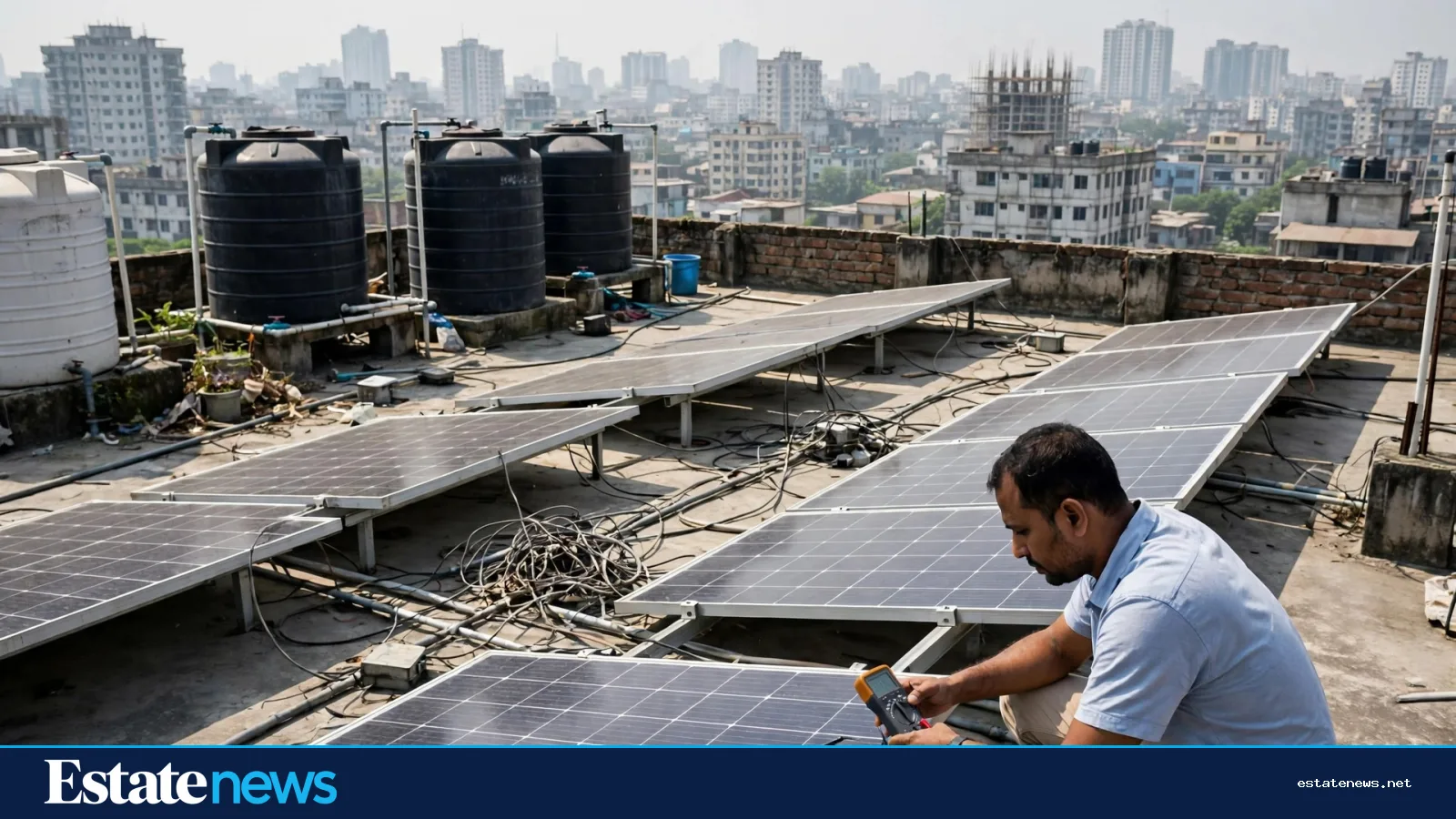
The second limit is the roof itself. Dhaka rooftops are crowded. Water tanks, the lift machine room, the stair head, the generator, the dish antennas and the neighbours' drying lines all compete for the same concrete. Panels need clear, unshaded space, and shade is their enemy. A panel half-covered by a water tank's shadow in the afternoon produces far less than its rating suggests. A building committee that wants solar has to decide what the roof is for, and that decision involves every flat owner, not just the enthusiastic ones.


Maintenance is the part brochures skip. Panels gather dust, and Dhaka's dry season dust is thick. A dirty panel generates less, so someone has to clean them, and someone has to check the inverter and the wiring. The cost is small next to the installation, but it is recurring, and it needs an owner. Buildings that assign the job to the caretaker and pay for it in the service charge keep their systems working. Buildings that leave it to nobody watch the output slide year by year.
Net metering adds another layer. Under the arrangement, a building can export surplus daytime power to the grid and be credited for it. That helps on holidays and quiet afternoons when the common load is low and the panels are still producing. But the credit is worth only what the distribution company pays for it, and the paperwork takes time. A building should not count on export income when it sizes a system. The saving that matters is the electricity the building no longer buys.
So what should a buyer or a committee ask at the expo? How much of the building's common load falls in daylight hours. How much clear roof the building actually has, after the tanks and the stair head. Who will clean and maintain the panels, and what that costs each month. And what the system costs to install, against the monthly common bill it will reduce. The answers differ so much between buildings that no single payback figure can be honest. Ask the installer for a written estimate based on the building's own electricity bills, not on a generic example, and ask who services the system if something fails in the second year.
Solar on a Dhaka rooftop is a sensible idea for many buildings, and the expo is the right place to learn about it. The saving is real, but it is a share of a specific building's bill, earned on a specific roof, and kept only with steady maintenance. A committee that understands that will buy well. One that believes a round number on a banner will be disappointed.