Bangladesh keeps its history in brick. Not in one museum or one city, but spread across the whole country: a mosque city in the south-west, a Buddhist monastery in the north-west, a pink palace on a Dhaka riverbank, a temple in Dinajpur, a fort that was never finished. Put them together and they draw a map of Bengal itself, from the third century before Christ to the concrete of the 1980s.
Only three places in the country carry UNESCO World Heritage status. The first two were inscribed together in 1985. The third followed in 1997. But the map does not stop there. The buildings below are the ones a traveller, a student or a flat buyer curious about the ground under their feet should know first. Each one is a short stop, not a full story: several of them have already had their own Estate News piece, and this is the guide that ties them together.
The two from 1985

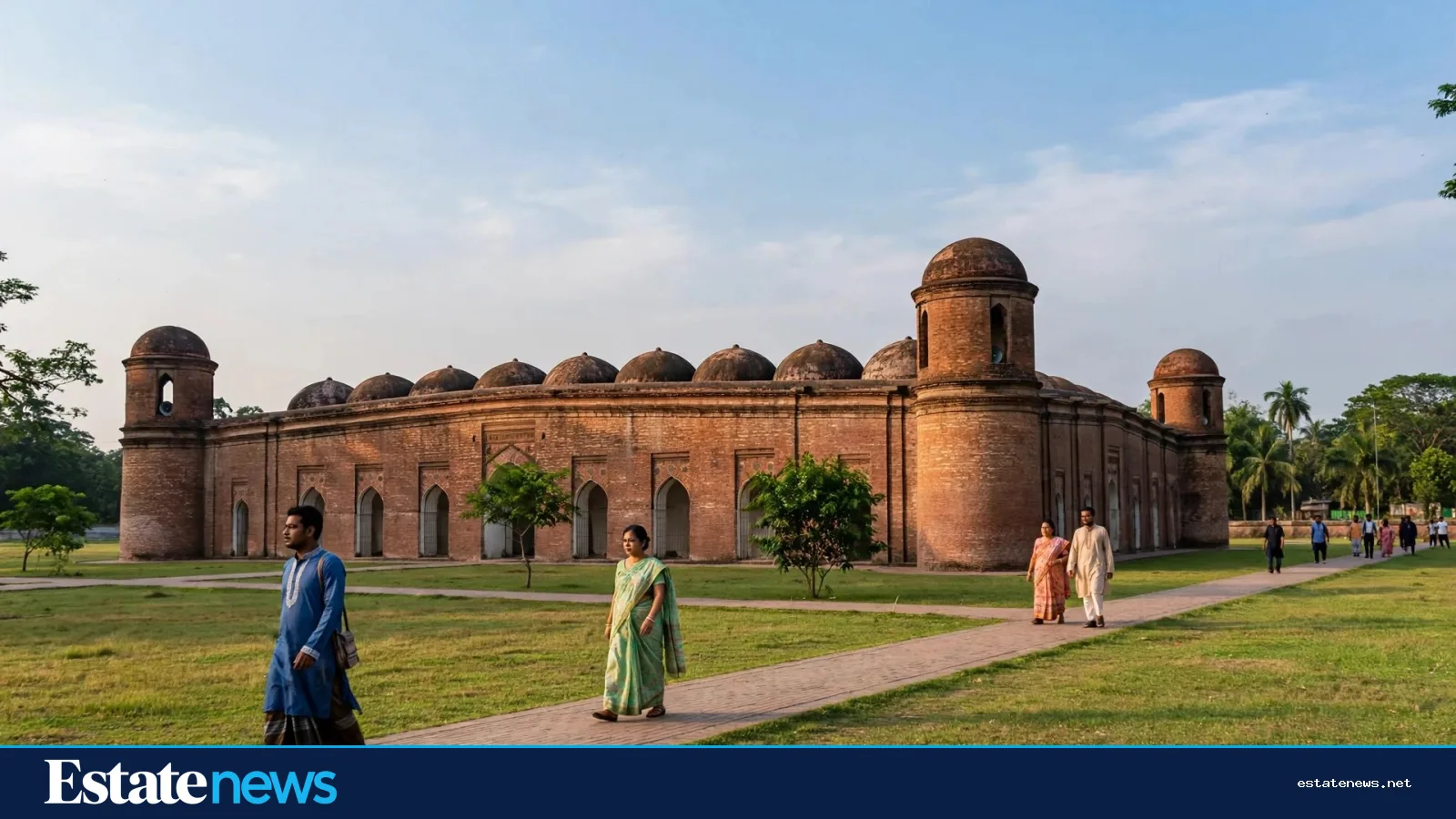
The Historic Mosque City of Bagerhat is the remains of a whole city, founded in the 15th century by Khan Jahan Ali under the name Khalifatabad, on the edge of the mangrove country. UNESCO describes it as a city of mosques, tombs, roads, bridges and water tanks spread over about 50 square kilometres, holding more than 300 mosques and other buildings, mostly in baked brick. Its centrepiece is the Sixty Dome Mosque, the largest historic mosque in Bangladesh. The city was covered by jungle after its founder's death and brought back into the open by archaeologists.
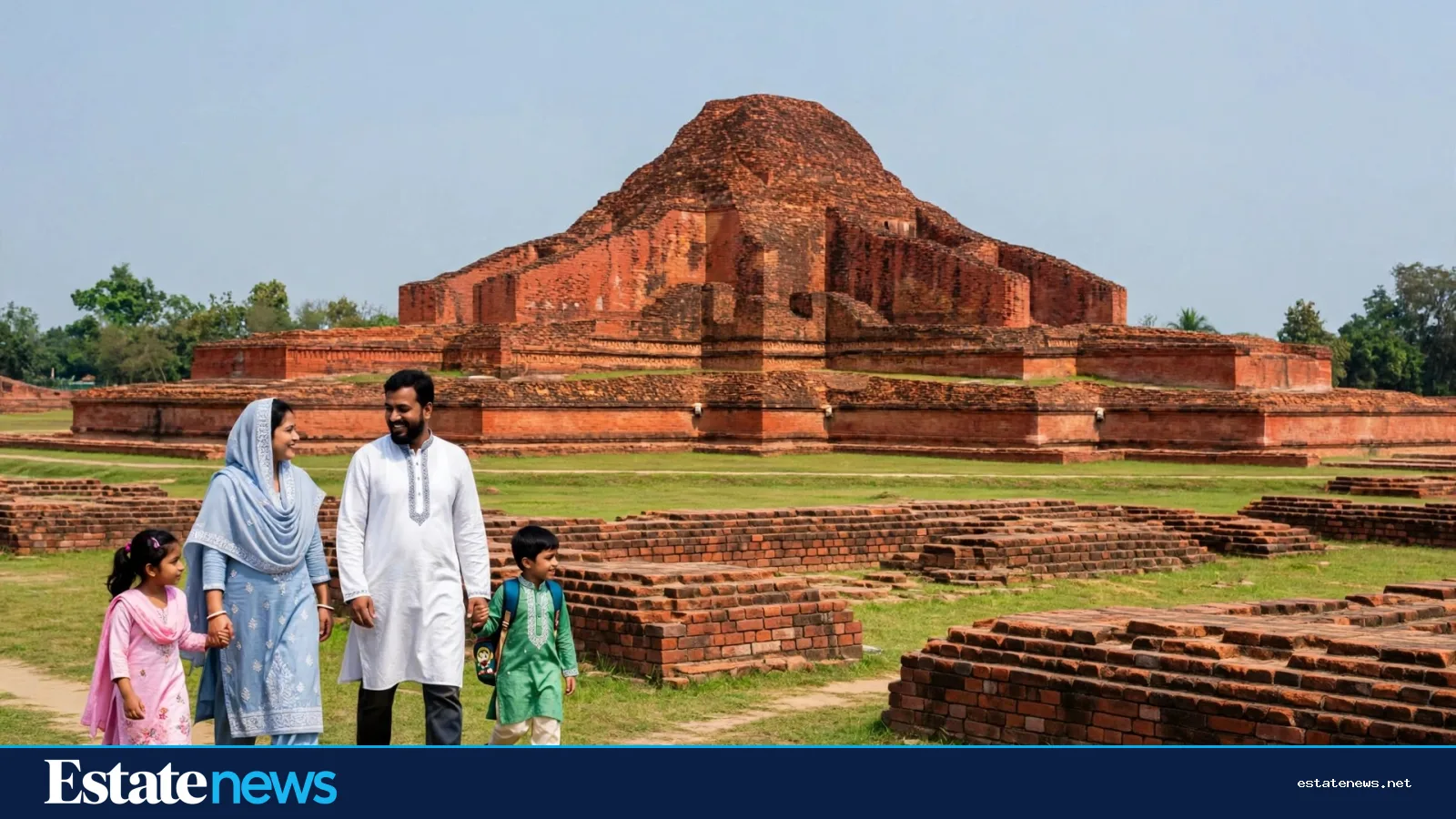
The Ruins of the Buddhist Vihara at Paharpur, in Naogaon district, is older by seven centuries. Somapura Mahavihara was founded in the late 8th century, in the reign of the Pala king Dharmapala, and it was one of the great Buddhist monasteries south of the Himalayas, second in size only to Nalanda's tradition in the region. It was a centre of Mahayana Buddhism until the 12th century, decorated with stone and terracotta carving, and its design influenced temples in Myanmar, Java and Cambodia. The central mound still rises over the brick terraces, and the scale of it is the first thing a visitor feels.
The third UNESCO site is not a building at all. The Sundarbans, inscribed in 1997, is the world's largest mangrove forest, and it belongs on this map because so much of Bengal's building history, from Bagerhat's brick to the timber of the river towns, came out of its edge.
Dhaka's old heart
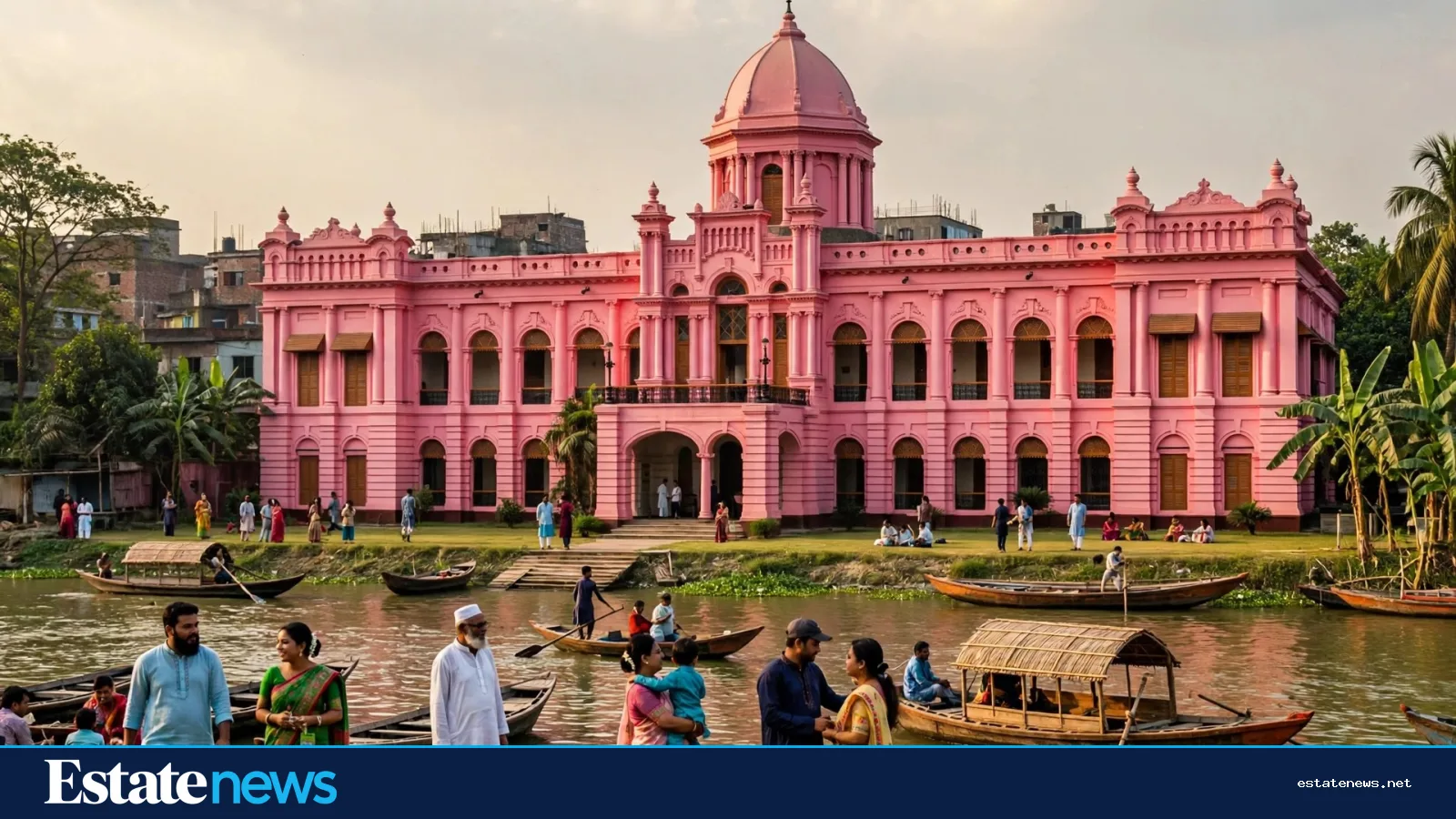
Dhaka holds its old buildings close together, mostly in the old city and around the university. Lalbagh Fort was begun in 1678 by Prince Muhammad Azam, the Mughal viceroy of Bengal, and never finished. Its mosque, the tomb of Pari Bibi and the Diwan-i-Aam stand inside walls that were meant to hold a much larger palace. Ahsan Manzil, the Pink Palace at Kumartoli on the Buriganga, was built between 1859 and 1872 by Nawab Khwaja Abdul Ghani, who named it after his son Ahsanullah. It was the seat of the Nawab family, damaged by a tornado in 1888 and an earthquake in 1897, and it has been a museum under the Bangladesh National Museum since 1992. The All India Muslim League was founded there in 1906.


Curzon Hall, on the Dhaka University campus, was built between 1904 and 1908 and named after Lord Curzon. Its red brick and arches have become the visual shorthand for the university itself. A short walk away stands Madhur Canteen, a university fixture since the institution's early years, where generations of students have argued over tea. The canteen is not a monument in the formal sense. It is a building that earned its place by being used.
The river towns and the temple country
Sonargaon's Panam City is a street of 19th-century merchant houses, built by wealthy Hindu traders in the old capital's shadow. The houses stand in rows, their facades worn but still carrying the carving and the ironwork of the merchants who built them. Rangpur's Tajhat Palace, built in the first decade of the 1900s by Maharaja Kumar Gopal Lal Roy, is a different kind of statement: a palace built to show that the north had its own courtly life, now kept as a museum.
Further north still, the Kantajew Temple in Dinajpur was begun in 1704 under Maharaja Pran Nath and finished in 1752 under Raja Ramnath. Its terracotta panels tell stories from the epics across every surface, and it remains the finest late-medieval temple in the country. Mahasthangarh, near Bogura, is older than all of them: a fortified city from the third century BCE, the ancient Pundranagara, where the archaeology still turns up new layers.
The new landmarks
The map does not end with the old. The Jatiya Sangsad Bhaban, designed by the American architect Louis Kahn and completed in 1982, is the most admired modern building in Bangladesh, a parliament house of concrete and light on the edge of a lake. Hatirjheel, opened in Dhaka in 2013, turned a polluted water body into a public lake with bridges and walkways, and it has become the city's evening ground. Both are already landmarks in the way the old ones are, because people use them every day.
Read together, these buildings tell a single story. Bengal was a Buddhist centre, then a Sultanate city, then a Mughal province, then a Nawabi capital, then a colonial port town, then a new nation building its own parliament. The buildings did not arrive in that order by accident. Each one was built by people who believed their city would last, and each one outlived the world that built it.
That is the point of keeping them. A country that knows where its old buildings stand knows where it stands. The map above is a starting point, not a finish. Visit one, and the next one is never far.