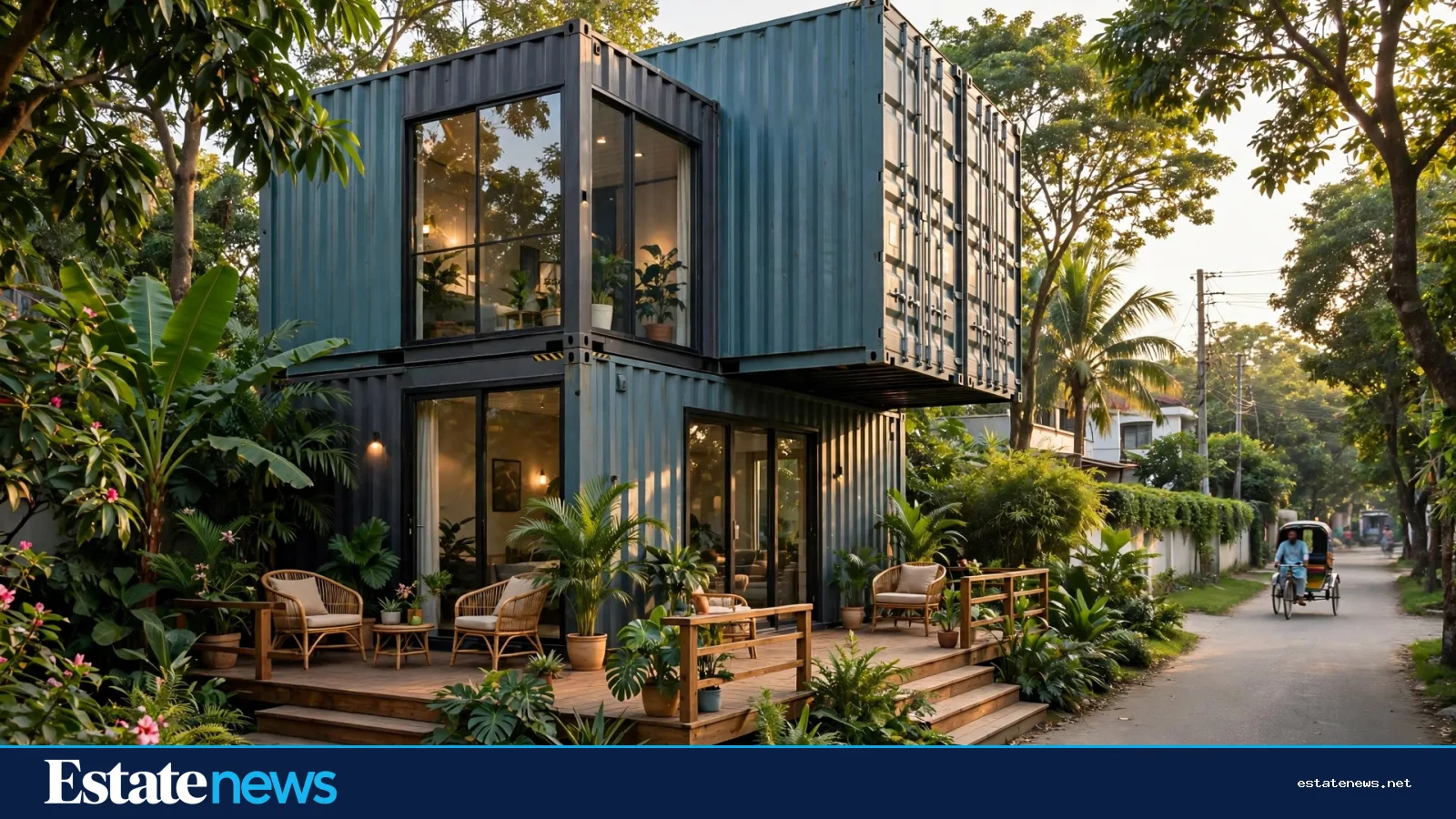
Most Dhaka houses try to look bigger than they are. Escape Den does the opposite. It sits low behind its trees in Bashundhara Residential Area, built entirely from recycled shipping containers, and it does not announce itself to the street at all. You could walk past the gate and miss it. That is the point.
The house belongs to a couple who wanted a place to get away from the city without leaving it. Bashundhara gave them the room. Their plot measures 20 katha, generous by Dhaka standards, and the architects, River & Rain, used that space the way a garden uses a courtyard: the house is only one part of the plot, and the green around it does the rest. The containers sit among trees rather than on top of a cleared site. From the road, foliage comes first and steel comes second.
A shipping container is a stubborn thing to live in. It is a steel box made to cross oceans, not to hold a family through a Dhaka summer. The trick of a container house is not stacking the boxes. Any builder can stack boxes. The trick is making steel feel like a home: cutting in light, letting air move, keeping the heat out, and hiding the industrial edges where they would grate. River & Rain's answer at Escape Den is restraint. The containers keep their corrugated rhythm on the outside, honest about what they are, while the inside is lined, shaded and opened up so the rooms read as rooms, not cargo holds.

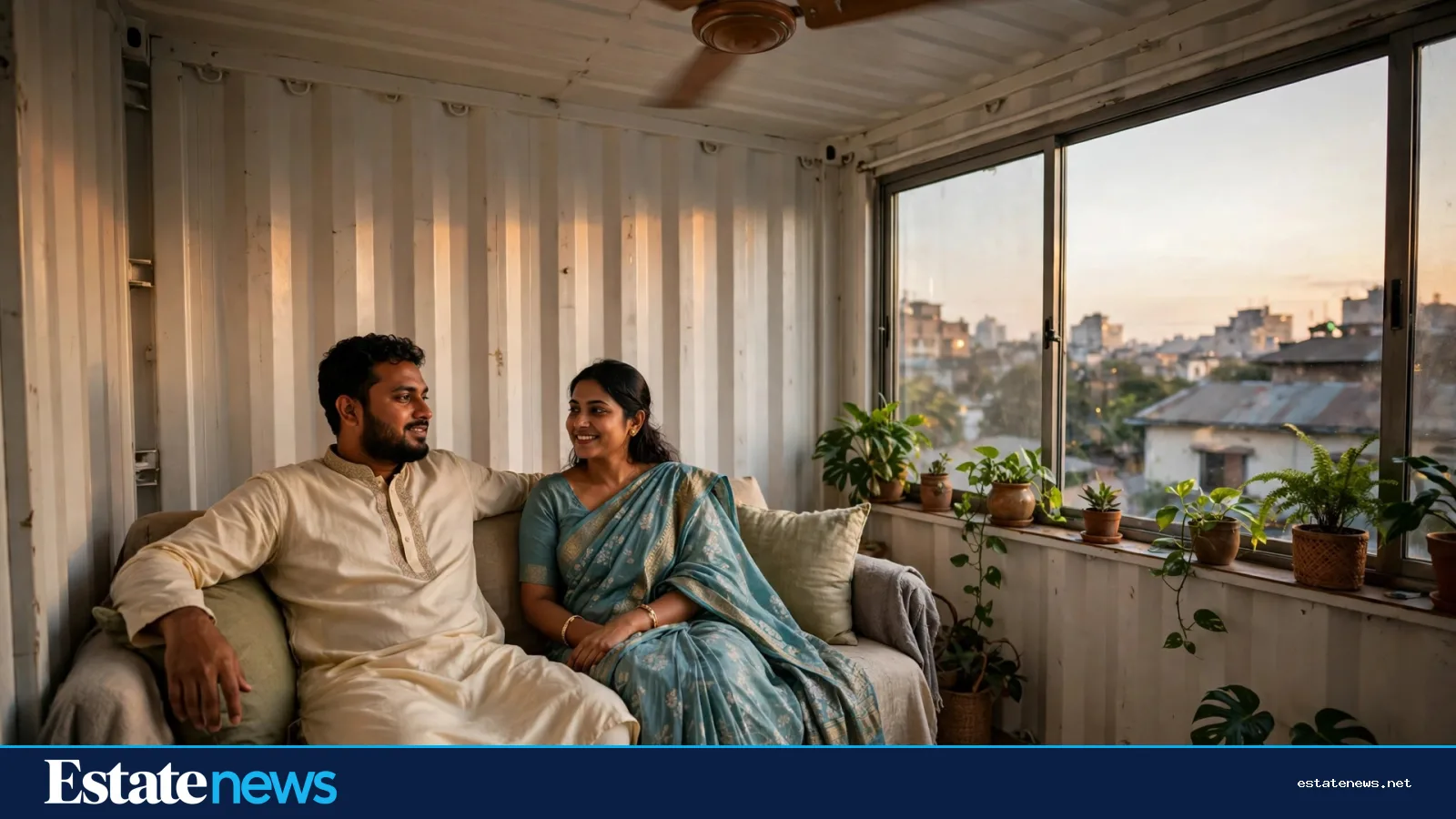
Step inside and the first thing you notice is the ceiling fan. It sounds like a small detail. In a container house it is not. Steel holds heat, and a Dhaka afternoon tests every surface. The fan, the tall windows and the cross-breeze do the daily work that air conditioning does in a concrete flat, and they do it cheaply. The living room runs the full width of a container, its long wall opened to glass, and the plants on the sill soften the steel line above them. A sofa, a wooden floor, a cup of tea on the table. Nothing in the room shouts. That is the design working.
Why containers, and why here
Container houses have a following around the world, and the reasons travel well. The boxes are strong, they arrive ready-made, and reusing them keeps steel out of the scrapyard. In Dhaka the case is a little different. Land is the expensive part of any house here. Bashundhara's asking prices for flats run at a median of Tk 12,005 per sq ft, according to current asking-price listings, which puts a 20-katha plot far beyond most buyers. A container house does not solve the land question. What it solves is the building question: how to put a comfortable house on a plot without the long, dusty, cash-hungry process of a concrete build, and how to end up with something that looks like nothing else on the street.
There is also a quieter reason, and it may be the real one. A concrete house in Dhaka tends to grow. A room gets added, a floor goes up, a cousin moves in. Escape Den was built to stay small. It is a getaway home, a place for two people to step out of their working week, and its size is a choice rather than a limit. The containers set the footprint, and the couple live inside it. In a city where every house seems to be reaching for one more floor, a house that decided to stay put is its own kind of statement.
The plot does half the work


Twenty katha in Bashundhara buys something Dhaka rarely offers: distance. The house sits back from the boundary, and the ground between the gate and the front door is garden, not driveway. Trees shade the steel in the hottest hours. That shade matters more than any gadget, because a container in direct sun turns into an oven and no amount of insulation fixes it cheaply. The planting is not decoration here. It is part of the cooling system, and it is the reason the house can sit quietly behind its greenery instead of glaring at the street.
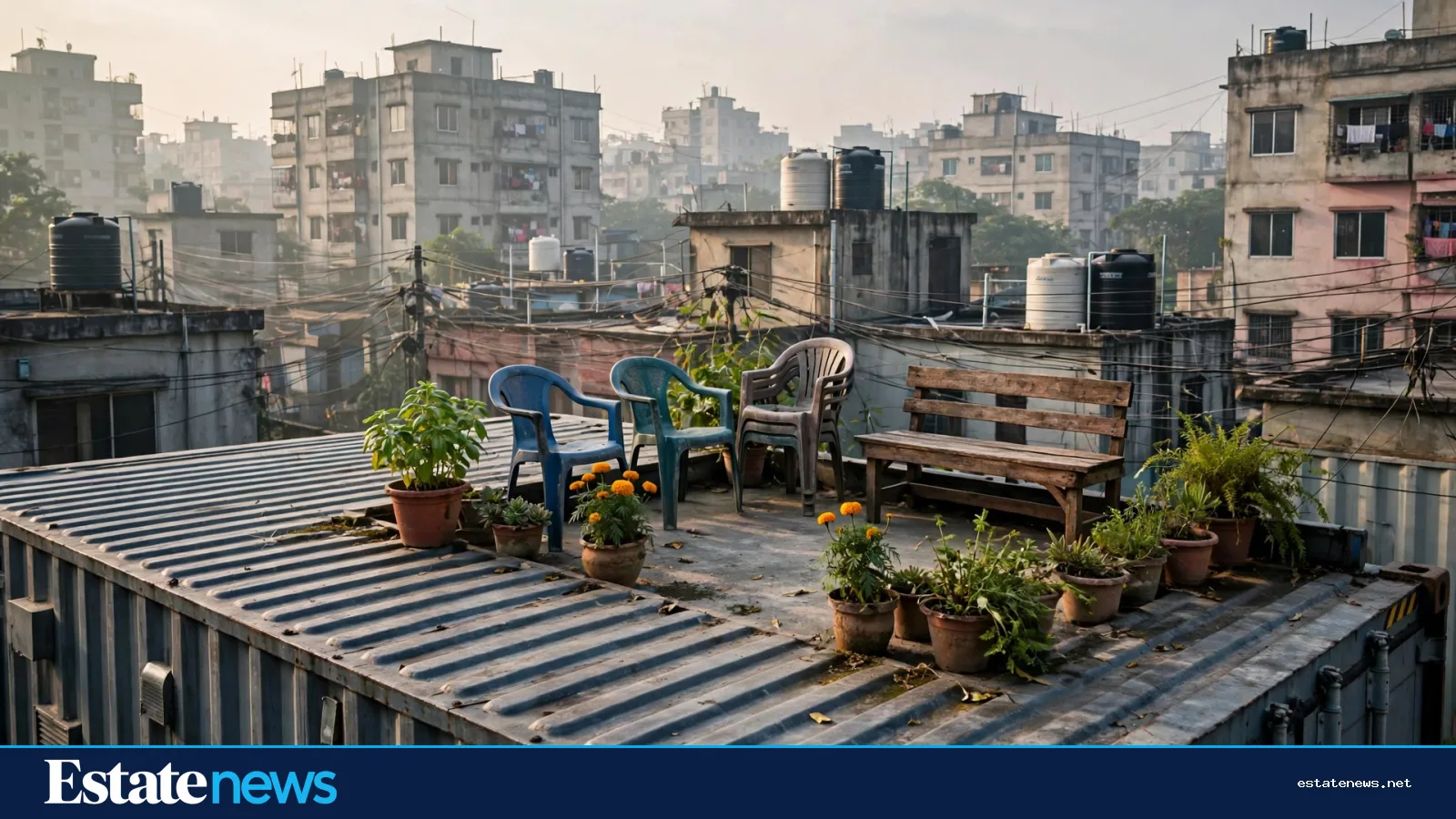
The roof does the quiet work in this house. Up top, a terrace holds potted plants and a few chairs, with the water tanks and the rooftops of neighbouring buildings in the distance. It is the most Dhaka part of the whole project: a roof that gets used in the evening, when the heat breaks and the air moves. Container roofs are flat and strong, so a terrace comes almost free. The couple get a second living room above their heads, open to the sky, and the house gets a lid that keeps the sun off the rooms below.
What a container house asks of its owners
Living in steel asks for a different kind of care than living in brick. The walls need looking after, because rust never sleeps in Dhaka's damp air. The seals around the cut windows need checking before the monsoon. The roof needs its drainage kept clear. None of this is hard, but none of it can be ignored for a year the way a concrete wall can. A container house rewards an owner who pays attention, and it punishes one who does not. That may be why the form suits a getaway home so well. The couple are here often enough to notice a leak, and the house is small enough that a repair is an afternoon's work, not a project.
The other question every visitor asks is heat, and it is a fair one. Steel conducts it. The honest answer is that a container house in Dhaka lives or dies on shade, airflow and insulation, in that order. Escape Den leans on all three, and on its trees. It is not a house you could copy onto a bare plot in the open sun and expect to feel the same. Its comfort comes from the plot as much as from the boxes.
A small house with a long shadow
Escape Den will not change how Dhaka builds. Containers are a niche here, and the city's housing need is measured in flats, not in one-off experiments. But the house matters for a different reason. It shows that a home in this city can be small, reused and quiet, and still feel complete. It shows that a 20-katha plot can hold a garden first and a house second. And it shows that two people, with an architect willing to work inside a steel box, can build a retreat in the middle of a neighbourhood better known for apartment blocks.
Dhaka's builders will keep pouring concrete, and for most families that is the right answer. Escape Den is not an argument against that. It is a reminder that the city's housing story has room for a second draft, written in steel, shaded by trees, with a ceiling fan turning and the street kept politely outside the gate.