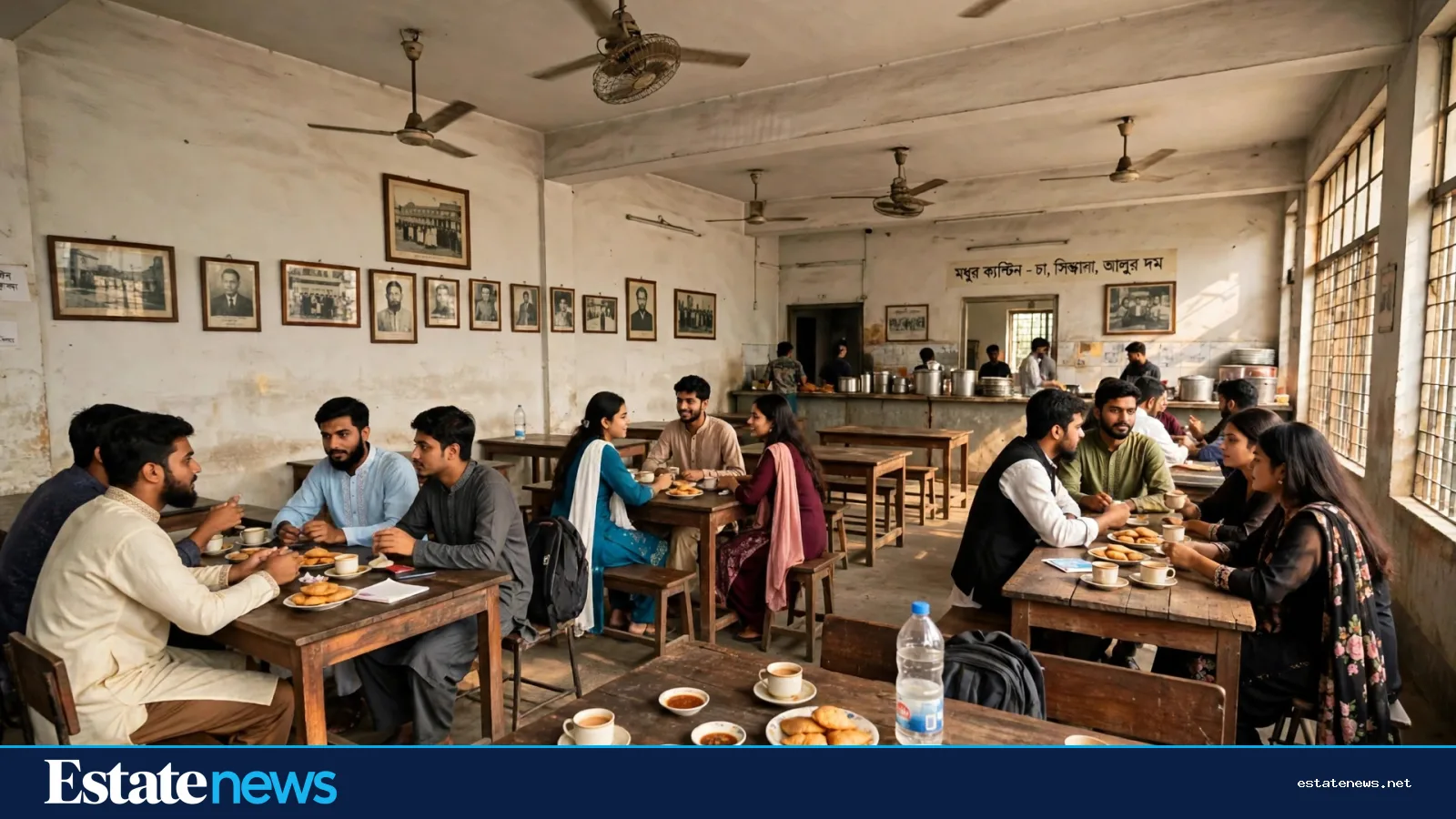
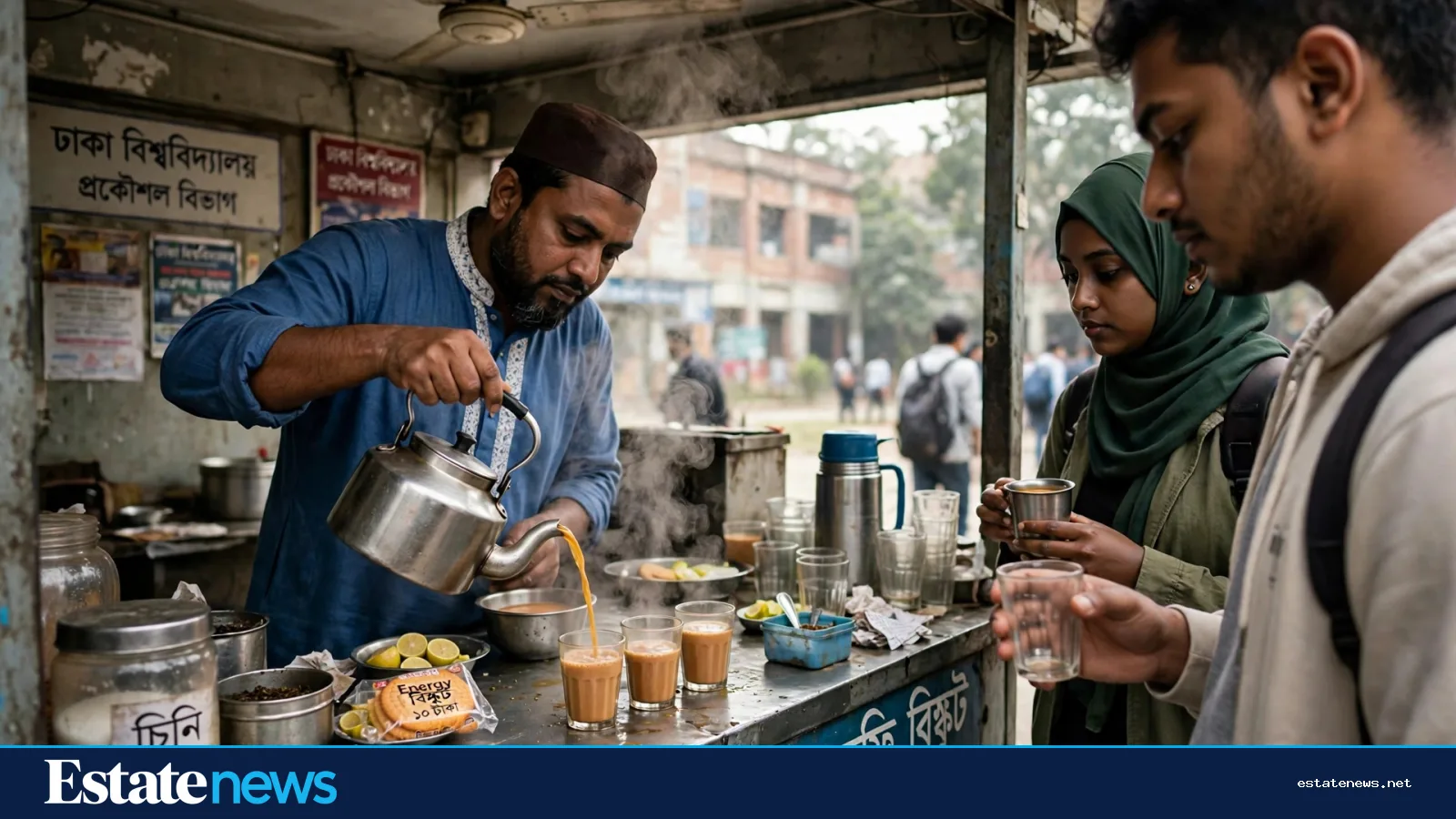
The tables fill early at Madhur Canteen. Students arrive with books under their arms, order tea and singara, and settle in for the long talk that Dhaka calls adda. Teachers stop by between classes. Old students return years later and look for their old corner. The room is small and plain, and that is part of its pull: nobody comes here for the furniture.
Madhur Canteen is as old as Dhaka University itself, and its story runs with the university and with the country. A food stall that began in 1921 became the campus room where students planned the Language Movement, argued through the 1969 uprising and gathered in the months before independence. Few buildings in Dhaka have heard so much of the country's history at such close range.
A food stall as old as the university

The canteen began in 1921, the year Dhaka University was established. Aditya Chandra Dey received permission from the university authorities to sell food on the campus, and he started with his fifteen-year-old son Madhusudan at his side. The campus then stood where Dhaka Medical College stands today, and the first canteen served sweets and confectionery to students and teachers from a small room there.
Madhusudan took over the running of the stall after his father's death. Students began to call him Madhu Da, elder brother Madhu, and the name stuck so firmly that the canteen itself took it. Within a few years the board outside read Madhur Canteen. The man who served the tea had become the name of the place, and the place had become a fixture of campus life.
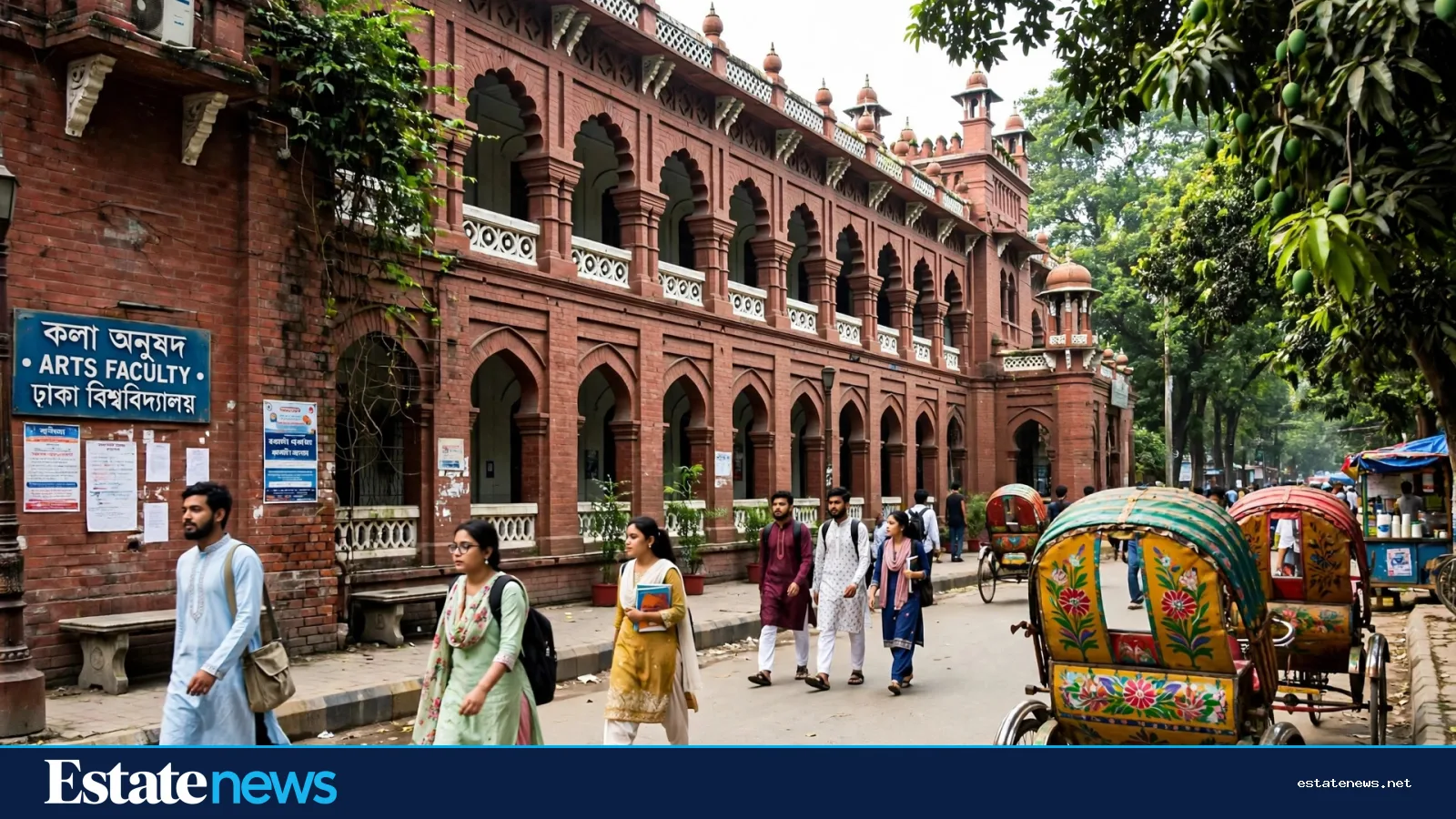
When the Arts Faculty moved to its present building near Nilkhet, the canteen moved with it. Its present spot, beside the Arts Faculty and close to the Institute of Business Administration, has been its home since the new Arts Building went up in the mid-1960s. Generations of students have learned the same geography: lectures in the Arts Building, arguments over tea at Madhu's. The campus has changed around it in the same way older Dhaka neighbourhoods have changed, as "Mohammadpur's Japan Garden City shows, four decades on".
The hall with an older past
The building that holds the canteen is older than the canteen itself. Construction began in 1873, and in the days of the Nawabs of Dhaka it served as their Darbar Hall, a formal meeting room. It was built first as a skating rink and ballroom for the Nawabs, then used for their formal and informal gatherings.
In 1906 the hall hosted a conference sponsored by Nawab Bahadur Sir Khwaja Salimullah of Dhaka, and that meeting led to the formation of the All-India Muslim League. The room had already made history before a single cup of tea was served in it. When the university took it over as a dining hall and meeting place for students and faculty, the habit of serious talk in that room simply continued under new management.


Where movements were planned
By the late 1940s the canteen had become the place where student politics was organised. It played a part in the Language Movement of 1948 and 1952, in the movement of fourth-class university employees in 1949, in the students' revolt against the university's black laws, and in the mass uprising of 1969. The pattern was the same each time: students met at Madhu's tables, argued, agreed a plan, and carried it out onto the campus and the streets.
Madhusudan Dey was more than a caterer to these students. He knew them by name, fed them when they had no money, and kept the canteen open as a meeting place through years when meeting places were watched. His popularity among student leaders was the reason the canteen carried his name, and his name became a shorthand for the campus itself. To say "meet at Madhu's" was to say "meet where the discussion happens".
March 1971 and after
The army crackdown that began on 25 March 1971 struck the university first, and Madhur Canteen was among its targets. Madhusudan Dey was killed in the crackdown, and the canteen was badly damaged in the fighting that followed. After the Liberation War his son Arun Kumar Dey took over the running of the canteen, and the damaged building was rebuilt.
The canteen that stands today carries that history without making a display of it. The walls hold photographs and memories, and older visitors point out where the old tables stood. New students, who were not born when the events happened, still sit in the same room and argue about the same country, over the same tea.
That is what makes Madhur Canteen a landmark rather than only a canteen. Dhaka has grander buildings and older ones, but few places have stayed in daily use for a century while keeping the same purpose. It began as a place to eat, became a place to talk, and the talk became part of the country's story. Planned neighbourhoods such as "Bashundhara Residential Area learned to live like a small city", but the canteen learned something rarer: how to stay the same room while the city changed around it. A hundred years on, the tea is still hot, the tables are still crowded, and the argument is still going on.