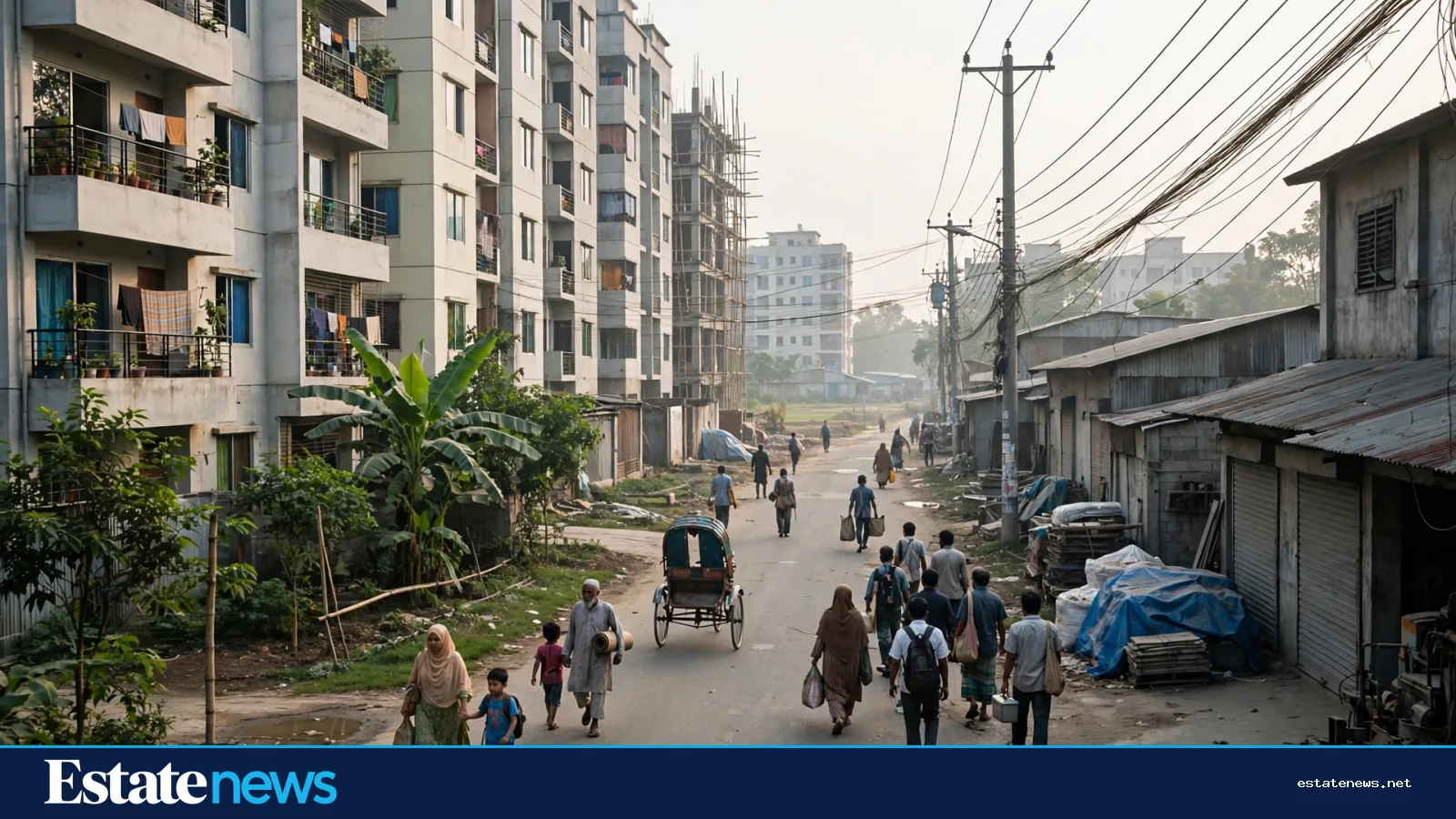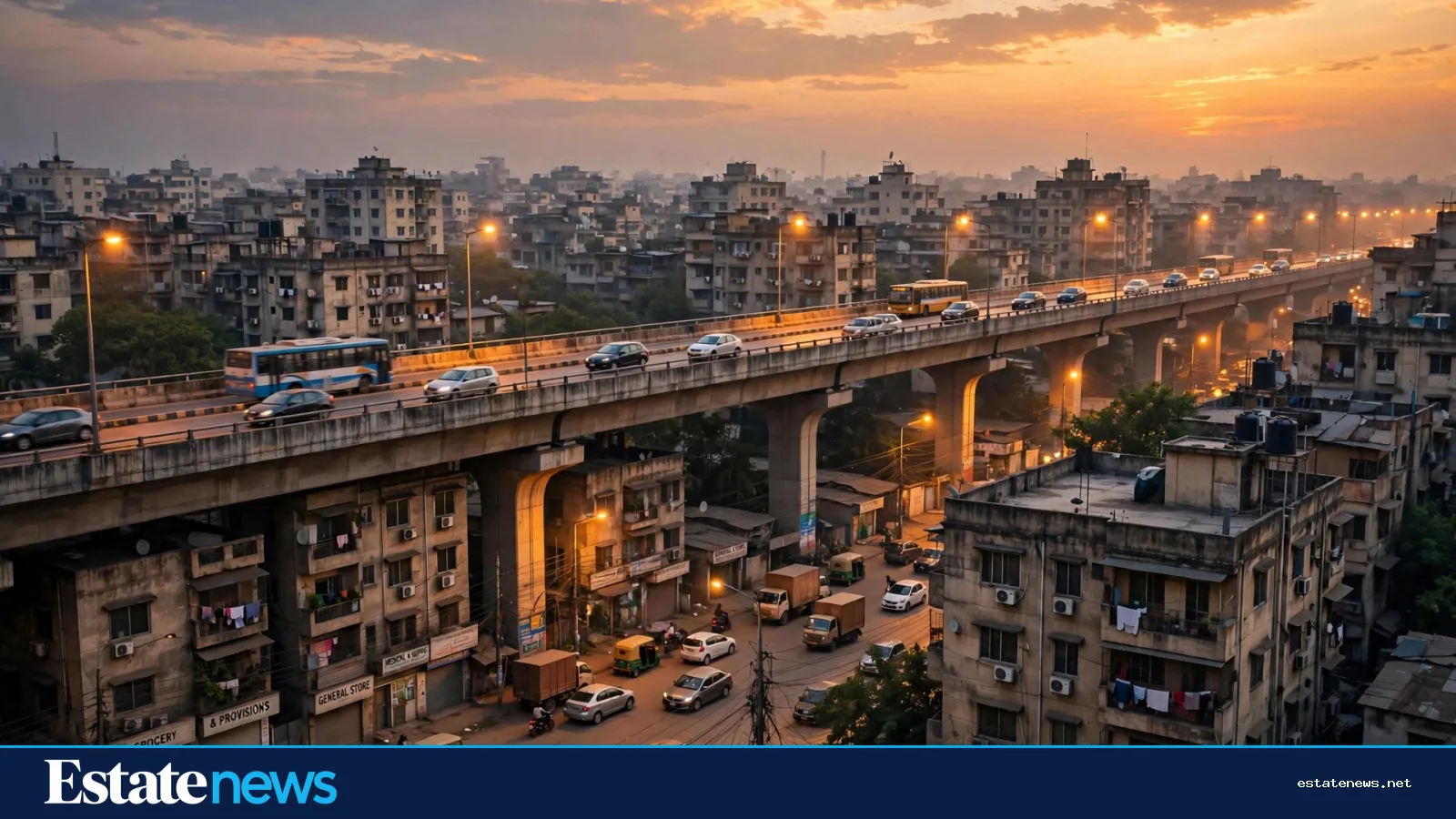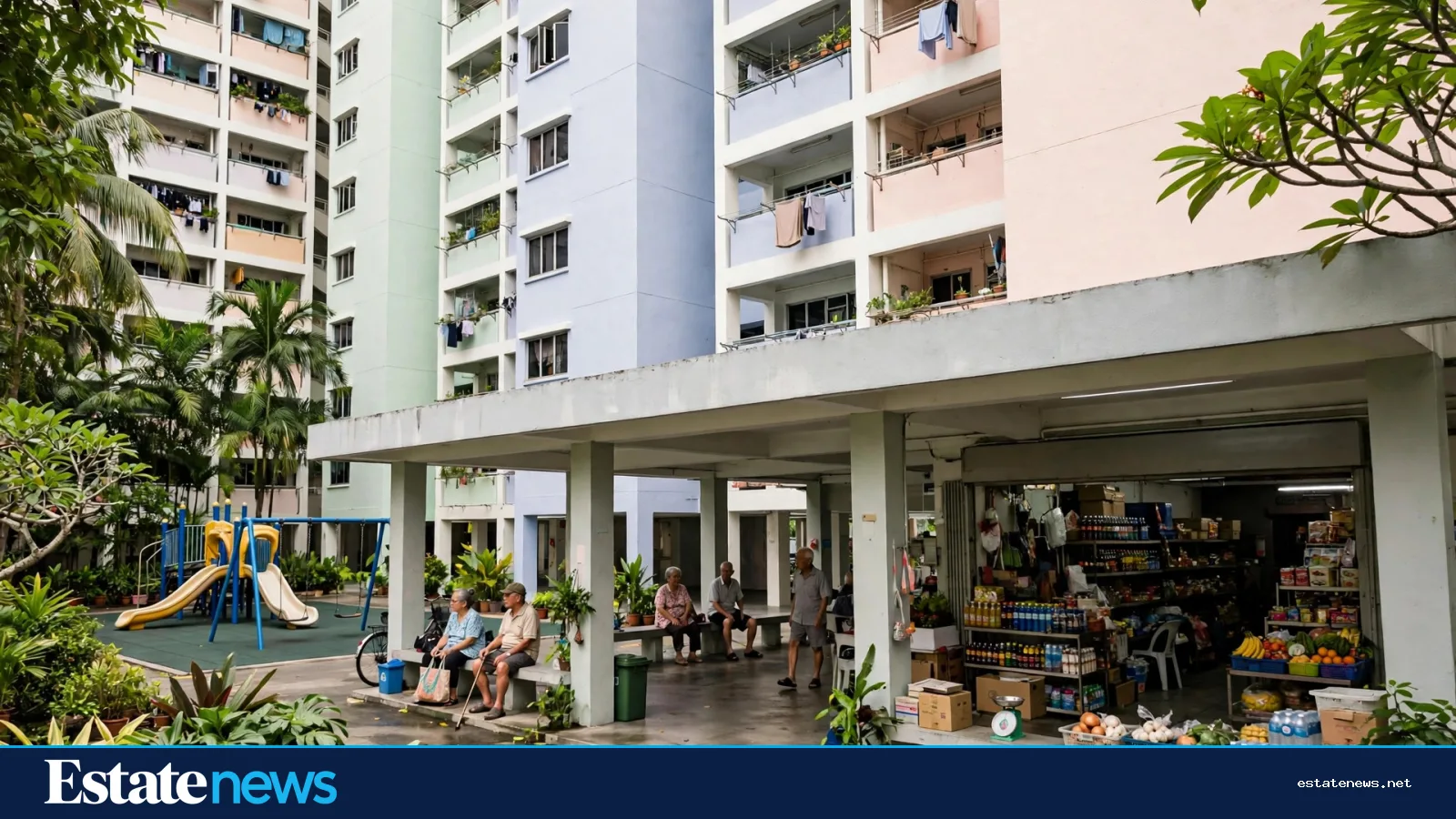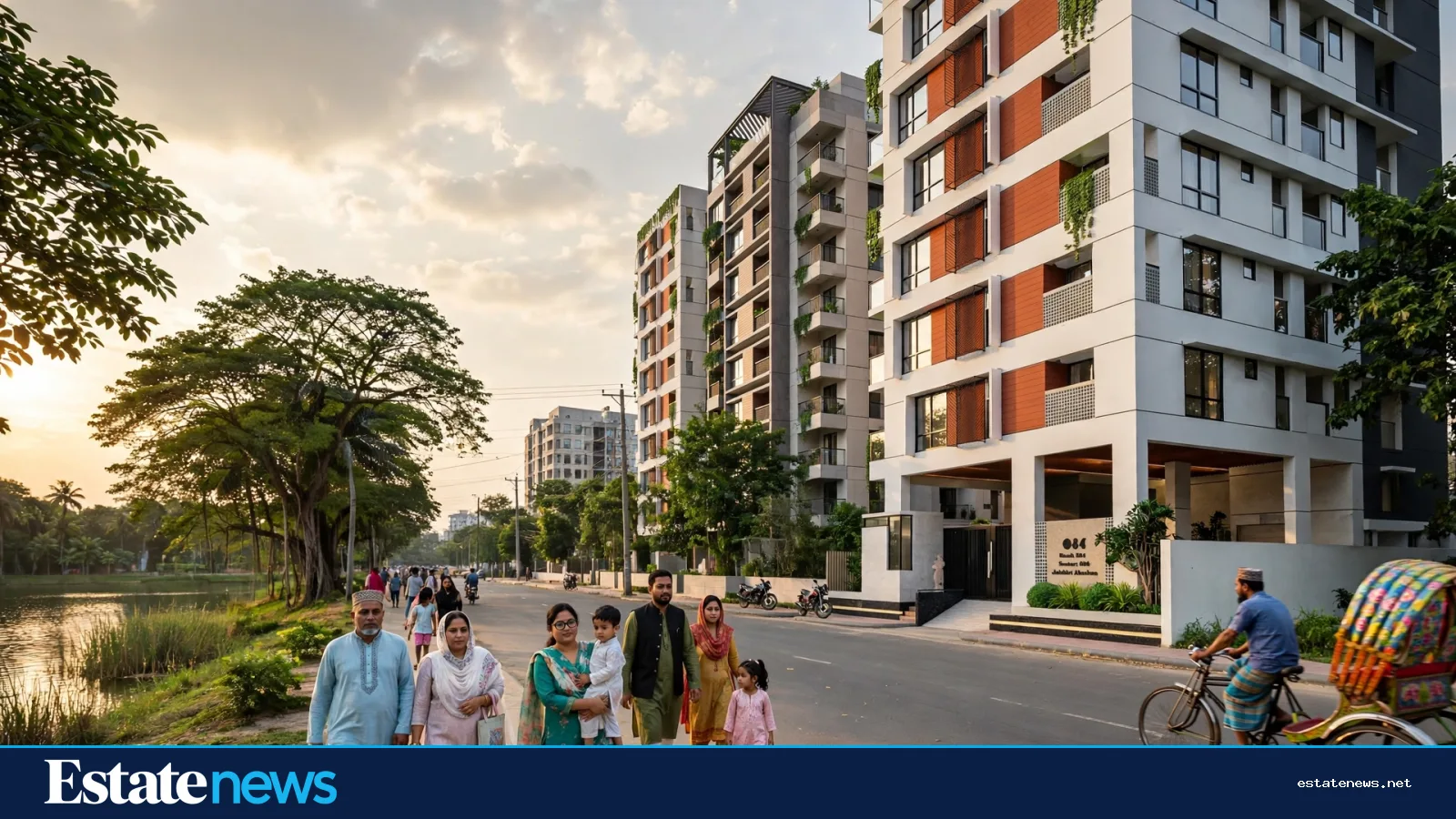
Late in the afternoon, the light over Jolshiri Abashon turns soft. A rickshaw moves slowly past a row of new apartment blocks, a family walks along the lakeside path, and the road stays wide enough for all three at once. Anyone who has spent a morning stuck on a narrow lane in old Dhaka notices the difference at once. Space is the first thing Jolshiri sells, and it is the thing its residents talk about when they describe why they moved.
Jolshiri Abashon sits in Rupganj, on the eastern edge of the capital's growth. Sheltech's own material describes it as a township of 2,133 acres, developed under the supervision of the Bangladesh Army, about 8 to 9 kilometres from Baridhara. Two roads shape its map for buyers: the Purbachal Expressway, often called the 300-foot road, and Madani Avenue, the 100-foot road. From those two links, Gulshan, Banani, Bashundhara, Uttara and Baridhara are all within a drive that feels shorter than the distance on paper, at least outside peak hours. The airport is close too, a point Sheltech mentions often for families who travel.
Sheltech has been building in Bangladesh since 1988, according to the company's own history. Its material puts the number of apartments and commercial spaces handed over at more than 4,650, and claims a 99.3 percent on-time handover record, alongside ISO 9001:2015 certification. Those are company figures, and they matter to buyers for a plain reason. In a market where a delayed handover can strand a family between a rented flat and a loan, a record of finishing on time carries weight that a brochure cannot.

One floor, one family
Inside Jolshiri, Sheltech's pattern is easy to read. Its projects across sectors 12, 13, 16 and 17 are mostly single-unit homes, one apartment per floor, sized at about 2,700 to 2,850 square feet. Sheltech Rainfall in Sector 16, Road 405, Sheltech North Point in Sector 16, Road 407, Sheltech Nirvana in Sector 16, Road 504A, and Sheltech Golf View in Sector 17, Road 502, all follow that scale, each offering four bedrooms in the company's project descriptions. In Sectors 12 and 13, names such as Sheltech Abode, Sheltech Celestia, Sheltech Phoenix and Sheltech Lakeshore sit on the same list. Groundbreaking ceremonies in mid-2025 for Sheltech Cavalry Castle in Sector 13, and for Sheltech Asharat and Sheltech Pine View in Sectors 16 and 17, showed the pipeline still growing.
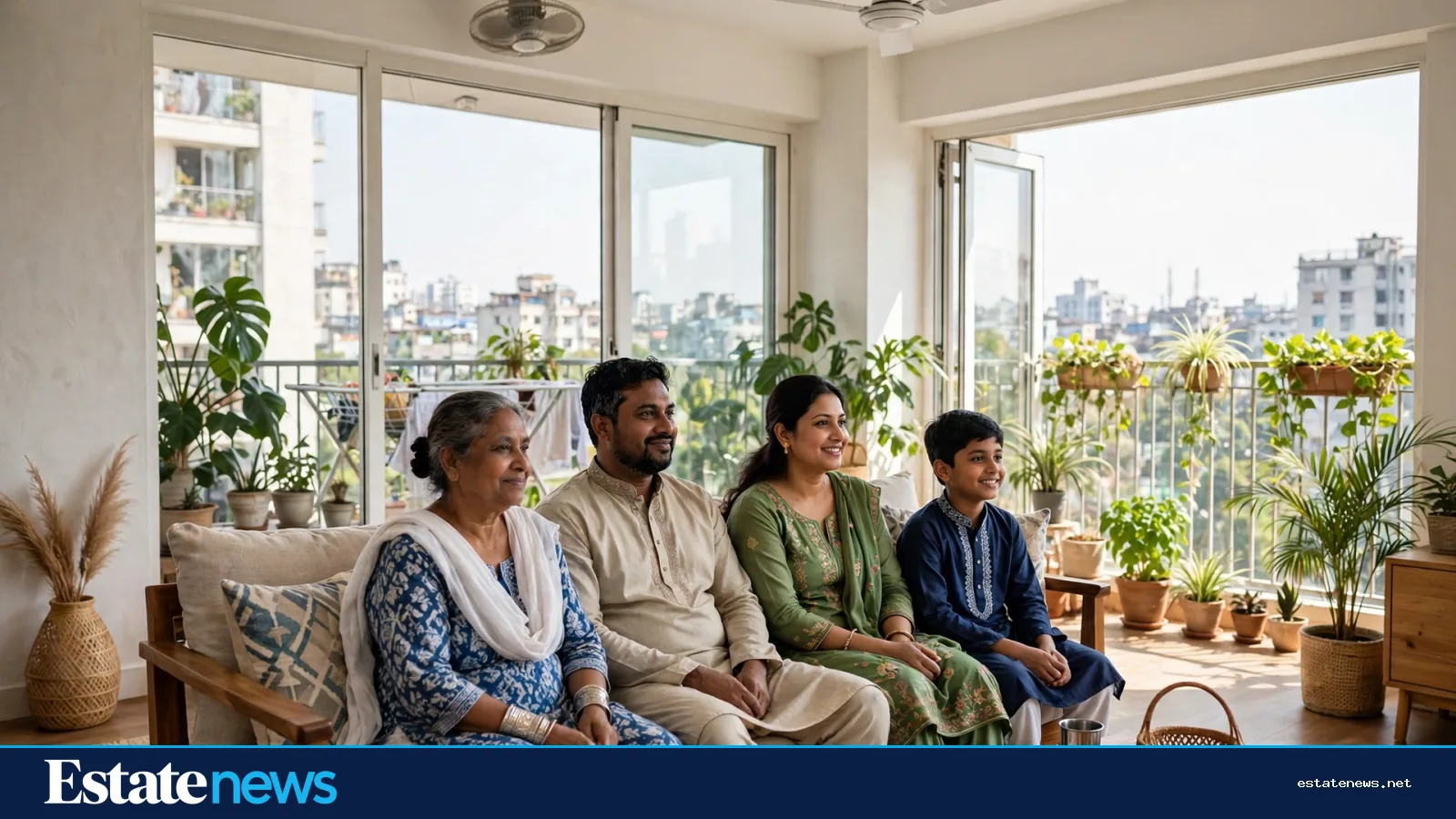
A single unit per floor changes how a flat feels. There is no shared landing argument about shoes outside a door, no neighbour's kitchen noise through a thin common wall at midnight. For joint families, it means a grandmother can have a quiet room at one end of the flat while children do homework at the other. For a couple moving from a two-bedroom flat in Bashundhara or Uttara, it means a study, a guest room and a dining table that seats twelve at Eid without borrowing chairs from the flat next door.
What the township promises, and what to check
Jolshiri's pitch rests on planning. Plots are laid out, roads are wide, lakes and green belts break up the blocks, and a central business district is planned at the centre. Sheltech's December 2025 newsletter describes the township's central complex as a mix of modern design and cultural symbolism, surrounded by gardens and open plazas. For a buyer used to Dhaka's unplanned lanes, where a new building can block light to the one beside it, that order is part of the appeal.


Order on a master plan is not the same as order on the ground on the day a family moves in. A buyer should walk the sector, not just the sample flat. Which roads are finished, and which are still dust? How far is the nearest school, mosque, market and clinic, and how does that trip feel after dark? Does the building's water supply hold up in summer, and does the generator cover lifts and common areas or only a few points? A township grows in stages, and a flat bought early can mean living beside construction for a year or more. That trade can be worth it. It should still be a choice made with eyes open.
Paperwork deserves the same walk-through. A buyer, or a lawyer acting for the buyer, should check the deed chain, the RAJUK approval, the mutation record and the handover terms in the agreement before paying beyond a booking amount. Sheltech's scale makes its documents easier to trace than those of a one-project builder, but scale is not a substitute for reading the agreement. Handover dates, penalty terms for delay, service charges and what counts as finished should be in writing, in plain language, before money moves.
Evenings on the roof
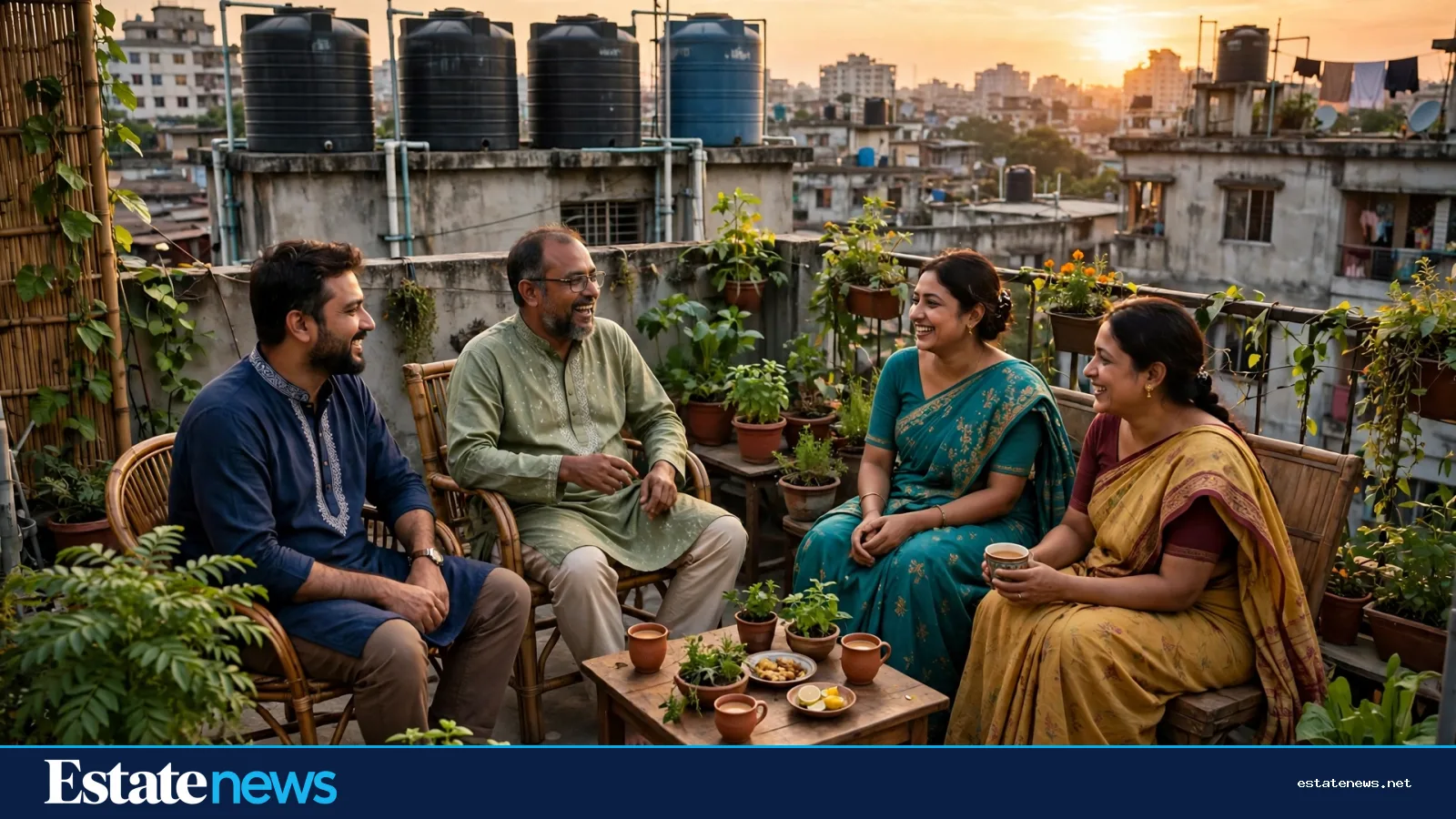
If the mornings in Jolshiri belong to school runs and office commutes, the evenings belong to the roof. Residents gather where the air moves, children play where a caretaker can see them, and neighbours who barely spoke in a crowded Dhaka stairwell learn each other's names. Sheltech's project descriptions return again and again to rooftops, barbecue zones and seating corners, and the reason is simple. In a flat of this size, the roof is not an afterthought. It is the extra room the city cannot give at street level.
Who this kind of home fits, and who it does not
A flat of 2,800 square feet is not a starter home. It suits a family that has outgrown a smaller flat, a buyer returning from abroad who wants space for parents and children under one roof, or a household that works from home and needs a room that is not also a bedroom. It does not suit a buyer stretching every taka for a first flat, or a household that needs to be in central Dhaka within twenty minutes at 9 am. Jolshiri rewards patience with distance. The expressway helps, but it does not erase the kilometres.
There is a second question buyers ask quietly, about resale. A large, single-unit flat appeals to a smaller pool of buyers than a mid-sized three-bedroom flat in Mirpur or Uttara. That pool exists in Dhaka, and Jolshiri's township setting gives it a reason to look east. Still, a buyer should buy the flat to live in it, and treat any later sale as a bonus, not a plan. The families who seem happiest in Jolshiri, from what the township's own growth suggests, are the ones who moved for the daily life: the walk by the lake, the quiet floor, the roof at sunset.
Jolshiri is still becoming a place. Some sectors feel settled, others feel like a building site with a view. That half-finished quality is part of its story, and part of its risk. For a buyer who wants Dhaka's centre, it will disappoint. For a buyer who wants room, air and a floor to themselves, and who checks the papers and the roads before signing, it is one of the few places near the capital where the city still feels like it has space left.