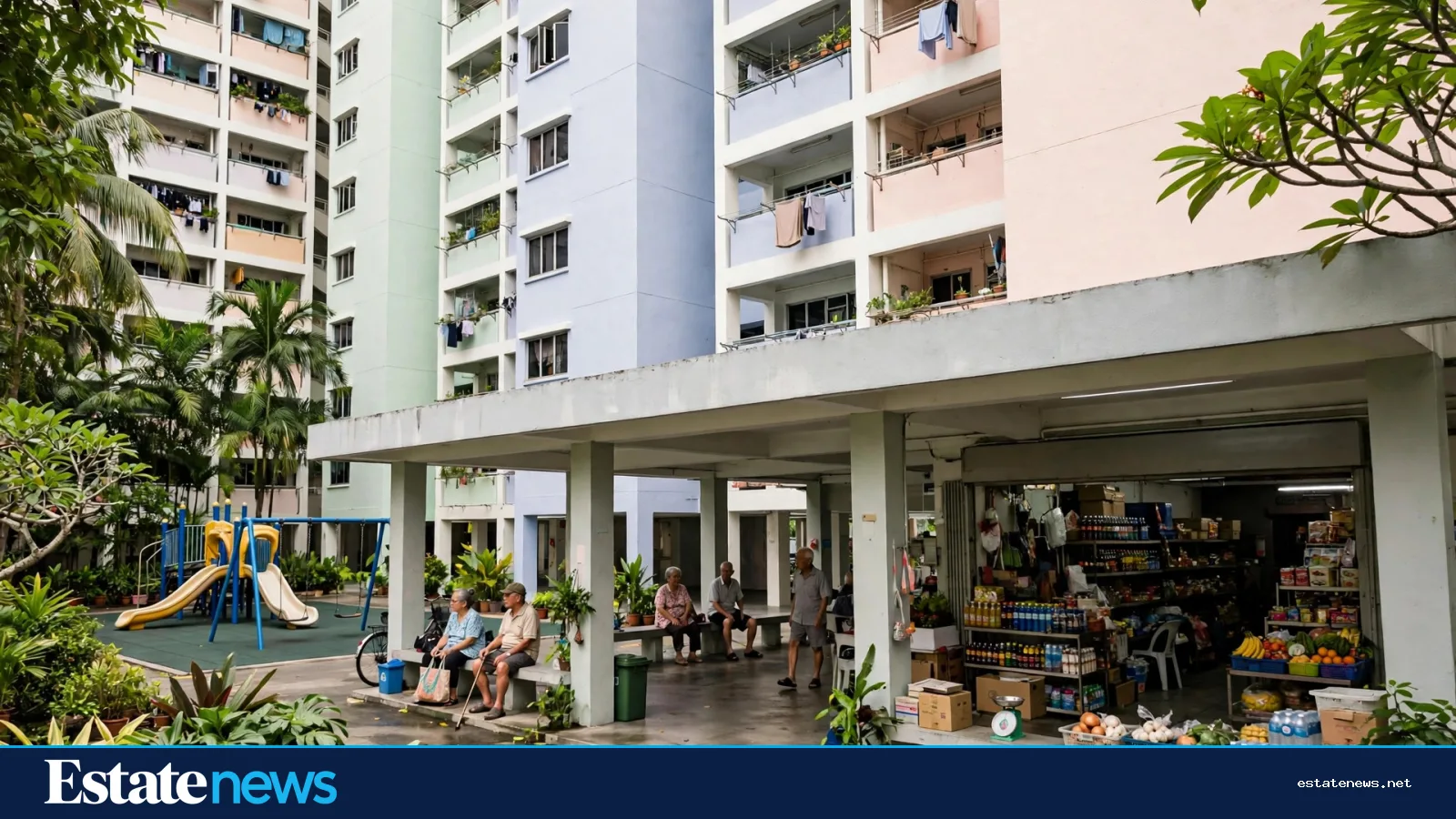
Every few years, someone points to Singapore and asks why Dhaka cannot do the same. The numbers invite the question. Close to 80 per cent of Singapore's resident population lives in flats built by the Housing and Development Board (HDB), and the overall home ownership rate is around 90 per cent, according to government figures widely cited in housing research. In a city-state where private condominiums sell for millions of dollars, public housing remains the normal way to live, not the exception.
That is a genuine achievement. It is also the product of conditions that took sixty years to build and that Bangladesh does not have. Understanding which parts are transferable — and which are not — matters more than admiring the headline.
How the model actually works

Three pillars hold the system up. The first is land. Singapore's government owns the overwhelming bulk of the island's land, acquired over decades under land-acquisition powers, and releases it for housing on its own terms. The second is finance. The Central Provident Fund (CPF), a mandatory savings scheme, lets citizens channel retirement savings into a home purchase, a down payment and monthly instalments — so buying does not depend on having a large pile of cash. The third is the HDB itself, which plans, builds and manages whole towns rather than isolated projects, complete with transport, schools, markets and clinics.
New flats are sold on 99-year leases, not as freehold property, through Build-To-Order exercises at subsidised prices, with grants for eligible buyers. When the lease ends, the flat reverts to the state; there is no automatic renewal and no payout, which is the government's stated position. Resale flats trade at market prices, but with rules attached: a minimum occupation period — five years for standard flats, ten years for the newer Plus and Prime categories in prime locations — during which the flat cannot be sold, and, for prime flats, a subsidy clawback on resale and a restriction that the whole flat can never be rented out. The aim is explicit: to keep public flats as homes first and investments second.
Those rules have a price. The same system that made ownership near-universal now produces million-dollar resale flats, and published analyses in 2025–2026 note that resale prices have risen faster than incomes, with affordability strain even inside public housing. Lease decay is the other shadow: flats built in the 1960s now have less than 40 years of lease left, and buyers face pro-rated CPF use and loan limits when the remaining lease does not cover the youngest buyer to age 95. Only around 5 per cent of HDB flats have ever been selected for the Selective En bloc Redevelopment Scheme, the government buy-back that owners remember as a windfall — it is not something a buyer can count on. Singapore's model, in other words, solved scarcity and created a new set of problems about ageing, wealth and fairness.
What Dhaka cannot copy
Dhaka cannot reproduce the land pillar. Singapore is a single city-state with a small, tightly governed territory; Dhaka is a sprawling capital inside a much larger country, where land is fragmented among private owners, disputed titles are common, and acquisition for public purposes is slow, contested and expensive. A state that cannot reliably establish who owns a plot cannot build a town on it.
Dhaka also lacks the finance pillar. Bangladesh has no universal mandatory savings fund comparable to the CPF that can be channelled into housing at scale, and its mortgage market is shallow and expensive: with Bangladesh Bank's policy rate held at 9.5 per cent for October–December 2026, home loans remain costly for middle-income buyers. A subsidised flat is of little use if the loan to buy it is unaffordable.
And the social pillar differs. Singapore's Ethnic Integration Policy, which sets quotas to prevent ethnic enclaves inside HDB blocks, grew out of that country's own history of communal tension. Transplanting quotas wholesale would answer a question Dhaka is not asking, and could create problems of its own.
What Dhaka can usefully borrow
The transferable lessons are less dramatic, but they are real.
- Build towns, not towers. Singapore's strongest idea is that housing is not a building but a neighbourhood: transport, schools, clinics, markets and jobs planned together. Dhaka's new housing projects, from Purbachal to the areas around metro stations, would be more liveable — and more valuable over
- Separate the home from the speculation. Singapore's minimum occupation periods and subsidy clawbacks are blunt tools, but the principle travels: when public money subsidises a home, the subsidy should not be instantly bankable as a resale windfall. Any future affordable-housing programme in Banglade
- Make the lease and the loan honest. Singapore now prices lease decay openly: buyers see how much lease remains and how it affects what they can borrow. Dhaka's buyers deserve the same honesty about what they are actually buying — lease terms, service-charge liabilities, handover risk — before they s
- Protect the resale ladder. Singapore's system works because a family can start in a small subsidised flat and move up. Dhaka's market, where the gap between a small flat and the next rung is often unbridgeable, needs the middle rungs: compact, well-located homes that a rising household can actually
None of this requires copying Singapore's institutions. It requires copying its discipline: plan the neighbourhood, protect the subsidy, and tell buyers the truth about tenure and cost.
The honest verdict
Singapore shows that mass home ownership is possible in a dense, expensive city — but only with decades of land control, forced savings and a state willing to build at scale and enforce unpopular rules. Dhaka has none of those preconditions in the same form, and pretending otherwise produces either grand announcements or imported blueprints that stall on the first disputed plot.
The useful question for Dhaka is smaller: can the next public or affordable project be planned as a complete neighbourhood, with a subsidy that cannot be flipped for instant profit, and with tenure terms a buyer can understand? If the answer is yes, Dhaka will have learned the important part of Singapore's lesson. The skyline will look different. The principle will be the same.
Follow Estate News on Facebook for daily property, market and money updates: https://www.facebook.com/profile.php?id=61593817347872