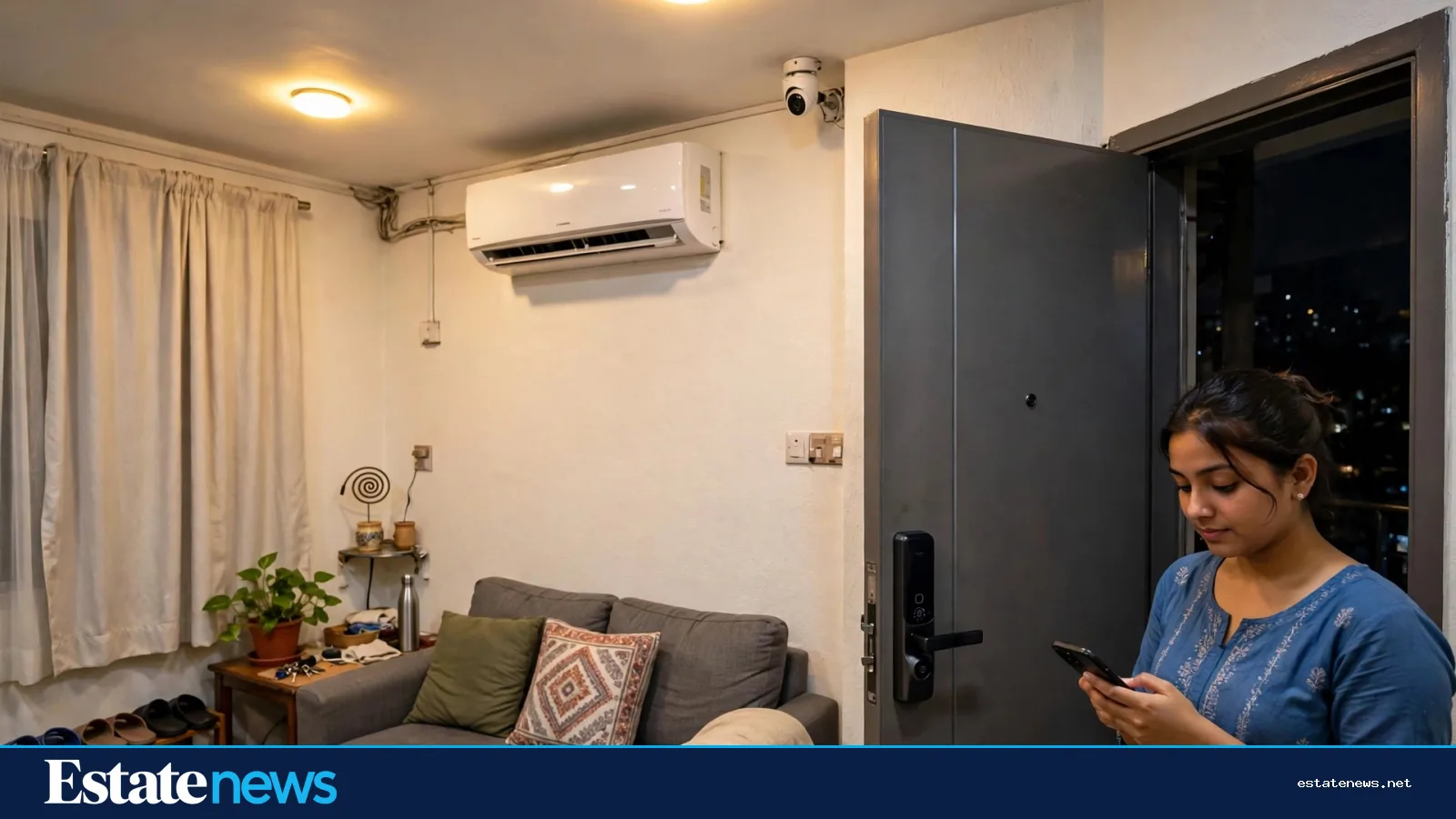
Walk through any new apartment block in Mirpur, Uttara or Bashundhara these days and the sales pitch will sound familiar: app-controlled lights, a video doorbell, a voice assistant in every room. The word "smart" is doing a lot of heavy lifting. In a Dhaka flat, where the real problems are heat, dust, power cuts and a shared building full of strangers, only some of that technology earns its keep.
The honest test is simple. Does it save money every month, does it make the home materially safer, or does it keep working when the power and the internet do not? If the answer to all three is no, it is a gadget, not an upgrade.
Start with cooling, because that is where the bill lives

Air conditioning is the single largest contributor to a typical urban household's electricity consumption in Bangladesh, accounting for nearly three-quarters of it, according to reporting in The Daily Star in April 2026. That is why the smartest money in a Dhaka flat is spent on cooling, not on lighting scenes.
An inverter air conditioner with app control and scheduling is worth it for one practical reason: it stops the machine running in an empty room. The Daily Star reported that smart-controlled inverter units certified by Bangladesh University of Engineering and Technology (BUET) tests could cost as little as Tk 2.19 per hour in Eco-mode, and cited global data suggesting smart thermostats can cut cooling bills by around 15 per cent by learning occupancy and weather patterns. Those are reported test and global figures, not a promise for any particular flat — a top-floor flat with an uninsulated roof slab will still cost more to cool than a shaded middle floor, whatever the machine.
The cheaper wins cost almost nothing. Set the thermostat to 24–26°C rather than 20–22°C, seal door gaps, use blackout curtains against the afternoon sun, and service the unit before summer. In Dhaka's heat, a well-sealed room matters as much as the brand on the wall.
Security: buy the lock and the camera, skip the showroom
Security is the second category that genuinely pays. A smart lock with temporary guest codes means the caretaker, the cleaner or a visiting relative does not need a copied key. A video doorbell and a door or window sensor tell you, on your phone, who is at the door and whether a window has opened while you are out. For families who travel, or for non-resident owners letting a flat sit empty, that visibility is the point.
But the sticker price is not the whole price, as The Daily Star's homeowner guide to smart security set out in detail. For traditional wired systems, installation runs Tk 500 to Tk 1,000 per camera, extra Cat6 cabling costs Tk 20 to Tk 45 per running foot, and PVC casing to protect wiring from moisture and rodents adds Tk 15 to Tk 30 per foot — often Tk 1,500 to Tk 2,000 extra before the first camera is even live. For Wi-Fi setups, the hidden cost is a compact UPS for the home router, priced between Tk 1,500 and Tk 3,000. Without it, the guide notes, a power cut takes every smart camera dark at exactly the moment you most want it working.
That is the practical rule for Dhaka: budget for backup power before buying more cameras. A small UPS for the router, a lock that still opens with a physical key or code when the Wi-Fi is down, and a camera with local storage so a lost connection does not mean lost footage. Any system that fails completely during load-shedding is a liability dressed as security.
Water, leaks and the unglamorous sensors
The third category worth paying for is the least photogenic: water. A leak sensor under a washing machine or near a bathroom wall, and a simple automatic shut-off habit for the rooftop pump, can prevent the kind of slow damp damage that ruins paint, warps doors and starts arguments with the flat below. Smart plugs, too, earn their place: they let you schedule a water heater or an iron, and they show which appliance is quietly eating power.
None of this needs a single-brand ecosystem. In fact, a single-brand ecosystem is often the trap. Devices that only talk to one company's app become expensive ornaments when that company changes its app, drops support, or prices its subscription in dollars. Prefer devices that work over standard Wi-Fi, keep a manual override, and let you export or view footage without a monthly fee.
What is mostly gadgetry
Voice-controlled curtains, colour-changing bulbs in every room, a fridge that announces its contents, a mirror that shows the weather — all of these are pleasant, and none of them changes the cost of running a home or its safety in a meaningful way. They also add failure points: another app, another password, another device that stops working after a software update.
The same caution applies to anything sold as "AI-powered" without a plain explanation of what it does. If the seller cannot say, in one sentence, how many taka or how many hours it saves, treat it as decoration and price it as decoration.
A sensible order of spending
For a typical Dhaka flat, the order that makes sense is:
- First, cooling and sealing: an inverter AC with scheduling, door seals, curtains, and a pre-summer service.
- Second, security with backup: a smart lock, a video doorbell, one or two cameras, and a router UPS.
- Third, water and power awareness: leak sensors and smart plugs on the biggest loads.
- Last, and only if the budget remains: lighting scenes, voice control and the rest of the showroom.
Renters should be more cautious still. A lock or a camera that cannot move with you, or that a landlord will not allow you to install, is money left in someone else's flat. Portable devices — a plug, a standalone camera, a sensor — travel. Drilled-in systems do not.
Dhaka's smart-home market is growing, and prices have genuinely fallen. That is good news, but it makes the judgement call harder, not easier. The flats that benefit most are not the ones with the most devices. They are the ones where every device answers a real Dhaka problem: heat, a power cut, a stranger at the door, or a leak no one noticed. Buy for those four problems first, and the rest is optional.
Follow Estate News on Facebook for daily property, market and money updates: https://www.facebook.com/profile.php?id=61593817347872