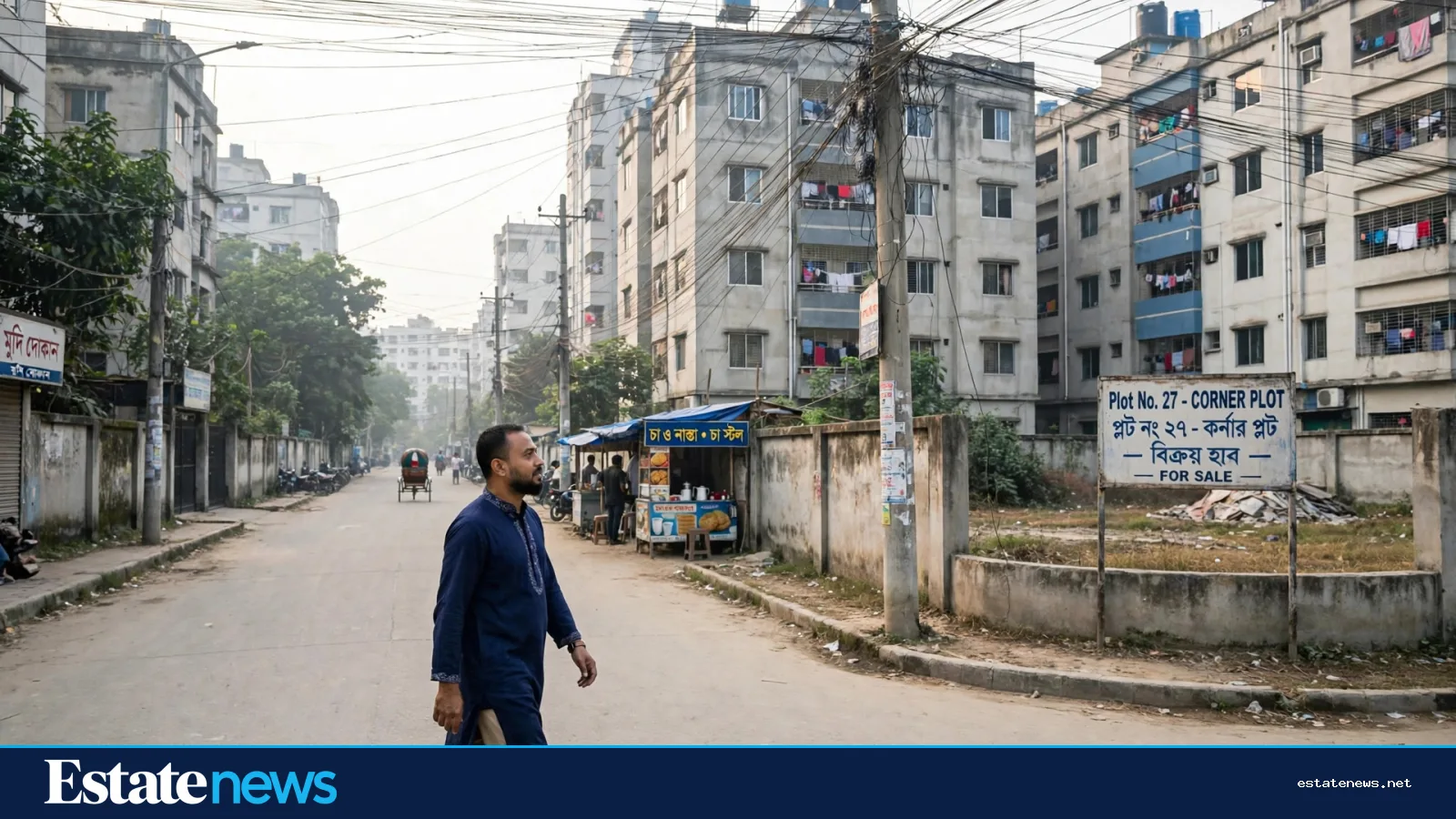
The lane is wide enough for two cars to pass without folding their mirrors in, and that alone tells a visitor something about where he is. A plot buyer walks it in the morning, past boundary walls and half-built houses, past a tea stall where masons drink from small glasses before the day's work. He stops at a corner plot and looks down the road toward the next block, where a crane stands over a new apartment frame. The plot was open field not so long ago. Now it has a number, a road and a price.
This is Bashundhara Residential Area, on Dhaka's eastern edge, and the company behind it is Bashundhara Housing, the real-estate arm of Bashundhara Group. The neighbourhood is Dhaka's largest private residential area, built on land plots sold to buyers who then built their own houses or sold on to developers. That model, land first and buildings second, shaped everything about the place: its wide roads, its mix of finished homes and empty plots, and the way it grew in stages rather than arriving all at once.
Asking prices for flats in Bashundhara R/A now sit at a median of Tk 9,865 per square foot, according to a Pbazaar sample of public sale listings from 8 November 2026. That is an asking price, not a transacted price, and it sits well below the asking medians of Gulshan and Dhanmondi, both Tk 20,000 per square foot in the same sample. The gap is the point. Bashundhara R/A was never sold as the most expensive address in Dhaka. It was sold as the largest one, with room to grow.

A neighbourhood drawn on open land
Most of Dhaka grew the other way round. Old neighbourhoods filled in house by house, lane by lane, until the city ran out of space and started building upward. Bashundhara R/A began with a plan and a large stretch of land, and the plots were laid out before the houses arrived.
That order of building left its mark. The roads are wider than in the older parts of the city. The blocks follow a grid that a newcomer can learn in a day. There is space for a mosque, a school, a market and a playground to be fitted in as the population grows, rather than squeezed in after the fact. None of this guarantees a good neighbourhood. It gives one a better chance than a place that was never planned at all. The patchwork is still visible, a finished house beside an empty plot beside a building under construction.
The 300-foot road and the pull east
The Purbachal link road, known across Dhaka as the 300-foot road, runs beside Bashundhara R/A, and it changed what the neighbourhood could be. A wide, fast road east out of the city gave residents a direct route toward Purbachal and the airport corridor, and it gave the area a spine that older neighbourhoods never had. Commuters who once measured a journey in hours through congested streets could now measure it in minutes on an open stretch of tarmac.
A road does not raise prices by itself. What it does is change who will consider living somewhere, and a wider pool of buyers steadies a market.
The pull east is still under way. Purbachal plots or Dhaka flats: land versus apartment, and the choice behind it remains an open question for many buyers, and Bashundhara R/A sits in the middle of it, close enough to the old city to feel connected and far enough east to feel like new ground. That in-between position is the neighbourhood's commercial strength and its planning challenge at the same time.
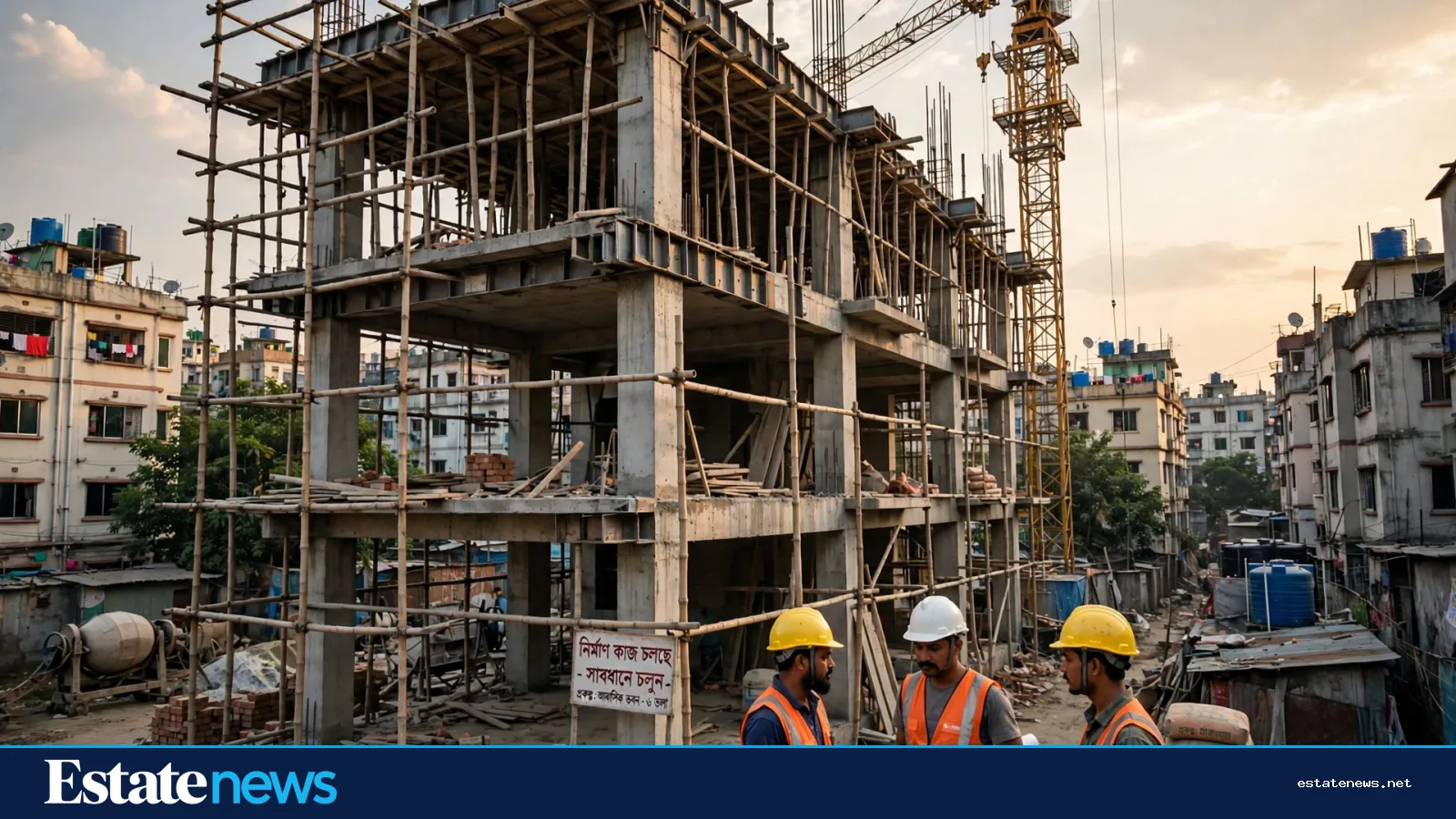
Riverview and the bet across the river


Bashundhara Housing did not stop at one large neighbourhood. Bashundhara Riverview, its land project in Keraniganj, carries the same plot-first idea across the Buriganga to the city's south bank. Keraniganj has long been Dhaka's workshop and warehouse district, a place of small factories and family homes pressed against the river, and a planned land project there is a different kind of bet from one on the eastern edge.
The logic is familiar. Land on the far side of a river costs less than land in the city centre, and a buyer who can wait for roads, bridges and services to catch up can buy space that would be out of reach closer in. Across the Buriganga: Keraniganj's south-bank homes find their buyers is a story still being written, and Riverview is one of its larger chapters. The risk is familiar too. A land project lives or dies on infrastructure arriving on time, and a buyer should check what exists on the ground today rather than what is promised for a later year.
What Tk 9,865 a square foot buys, and what it does not
The asking median of Tk 9,865 per square foot for Bashundhara R/A flats, from the Pbazaar sample of 8 November 2026, needs reading with care. It is a median of asking prices in public listings, not a record of completed sales, and individual flats will sit well above or below it depending on the building, the floor, the facing and the finish. A top-floor flat with a lake view and a new lift commands a different price from a ground-floor flat in an older block with a generator that fails in the monsoon.
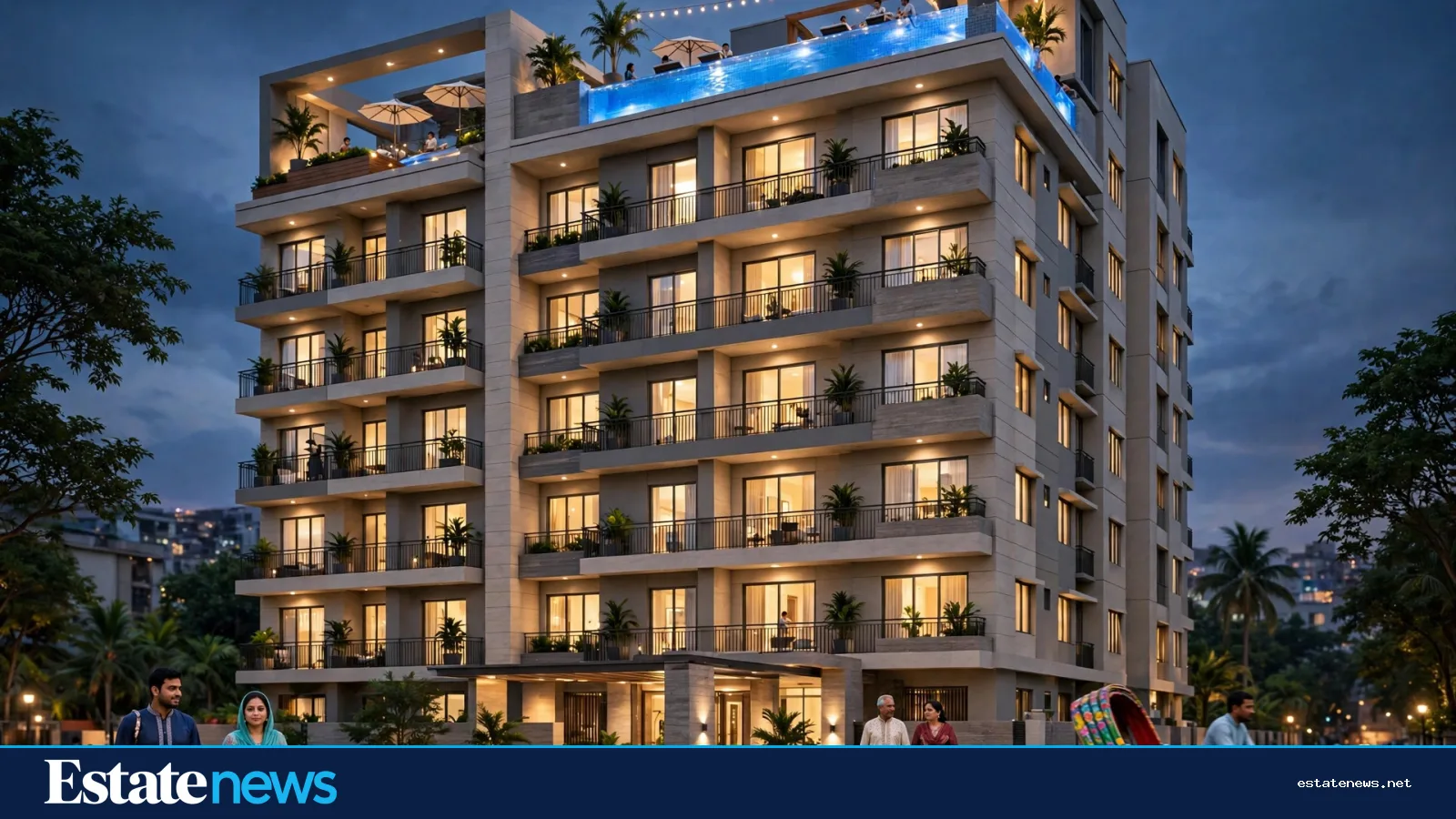
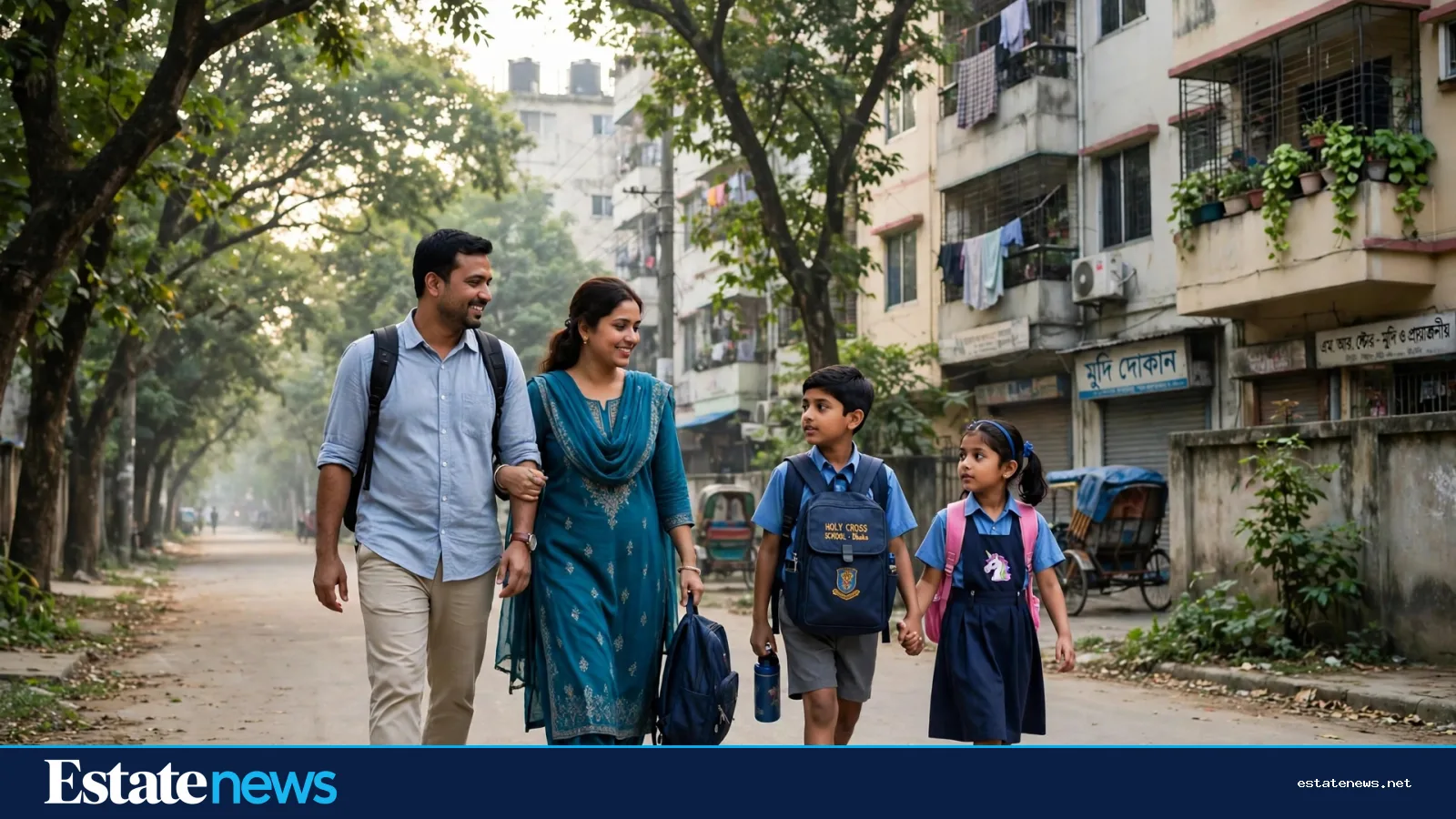
What the figure does show is the neighbourhood's place in Dhaka's price order. At roughly half the asking median of Gulshan and Dhanmondi, Bashundhara R/A is priced for the upper-middle buyer rather than the top of the market. That buyer gets space, wider roads and newer buildings, and gives up the central location and the established street life of the older premium areas. For a family that works east of the city, or one that wants a larger flat for the same money, the trade is often worth making.
Buyers should still do the arithmetic themselves. A per-square-foot figure means little without the total: the flat's size, the registration cost, the service charge, the parking and the gas connection. Bashundhara Residential Area: a planned neighbourhood learns to live like a small city looked at how the area functions day to day, and the lesson from that walk is the same as the lesson from the price list. The numbers describe a neighbourhood. They do not describe a single flat.
Buying a plot, not a promise
A plot is a simpler purchase than a flat in one way and a harder one in another. There is no building to inspect, no lift to test, no plaster to tap. There is only paper, and the paper has to be right. A buyer should check the deed chain, the mutation record, the approved layout of the project and whether the plot's boundaries on the ground match the boundaries on the map. A lawyer who knows land records in Dhaka should read the file before any money changes hands, and the buyer should walk the plot with that lawyer, not just look at it from a car window.
The same caution applies to flats built on Bashundhara plots by other developers. The neighbourhood's name is not a guarantee of any single building, and the RAJUK approval, deed of agreement, handover history and service charge terms need the same checking they would need anywhere else in the city.
The plot buyer on the morning lane will make his decision the way most Dhaka buyers make theirs, by weighing a price against a place. He has seen the road, the crane, the tea stall and the guard at the gate. He knows the flat price in the area and he knows what the same money buys closer to the centre. What he is really weighing is time: whether a neighbourhood that grew plot by plot on open land will keep growing into the small city it already resembles, with schools and markets and buses filling in the gaps between the houses.
Bashundhara Housing built the ground for that bet. The buildings on it belong to hundreds of owners, and the neighbourhood they add up to is now the largest private residential area in Dhaka. Its next chapter will be written the same way the last one was, one plot at a time, by the people who choose to live there.