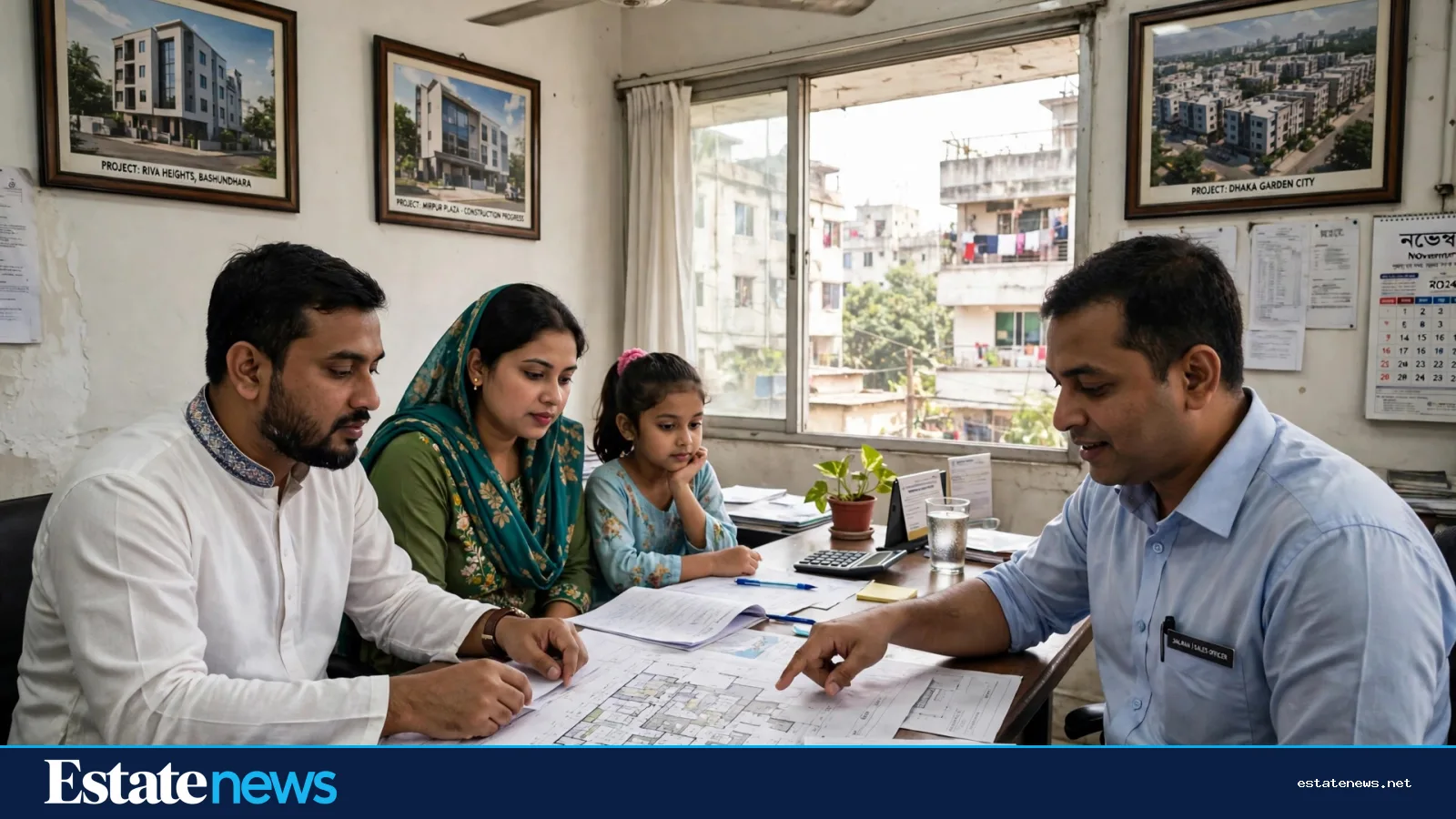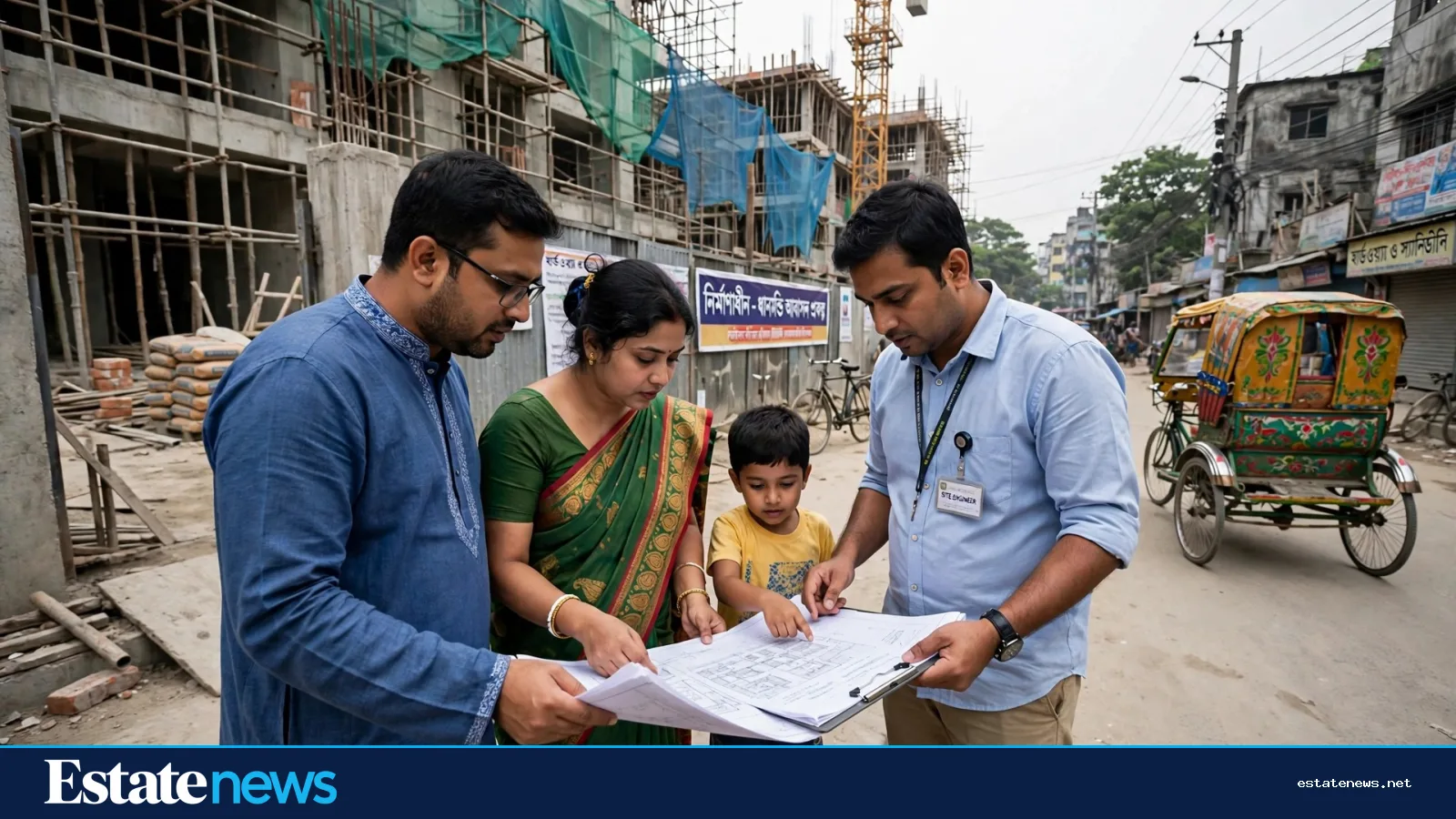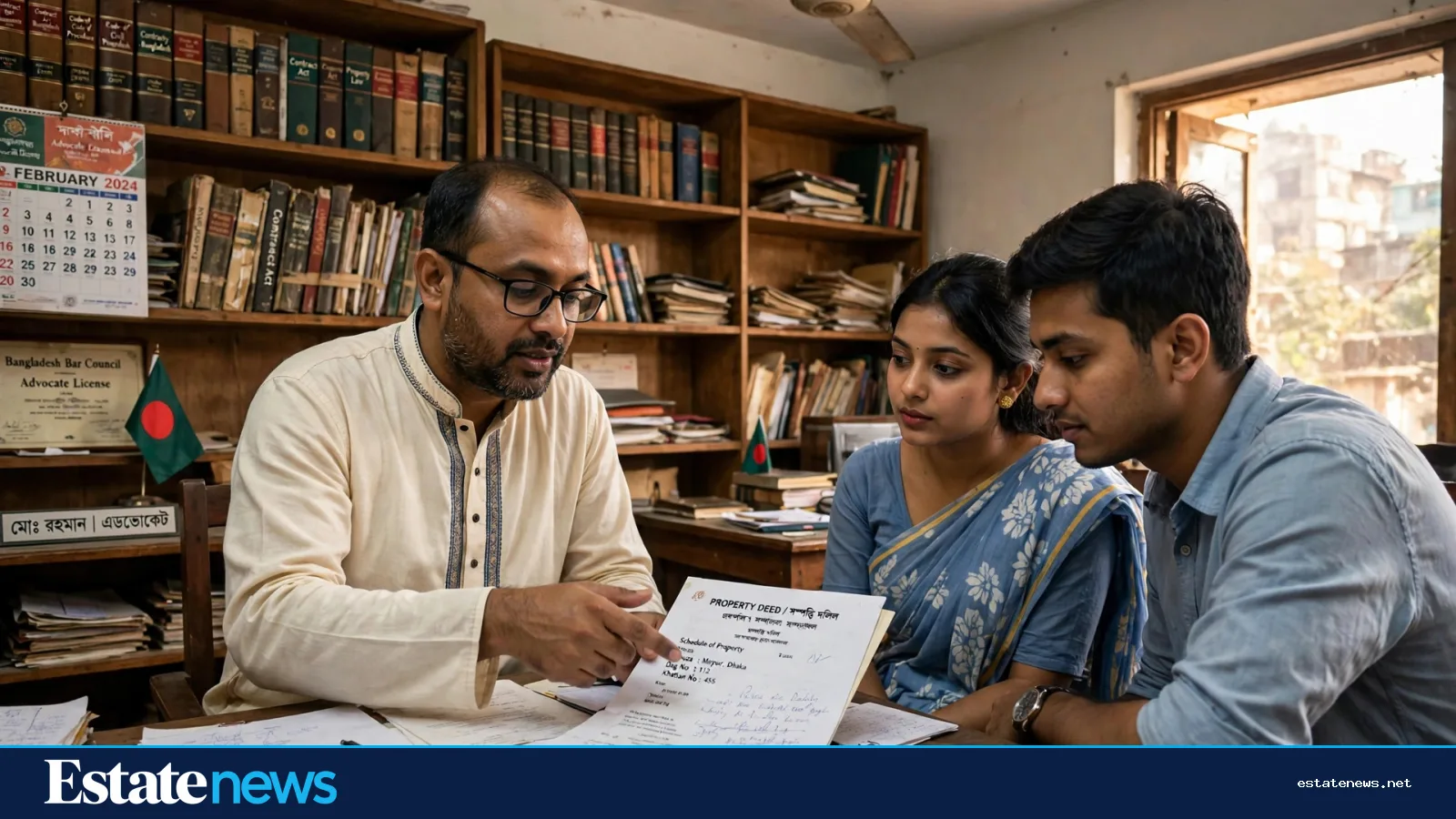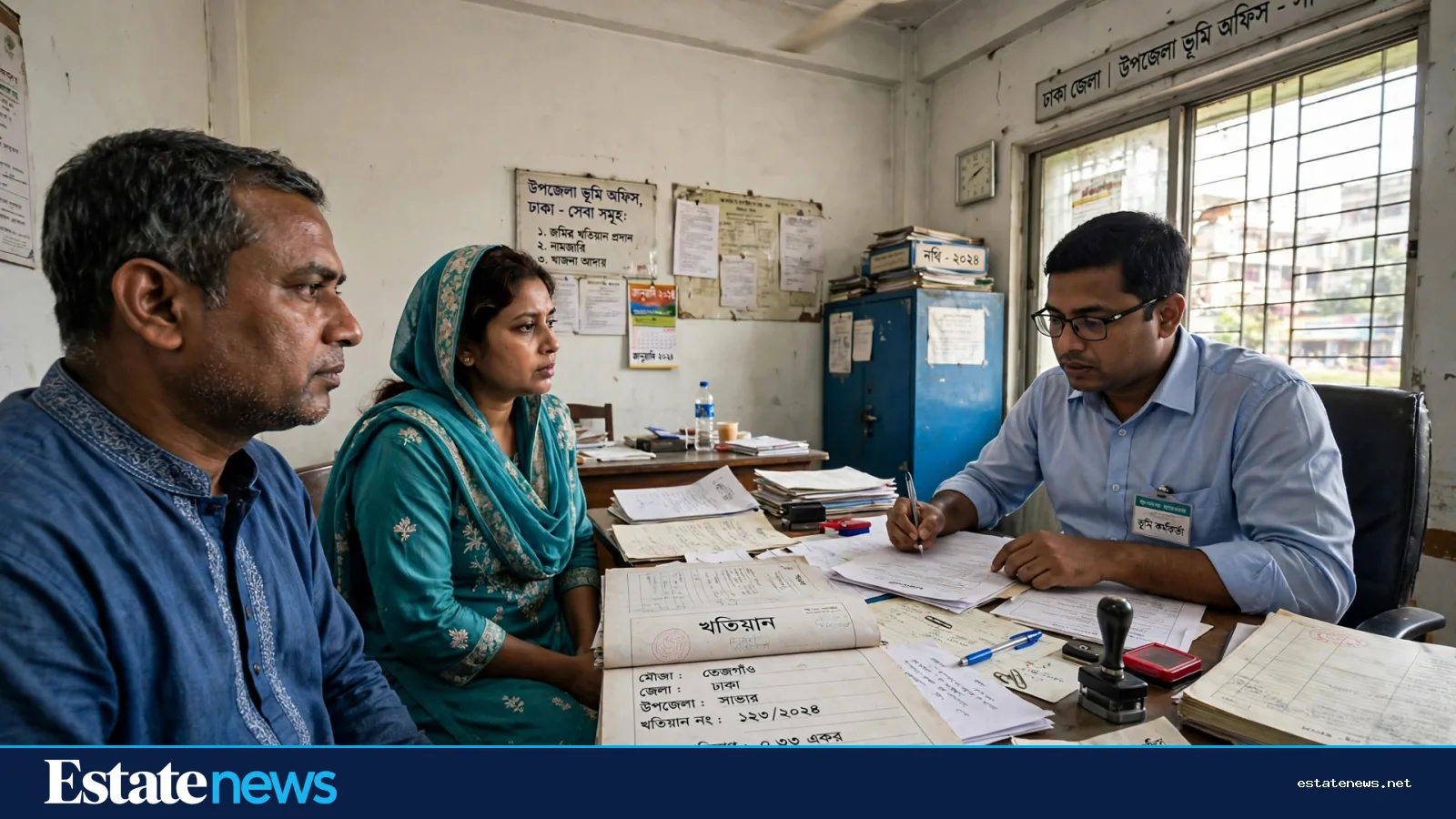
In Dhaka and in the districts, some of the hardest land disputes start with a simple sale. A man offers a plot his father left behind. The price sounds fair. The neighbours nod. Months later, a brother or a sister appears with a claim, and the buyer learns that the seller never owned the whole plot alone.
Inherited land works differently from land bought in a single transaction. Ownership passes to several people at once, and each of them holds a share. A buyer who deals with only one heir is buying a share of a problem, not a plot.
The first paper to ask for is the inheritance certificate, known as the warish certificate. It is issued by the Union Parishad chairman, the municipality mayor or the city corporation ward councillor for the area where the deceased lived. It lists the legal heirs. Without it, there is no reliable way to know who must agree to a sale.

Next comes the record of rights, the khatian. The deceased owner's name should appear in the record, in the CS, RS or BS survey as it applies to that mouza. A buyer should read the khatian line by line: the mouza, the khatian number, the dag numbers, the area and the share of each holder. If the record still shows a grandfather's name two generations back, the chain is incomplete.
Then comes mutation, called namjari. This is the step that moves the land from the deceased owner's name into the heirs' names in the government record. A registered deed on its own does not do this. Mutation is what lets the heirs pay land development tax in their own names, and since the Land Crime Prevention and Remedy Act 2023, a person without the latest operative khatian and proof of up-to-date tax cannot sell, gift or register a deed for the land.
Joint mutation or separate mutation
The Ministry of Land has clarified how this works for inherited land, most recently in a circular reported in October 2026. Heirs have two routes, and the choice shapes everything that follows.
All the heirs can apply together for a joint mutation. They submit the inheritance certificate, and the Assistant Commissioner (Land) opens a mutation case and records each heir's share against the total holding of the deceased. No distribution deed is needed for this route. The ministry has told land offices not to reject joint applications only because no distribution deed is attached.
The second route is separate mutation. Here the heirs first agree how the land is divided, who takes which plot or which part of a plot, and then execute a registered distribution deed. Each heir then applies separately, and each gets a separate record in their own name. This route must follow Section 143(B) of the State Acquisition and Tenancy Act, 1950. It is the route to take when heirs want separate tax accounts and separate holdings.


A buyer should know which route the sellers took. If the land is still in joint mutation, every heir named in the record must consent to the sale. One heir cannot sell the whole plot. If the land went through a distribution deed, the buyer should read that deed and check that the seller's allotted portion matches the dag numbers and area in the mutation khatian.
The paper trail, in order
Start with the death certificate of the previous owner and the inheritance certificate. Then collect the khatians, the mutation papers and the land development tax receipts, known as dakhila, in the deceased owner's name and then in the heirs' names. Ask for the deed chain too: how the deceased acquired the land, and whether that title was itself mutated. A gap anywhere in that chain is a warning, not a detail to wave away.
The application for mutation is now made largely online, through the government's e-mutation system at mutation.land.gov.bd. The Union Land Office verifies the file, the Assistant Commissioner (Land) hears the case where an objection is raised, and the applicant pays the official fee and downloads the updated mutation khatian and the QR-coded duplicate carbon receipt. The official fees for mutation total Tk 1,170. Land offices do not take cash for this; applications and payments run through the portal and the Bhumi app.
When the family cannot agree
Not every family agrees. Where heirs cannot settle a division among themselves, the law leaves them the civil court, where a partition suit can divide the property. That takes time, and a buyer should not pay for land that is heading into such a case. A plot under a partition suit is not a bargain. It is a case with a price attached.
What to do before money changes hands
Get the papers checked by a lawyer who works on land matters, and give that lawyer the full set, not a selection. Cross-check the dag numbers on the ground with the mouza map where possible, and speak to the Union Land Office about the holding. Pay land development tax only after the mutation is in the right names, and keep every receipt.
Read more: the guide to "buying a plot in Dhaka's new sectors" and the "registration-cost calculator" for the fees that follow a purchase.