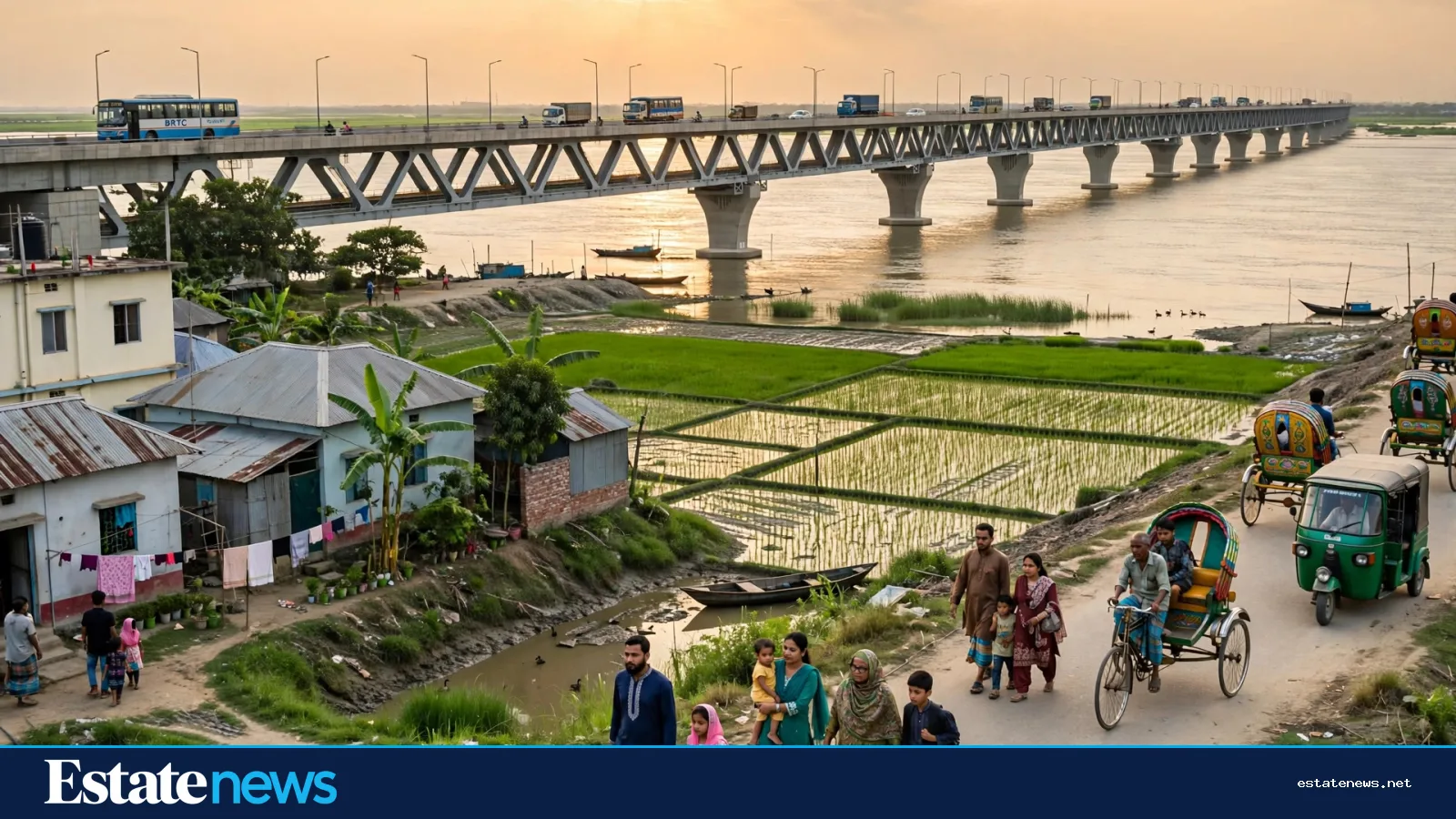
For generations, the Padma River set the terms of life in the south-west. A family in Faridpur or Barisal planned a trip to Dhaka around a ferry queue. A business in Khulna sent its goods the long way round, through the Jamuna Bridge. The Padma Multipurpose Bridge changed that geography in a single day. Inaugurated on 25 June 2022, the 6.15 km road and rail bridge connects Louhajang in Munshiganj with Zazira in Shariatpur, and through them links 21 south-western districts to the capital by road.
The bridge did not arrive alone. The Dhaka-Mawa-Bhanga Expressway runs from the capital to the bridge and on to Bhanga in Faridpur, and the rail link followed. The Dhaka-Bhanga section of the railway opened in October 2023, and the full line to Jashore opened to traffic on 24 December 2024. Two new trains, the Jahanabad Express and the Ruposhi Bangla Express, now run the Dhaka-Jashore-Khulna-Benapole section through the bridge. The railway cut the Dhaka-Khulna journey to about four and a half hours, against about nine and a half hours by the old Jamuna Bridge route, and the Dhaka-Jashore trip to about three hours. A family that once needed a full day to reach Khulna can now go and return with time to spare.
Houses follow the road

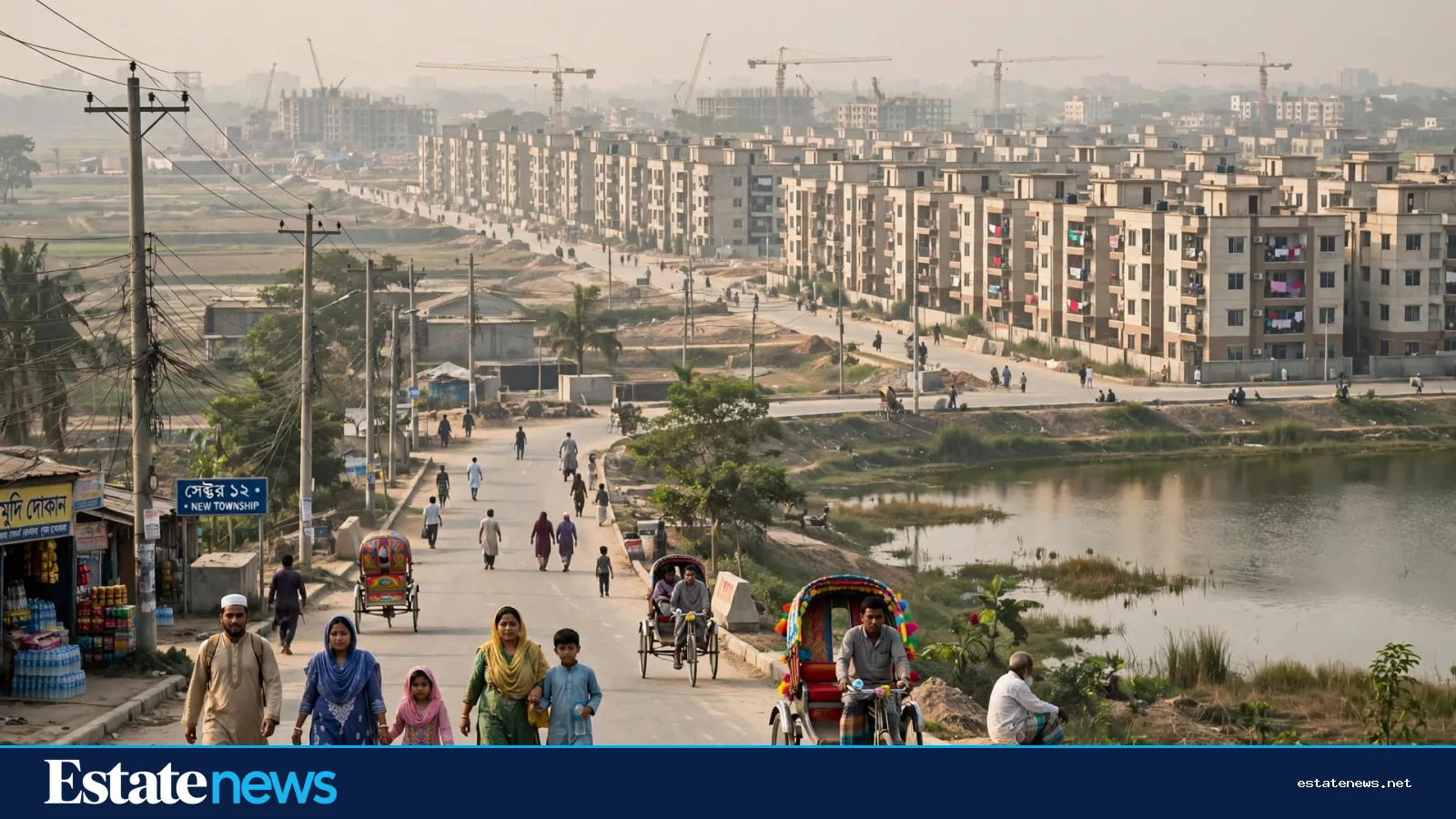
Housing has followed the corridor. The Daily Star reported in December 2024 that the housing sector had grown rapidly along the Dhaka-Mawa-Bhanga Expressway after the bridge opened, with land developers and individual buyers building homes on both sides of the road. TBS reported in June 2023 that at least 200 housing projects had come up along the expressway, and cited REHAB as saying builders had invested nearly Tk 2 lakh crore in them. The projects offer plots, flats, ready houses and duplex villas, and the buyers are often people from the south who want a home near Dhaka, close to their roots.
The largest of the named projects sits in Sirajdikhan, in Munshiganj. Amin Mohammad City, spread over 803 acres and divided into seven sectors, offers plots of 2.5, 3, 5, 10 and 20 katha, with per-katha prices reported at Tk 15-30 lakh depending on location in 2023. The Daily Star's December 2024 report put the approximate price of land along the road at Tk 15-16 lakh per katha, with a 3-katha plot at about Tk 45-50 lakh on a payment plan of five to seven years. Those are 2023 and 2024 figures, not today's prices, and they describe one corridor at one moment. What they show is the shape of the demand: plots and houses for families who want space, greenery and a road home, at sums far below a Dhaka flat.


The pull is not only about price. Sheltech's head of sales told The Daily Star that buyers from southern Bengal prefer places near Dhaka, particularly around Dhaka-Mawa, because the area feels familiar and the commute has shortened. The corridor towns, Mawa, Jajira, Bhanga, Faridpur, offer something Dhaka's centre no longer can: a plot large enough for a house with a yard, and air that does not smell of traffic.
What a buyer should check before following the crowd
A corridor is not a guarantee. The first question is the same as anywhere else in Bangladesh: who owns the land, and what do the papers say. Trace the deed chain, match the khatian and the dag number, and confirm mutation in the seller's name before paying, and read the deed of agreement slowly before signing it.
The second question is approval. A housing project along the expressway needs its own planning approval, and a buyer should ask to see it. The third is the ground itself. Much of the corridor is low land beside a river, and a plot that looks fine in the dry season can sit under water in the monsoon. Visit in the rain if you can, ask the neighbours about waterlogging, and look at how high the plinth of the nearest house stands. The fourth question is the commute, counted honestly. A road that takes an hour on a quiet morning can take three on a festival evening. Try the journey at the hour you would actually travel. And the fifth is services: gas, water, electricity, a school and a clinic within reach. A house with a view and no water connection is a weekend retreat, not a family home.
The bridge gave the south-west a road and a railway. It also gave its families a choice they did not have before: a home near the capital without living inside it. That choice is real, and it is growing. It still deserves the same slow checks as any purchase in Dhaka, because the distance from the capital is shorter now, but the cost of a mistake is just as large. The Keraniganj story on the other side of Dhaka shows the same pattern: a river crossing opens, and homes follow, but only the careful buyers keep what they buy.