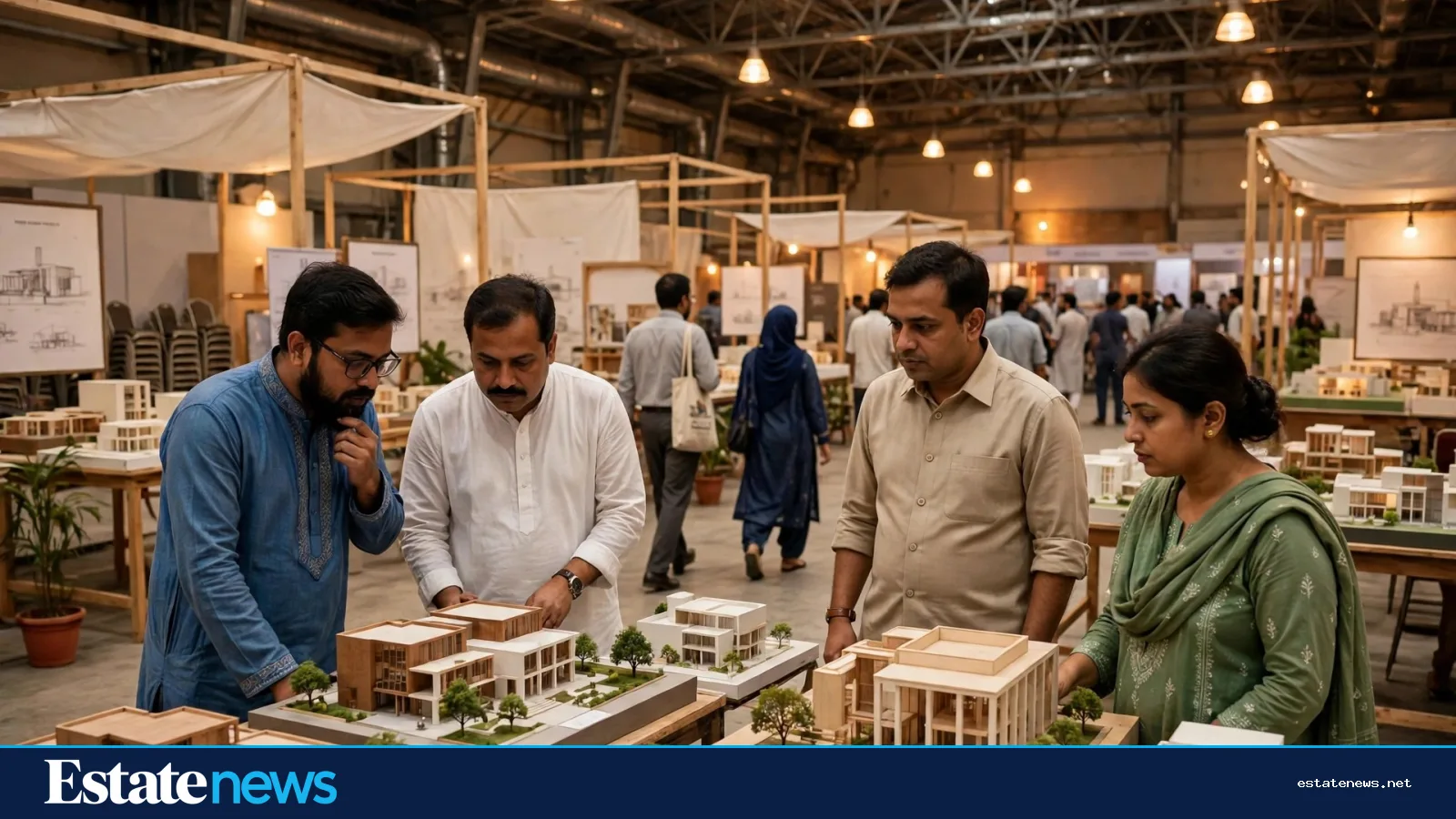
The first Delta Award has its winners. Architect of the Year is Md Didarul Islam Bhuiyan, and a posthumous Lifetime Achievement award went to the late Raziul Ahsan Khandaker. The names were announced at a ceremony on Tuesday 10 November at ICCB Hall 2, and the awards set a marker for what Bangladeshi architecture is now expected to be: rooted in place, honest about climate, and useful to the people who live with the buildings.
Seven main awards and seven honourable mentions were given in all. The awards are organised by ARCHICONNECT and CEMS-Global, the same team behind the building expos that open at the ICCB today, and the Delta Festival of Architecture runs alongside them from 12 to 14 November. For a flat buyer or a builder, the festival is the practical side of the ceremony: the winning projects are on show, and the ideas behind them can be seen up close.
Two projects shared the Sustainability and Resilience award, and the pairing says much about where the profession is heading. Kobita Kunjo, by Jubair Hasan Architects, and Rupgaon, by the practice Perceive, both won the category. An honourable mention went to Interim House, by Roofliners Studio of Architecture. The category rewards buildings that answer heat, rain and flooding rather than fighting them, and the two winners take different routes to the same end: one through careful attention to light, air and planting, the other through a plan that lets a building breathe in a climate that punishes sealed boxes.

Buildings that belong where they stand
The Contextual and Social Impact award went to two projects that could not exist anywhere else. Meer Manzil, by the practice Indigenous, and Chawk Bazar Public Spaces and Park, by FORM.3 Architects, shared the honour. The Chawk Bazar project is the one most Dhaka residents will understand at once. Old Dhaka's Chawk Bazar is a dense knot of trade, food and crowds, and carving public space out of it takes patience and a willingness to listen to the people who use the streets every day. A park there is not decoration. It is room to breathe in a part of the city that has very little of it.
Honourable mentions in the same category spread across the city and its building types. ARA's Office in Hazaribagh, by Atelier Robin Architects, sits in the old tannery district, where a workplace must answer to a neighbourhood in transition. The Stha-Kalpa Office and the Al Falah Jame Mosque, by DWm4 Architects, show the range of what a single category can hold, from a place of work to a place of prayer. The RAJUK Kancha Bazaar, by Tarique Hasan and Associates Ltd, takes on the most everyday building of all, the neighbourhood market, and treats it as architecture worth doing well.


A scholar, a book, and a modernist to remember
The Scholar Award went to Adnan Zillur Morshed for his book "Shamsul Wares: An Architecture of Elemental Modernism". The book studies Shamsul Wares, one of the architects who shaped modern building in Bangladesh, and it matters because the country's best buildings are often used without being understood. A book that explains why a building looks the way it does gives the next generation of architects, and the next generation of buyers, a language for judging what is good.
The Lifetime Achievement award, given posthumously to Raziul Ahsan Khandaker, carries the same message in a different form. It honours a career spent building the profession itself, not only buildings. Awards usually look forward. This one looked back, and reminded the hall that today's winners stand on work done decades ago.
What the festival offers a buyer
The Delta Festival of Architecture opens today at the ICCB and runs to 14 November, alongside six expos covering building, real estate, power, solar, lighting and water. Entry to the expos runs 10am to 7pm daily, and the opening ceremony is at 11:00 today in the Seminar Hall. A buyer walking the halls will see the materials the winning architects used, from lifts and finishes to solar panels and water systems, and will hear the language of the profession spoken plainly: shade, ventilation, drainage, and the cost of getting them wrong.
Our preview of the six expos explains what is on and when. The Delta Award itself is new, and a first edition always carries a question: will it last? The quality of this first list suggests it has a chance. The winners are not a single style or a single firm. They are a house, a park, a market, a mosque and an office, spread across Dhaka and its neighbourhoods. That spread is the point. Good architecture in Bangladesh is not a luxury import. It is a response to this place, and the festival is where that response can now be seen, touched and argued over.