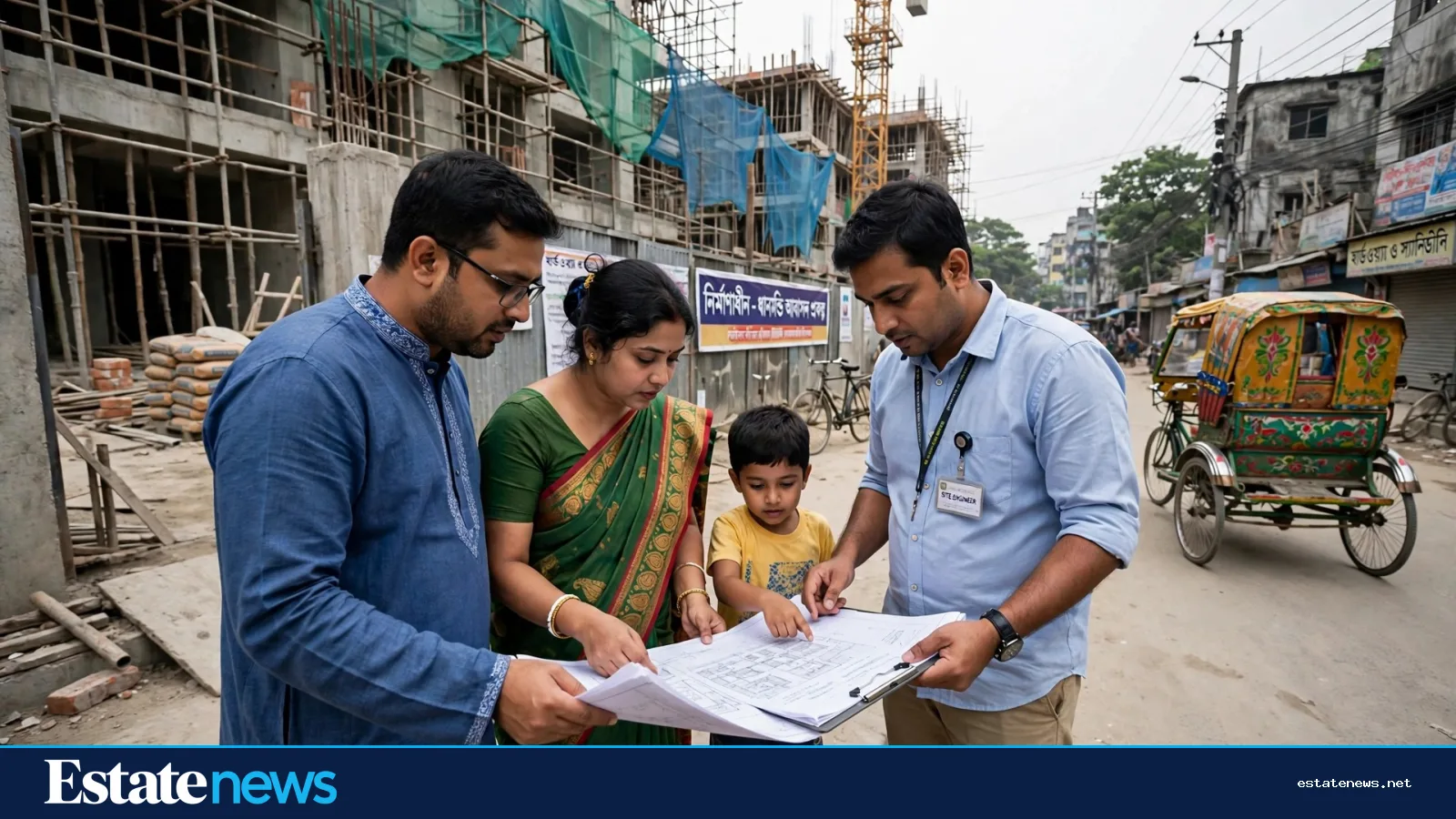
A flat in Dhaka is usually the largest purchase a family ever makes. The booking money usually goes in before the questions start. That order is backwards. A few hours of checking before the booking can save years of chasing a handover, a registration or a refund.
The developer is the first thing to check, not the brochure. Ask whether the company is a member of the Real Estate and Housing Association of Bangladesh, known as REHAB. The association was formed in 1991 and publishes a member list on its website, rehab-bd.org. A name on that list is a starting point, not a guarantee. It tells you the company belongs to the industry body. It does not tell you whether its last project finished on time.
That is why the next check matters more. Ask for the names and addresses of the developer's last two or three completed projects, then go and look at them. Walk through a finished building. Look at the lift, the staircase, the water pressure on an upper floor, the parking and the condition of the common areas. Speak to a resident if you can. Ask when the flats were handed over, and whether the owners received their registration papers without a fight.

The land papers come before the flat papers
Every flat stands on land, and the land has its own paper trail. Ask to see the title deed for the plot, and the earlier deeds behind it, going back 25 to 30 years. Lawyers call the earlier deeds the chain of deeds. Each transfer in that chain should have been registered. A gap in the chain is a question, not a detail to wave away.
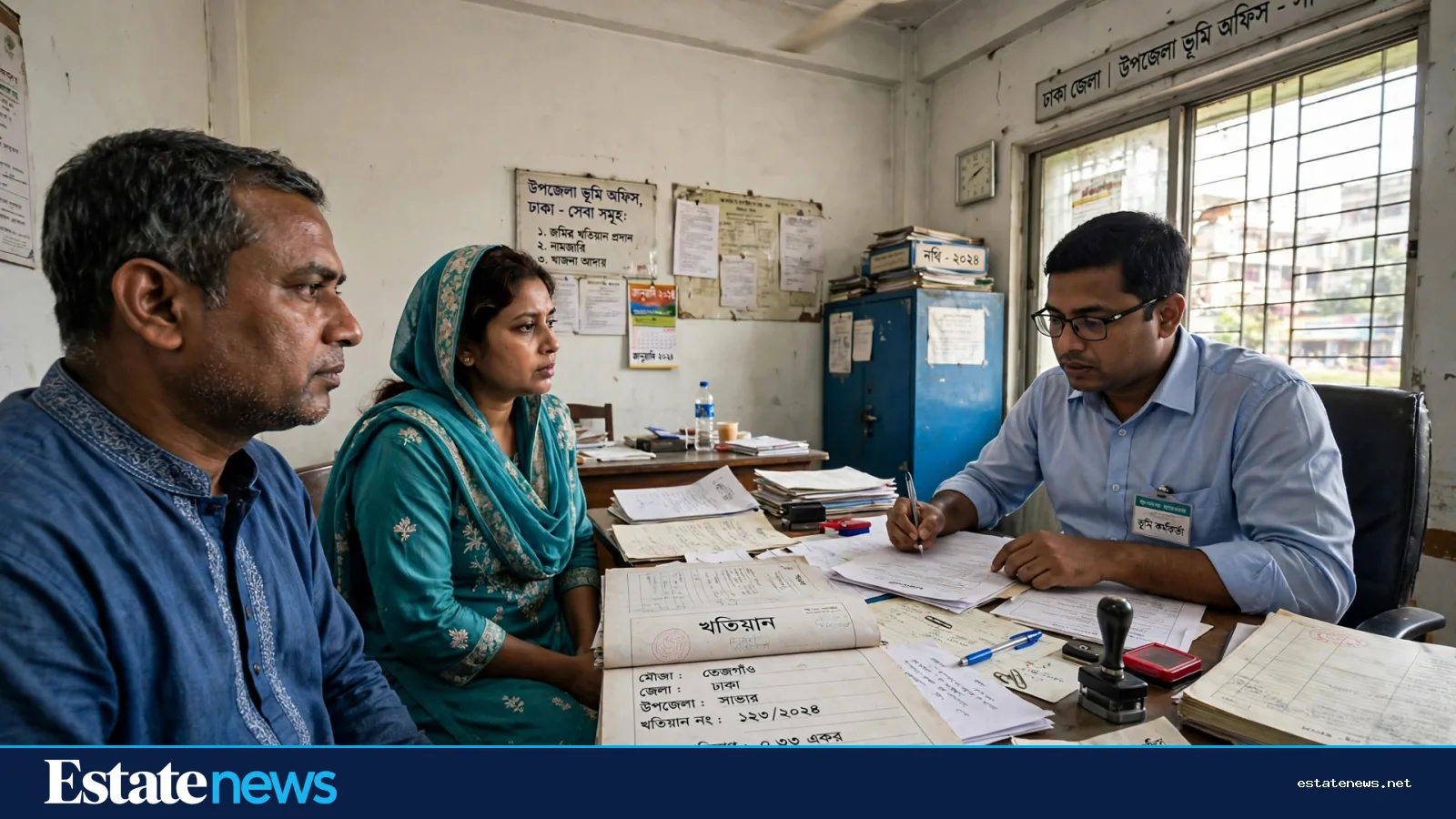
Match the deeds against the khatian, the record of rights for the plot. Bangladesh has several surveys, and the plot should be traced through them: CS, SA, RS and BS, or the city survey where it applies. The dag number, the khatian number, the mouza and the area of the plot should agree across every document.
Then ask for the mutation record. Mutation, or namjari, moves the khatian into the current owner's name, and the land office issues a duplicate carbon receipt, the DCR, for the fee. Without mutation in the seller's name, the owner cannot pass the title on cleanly. The same paper trail matters when the land came through a family: our guide to inherited land sets out the inheritance certificate and distribution deed every heir must agree on. Under section 52A of the Registration Act, the sub-registrar must see the seller's name in the latest record before registering a sale. Ask for the mutation khatian and the DCR, and for current land development tax receipts in the seller's name. A certified copy from the sub-registry office or the record room carries more weight than a photocopy handed over at a sales desk.


Check the approval, then check the building against it
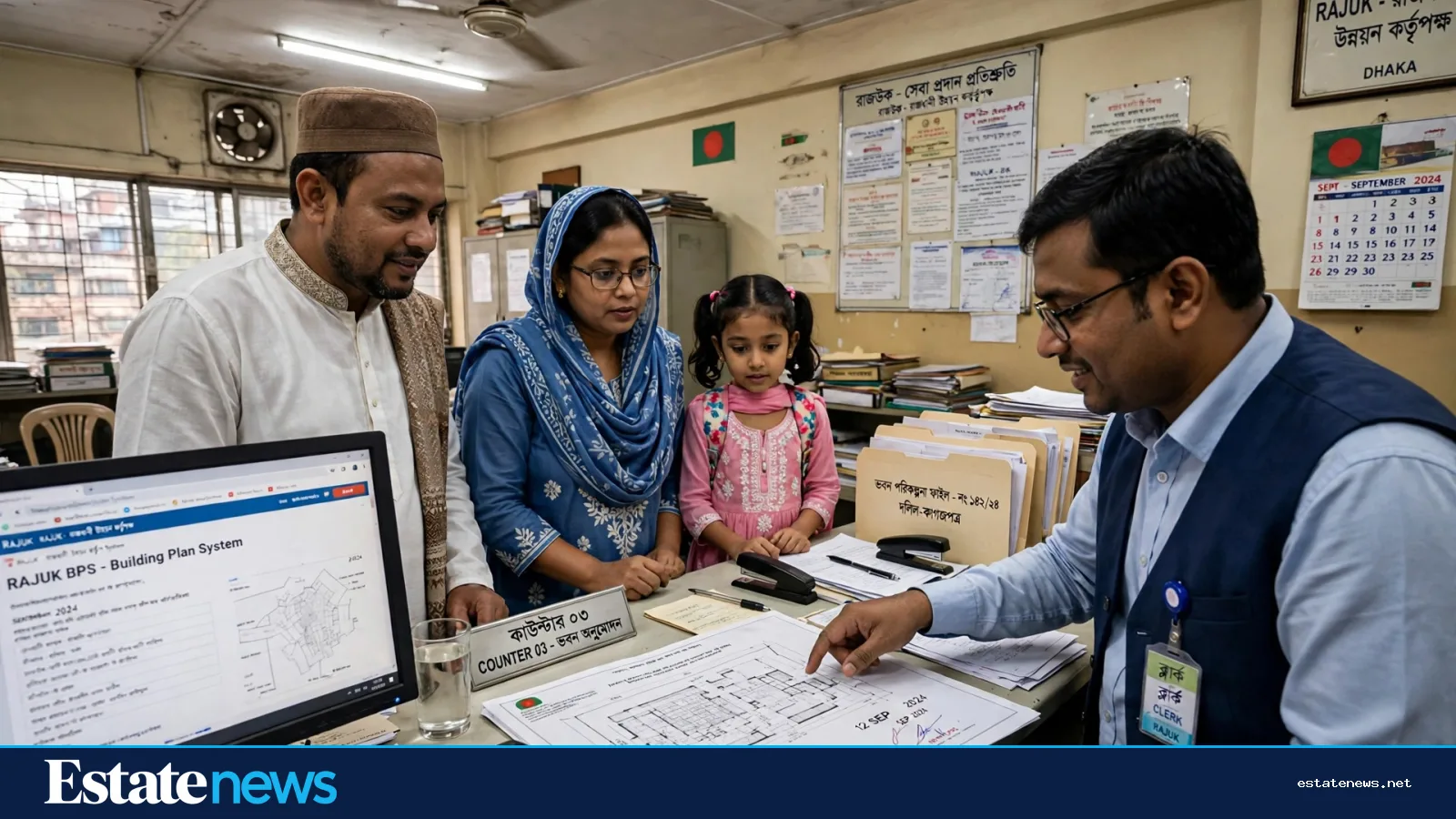
In Dhaka, a developer cannot legally build or market an apartment without approval from RAJUK, the Rajdhani Unnayan Kartripakkha. Ask for the approved building plan and the sanction letter. Our earlier guide to checking a RAJUK approval explains which documents to ask for and where to verify them. Read the sanctioned number of floors and the total number of flats. If the approval covers seven floors and the company is selling flats on the ninth, those top flats sit outside the approval, and they may never get separate mutation or utility connections on their own.
Approval on paper is only half the check. After construction, RAJUK issues an occupancy certificate confirming the building matches the approved plan. For a ready flat, ask whether the building has one. For a flat under construction, ask to see the planning permit and the construction permit, and ask at the RAJUK zonal office if anything is unclear. The developer should be able to show you the approval number without delay. Hesitation here is an answer in itself.
Where the project is a joint venture, one more paper matters. The developer builds on land owned by someone else, so ask for the registered power of attorney from the landowner and the joint venture agreement, which should say clearly which flats belong to the developer to sell and which belong to the landowner.
The payment schedule is a contract, not a sales pitch
Ask for the deed of agreement before you pay anything, and read the payment schedule inside it. It should say how much is due at booking, how much at each construction stage, and how much at handover. The deed of agreement is the document a buyer signs before the flat exists, so its clauses deserve a slow read. It should say what happens if construction runs late, and what happens if you need to withdraw. Get every promise in writing. A verbal assurance about a handover date, a finishing standard or a free fixture is worth nothing once the booking money is paid.
None of this is legal advice, and no checklist replaces a lawyer reading the title before you sign. What it does is put you in the room with the right papers in your hand. A developer that welcomes the questions is telling you something. One that rushes you past them is telling you something else.