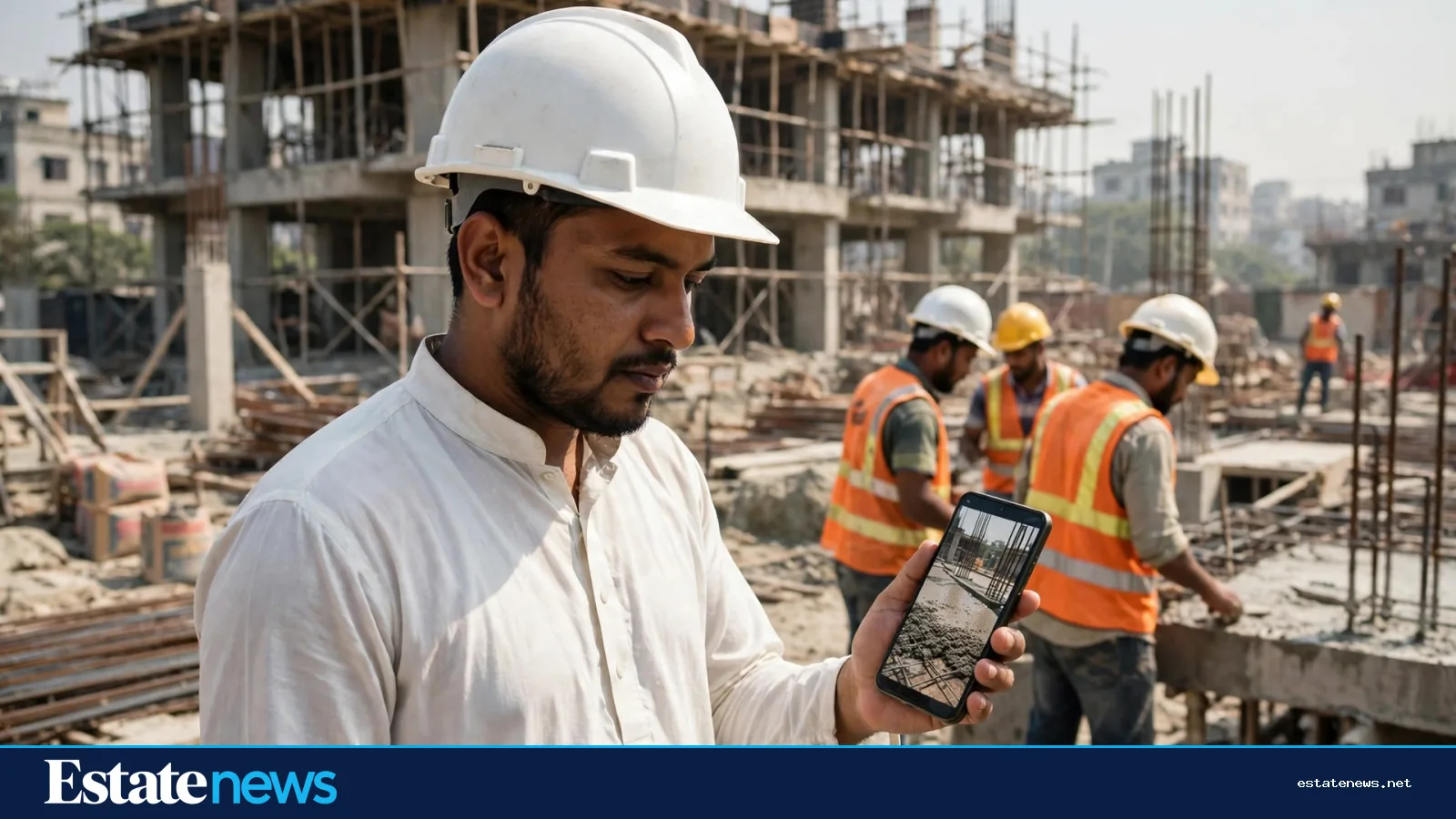
The concrete pump in Dhanmondi starts at nine in the morning. By ten, the site engineer has taken six photographs of the pour, the steel fixing and the curing water on the slab. By eleven, those photographs are in a WhatsApp group with the project manager, the developer's office and, in some projects, the buyers. A decade ago, that same information travelled by paper, by a weekly visit, or not at all. The phone has not changed the concrete. It has changed who sees it, and how fast.
Photos, groups and delivery logs
Daily photo updates are now the most common piece of site technology in Dhaka. A site engineer walks the floors with a phone, photographs the work, and sends the pictures to the office the same day. The office keeps them in a dated folder, and the folder becomes the project's memory. When a buyer asks what happened in March, the office can open March and show it. The practice is simple, and that is why it has spread. It needs no special software, only a phone, a data connection and a habit.

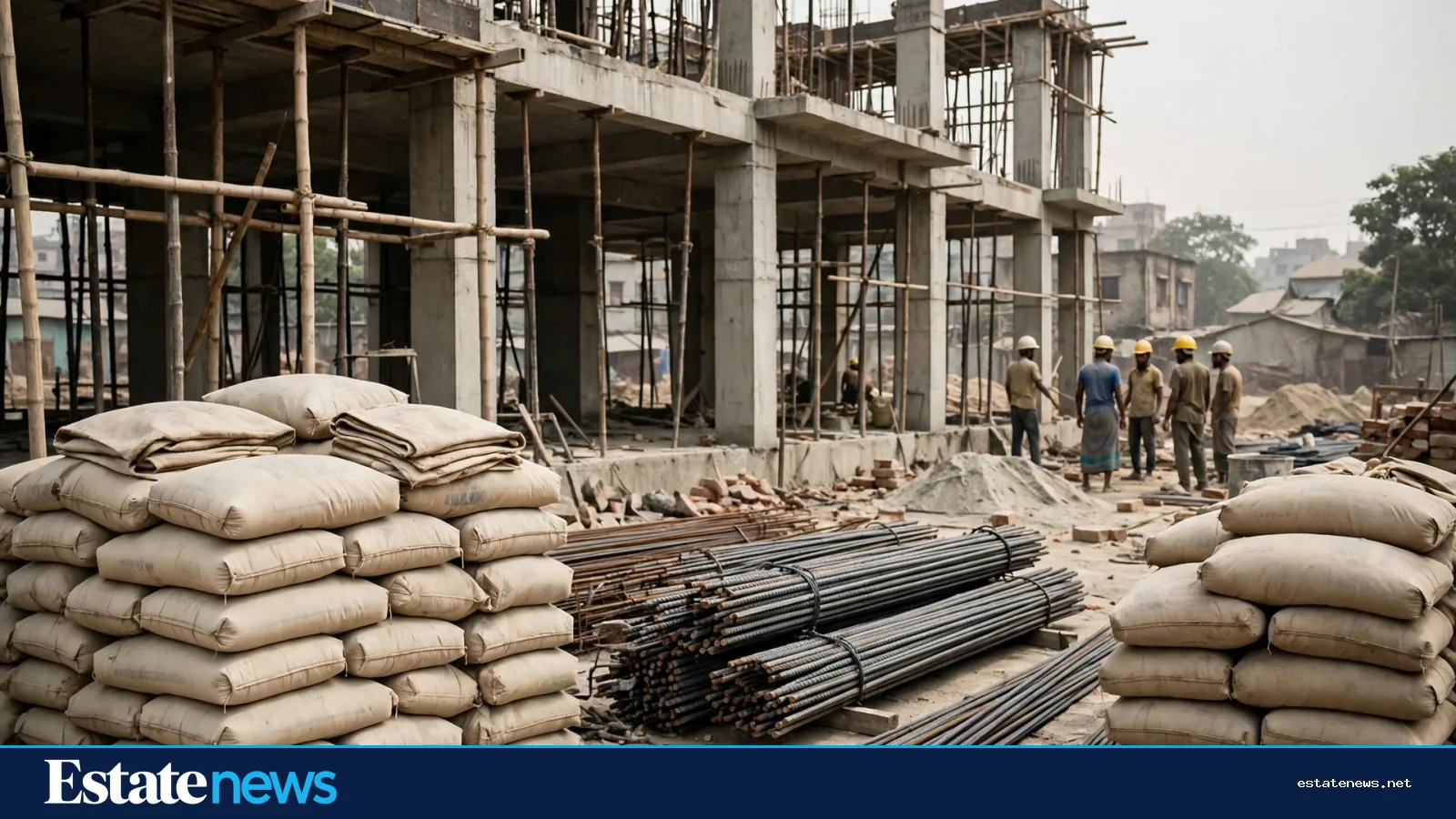
WhatsApp site groups sit beside the photographs. A typical project group has the site engineer, the project manager, the structural engineer and the developer's sales team. Material deliveries are announced in the group. A truck of rod arrives, and the engineer posts a photograph of the delivery note and the bundles on the truck. Cement arrives, and the bags are counted in the open. The group is not a formal record, but it is a running one.
Material delivery tracking has grown out of the same habit. On larger projects, each delivery is logged with a date, a quantity and a photograph. The log lets the office compare what was ordered with what arrived, and what arrived with what was used. On smaller projects, the log may be a notebook photographed at the end of the day. The form matters less than the discipline. A project that logs its deliveries is a project where a missing truck is noticed, and where a buyer who asks about materials gets an answer instead of a shrug.
Attendance and progress reports follow a similar pattern. Many sites now mark attendance on a phone, with a photograph or a fingerprint, and the office sees who was on site and when. The progress report, once a monthly letter, is now often a weekly message with photographs: this floor cast, that floor's brickwork started, the lift shaft at this level. A buyer who receives that report every week learns the rhythm of the project. A buyer who receives nothing for a month learns something else, and should ask why.
What a buyer can ask for


The question for a buyer is what to ask for, and what the answer proves. A buyer can ask for dated site photographs, sent regularly. A buyer can ask for a progress report in writing, not only a verbal assurance at the sales office. A buyer can ask who is in the site group, and whether buyers are included. A buyer can ask how deliveries are logged, and whether the log can be shown. These are reasonable questions, and a developer with nothing to hide will answer most of them without fuss.
The tools have limits, and a buyer should know them. A photograph shows a slab that was poured. It does not show whether the concrete mix was right, or whether the curing continued after the photograph was taken. A delivery note shows that rod arrived. It does not show that the rod went into the columns rather than into another site. A WhatsApp message shows that work happened on a given day. It does not show that the work met the approved drawing. The phone makes the site visible. It does not make the site honest on its own.
What the phone cannot prove
That is why the old checks still matter. A buyer should still visit the site, walk the floors, and look at the work with their own eyes. A buyer should still ask for the RAJUK approval and compare the drawing with the building. A buyer should still ask an independent engineer to look at the structure before paying a large instalment. The phone can bring the site to the buyer's living room in Mirpur or in London. It cannot replace the visit, the drawing and the engineer's eye.
The phone will not build a better building by itself. The concrete still needs the right mix, the steel still needs the right fixing, and the curing still needs water for days after the pour. What the phone does is make it harder to hide a project that has stopped, and easier for a buyer to follow a project that is moving. A buyer who asks for it, and who knows what it can and cannot prove, buys with clearer eyes than one who never asks.
Buyers can see what a screen can and cannot show in Flat Hunting on a Screen: What Virtual Tours Can Show You, and What They Cannot, and the site-visit checks that still matter are in The Flat Site Visit: Light, Noise, Water, Lift and the Papers to Ask For. The approval documents to compare against the building are explained in Checking RAJUK Approval Before Buying a Dhaka Flat.