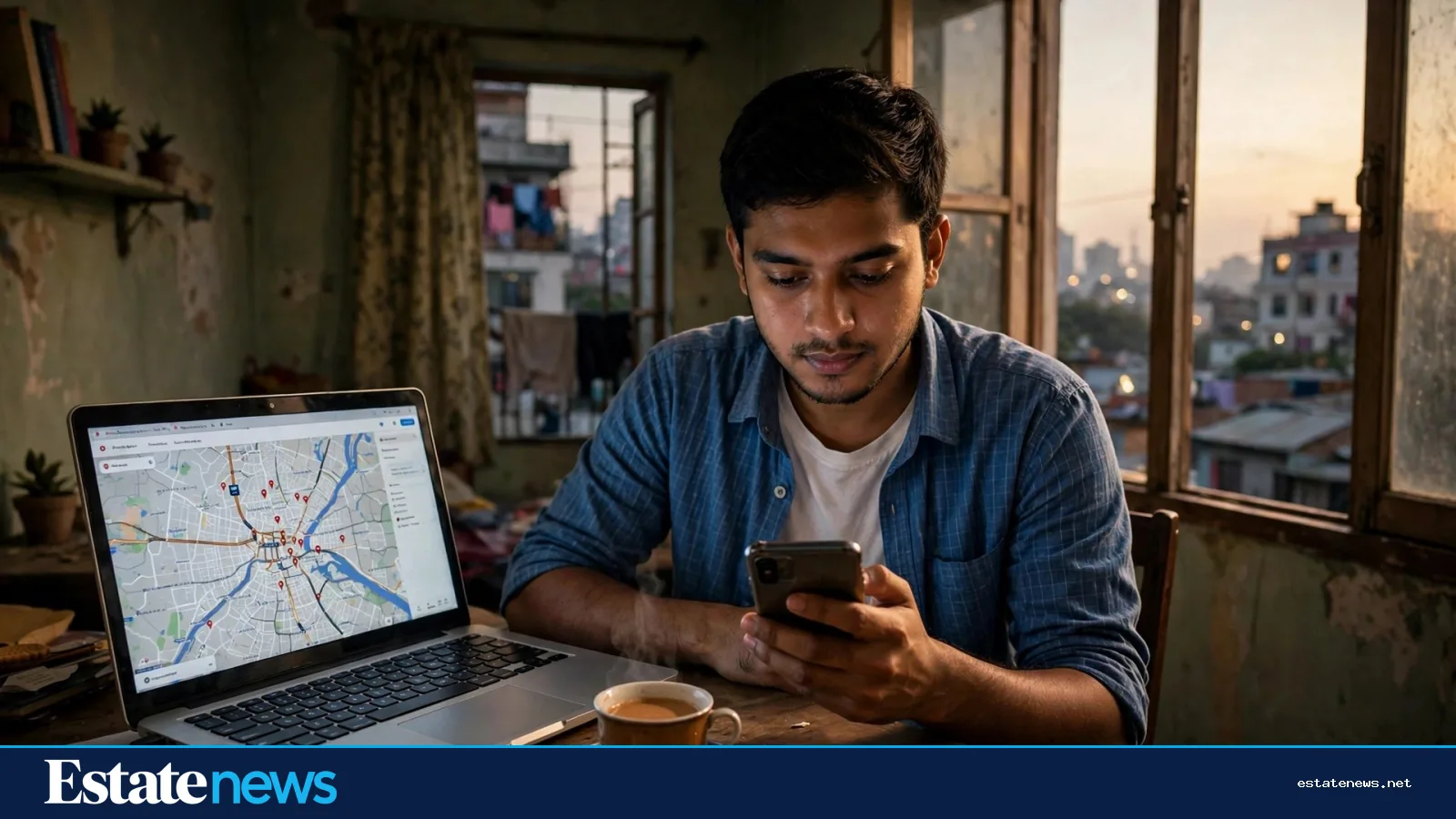
A decade ago, finding a flat in Dhaka meant walking the lanes of the area you wanted, asking the caretaker, and following a hand-painted "To Let" sign. The walk still happens, but it is no longer the first step. The search now starts on a phone, usually late at night, with a buyer scrolling through listings while the family discusses budget over tea. By the time anyone visits a building, the shortlist already exists.
Property portals carry the widest net. A buyer can filter by area, size and budget, compare ten flats in an evening, and save the ones worth a call. The strength of a portal is its range. Its weakness is freshness. A listing can stay live long after the flat is sold or rented, and a price written weeks ago may have moved since. The habit that saves buyers is the phone call. Ring the number, ask whether the flat is still available, and ask the price again before travelling across the city.
Facebook groups and the broker's WhatsApp

Facebook groups do a different job. They carry the flats that never reach a portal: a resale in a building where the owner knows someone in the group, a rental posted by a tenant leaving early, a new project shared by a developer's sales team. The posts are informal, the photos are taken on a phone, and the comments section does the work of a first screening. Neighbours ask about the lift. Former tenants ask about water. The answers are public, and that is the point.
WhatsApp is where the search turns personal. A broker sends a forward with four photos and a price. A relative in the family group shares a listing from a friend. The message arrives with a name attached, and that name carries trust. The risk is that the trust is misplaced. Photos flatter. A wide-angle lens makes a small room look large, and a photo taken at noon hides a flat that gets no light after three. A WhatsApp forward is a lead, not a viewing. The flat has to be seen in person, in daylight, with the taps turned on.
Maps, street checks and the video call


Google Maps has become a quiet part of the hunt. A buyer checks how far the building sits from the main road, whether the lane floods in the monsoon, and how long the walk to the nearest bazaar really is. Street View, where it exists, shows the building's surroundings better than any brochure. A buyer who skips this step can discover too late that the flat is a fifteen-minute walk from the rickshaw stand, or that the lane turns to mud in July.
For NRB buyers, the video call has changed everything. A buyer in Dubai or London can now walk through a Dhaka flat on a phone screen while a relative or a broker holds the camera. The call can check the lift, the staircase, the view from the balcony and the condition of the bathroom. It cannot check the smell of damp, the sound of the generator, or the state of the water at six in the morning. NRB buyers who shortlist on video and buy on video take a risk that no amount of screen time removes. The sensible ones shortlist on video and send someone they trust to walk the flat before any money moves.
Where buyers get caught out
The traps are consistent. A stale listing wastes a Saturday. A flattering photo wastes a visit. A price that moves on the phone wastes a negotiation. A flat that looks good on a screen but sits in a building with a broken lift wastes the purchase itself. None of these traps is new, but the online search has made them faster. A buyer can now be misled by ten flats in an evening instead of one in a week.
The defence is slow and old-fashioned. Visit the flat. Visit it twice, once in the morning and once in the evening. Talk to the caretaker and to a neighbour, not only to the seller. Check the deed and the mutation with a lawyer. Ask the building association about the service charge and about any pending repair. The internet can find the flat. It cannot buy it for you.
Dhaka's flat hunt will keep moving online. Portals will get better, groups will get busier, and video calls will get sharper. The buyers who do well will be the ones who use all of it and trust none of it completely. A phone screen is a good place to start a search. It is a poor place to finish one.