
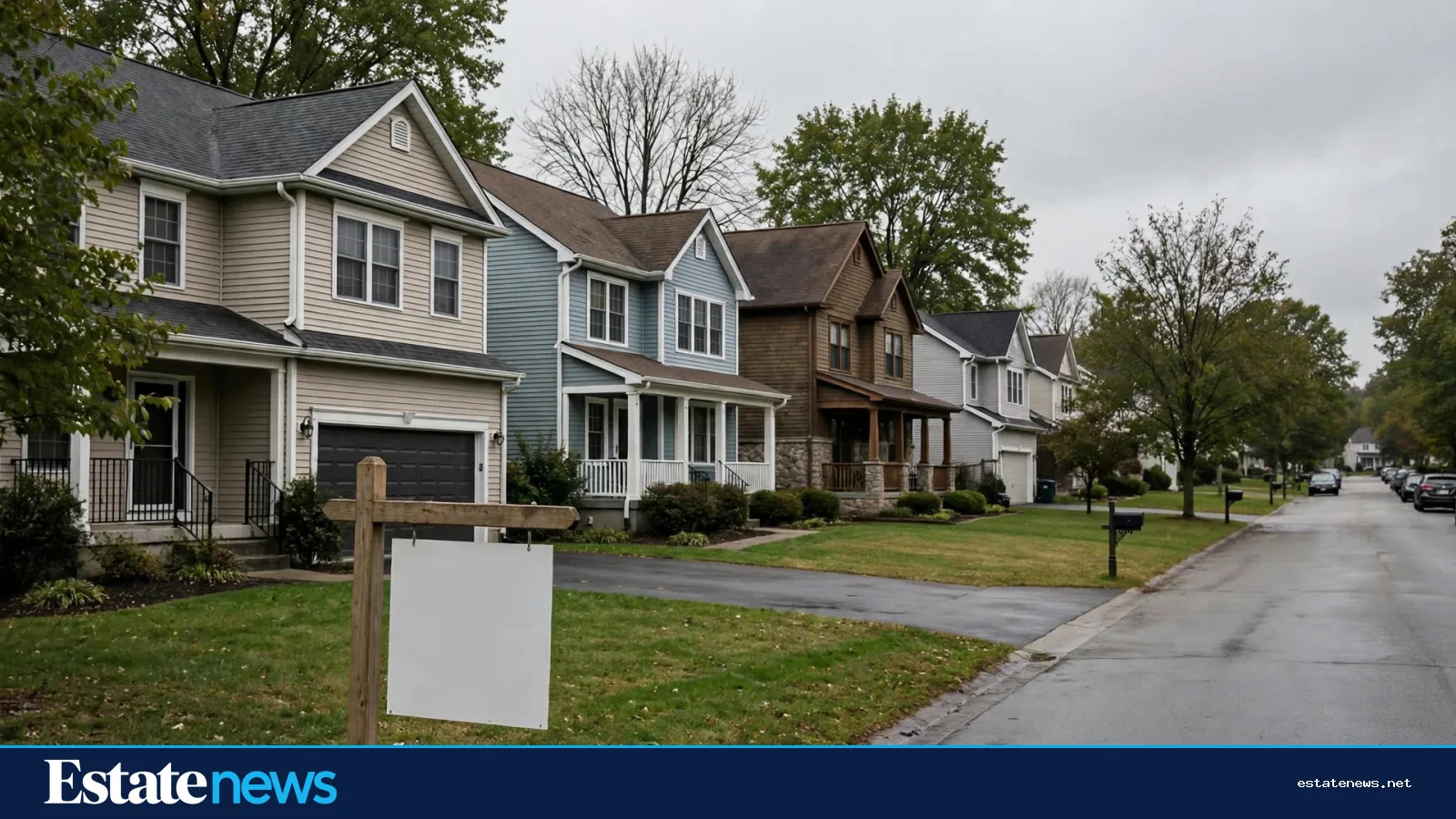
The American housing market has produced a puzzle. Prices are holding, and in most cities they are still rising. Yet fewer people are buying. Sales have stalled, pending deals have fallen to record lows, and the market feels frozen in a way that surprises even seasoned watchers.
The numbers tell the story plainly. The National Association of Realtors reported that prices rose in 78 per cent of about 235 US metro areas in the third quarter of 2026. The national median price for an existing single-family home reached $432,900, up 1.7 per cent on a year earlier. The Northeast led with a median of $561,500, up 4.0 per cent, followed by the Midwest at $342,500, up 3.6 per cent, and the South at $374,900, up 1.0 per cent. Only the West slipped, with a median of $629,000, down 0.6 per cent.
At the same time, the market for actually buying and selling has gone quiet. Redfin reported that pending sales fell to their lowest in records going back to 2021. Zillow found pending sales down 16.8 per cent year on year in October. Existing-home sales ran at an annual pace of 3.99 million in September, up 1.5 per cent on the month but down 2.2 per cent on the year, with a median price of $417,500, up 1.3 per cent, and inventory of 1.60 million homes, equal to 4.8 months of supply.

The rate lock
The main reason is the cost of borrowing. The 30-year fixed mortgage rate stood at 7.18 per cent as of 5 November, according to Freddie Mac. That is the third straight weekly fall, down from 7.24 per cent on 29 October and 7.40 per cent on 8 October, but it is still far above the 6.22 per cent of a year ago.
That gap has created what American agents call the lock-in effect. Millions of homeowners hold mortgages taken out when rates were near 3 per cent. Selling now would mean giving up that cheap loan and borrowing at more than 7 per cent for the next home. So they stay put. Fewer homes come onto the market, supply stays tight, and prices hold even as sales fall.
The same logic runs in the other direction for buyers. A buyer who could afford a home at 6 per cent finds the same home out of reach at 7.18 per cent, because the monthly payment is higher on the same price. Some wait. Some buy smaller. Some rent for another year.
What it means for NRB buyers
For a non-resident Bangladeshi weighing a home in the United States against a flat in Dhaka, the comparison has changed.


A home in the US now costs more to finance than it did a year ago, and the choice of homes is thinner, because owners are not selling. The median price of $432,900 is about Tk 5.3 crore at current exchange rates, and the mortgage on it at 7.18 per cent carries a monthly payment that would stretch most household budgets. The market may ease if rates keep falling, and the third straight weekly fall is a hopeful sign, but no one can say how fast.
A flat in Dhaka, by contrast, is bought in a market where prices are set in taka, where the buyer often knows the neighbourhood, and where the family can live in the flat or rent it out. Dhaka's rental yields run roughly 2.5 to 3.5 per cent, according to the site's own rental-yield reporting, which is modest by global standards but comes with a home the family can use.
The two purchases are not the same kind of decision. A home in the US is a place to live for a family that has settled there. A flat in Dhaka is often a base for the family back home, an asset for the future, or a retirement plan. The American market's freeze does not make a Dhaka flat cheap, but it does make the Dhaka option easier to compare honestly: the price is visible, the loan is in taka, and the buyer can walk through the building before signing.
A market waiting for a reason to move
The American market is not crashing. Prices are still rising in most cities, inventory is only 4.8 months of supply, and sales, while slow, have not collapsed. What it is doing is waiting. It waits for mortgage rates to fall far enough that owners feel able to sell and buyers feel able to buy.
That wait could last months. Rates have fallen for three weeks, and if that trend continues, the spring buying season may look different from the autumn. But a fall from 7.40 per cent to 7.18 per cent is a step, not a solution. Most owners will need rates much closer to 6 per cent before moving becomes attractive.
For NRB families, the lesson is practical rather than dramatic. Do not rush a US purchase because prices are holding, and do not rush a Dhaka purchase because American sales are stalling. Compare the full cost in each place, including the mortgage rate, the taxes, the maintenance and the exchange rate. And remember that a home is not only an investment. It is where a family lives, and that question matters more than any quarterly price index.
This is general information, not financial advice.