Every Dhaka flat buyer knows the sentence. The booking form promised handover in three years. Year three arrives, the building is not ready, and the sales office has a new date. Sometimes the new date holds. Sometimes it does not.
Delays are the most common complaint in Dhaka's housing market, and they are also the least understood. A late project is rarely late for one reason. It is usually a chain, and the first link decides how long the rest takes. These are the five delays buyers hear about most, and what each one means in practice.
Approvals take longer than the plan allows

Before a spade touches the ground, a project needs RAJUK approval, and the approval process is where many timelines first come apart. Drawings go back for correction. A file waits for a signature. A rule changes while the file is in motion.
This is not an abstract problem. On 5 November, a REHAB delegation met RAJUK chairman Engineer Riazul Islam and pressed for amendments to the Detailed Area Plan, more planned high-rise construction and clearer rules for building outside Dhaka. The chairman accepted a dedicated extended session to discuss the changes. That meeting shows both sides know the approval system needs work.
For a buyer, the practical point is simple. Ask whether the project you are booking already has its RAJUK approval in hand, and ask to see it. A project sold on the promise of approval "coming soon" carries a risk that a project with approval in hand does not.
Materials arrive late or cost more than budgeted
Cement, steel and finishing materials set the pace of construction once work starts. Bangladesh imports most of its clinker, the raw material for cement, so international prices, shipping and the exchange rate feed straight into building costs. Steel prices move the same way.
When a material price jumps, a developer faces a choice: absorb the cost, slow the work, or renegotiate with suppliers. Slowing the work is often the quiet choice, and it shows up months later as a floor that was supposed to be cast in March and is still open in June.
Buyers can watch for this. A site where work stops for weeks without explanation deserves a question. A developer that explains a material delay honestly, with a revised schedule, is easier to trust than one that says nothing.
Labour is short when every site is busy
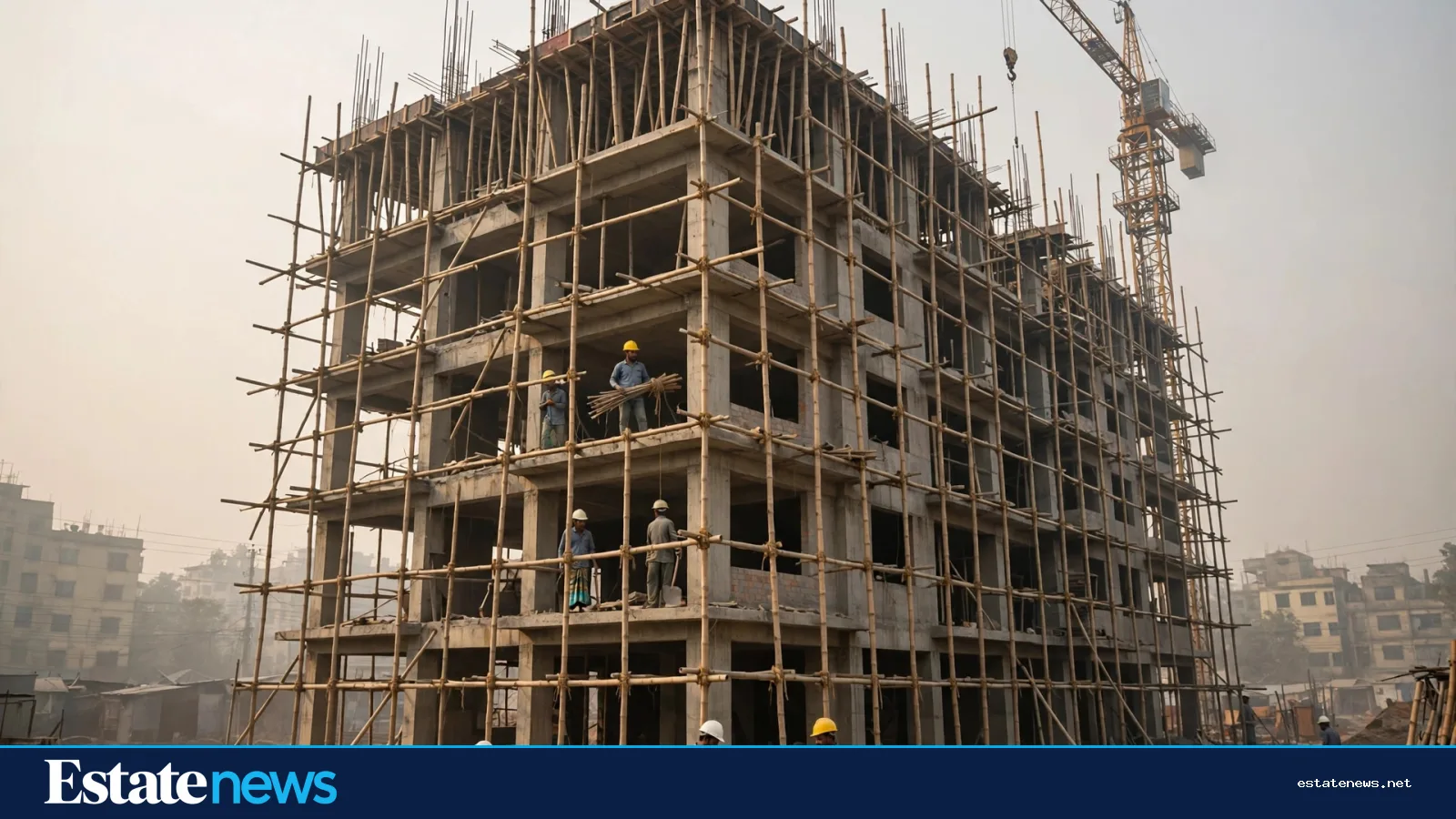
Dhaka's construction labour moves with the seasons and with the number of projects running at once. When the dry season arrives and dozens of sites pour concrete in the same weeks, skilled masons, electricians and plumbers are in short supply. Wages rise, and smaller projects lose workers to bigger ones.
The garment sector's wage unrest this year is a reminder of how quickly labour conditions can change across the whole economy. More than 500 factories shut after wage protests, and a wage board is now working on a new minimum. Construction is a different trade, but it draws on the same pool of working families, and the same pressure on household budgets.


A buyer cannot fix a labour shortage. But a project that has kept the same contractor and the same site team for years is less exposed to it than one that changes contractors mid-way.
Money moves slower than concrete
Apartment projects in Dhaka are usually financed in stages, from booking money, instalments and bank loans. If buyers pay late, or if a bank slows its disbursement, the developer's cash flow tightens. Work slows to match the money coming in.
This is why a developer's sales record matters. A project that has sold well has money to build with. A project that has sold slowly may stall, even if the design and the location are good. Ask how many flats are sold, and ask whether the developer has other completed projects that were handed over on time. The answers are not a guarantee, but they are evidence.
Land and paperwork problems surface late
Some delays are buried in the land itself. A title dispute, a mutation that was never completed, a joint-venture agreement with a landowner that was loosely written: these problems can sit quietly for years and surface only when the building is nearly done.
Joint ventures are common in Dhaka, where a landowner gives land and a developer builds on it. When the agreement is clear, the arrangement works well. When it is vague about who gets which floors, or who pays for what, the dispute can freeze a project after the structure is up.
The check here is paperwork. Before booking, ask to see the deed chain, the mutation record and the agreement with the landowner. A developer that shows these willingly is a better sign than one that asks you to trust the brochure.
What to do when your date slips
A delay is not always a disaster. Some of the best buildings in Dhaka were handed over late. The question is whether the developer tells you early, explains the reason, and gives a new date that holds.
Ask for the revised schedule in writing. Ask what has actually been completed, floor by floor, rather than accepting a percentage. Visit the site yourself, or send someone you trust, and look at whether work is happening. And keep every receipt, agreement and letter, so that if the delay stretches from months into years, you have the record you need.
Dhaka will keep building. The city's housing demand is real, and so is the pressure on the builders who meet it. Buyers who understand the five delays, and who ask the right questions before they book, give themselves the best chance of moving in somewhere near the date they were promised.