Two central banks moved in the same week, and both moved up. The Bank of England raised its benchmark rate by 0.25 percentage points to 4 percent on 5 November, its first rise in more than three years. Two days earlier, the Reserve Bank of Australia raised its rate by the same amount to 4.85 percent, the highest in about 18 years.
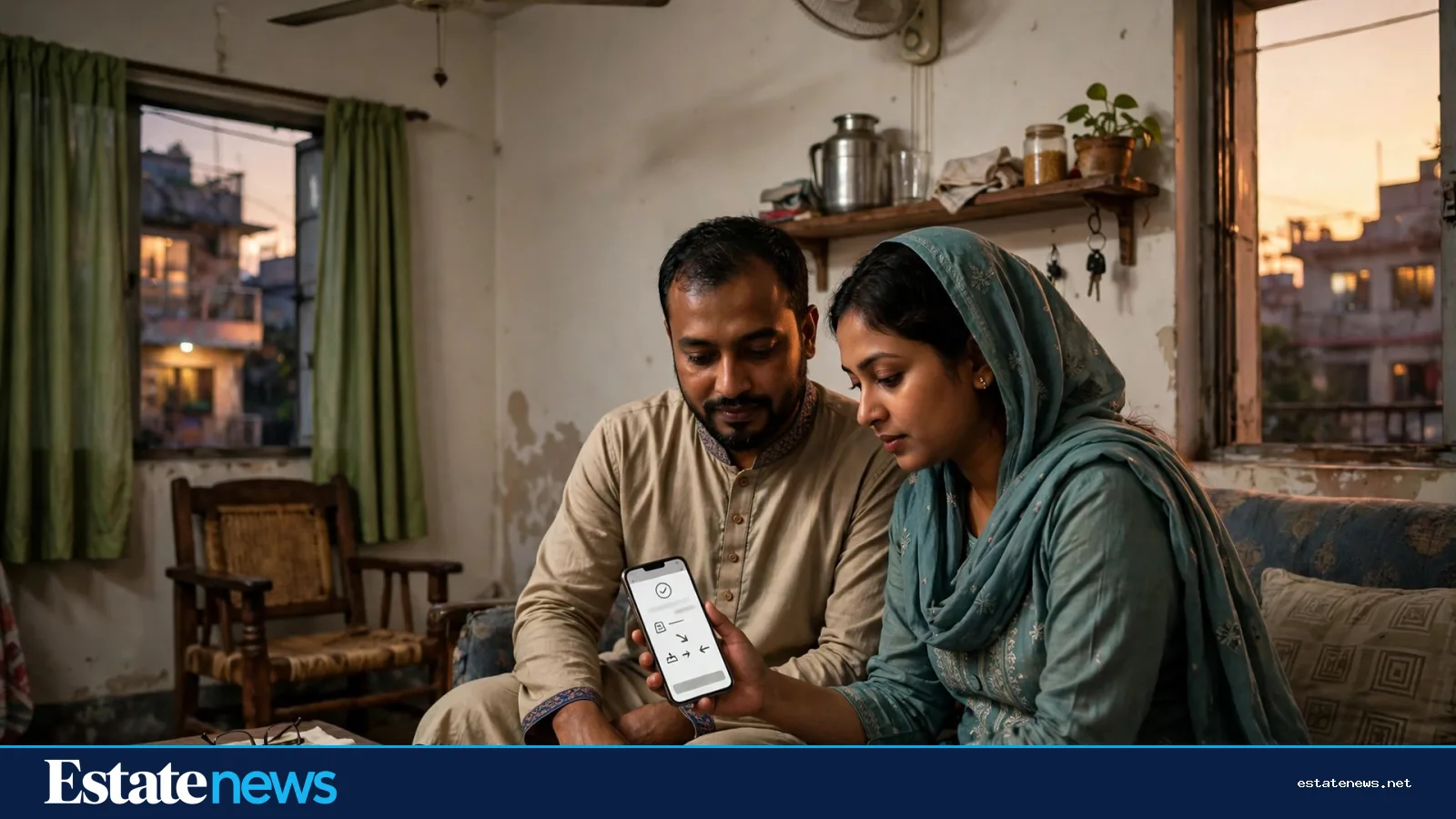
For a reader in Dhaka, those numbers may look distant. They are set in London and Sydney, and they govern mortgages and savings accounts that most Bangladeshis never touch. But for the millions of Bangladeshis who live and work in Britain, Australia and the Gulf, and for the families in Dhaka who depend on their money, the moves land close to home.
What a rate rise does to a household abroad

A higher policy rate feeds through to the cost of borrowing. Mortgages get dearer. Credit card and personal loan rates rise. A Bangladeshi family in London with a mortgage on a two-bedroom flat in East Ham will feel the Bank of England's decision in the monthly payment, either now or when the fixed term ends. A family in Sydney will feel Australia's decision the same way.
That pressure cuts two ways for Dhaka property. A family paying more on a mortgage abroad has less spare cash to send home, or to put toward a deposit on a flat in Dhaka. The remittance flow that reached $2.87 billion in October, and the export earnings of $3.99 billion in the same month, are strong. But household budgets abroad are the source of that flow, and a rate rise squeezes them.
The other side of the coin is savings. Higher rates pay more on deposits. A Bangladeshi worker abroad who keeps savings in a British or Australian bank earns more interest than a year ago. For some, that tilts the choice between keeping money in a savings account abroad and sending it home for a flat. A deposit abroad earns interest, but it is far away and it does not house anyone.
The global property picture
The rate moves arrive as global property investment is picking up. Direct real estate investment around the world rose 19 percent in the first nine months of 2026 compared with a year earlier, with transactions in the third quarter of about US$235 billion, up 7 percent year on year. The living sector, the part of the market that covers homes people rent and live in, moved the other way: investment fell about 9 percent in the third quarter. Residential investment fell about 7 percent in the United States, 19 percent in Europe, the Middle East and Africa, and 5 percent in Asia-Pacific.
The split tells a story. Investors are buying property again, but they are buying offices, warehouses and shops more eagerly than homes. Homes are the part of the market where higher borrowing costs bite hardest, because a home buyer borrows more relative to the price than a company buying a warehouse. That pattern holds in Dhaka too, where a buyer who needs a large home loan feels every move in rates, while a cash buyer barely notices.


In the United States, the picture has a different shade. The 30-year fixed mortgage rate averaged 7.18 percent as of 5 November, according to Freddie Mac, its third straight weekly fall. American house prices kept rising in most of the country: prices rose in 78 percent of about 235 metro areas in the third quarter, and the national median price of an existing single-family home reached $432,900, up 1.7 percent from a year earlier. Mortgages are still expensive, but they are getting slightly cheaper, and prices have not fallen.
What NRB buyers should do now
For a non-resident Bangladeshi weighing a flat in Dhaka, the rate rises abroad change the maths in three places.
The first is the deposit. Money saved abroad earns more interest now, so the cost of moving it into a flat, where it earns nothing until the flat is rented or sold, is higher than it was. A buyer should weigh that cost honestly against the value of owning a home in Dhaka.
The second is the loan. A buyer who plans to borrow in Dhaka should compare the home-loan rate at home with the cost of borrowing abroad, and should ask the bank what happens to the monthly payment if rates move. A loan that looks comfortable today can become tight if rates rise again.
The third is timing. Rate rises abroad often arrive when inflation is proving stubborn, and stubborn inflation can push building costs up too. A buyer who waits for rates to fall may find that flat prices have moved in the meantime. There is no moment when every figure lines up at once.
The sensible approach is the same as ever. Fix the budget in taka, not in pounds or dollars, because the flat is priced in taka. Check the developer and the papers. Borrow only what the monthly payment allows after the family's living costs abroad are covered. And remember that a flat in Dhaka is a home first and an investment second. The rate decisions in London and Sydney change the cost of the decision. They do not change what the flat is for.
This is general information, not financial advice.