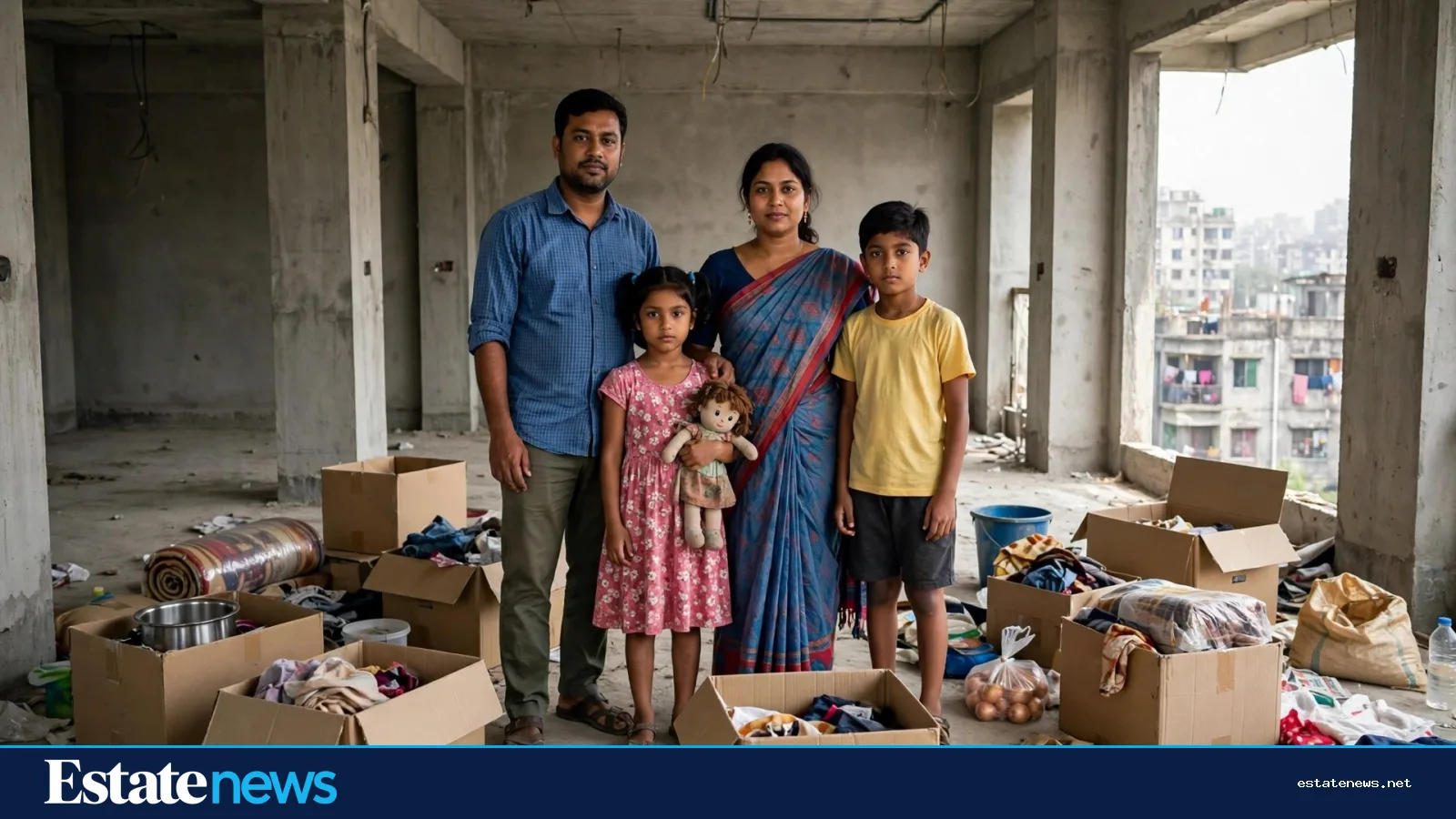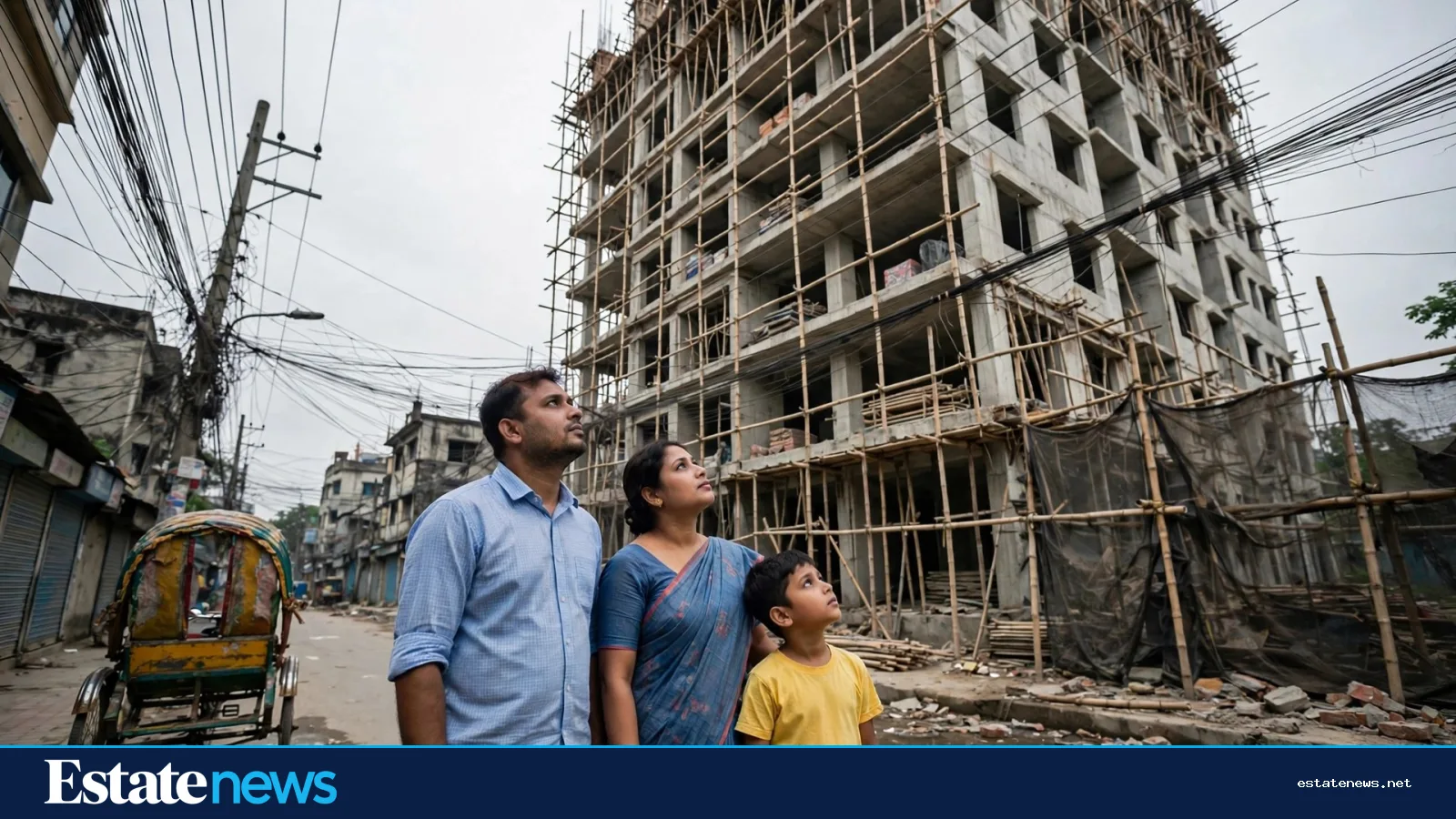
A buyer hands over savings, sometimes a lifetime's savings, for a share of a plot and a promise: a flat of a certain size, in a building that does not yet exist. That is how a land-share scheme works, and for thousands of families in Dhaka it has ended in court.
The Real Estate and Housing Association of Bangladesh, REHAB, put the scale of the problem in plain numbers at a press conference in Dhaka on 8 November. REHAB president Ali Afzal said about 40,000 buyers have been affected by unregulated land-share housing. Citing a Business Standard investigation published on 25 October, REHAB said 9,823 cases involving alleged fraud in land-share projects were pending as of 30 September 2026, involving around Tk 12,000 crore. Afzal warned close to Tk 50,000 crore could be tied up in lawsuits over the next two to three years if the business is not brought under control. REHAB presented six demands to the government, including an end to unregulated land-share sales.
How a land-share deal is supposed to work

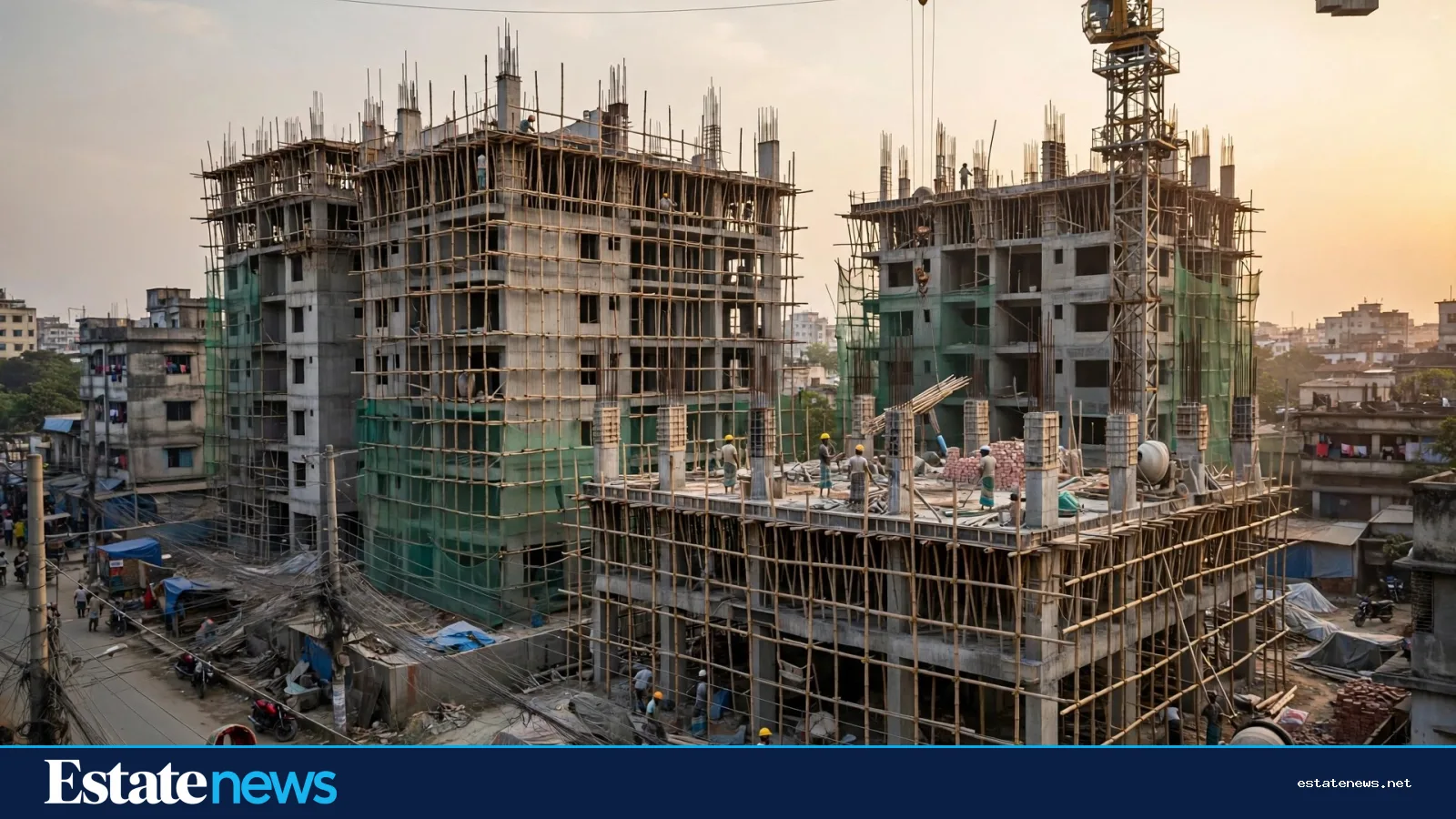
In a normal land-share arrangement, a group of buyers jointly buys a plot. Each buyer takes a share, registered in the buyer's name, and the group builds an apartment building on it, sharing the construction cost. The buyer ends up owning both a share of the land and a flat.
The trouble starts when the steps are skipped. A buyer may pay for a share that is never properly registered. The land may be mortgaged, disputed, or owned by someone else. The building plan may never have gone to RAJUK for approval, and money collected for construction may be spent elsewhere. Seven checks cover most of the danger.
1. Verify the title and the chain of ownership
Start at the sub-registry office. Ask for the chain of title, the CS, RS and BS records and the mutation record. The name on the deed should match the seller, and the chain should run back without a break. A seller who shows photocopies only is giving a buyer a reason to walk away. A property lawyer can read the chain in an afternoon, for a fee that is small beside the price of a flat.
2. Check RAJUK approval for the actual building plan
A land-share project needs an approved building plan from RAJUK, the Rajdhani Unnayan Kartripakkha. Ask for the approval number and check it against RAJUK's records. The approval must cover the building as sold: the same floors, flats and use. An approval for a different plot, a lapsed approval, or a plan still "under process" is not approval. A project without approval can be stopped midway.
3. Look at the developer's record, not its brochure


A glossy brochure is cheap. A handover record is not. Ask how many buildings the operator has finished, where they are, and when they were handed over. Visit one and talk to the people who live there. Ask whether the handover happened on time and whether the flats matched the promise. An operator with no finished building is asking buyers to fund a first attempt with their savings.
4. Read what the agreement promises against what is registered
The deed of agreement and the registered documents should agree. Check the size of the flat, the share of land, the payment schedule and the handover date, and what happens if the handover is late. If the agreement promises a 1,200 sq ft flat but the registered share would only support something smaller, that gap will not close by itself. Anything promised verbally or in an advertisement counts for nothing unless it is written into the agreement.
5. Ask whether the land is mortgaged or under dispute
Land under a bank mortgage or tied up in a court case cannot be transferred cleanly. Ask for a sub-registry certificate showing no encumbrance, and a written confirmation that the land is free of mortgage, dispute and government acquisition. Skip this step and you may pay for a share a bank or a court already has a claim on.
6. Ask who holds the money and how it is released
In a sound project, buyers' payments go into an account for that project, released as construction reaches agreed stages. Get the arrangement in writing, including who signs for withdrawals. Be careful of large cash payments, payments to a personal account, or pressure to pay in full before the foundation is laid. A schedule tied to visible progress protects both sides.
7. Keep every receipt, and keep it in order
Every payment should come with a receipt showing the date, amount, purpose and project name. Keep the receipts with the agreement, the deed, the RAJUK approval and all written notices. Buyers who ended up in court told reporters the same story: the case turned on what they could prove they had paid. A file of receipts is the buyer's evidence.
The land-share idea itself is not the problem. Families pooling money to build on a shared plot is an old way of getting a home in Dhaka, and done openly, with registered shares and an approved plan, it works. The problem is the unregulated version, where the share is vague, the land is unclear and the money disappears into a project that was never properly approved. Until the rules change, these checks are the buyer's own protection.