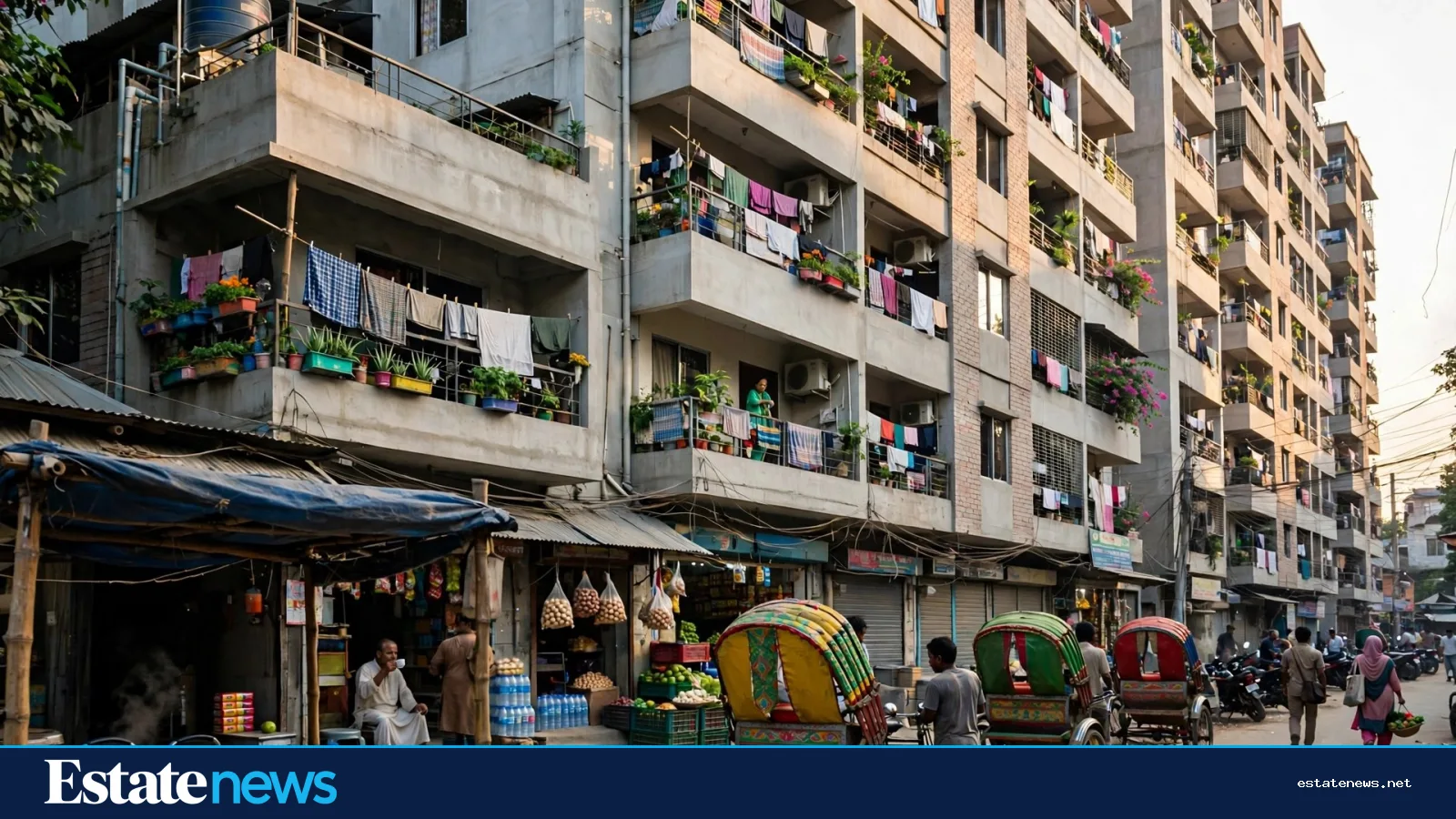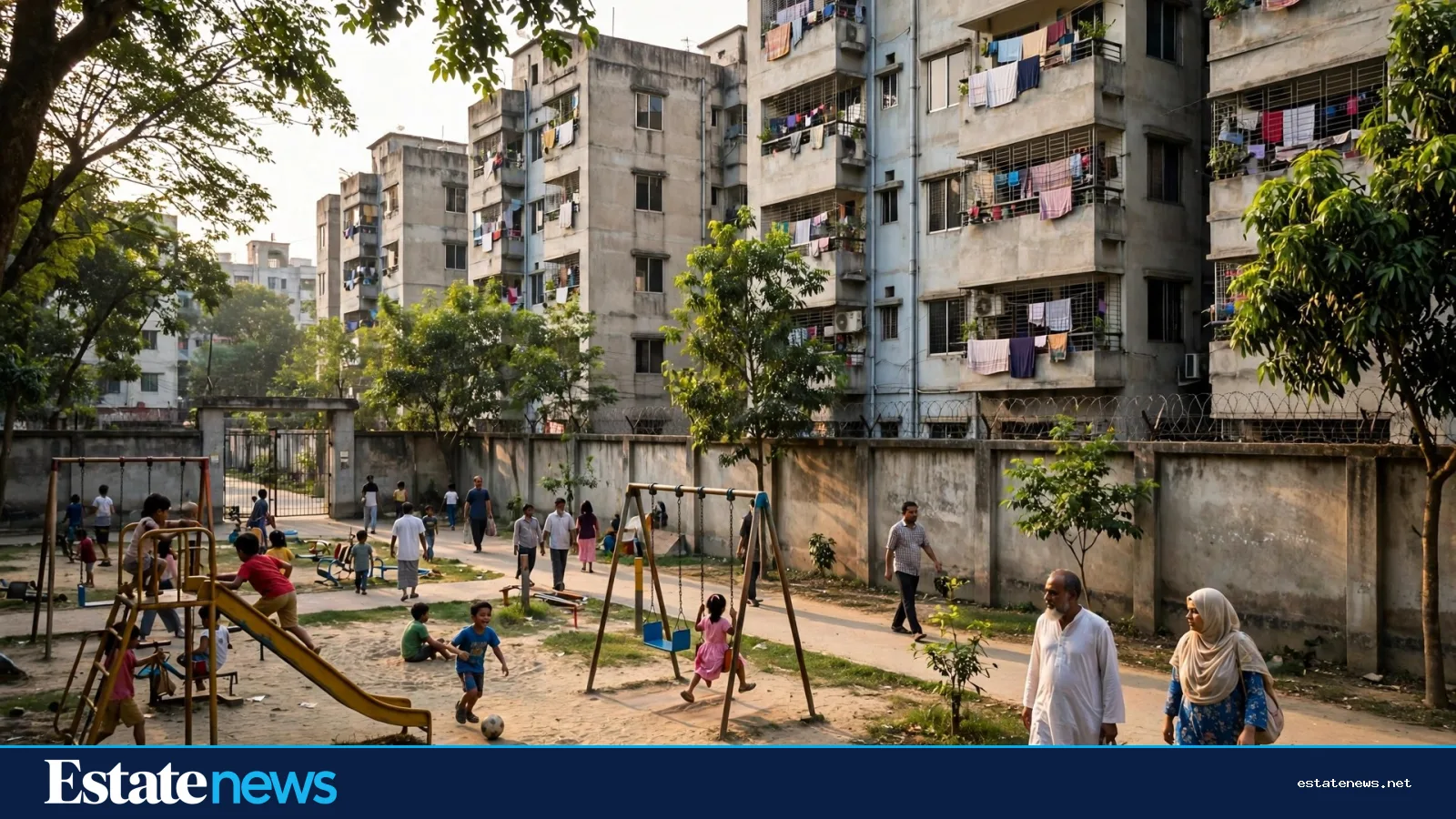
Stand at the gate of Japan Garden City on a weekday morning and the first thing you notice is the quiet. Inside the wall, the sound of Mohammadpur's main roads drops away. Rickshaws move slowly past the towers. Children walk to school in small groups. A caretaker sweeps the courtyard of a building whose residents have lived there for twenty years or more.
The estate is one of Dhaka's earliest large housing projects, and it still works on a model that few newer projects have copied: a walled neighbourhood, built at once, with its own power supply and its own services, holding about 1,600 flats across 19 sixteen-storey towers.
A project from a different era

Japan Garden City was built in Mohammadpur at a time when Dhaka's housing market looked very different. The city was smaller, the middle class was growing, and a flat in a planned estate was a new idea. The estate was developed by Japan Garden City Ltd, and its scale was ambitious for its day: nineteen towers, each sixteen storeys high, arranged around courtyards and internal roads, with space for shops, a mosque and community facilities inside the wall.
The numbers still impress. By 2010, the estate held about 1,600 flats, and the population had grown to roughly 1,600 families living in 21 buildings, according to reports in the Daily Star and The Business Standard. The estate's own 33kV substation, reported by TBS in July 2026, gives it a measure of power security that most Dhaka neighbourhoods do not have. When the city grid falters, the estate's supply holds longer, and residents notice the difference every time the lights go out elsewhere.
What life inside the wall looks like
The estate's appeal has always been its completeness. A family can live, shop, pray and send children to school without leaving the gate. The towers are old now, and the buildings show their age in places: paint faded by monsoon rain, lifts that need attention, stairwells that carry the marks of decades of use. But the structure holds, and the community holds with it.


Residents describe a neighbourhood where people know each other by floor and by flat number, where the building association manages shared services, and where the wall itself is part of the bargain. The wall keeps the traffic out and the children in. It also keeps the estate separate from the streets around it, and that separation has been both its strength and its criticism. A walled estate is a private world, and a private world can feel cut off from the city it sits in.
The developer's standing
Japan Garden City Ltd remains a name in Dhaka's housing industry. Its managing director, Md Wahiduzzaman, was elected president of REHAB unopposed in May 2024, and the company has been a participant in REHAB fairs, including the 2025 fair. The estate is the company's best-known project, and its longevity is part of its reputation.
What the estate teaches Dhaka
Japan Garden City matters because it shows what a planned estate can do when it is built at scale and managed over decades. The towers have outlasted many newer buildings. The substation still works. The community still functions. The estate's problems are the problems of age, not of design: maintenance that needs money, lifts that need replacing, and a building stock that was never designed for the air conditioners and appliances that residents now run.
Dhaka's newer projects rarely attempt the same completeness. They build towers and sell flats, and the services follow later, or not at all. Japan Garden City built the services first, and the flats around them. Four decades on, that order of work still shows.