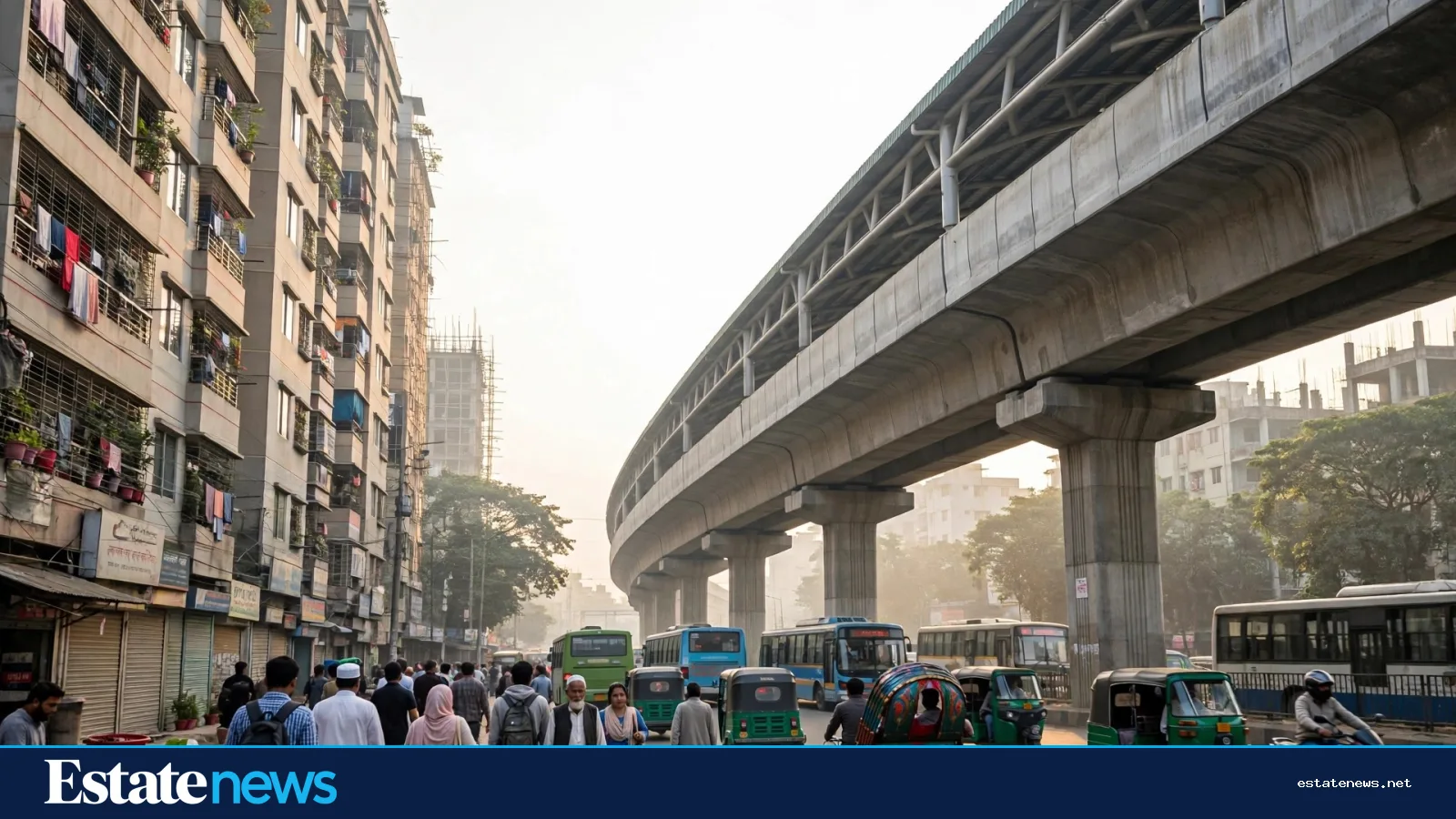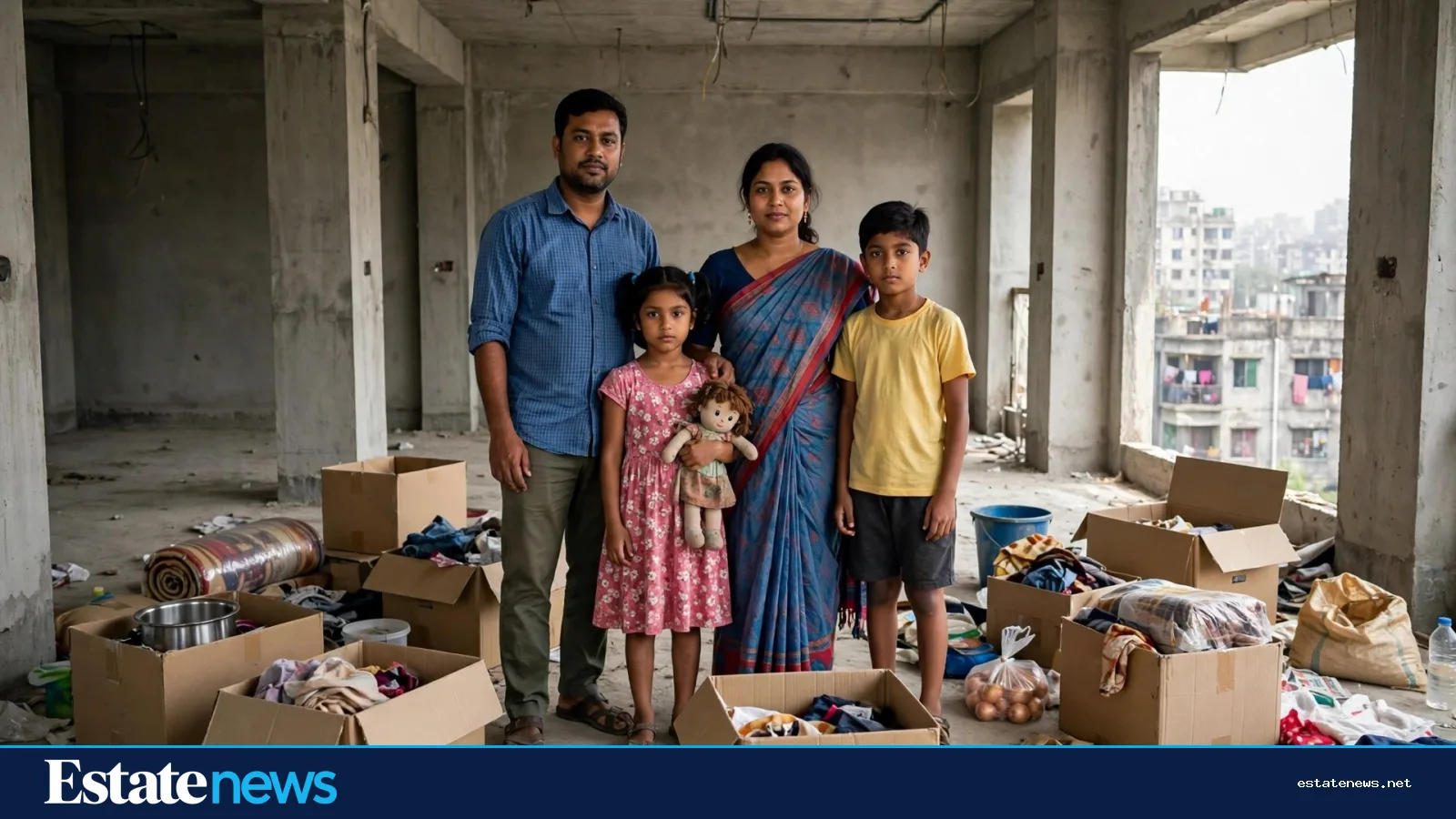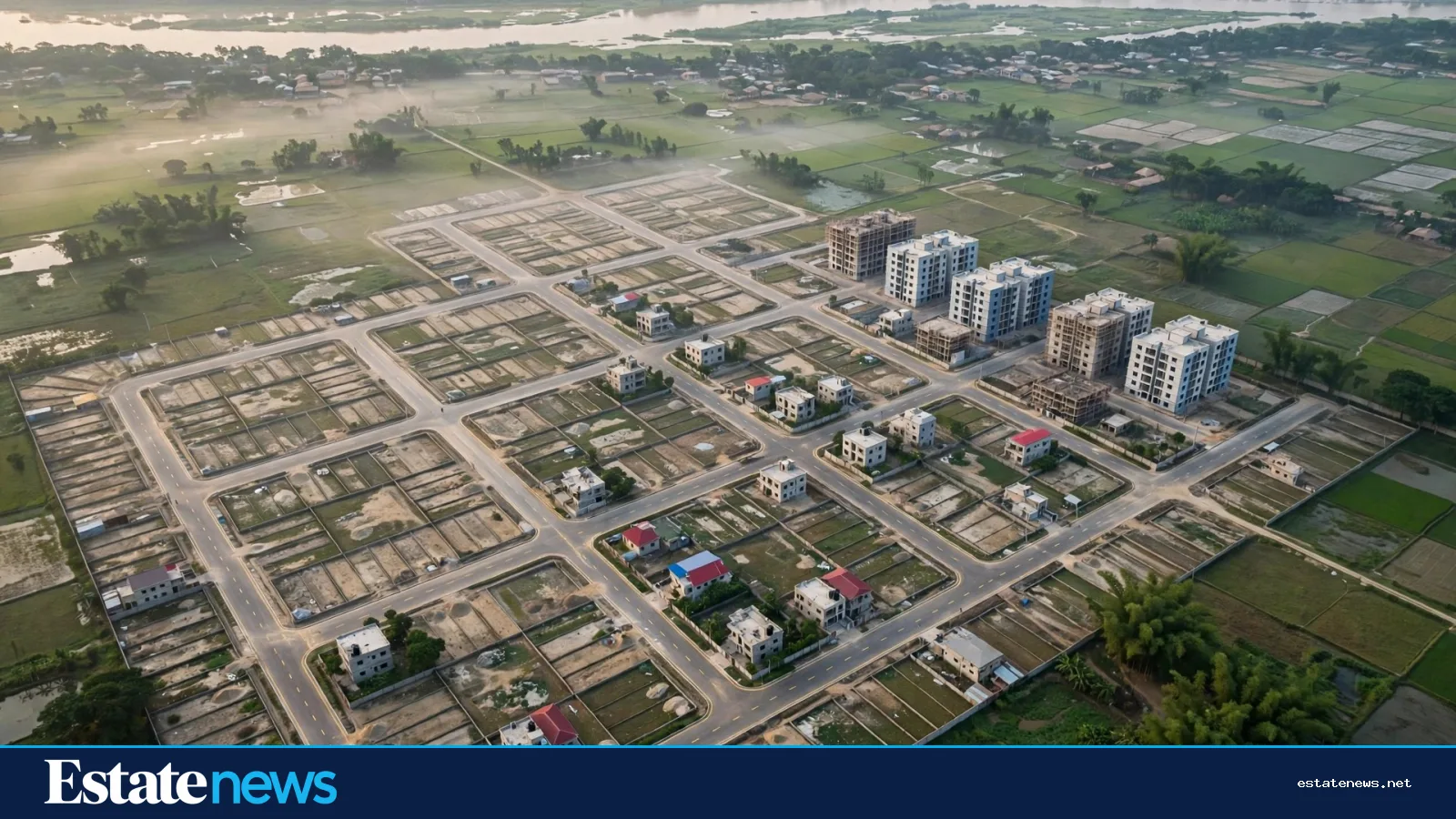
Dhaka has been running out of room for a long time. The city's older neighbourhoods are built up, its plots are divided and redivided, and its housing demand keeps growing. That is why the townships on the edge of the capital matter. Jhilmil, the RAJUK housing project on the Keraniganj side, south of Dhaka, is one of them, and it moved back into focus last month.
On 14 October 2026, the Ministry of Housing and Public Works gazetted an amendment to the Detailed Area Plan, the DAP, for 2022-2035. The Daily Star reported that the amendment raised the floor area ratio, or FAR, by up to 0.5 for residential plots of five katha or more in the Purbachal and Jhilmil housing projects. FAR is the ratio that decides how much floor area a building may have relative to its plot. A higher FAR means more built space on the same land.
The benefit comes with a clock. The Daily Star reported that owners must apply for building plan approval within six months from 15 October 2026 to qualify, and must complete construction up to the plinth level within one year of final approval, or face a penalty equal to 20 times the approval fee. A plot owner in Jhilmil who wants the extra space cannot sit on the gazette. The six-month window closes in the middle of April 2027.

What the DAP is, and why builders watch it
The DAP is the planning document that divides RAJUK's area into zones and sets the rules for each one: what can be built, how tall, how much of the plot can be covered, and how much floor area is allowed. The current version, DAP 2022-2035, took effect in August 2022 and covers about 1,528 sq km under RAJUK's jurisdiction. When the plan changes, the economics of every plot inside it change with it, which is why developers, architects and plot owners read each gazette closely.
The October amendment changed three provisions. Besides the FAR incentive for Purbachal and Jhilmil, it reclassified three plots in Ailbahar mouza under Shyampur and Kadamtali from open space to heavy industrial use, and revised the rules for water flow overlay zones. Urban planners raised concerns about the procedure and the effect on the river and drainage, and the ministry said RAJUK would issue a statement clarifying the process. The debate is a reminder that a planning change is never only about floor area. It touches water, roads and the land around it.
Who Jhilmil is for


Jhilmil is a planned township, laid out by RAJUK with plots, roads and blocks rather than grown plot by plot the way older parts of Dhaka grew. Planned townships appeal to buyers who want wider roads, a regular layout and a plot they can build on to a clear plan. They also appeal to families priced out of central Dhaka who are willing to live further from the centre in exchange for space and a new building.
The demand behind them is large. Dhaka needs about 120,000 new housing units a year, according to the Bangladesh Investment Development Authority, BIDA, while the private sector supplies about 25,000 a year, according to a 2017 BRAC study. The gap between those two numbers is the reason townships like Jhilmil and Purbachal keep being discussed, and the reason every change to their building rules draws attention.
Pressure for more changes is still coming. On 5 November 2026, a REHAB delegation met RAJUK chairman Engineer Riazul Islam and pressed for DAP amendments and credit facilities outside Dhaka. The association has argued for years that the plan's limits on height and floor area push up the cost of building, and that easier rules would let developers build more homes. Planners answer that the rules protect drainage, light and air in a city that already floods and already chokes on traffic. Both sides were in the room, and the argument is not settled.
What a plot owner should do now
For an owner of a five-katha or larger plot in Jhilmil, the October amendment is practical, not abstract. The first step is to check the plot's size and classification against the gazette, and to confirm with a licensed architect how much extra floor area the 0.5 FAR incentive would actually allow on that plot. The second step is the calendar. An application for building plan approval must reach RAJUK within six months from 15 October. The third step is the money: the plinth-level deadline, one year from final approval, means construction must start in earnest, not on paper.
Buyers looking at Jhilmil should ask the same questions they would ask anywhere in Dhaka. Is the plot's title clear? Is the seller the recorded owner? Has the building plan been approved? What are the roads, water, gas and electricity like on that block today, not in a brochure? A township takes years to fill with homes, shops, schools and transport. The early buyers get the space and the new roads. They also live with the construction, the dust and the wait for services to arrive. That trade is the real choice in Jhilmil, and the FAR amendment does not change it. It only changes how much can be built, and how fast the owner must move to build it.