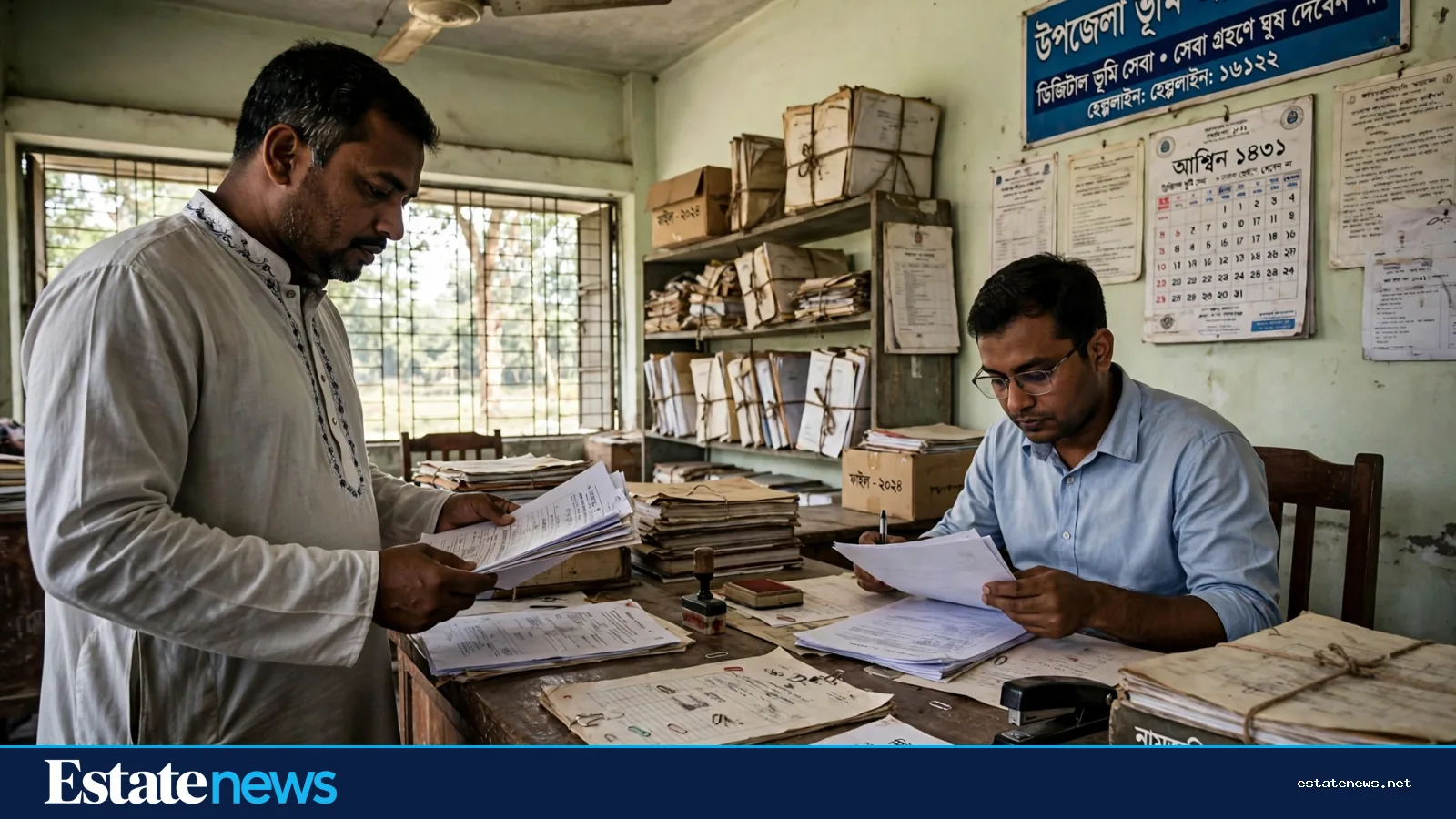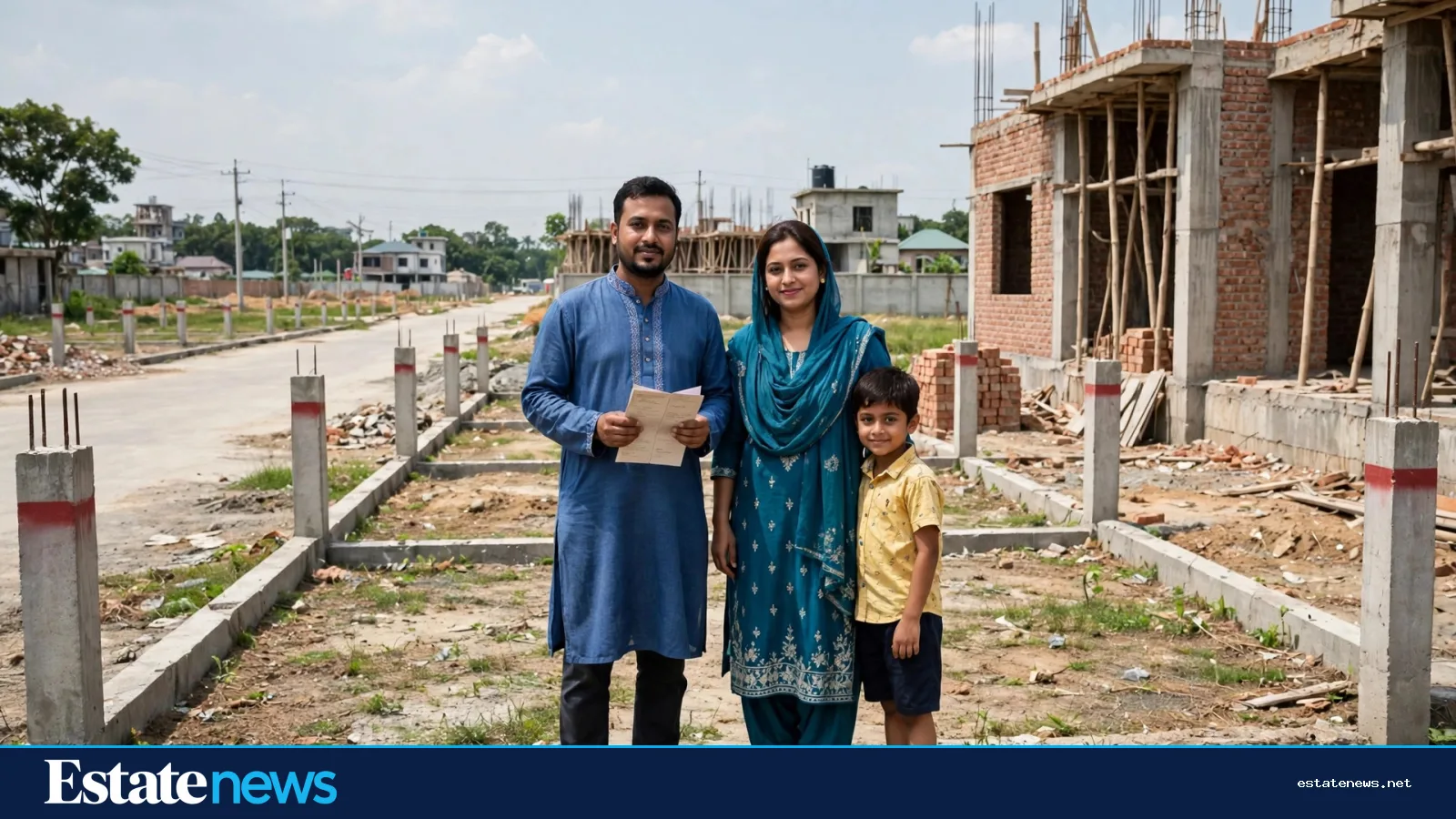
The plot is marked by four concrete pillars with red bands, a patch of grass between them, and a wide road running past. The seller says the road will be blacktopped next year, the gas will come the year after, and the neighbours are already building. The price sounds fair. The only thing standing between the buyer and the deal is a set of papers, and those papers are the whole purchase.
Purbachal covers about 6,200 acres with about 26,000 plots, according to the Daily Star on 31 October. It is the largest planned township near Dhaka, and its plots have drawn buyers for two decades. Uttara Third Phase, covering Sectors 15 to 18, is closer to the city and further along. Bashundhara Residential Area is already a lived-in neighbourhood with plots changing hands between owners. Keraniganj, across the Buriganga, is the newest of the four, and the cheapest to enter. Each of them rewards the same habit: check first.
The approved layout is the first document

Every plot inside a housing project sits on an approved layout plan. That plan shows which land is plots, which is roads, and which is reserved for parks, lakes and public use. A plot sold on land the layout marks as a park is not a plot at all. It is a piece of public land with a seller attached.
Ask for the layout plan and find the plot number on it. The number on the plan should match the number on the deed, the mutation record, and the pillars in the ground. If the pillars stand on different land from the one the papers describe, walk away. That mismatch is the most common plot fraud in Dhaka, and one visit is enough to catch it.
The deed chain and the mutation
A plot changes hands more than once in its life, and each sale should be recorded. The deed chain is the sequence of those sales, from the original allotment or purchase to the current seller. A gap in the chain is a warning. It may mean a sale was never registered, or a family dispute was never settled, or a document was lost and never replaced. A lawyer should read the chain before the buyer pays anything, and the reading should happen at the sub-registry office, not at the seller's drawing room.
The mutation record is the second half of the same check. Mutation puts the buyer's name in the government's land records, and without it the buyer is not the owner in the records. Ask the seller for the mutation record in their own name. If they never mutated the plot into their name, the buyer will inherit the problem, and fixing it after payment is slower and more expensive than fixing it before.


The title-search guide on this site sets out the steps a lawyer follows, and the plot-buying checklist covers the layout check in detail. Both are worth reading before a site visit.
RAJUK approval, access and utilities
A plot is only as good as the building that can stand on it. RAJUK approval governs what can be built: how many floors, how much of the plot can be covered, and how far the building must sit from the boundary. A buyer who plans a five-storey house on a plot approved for three will discover the limit after the money is paid. Ask for the approval status of the sector, and for the building rules that apply to the specific plot.
Access is the check buyers most often skip. A plot with a road on the layout plan may have no road on the ground, only a strip of low land that floods in the monsoon. Visit in the rain if possible, or ask the neighbours how the road behaves in July. A plot that floods every year cannot be lived on.
Utilities follow the same rule. Water, electricity and gas arrive at different times in different sectors, and in some parts of Keraniganj and Purbachal they have not arrived at all. A seller who promises gas next year should be asked who promised it. Deep tube wells, generators and LPG cylinders are workable substitutes, but they cost money every month, and the buyer should know that before the price is agreed.
The price has no index
There is no verified plot-price index for Dhaka's new sectors, and this article will not invent one. Asking prices for built flats in the same areas give some context: flats in Bashundhara Residential Area ask about Tk 9,865 per sq ft and flats in Uttara about Tk 12,500 per sq ft, according to a Pbazaar sample of 8 November 2026. Those are asking prices for finished flats, not plot prices, and they say nothing about what a plot in the same area should cost. A plot is land, a flat is a building on land, and the two markets move on different logic.
A plot is the slowest purchase in Dhaka's property market and often the most rewarding. It gives a family the chance to build exactly the house they want, on a street they chose. It also gives a seller the chance to sell a problem to a buyer who did not check. The pillars, the deed, the mutation, the layout and the road: five checks, one visit, and a lawyer's reading before the money moves.