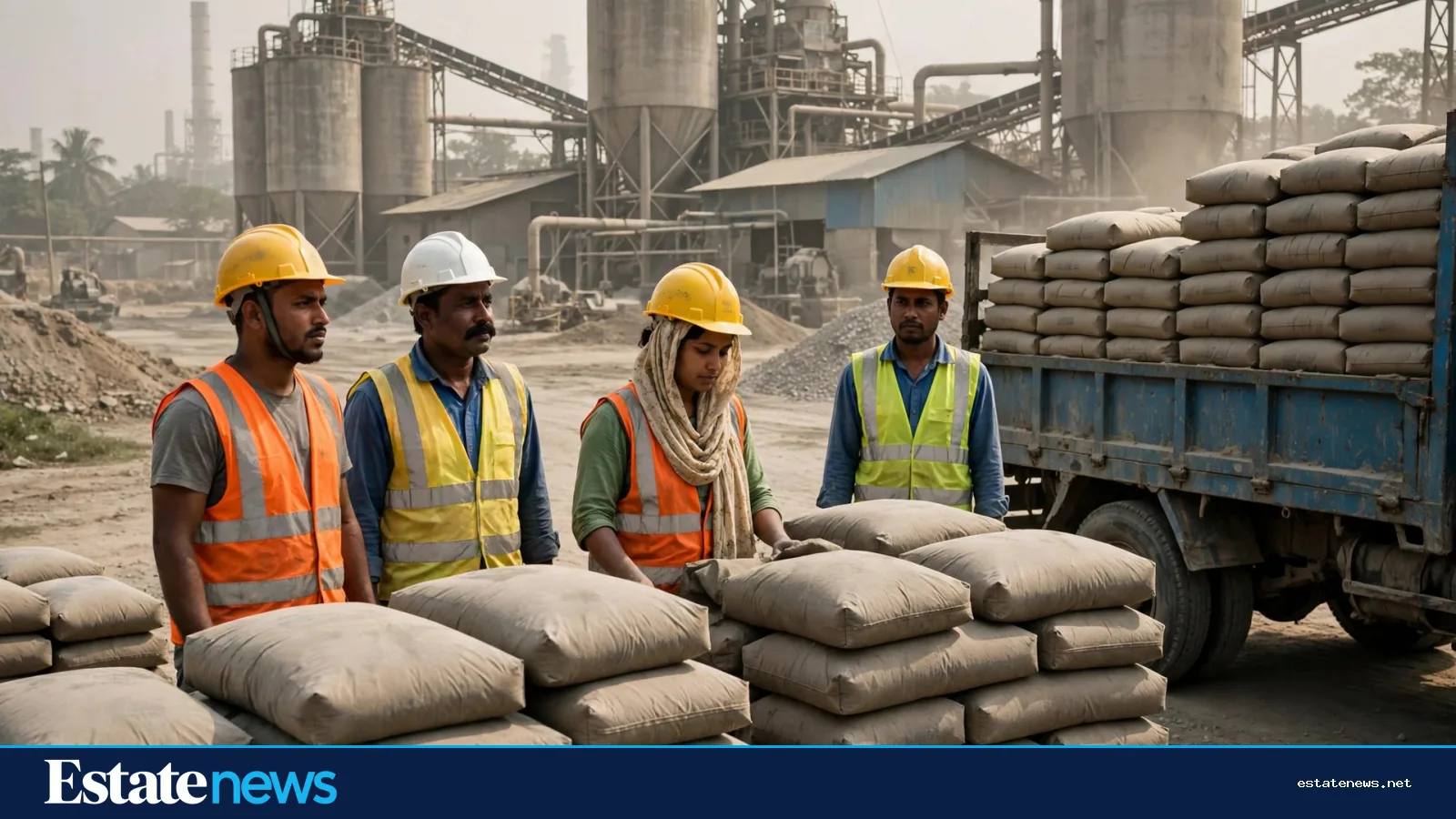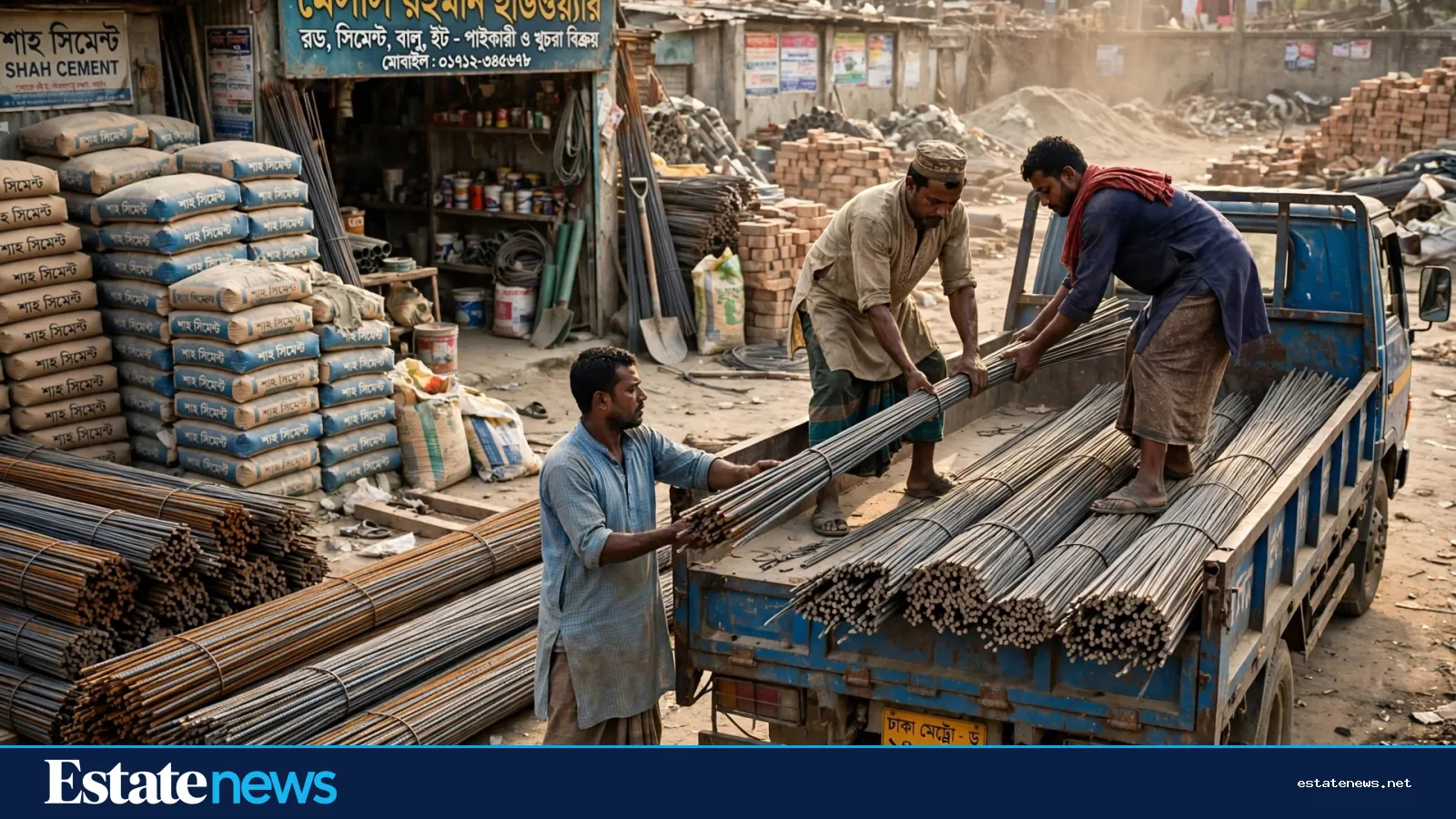
The two costs that decide whether a Dhaka building stays on budget have not moved. Rod, the steel bar that carries a building's frame, is listed at Tk 92,500 to Tk 94,500 a tonne in the latest published ranges, a midpoint of Tk 93,500. Cement sits at Tk 540 to Tk 580 a bag, a midpoint of Tk 560. No new price move was found between 10 and 12 November, and builders planning winter work can price their next stage on numbers that have held for weeks.
The ranges come from the Financial Express market report of 10 October 2026, and they are published ranges, not a single surveyed price. That distinction matters. A builder in Tejgaon and a builder in Keraniganj will pay different prices on the same day, depending on the brand, the quantity and the transport. The range captures that spread. The midpoint is a working number, not a promise. Readers should treat it as a guide for planning, and confirm the price with their supplier before ordering.
Methodology is the reason this tracker exists. Estate News collects the published rod and cement ranges, records the collection date, and keeps asking prices separate from transaction prices. A published range shows what sellers are asking. A transaction price shows what a buyer actually paid. The two can differ, and a tracker that mixes them up misleads the reader. This week's figures are the published ranges of 10 October 2026, checked again on 10 to 12 November, with no new move found in that window. The next update will record any change the same way.

What steady prices mean for a family building a home


For a family building a house on a plot in Gazipur or a small building in Narayanganj, steady input costs are the difference between a budget that holds and a budget that slips. Rod and cement are bought in stages, and a price jump in the middle of construction forces a choice: pay more, or stop and wait. A steady range lets the family order in stages without that fear. It also lets a contractor quote a price and stand by it, which is worth more than a small discount that disappears halfway through the job.
The winter season is the busiest time for building in Bangladesh. The rains have ended, the ground is dry, and work can move fast. Builders who held back during the monsoon now want to start. Steady prices at the start of that season are good news for them, and for the families who hired them. The risk to watch is not in the price list but in the supply chain: a delay in a shipment or a shortage of a particular brand can still push costs up for a single project, even while the published range stays flat.
The steel year behind the numbers
The steadiness has a backdrop. BSRM Group, the country's largest steel maker, closed its 2025-26 financial year with combined revenue of Tk 23,943 crore, up 20 percent, and net profit of Tk 1,418 crore, up 25 percent. A record year for the biggest steel maker does not by itself set the price a family pays for a tonne of rod, and this tracker does not claim that it does. It does show that the industry supplying the rod is strong, which is one reason supply has stayed reliable. Cement tells a more mixed story, and it will be covered in full in a separate results piece this week. For this tracker, the point is simpler. The two main inputs have held their range into the winter season, and a builder or a family can plan on that. Our earlier report on rod and cement holding steady gives the longer view, and our area-price page shows what finished flats are asking in the same neighbourhoods where new buildings are going up. The tracker will return next week with fresh ranges. If rod or cement moves, the change will be recorded here with its date and its source, and the midpoint will be recalculated. Until then, the message of this week is a quiet one: the costs have not moved, and in a market where they often do, that is news worth noting.