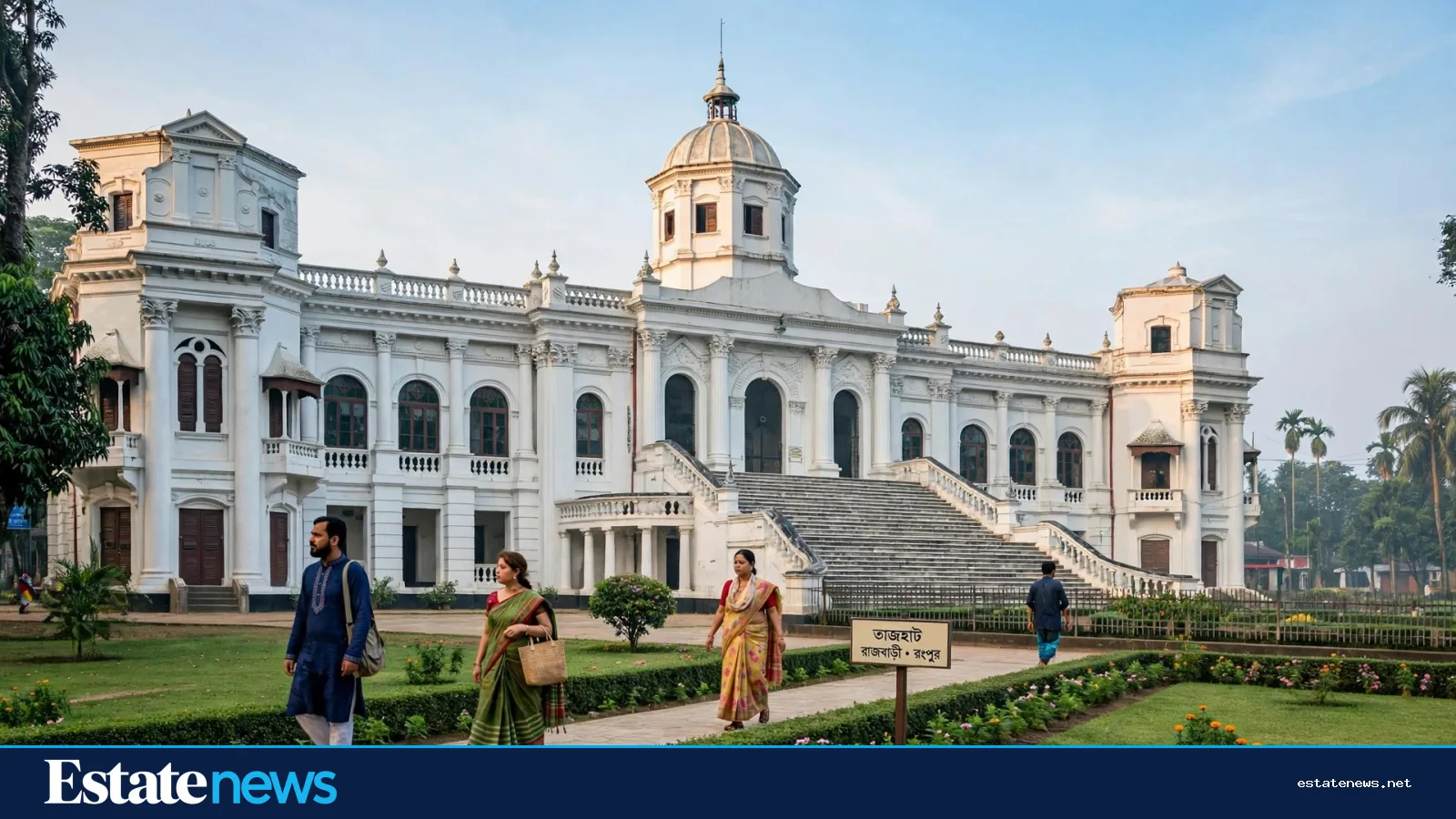
Drive out of Rangpur city towards the east and the road opens onto a long white frontage that does not look like anything else in the district. Tajhat Palace stands two storeys high, its marble face catching the light, its gardens spread out in front of it. Visitors come for the museum inside. They stay for the building itself, and for the story of the family that raised it out of the flat Rangpur plain.
The palace was built between 1908 and 1917 by Raja Kumar Gopal Lal Roy, son of Raja Gobind Lal Roy and a descendant of Manna Lal Roy. About 2,000 workers laboured on it for about ten years, and the cost was put at about Tk 1.5 crore, a sum that still startles when it is quoted in the town. The building is 76.20 metres long and 15.24 metres wide, two storeys, east facing, and finished in white marble. It was built to be seen, and more than a century later it still is.
A name from the crown trade

The name Tajhat carries its own story. The accepted local account says it comes from Manna Lal Roy's trade in tajs, jewelled crowns, in Mahiganj, the old trading town near Rangpur. That account is told in the town as history, but it rests on local tradition rather than documents, and it is best read as legend rather than a recorded fact. What the records do support is the family itself: a line of Rajas whose wealth and standing shaped the Rangpur of the early twentieth century, and whose palace was the most visible sign of it.
Inside, the palace was built for a household that lived on a grand scale. Wide staircases, high ceilings and long verandas run along the front, and the rooms were arranged for both family life and the business of a Raja: receiving visitors, settling disputes, and keeping the accounts of estates that stretched across the district. The marble was not decoration for its own sake. It was a statement, in a town of brick and tin, that this family had arrived and intended to stay.
From palace to courtroom
Partition changed everything for the house. In 1947 the palace was declared abandoned, and it was handed over to the Agriculture Institute along with 55 acres of land. The family was gone. The building stayed, and the state found new uses for it. From 1984 to 1991 it housed a bench of the High Court Division of the Supreme Court, and for seven years the corridors that once carried a Raja's household carried judges, lawyers and litigants instead. It is a strange second life for a palace, but it kept the building in use, and use is what saves old buildings in Bangladesh.
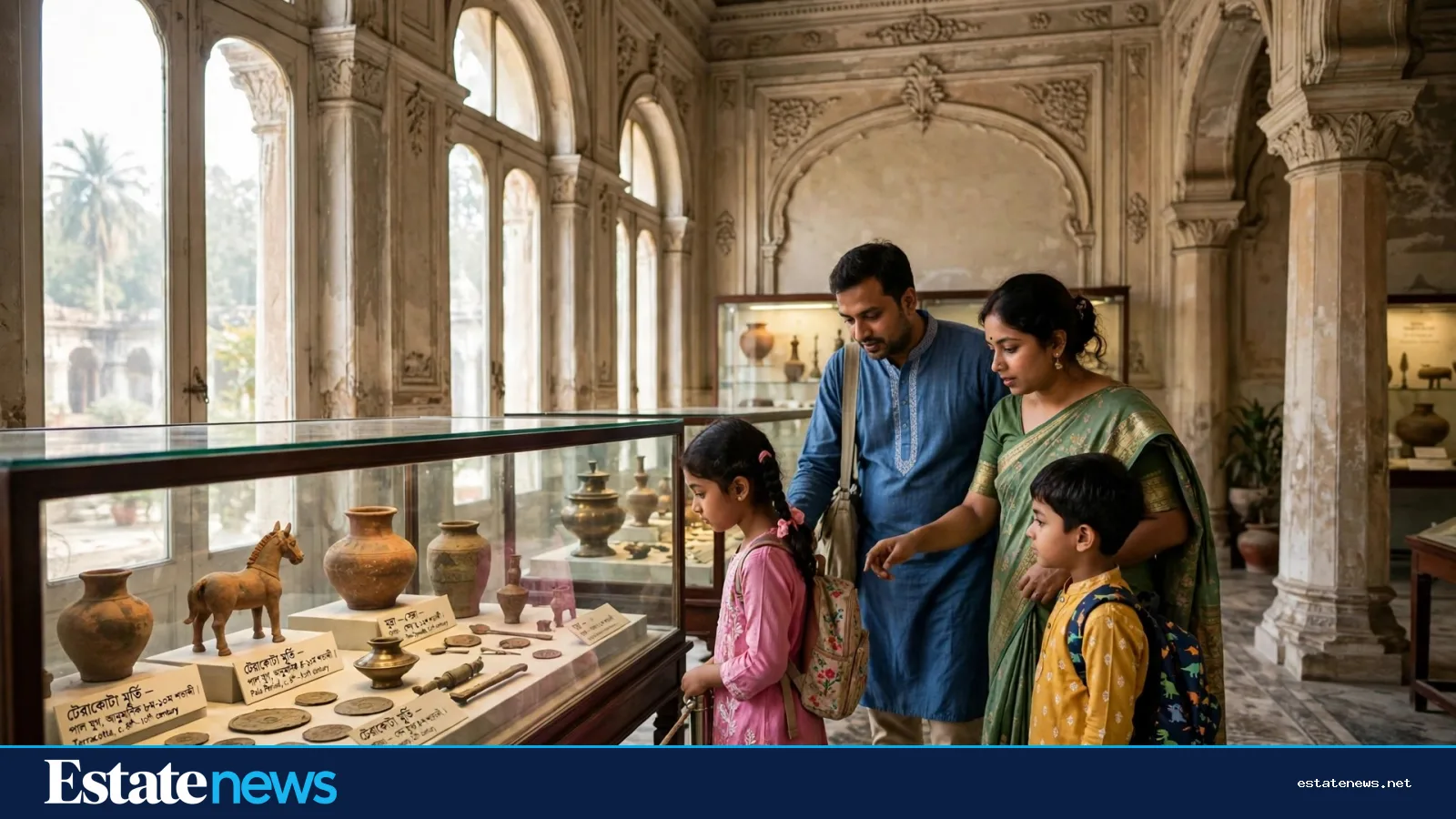
In 1995 the Department of Archaeology declared Tajhat a protected antiquity. That gave the building a legal shield it had not had before, and a reason for the state to spend money on its upkeep. Ten years later, in 2005, the palace opened as a museum. The collection inside covers the region's history, and the building itself became the main exhibit: the marble front, the staircase, the high rooms, all open to visitors who pay a small entry fee and walk through a house that was never meant for the public at all.


What stands there today
Today Tajhat is one of Rangpur's best-known places, and the museum draws visitors from across the division. School groups come in the winter months. Families from the city walk the gardens in the late afternoon. Researchers come for the collection, and photographers come for the frontage, which photographs well in the morning light. The palace has become a piece of civic furniture in Rangpur, the building everyone gives as a landmark when they are telling a stranger how to find their way.
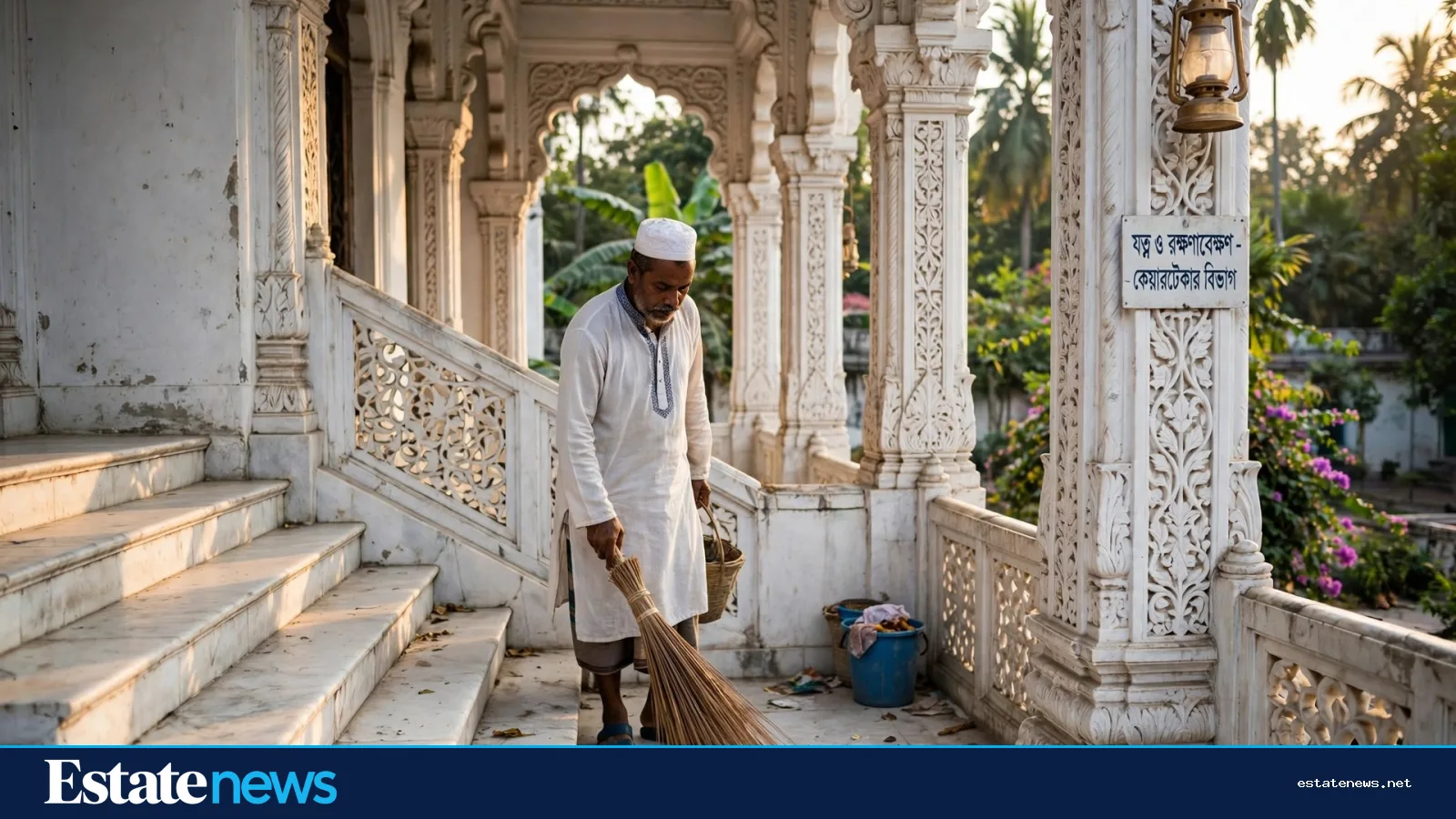
The building's condition is part of its story too. A palace of white marble in a humid climate needs constant care, and the Department of Archaeology's protection is only as good as the maintenance that follows it. The roof, the plaster and the gardens all need regular work, and the museum's staff keep the place open with the resources they have. For a visitor, the lesson is plain: a building survives when people keep using it and keep paying for its repair. Tajhat has had both, first as a court and now as a museum, and that is why it is still standing when so many of the district's other great houses have gone.
Why it matters
Tajhat Palace matters for more than its marble. It is a reminder that Rangpur, often treated as a distant corner of the country, once had wealth and ambition of its own, and built to show it. The palace also shows what a second life can do for a historic building. A house that became a court, and then a museum, is a house that stayed alive. Other districts have palaces that were left empty and fell apart. Tajhat did not, because the state kept finding a use for it.
For a reader in Dhaka, the palace is worth a detour on a trip north. The museum is small and the gardens are calm, and the building itself rewards a slow walk around its front. Stand on the lawn in the morning, look up at the marble, and remember that 2,000 workers spent ten years putting it there. That is the kind of building Bangladesh does not make any more, and it is still here to be seen.
The Kantajew Temple story tells of another northern landmark built of terracotta rather than marble. The Madhur Canteen piece looks at a very different kind of historic building, one that still serves its original purpose every day.