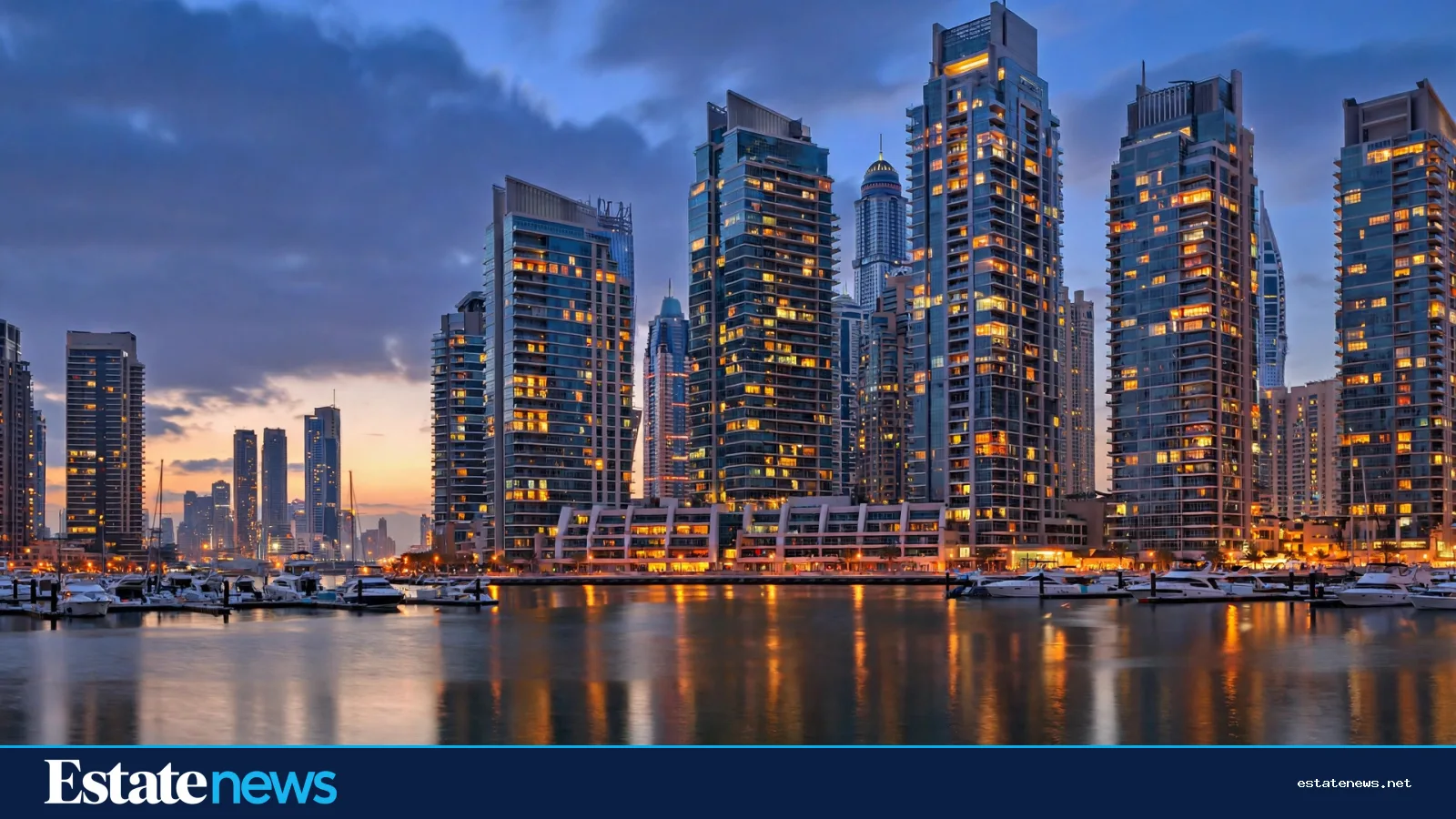
Dubai's property market has a new headline number, and it is the kind of figure that travels fast among Bangladeshi buyers who watch the Gulf. The median flat in Dubai now costs AED 1,722 a square foot, according to data from the Dubai Land Department, compiled by Cevitas. The figure covers 149,920 sales registered with the department over the twelve months to 4 November 2026, and it is 4.5 percent higher than the previous twelve months. For a city that has spent the last few years breaking its own records, the number is less a surprise than a confirmation: Dubai property keeps getting dearer, and the middle of the market is moving with it.
The median is the useful number here, more useful than the average. It is the middle sale, half above and half below, and it describes what an ordinary buyer actually pays. At AED 1,722 a square foot, or AED 18,534 a square metre, the median flat in Dubai sits far above what the same money buys in Dhaka. That comparison is the one Bangladeshi readers make first, and it is worth making carefully, because the two markets sell different things: different sizes, different rules, and different buyers.
What the money buys, flat by flat

The same DLD data breaks the median down by size, and the steps between the categories are steep. A median studio costs AED 688,516. A one-bedroom flat costs about AED 1.25 million. A two-bedroom flat costs AED 2.2 million. A three-bedroom flat costs AED 3,955,888. In Dubai, space is the expensive thing. An extra bedroom is not a small upgrade. It is a different purchase.
Three quarters of the residential sales in the period were off-plan, meaning buyers bought flats that were not yet built, paying in instalments as construction went on. That is the shape of the Dubai market now. Developers sell the future, and buyers pay for the promise of a finished flat in a new tower.
Where the yields sit
For buyers who think about rent rather than living in the flat, the area figures matter more than the city median. Among ready apartments, Jumeirah Village Circle records a median of AED 1,303 a square foot with a gross yield of 6.8 percent. Dubai South records AED 1,080 a square foot and 6.7 percent. Dubai Creek Harbour records AED 2,376 a square foot and 5.2 percent. Dubai Sports City records AED 1,002 a square foot, where a ready one-bedroom flat averaged AED 760,000, with a gross yield of 7.9 percent.
The pattern is plain. The cheaper areas yield more, and the dearer areas yield less. Dubai Sports City, at the lowest median of the four, offers the highest yield. Dubai Creek Harbour, at the highest median, offers the lowest. That is how property markets normally work, and it is the first thing a Bangladeshi buyer looking for rental income should notice. The headline price and the rental return pull in opposite directions, and the buyer has to choose which one matters more.


Gross yields are not net returns. Service charges in Dubai are high, and they vary sharply by building. A flat with a 7.9 percent gross yield can look very different once the annual service charge, the agent's fee and the empty months are taken out. Any buyer working from Dhaka should get the service charge for the specific building before doing any sums.
A market still growing
The wider numbers put the median in context. Dubai recorded more than 270,000 transactions worth AED 917 billion in 2025, up 20 percent on 2024 by value, according to the Dubai Media Office. The first quarter of 2026 kept the pace: 60,303 transactions worth AED 252 billion, up 31 percent by value on the same quarter a year earlier. This is a market that has grown through higher rates and global uncertainty, fed by new residents, new companies and buyers from around the world.
At the top of the market, the pace has cooled a little. In the third quarter of 2026, Dubai recorded 86 sales of homes worth 10 million dollars or more, worth 1.57 billion dollars in total, according to Knight Frank figures reported by The National. That is down 34 percent by count and 28 percent by value on the second quarter. Even so, Dubai stayed first in the world for super-prime sales, ahead of Hong Kong, which recorded 78 sales worth 1.58 billion dollars. Over twelve months, Dubai recorded 525 such deals worth 9.25 billion dollars.
The read-across for Bangladeshi buyers
What does all this mean for a reader in Dhaka? The first point is that Dubai is not a cheap alternative to a Dhaka flat. It is a different market with a different price level, and the median of AED 1,722 a square foot puts it beyond the reach of most Bangladeshi buyers as a first home. The buyers from Bangladesh who look at Dubai are usually doing something else: buying a second property, parking savings in a market they see as stable, or planning a move.
Then there is the currency. The dirham is tied to the dollar, and the taka has weakened against the dollar. A Bangladeshi buyer paying in taka has watched Dubai get dearer in taka terms even when the dirham price stood still. The 4.5 percent rise in the median is measured in dirhams. In taka, the rise is larger. That is a cost that does not appear in the Dubai brochures, and it is the one that decides whether the purchase still makes sense.
This article is for information only. It is not financial advice. Property in another country carries currency, legal and tax questions that need professional advice before any money moves.