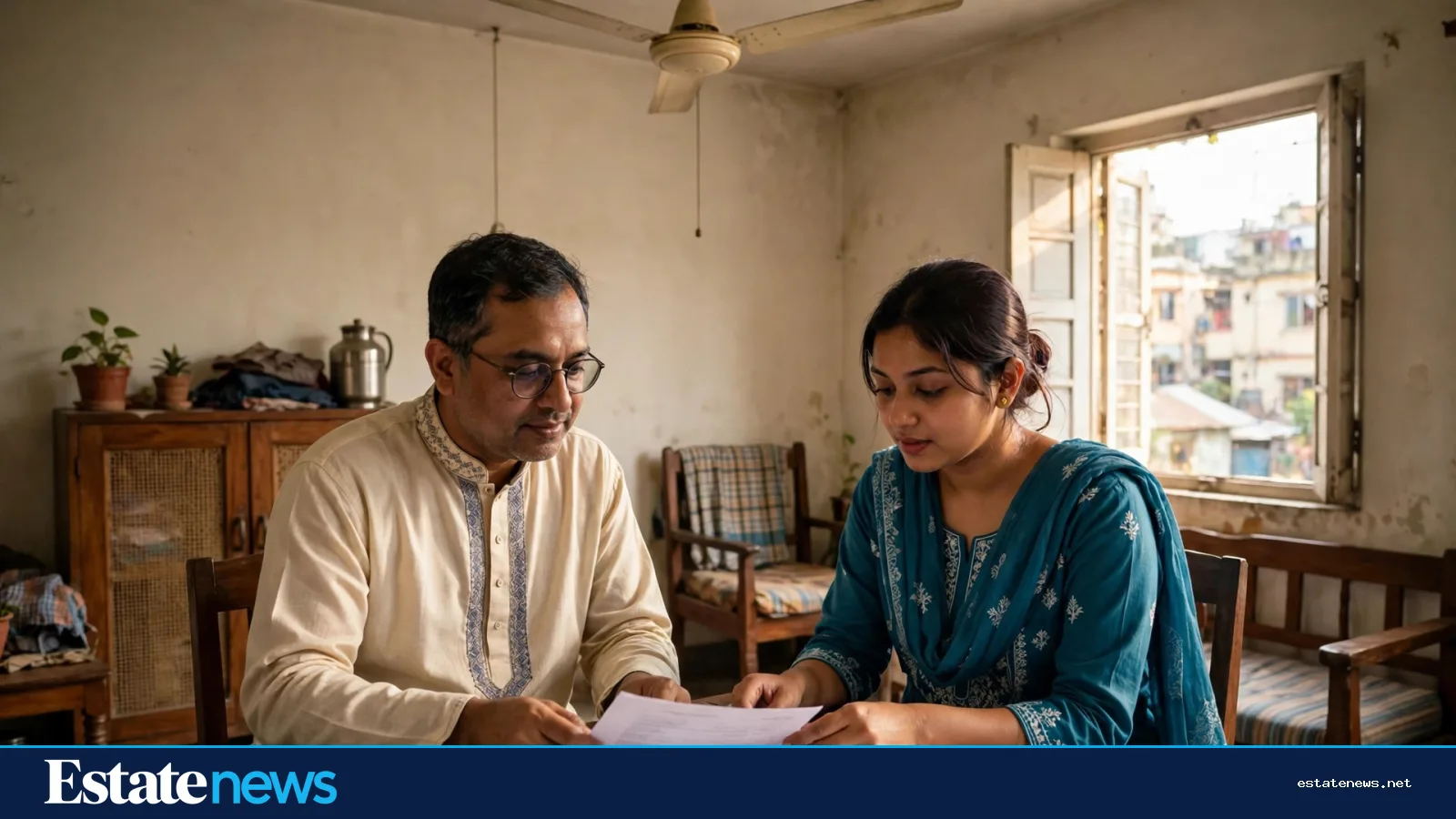
In Dhaka, the family flat is often the family's largest asset and its most complicated one. Parents buy it, children grow up in it, and when the parents die, the flat belongs to several people at once. That is where the trouble starts. Not because anyone has done anything wrong, but because the papers were never brought up to date, and the family never sat down to agree on what happens next.
The first step after a death is the least dramatic and the most often skipped: updating the records. The flat or land must be mutated into the names of the heirs, so the government's records show who owns it now. Mutation is the paperwork that makes a person the owner in the official record. Without it, the heirs cannot easily sell, mortgage or even prove ownership to a buyer. Estate News set out the process in Mutation explained: the paperwork that makes you the owner (https://estatenews.net/policy/mutation-explained-the-paperwork-that-makes-you-the-owner-in-the-governments-records), and the same steps apply after inheritance. A lawyer can prepare the application, and the heirs will need the death certificate, the deed, the previous mutation record and proof of who the legal heirs are.
The khatian has to match

Before anything is sold, the khatian, the record of rights, must be checked line by line. Names, shares and plot numbers must match the deed. If a name is misspelled, or a share is wrong, or a plot number does not match, the record has to be corrected first. A wrong khatian is one of the commonest reasons a sale stalls. The correction can be a simple application to the land office, or it can require a court order, depending on the kind of error. Either way, it takes time, and it should be started long before a buyer appears.
The deed chain matters just as much. A buyer, and the buyer's bank, will want to see how the property passed from owner to owner down to the present heirs. Any gap in that chain is a question the seller must answer. Title search before you buy land (https://estatenews.net/policy/title-search-before-you-buy-land-in-bangladesh-deed-chain-mutation-records-and-how-a-lawyer-checks-ownership) explains how a lawyer checks that chain, and the same checks apply when the seller is a family of heirs.
Every heir must agree
This is the part that causes the most pain. A flat inherited by four siblings belongs to all four. One sibling cannot sell the whole flat alone. A sale needs the consent of every heir, or a partition that divides the property properly. If the heirs agree to sell and share the money, the sale deed must carry all their signatures. If one heir lives abroad, that heir's consent must be arranged properly, with a power of attorney that is executed and attested in the right way.


When heirs do not agree, the options narrow. The family can partition the property, dividing it by agreement or through the court. A flat cannot easily be cut into pieces, so partition often means one heir buys out the others, or the property is sold and the money divided. Either way, a court process takes time. Families that talk early, before a buyer is waiting, almost always do better than families that discover the disagreement at the registration office.
The papers to gather before a sale
A seller who is an heir should gather the file before listing the flat. The deed in the deceased parent's name. The mutation record in the heirs' names. The corrected khatian. The death certificate. A list of legal heirs, usually shown through a succession certificate or a family certificate from the local authority. The holding tax receipts, to show the property's dues are paid. And the written consent of every heir, or the partition deed. A buyer who sees that file complete will pay more readily than one who is asked to wait while papers are chased.
Two warnings are worth keeping. The first is about haste. A family that sells quickly, before the mutation is done, often finds the buyer cannot register the sale, and the money sits in dispute. The second is about informal arrangements. A verbal agreement among siblings, or a note on plain paper, is not a substitute for a registered partition or a properly executed sale deed. Courts and banks work from registered papers.
For the risks that come with inherited land in particular, the risks of buying land inherited by heirs (https://estatenews.net/policy/uttradhikar-suutre-paooza-jmi-kenar-jhunnki-oozaris-bntn-ar-birodh-edate-za-zacai-krben) sets out what buyers check and what sellers should prepare. And for the mutation step itself, mutation after buying a flat (https://estatenews.net/policy/mutation-after-buying-a-flat-the-paperwork-most-buyers-forget) covers the paperwork most people forget.
This article is general guidance, not legal advice. Inheritance law and land procedure have details that vary by case, and a lawyer should be consulted before a sale is agreed.