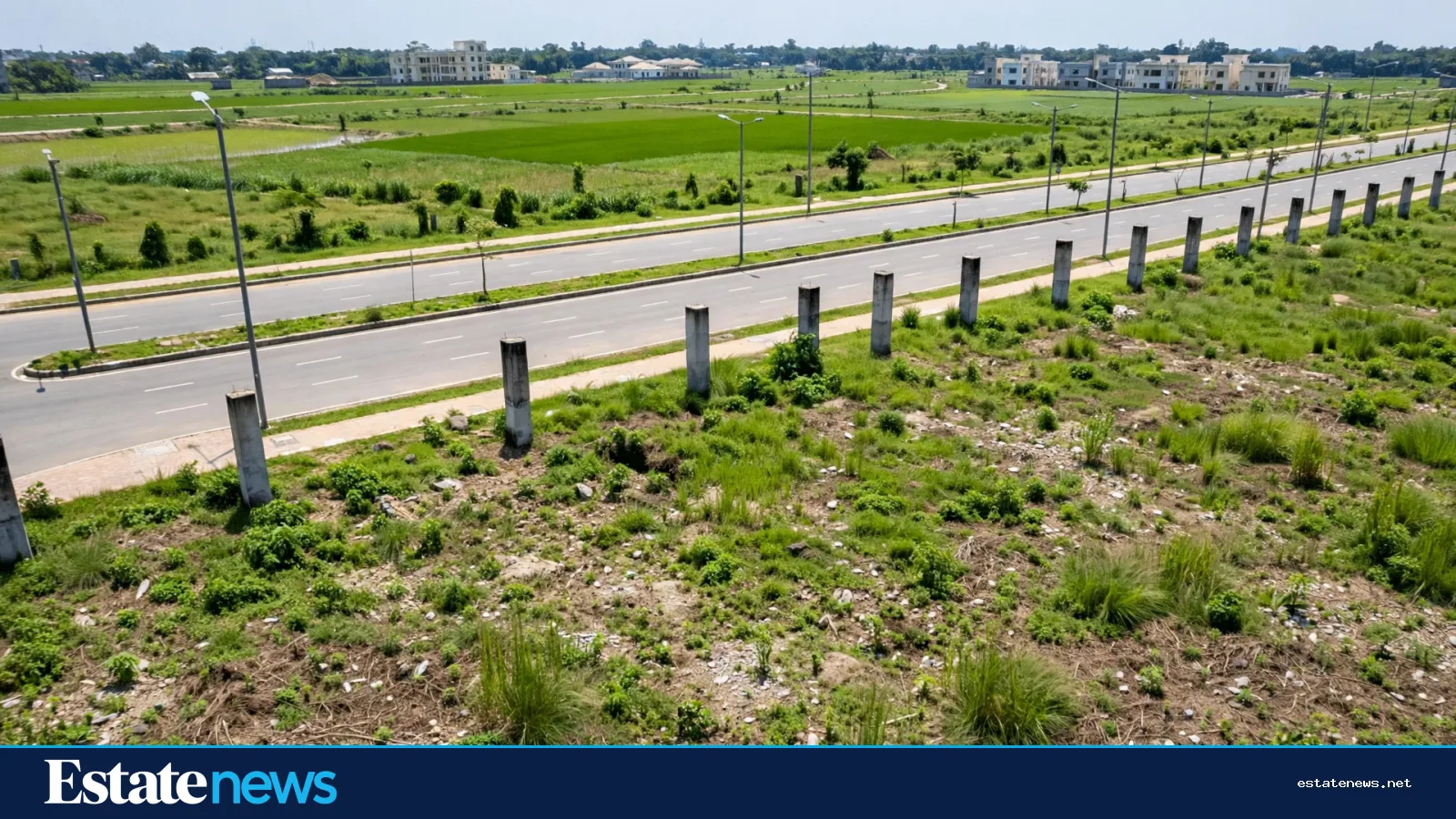
Drive out of Dhaka on the 300-foot road and the city thins quickly. Wide avenues, empty plots marked with concrete pillars, a handful of new houses standing alone in green fields. This is Purbachal New Town, RAJUK's planned township north-east of the capital, between the Balu and Shitalakhya rivers. About 6,150 acres, 30 sectors, 26,213 residential plots. The project started in 1995. Its deadline has been extended seven times. Houses are going up on only a few hundred plots so far.
Yet the plots sell. Every week, buyers from Dhaka and from abroad pay for land in a town that is still mostly fields. Some will build a family home. Some are buying for the next generation. All of them are buying a piece of paper as much as a piece of land, and the paper is where the trouble lives.
First, whose plot is it

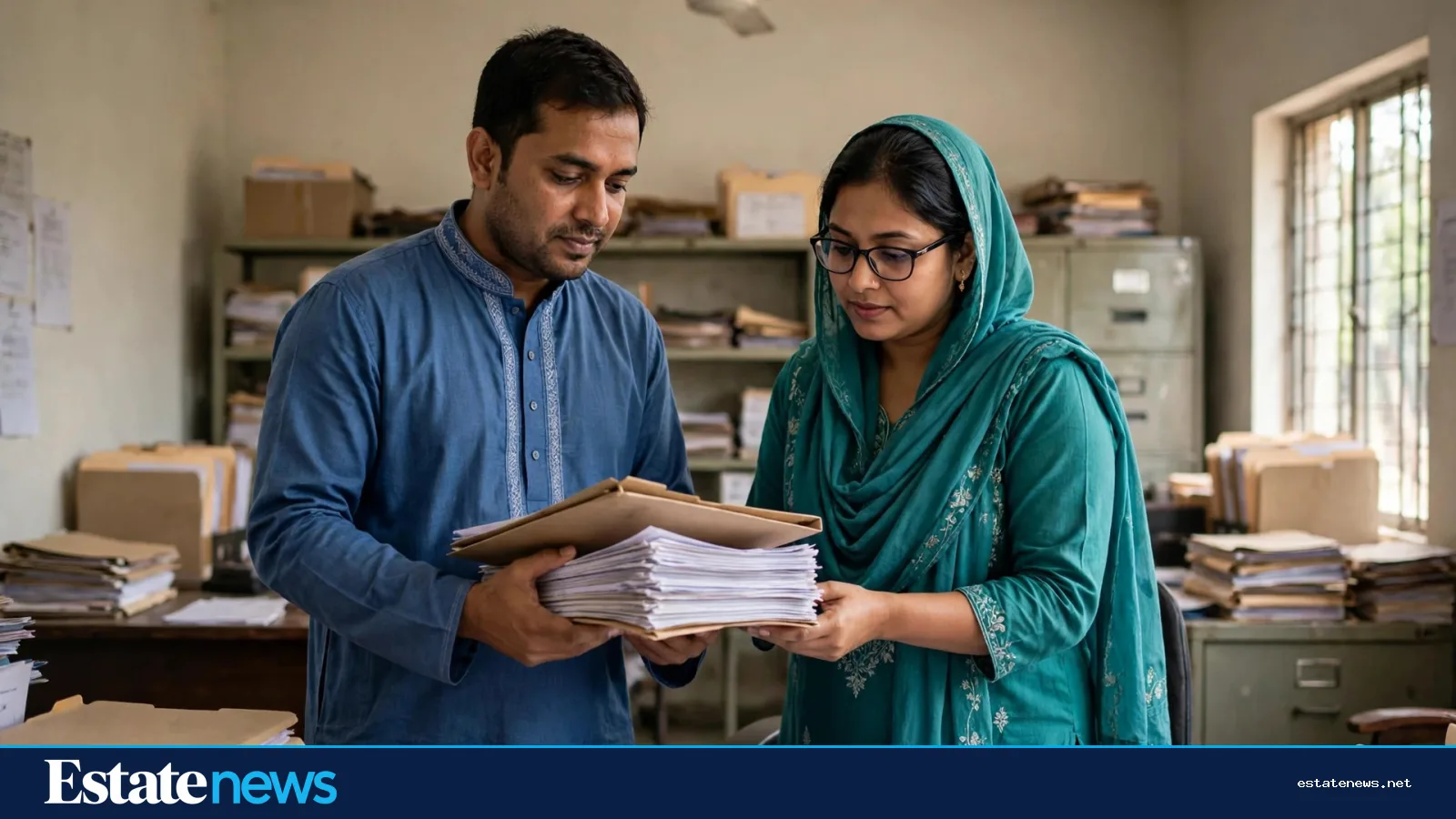
Purbachal plots were allotted by RAJUK by lottery, in categories that include government officials, private-sector employees, expatriates and businesspeople. The seller should hold a RAJUK allotment letter, payment receipts, a possession letter and a registered 99-year lease deed. Those four documents are the spine of the transaction. Ask for the originals, not photocopies, and read the name on the allotment letter against the seller's national ID card. Then, with the seller, check the plot's file at RAJUK's Estate and Land office. The file will show whether the allotment is in the seller's name, whether any dues are outstanding, and whether the plot carries any restriction.
The plot's category matters as much as its owner. Plots allotted on special consideration between January 2009 and July 2024 are under review, and selling them needs RAJUK's permission first. A seller who brushes past the category question is a seller to walk away from. The category is written on the allotment letter. Read it yourself.
Second, the paper trail at the sub-registry
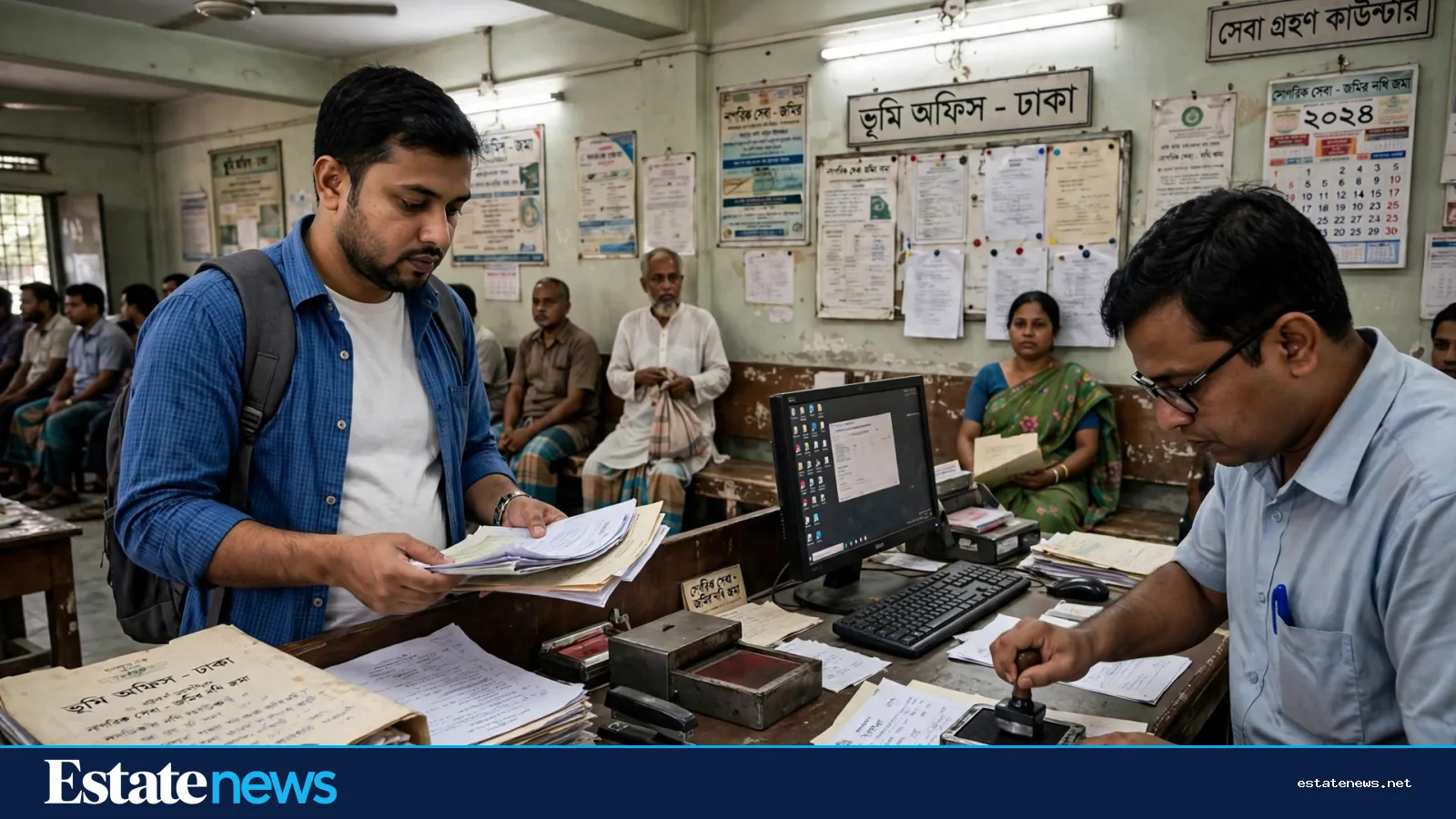
Purbachal deeds are still registered at the Rupganj or Kaliganj sub-registry office, depending on the mouza, because the move of the area into Dhaka district has been decided but no gazette had been found as of late October 2026. Go to the sub-registry office and search the record for earlier deeds on the same plot. You are looking for two things: that the chain of ownership is unbroken, and that no earlier sale, mortgage or dispute is recorded against the plot. A lawyer who does land work in Narayanganj and Gazipur will know how to run this search. Pay for one.
While you are there, check the mutation, or namjari, papers. Mutation is the record that puts the owner's name in the government's land register. A plot without mutation is a plot whose ownership the government has not yet recorded in the seller's name. The mutation fee at the AC Land office is Tk 1,170 in total, a small sum, but the paperwork behind it is what counts. Our guide to mutation (https://estatenews.net/policy/mutation-explained-the-paperwork-that-makes-you-the-owner-in-the-governments-records) explains the process step by step.
Third, the plot itself


Visit the plot. Stand on it. The sector, road and plot number should match the allotment letter, and the plot should be identifiable on RAJUK's layout plan. Check the ground: is it low land that floods, is it filled land, and how far is the nearest road, water line and electricity connection? Most roads in Purbachal are built, but electricity and water are partial and there is no piped gas. A plot far from the built roads will cost more to develop than the price suggests.
Ask the neighbours. The few hundred families already building in Purbachal know which sectors have water, which roads flood, and which plots have been disputed. An afternoon talking to them is worth more than a morning with a brochure.
Fourth, how you pay
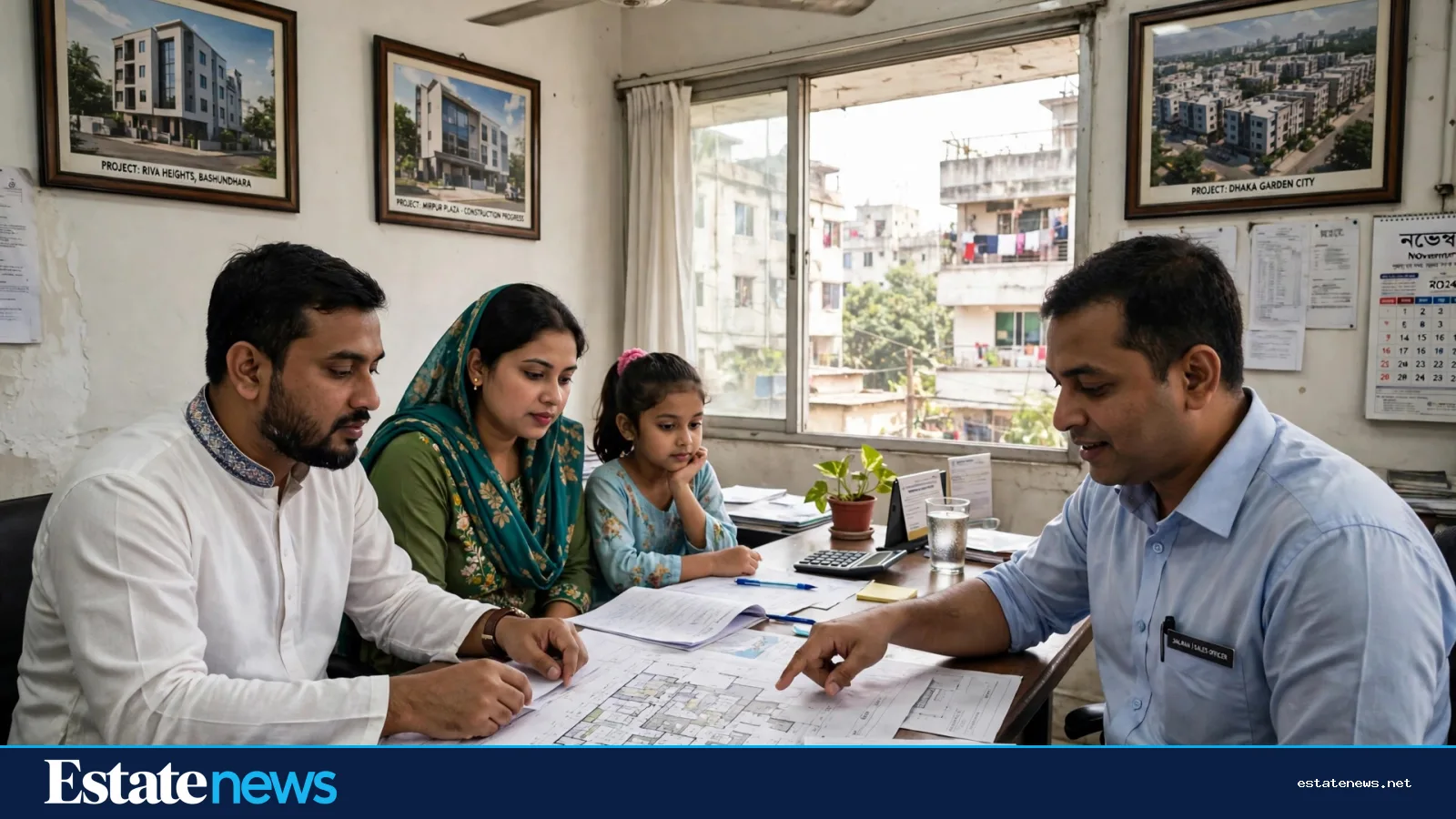
Pay through the bank, by account-payee cheque, pay order or demand draft, in the seller's name. Never pay in cash, and never pay the full price before registration. A bayna, the written sale agreement made when part of the price is paid in advance, must be presented for registration within 60 days of signing, a rule in force since 1 January 2026. For scheduled residential plots, the buyer pays RAJUK a 3 per cent transfer fee at the sub-registry office under a change made in November 2025. Special-consideration, commercial, disputed and unscheduled plots follow a different route and need RAJUK's permission first.
After registration, collect the certified copy of the deed within 90 days and complete the mutation. Then, and only then, apply for a building plan, which RAJUK approves online through an enlisted architect. The floors and floor area allowed depend on the plot size and the width of its road.
The question to keep asking
Purbachal will be built, sector by sector, over the next decade or more. The 300-foot road is already there, the plots are laid out, and the demand from Dhaka families is genuine. Our comparison of Purbachal plots against Dhaka flats (https://estatenews.net/markets/purbachal-plots-or-dhaka-flats-land-versus-apartment-and-the-choice-behind-it) and our look at the 300-foot road (https://estatenews.net/development/purbachals-300-foot-road-the-new-towns-main-street-takes-shape) cover the town's growth from other angles, and our earlier Bangla guide to Purbachal (https://estatenews.net/development/puurwacl-priklpit-shrer-suzog-ar-kenar-age-ze-jhunnkigulo-mathaz-rakhte-hbe) sets out the same risks in Bangla. None of that changes the basic rule. In Purbachal, the land is the easy part. The paperwork is the purchase. Check it first, pay second, and keep every receipt.
This guide is general information, not legal advice. For any transaction, engage a lawyer who practises land law before you sign or pay.