The numbers, from Bangladesh Bank data released on 1 November, are steady rather than spectacular. Merchandise exports reached $17.04 billion in July to October of 2026-27, up about 6 percent on $16.08 billion a year earlier. October alone brought $3.99 billion, up 4.39 percent on the year, the third straight month of growth. The Export Promotion Bureau puts the four-month total slightly higher, at $17.09 billion, up 5.88 percent. The gap between the two counts is small, and the direction is the same.
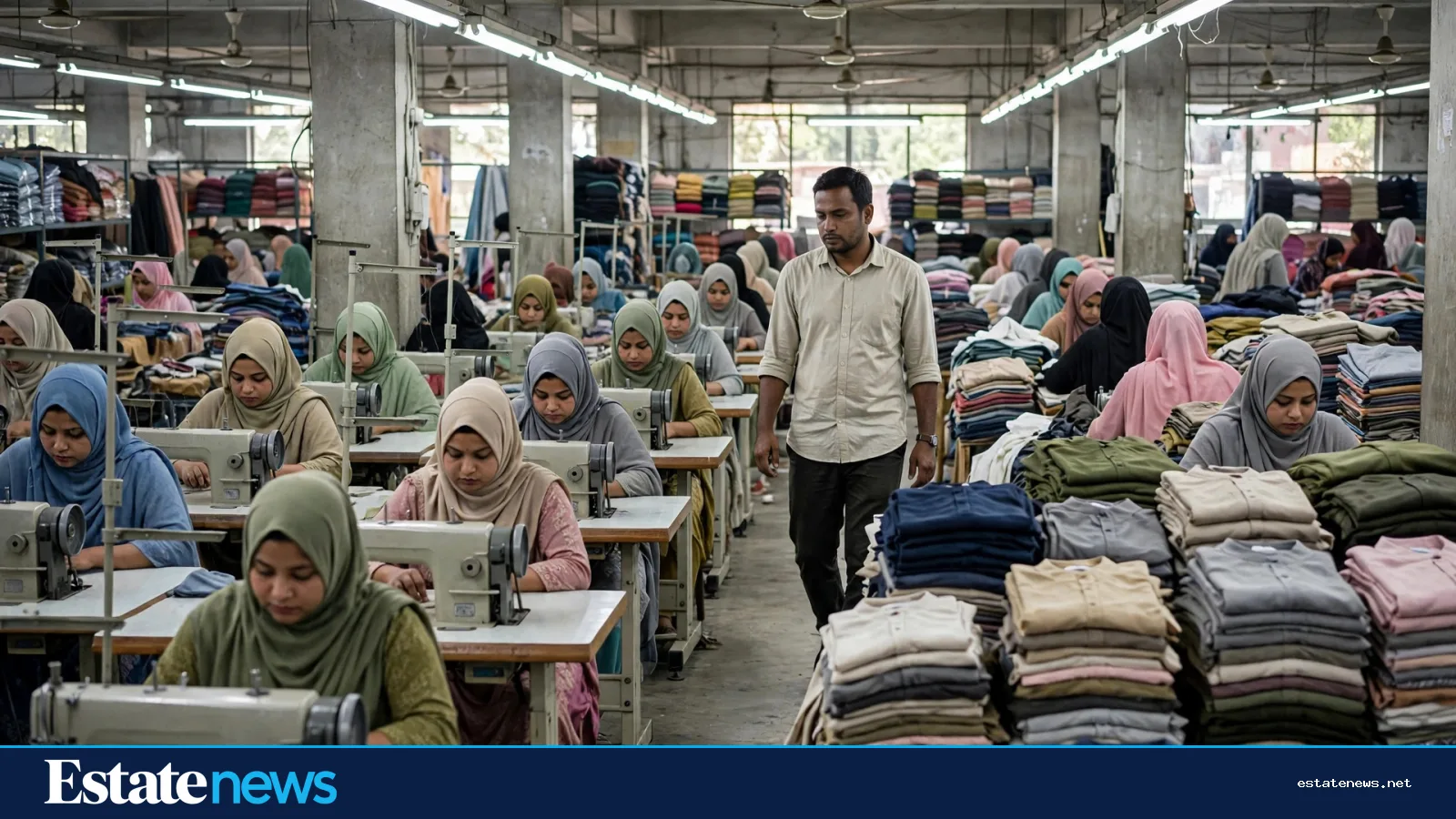
Garments did the work, as they always do. Ready-made garment exports reached $13.75 billion in the four months, up 5.82 percent, with knitwear at $7.73 billion and woven garments at $6.02 billion. That is more than four-fifths of everything the country sells abroad. Knitwear, the sweaters and T-shirts that fill most factory floors, now brings in more than woven shirts and trousers, a shift that has built up over years as buyers moved basic knit orders to Bangladesh. When the garment factories are busy, the whole export economy is busy, and the housing demand in factory towns from Gazipur to Chattogram follows the orders.
The United States remains the biggest single market, taking $3.35 billion in the four months, up 11.51 percent, with October sales to the US at $756.64 million, up 12.10 percent. The United Kingdom bought $1.74 billion, Germany $1.57 billion and Spain $1.52 billion. The surprise in the list is Turkiye, where exports jumped 82.69 percent to $292.15 million, a small base growing fast.
A tariff edge, with strings attached
The tariff picture is where the story turns. Under the new United States Section 301 regime, effective from 24 July, Bangladesh sits in the lower 10 percent tier, a 2.5 percentage point edge over China, Vietnam and Thailand, which face 12.5 percent. Bangladesh, Cambodia, Indonesia and Malaysia are the only four economies that qualify for duty-free tariff-rate quotas on textiles and United States cotton, though that quota mechanism is not yet operational. BGMEA president Mahmud Hasan Khan has described Bangladesh's tariff position as relatively favourable against some competitors, and said the association is engaging the United States Trade Representative to seek exemption from the additional 10 percent tariff.


That edge is real, but it is not a guarantee of orders. Buyers choose on price, on reliability and on speed, and a tariff advantage helps only if the factories can deliver. This is where the caution comes in, and it should not be left out of the story. BKMEA vice-president Md Fazlee Shamim Ehsan has warned that raw-material import costs have risen 15 to 20 percent and wages are up 9 percent. A factory that wins an order at a thinner margin still has to pay those costs. The tariff edge protects the order book. It does not protect the profit.
The stakes reach beyond the factory gate. Garment orders decide how many workers are hired in Gazipur, Narayanganj and Chattogram, and how many of them rent rooms, share flats or send money home to build houses in their villages. A steady export year means steady demand for the small flats and mess rooms around the industrial belts. A weak one shows up quickly in empty rooms and unpaid rents.
The quota question is the one to watch next. The duty-free tariff-rate quotas for textiles and United States cotton are open to only four economies, Bangladesh among them, but the mechanism is not yet operational. Until it starts working, the benefit exists on paper rather than in the order book. Exporters will be watching for the date it opens, because a working quota would cut the duty on a real share of shipments, not just improve the headline rate.
For now, the orders are holding. Four months of growth, a tariff position that favours Bangladesh over its closest rivals, and a United States market that keeps buying. The work ahead is less glamorous: keeping costs in check, getting the quota mechanism running, and turning a tariff edge into orders that actually pay. The factories have done the first part. The rest is still to be won.