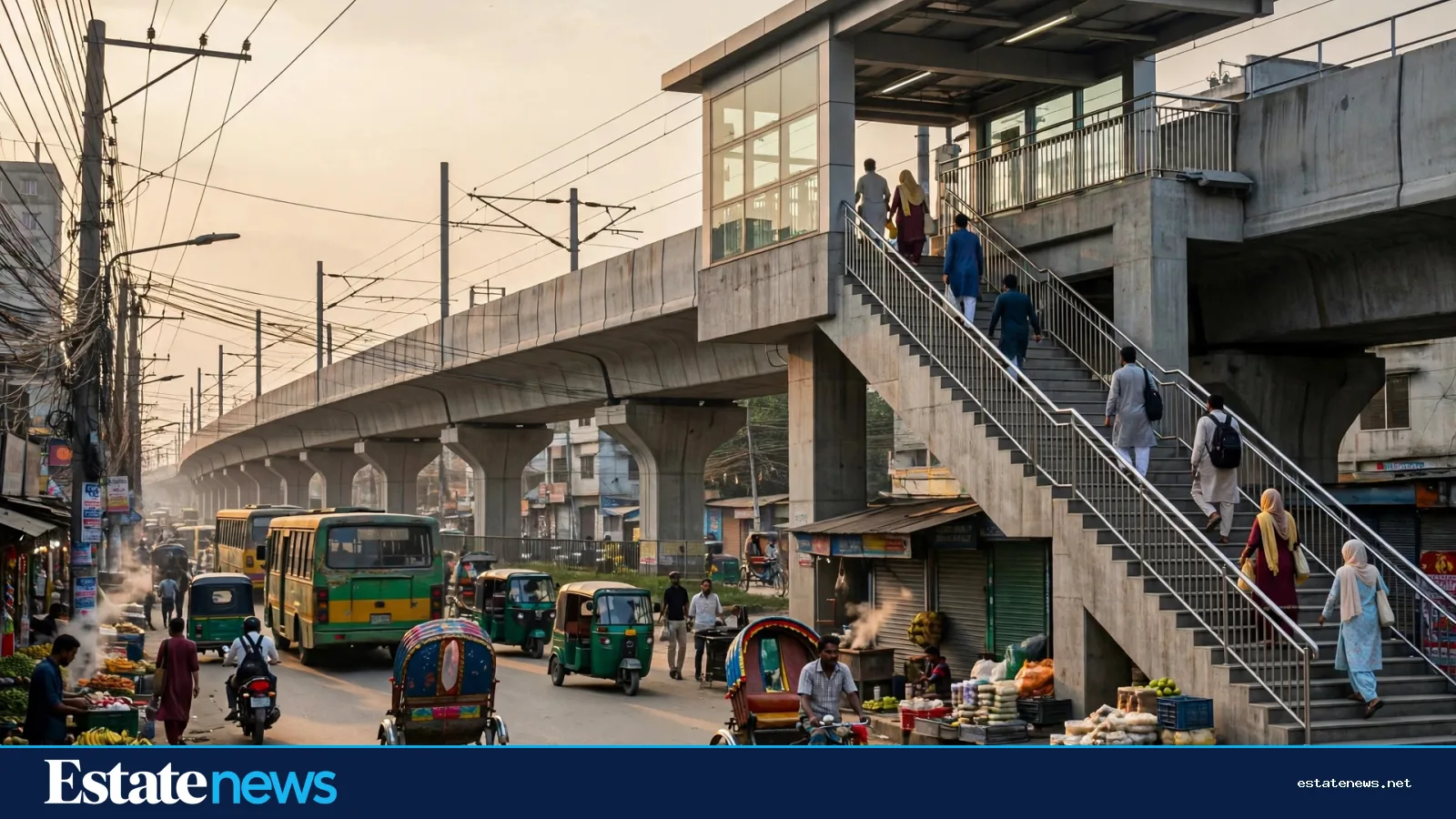
At eight in the morning the stairs at Mirpur 10 fill with people who know exactly how long the trip takes. A student with a backpack, a bank officer with a tiffin carrier, a shop assistant heading for Karwan Bazar. Three years ago the same trip meant a bus, a rickshaw, and a guess about the traffic on Rokeya Sarani. Now it means a train every few minutes and a journey that ends when the timetable says it will.
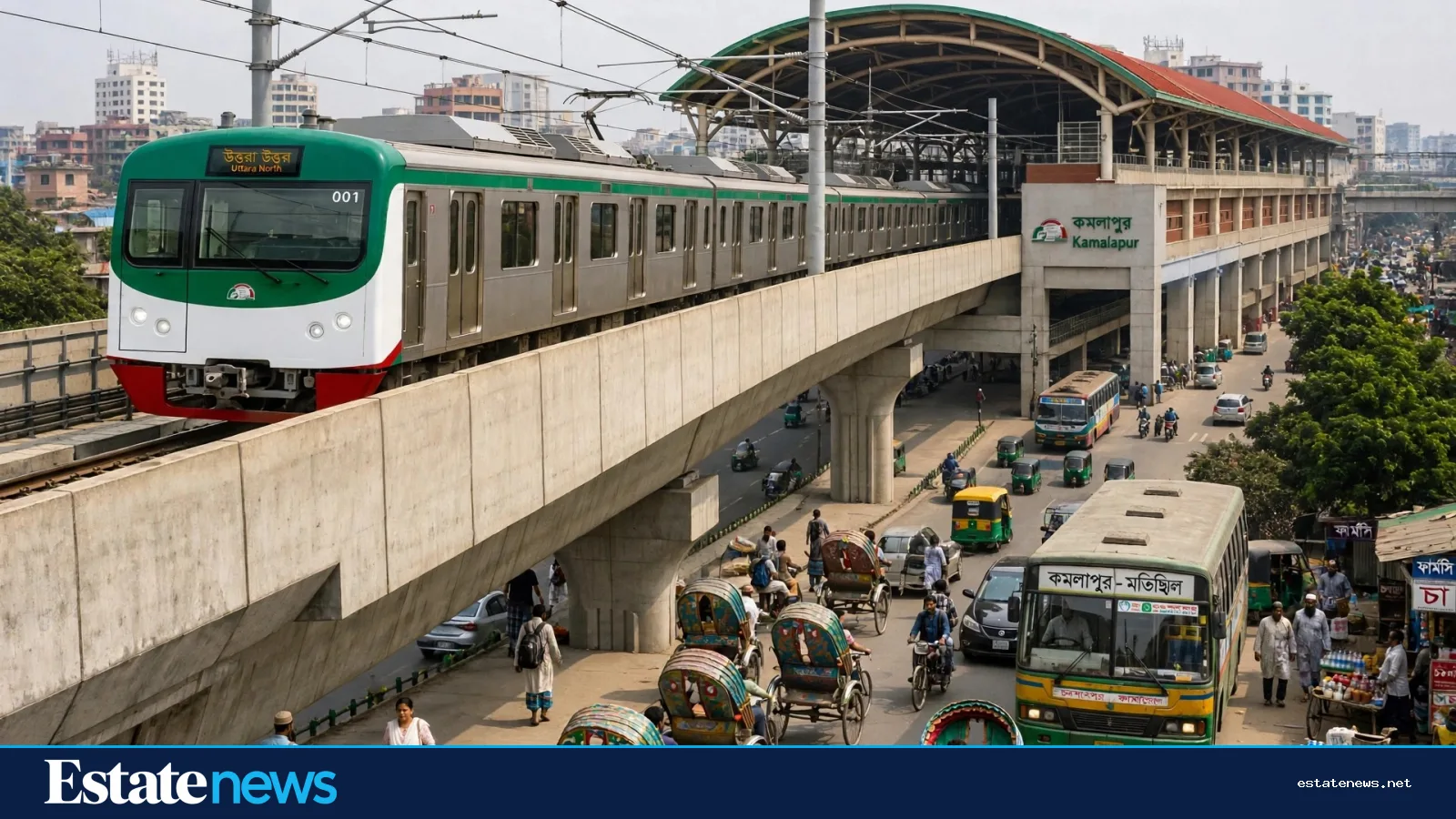
MRT Line 6 runs 20.1 kilometres on an elevated track from Uttara North to Motijheel, with 16 stations in between. The first section, Uttara to Agargaon, opened on 28 December 2022. The rest, Agargaon to Motijheel, opened on 4 November 2023. Dhaka Mass Transit Company data shows the line now carries more than 450,000 passengers on a normal day, and on 10 September this year it carried a record 499,756. More than 313.5 million trips have been made since the launch. Motijheel is the busiest station, with about 51,500 people entering it on an average day, and Uttara North, Pallabi, Mirpur 10, Karwan Bazar and the Secretariat are among the busiest as well.
The street under the viaduct

Stand under the viaduct at Farmgate at six in the evening and the change is plain. Tea stalls, fruit sellers and phone-accessory carts line the pavement below the stairs. Shopkeepers near the stations keep longer hours than they did before the metro, because the evening crowd now arrives on foot, in a steady stream, instead of in bursts from buses. A pharmacy near Karwan Bazar stays open late for the office crowd coming down the stairs. A rickshaw puller waits where the passengers come out, because the last part of the trip still belongs to him.
The stations have changed how people plan their days. A family in Mirpur can reach Dhaka University for a morning class, or a job interview in Motijheel, without leaving home two hours early. Office workers in Uttara can take a job in the Secretariat area and still be home for dinner. The fare helps: Tk 5 per kilometre, with a minimum of Tk 20 and a maximum of Tk 100 for the full run from Uttara North to Motijheel.
Station by station


Each stop has its own crowd. Uttara North serves Diabari and the airport road, and its mornings are full of students and young office workers. Pallabi and Mirpur 10 pull in shoppers as well as commuters, since the markets around them stay busy all day. Karwan Bazar empties straight into the wholesale markets and the newspaper offices, and the Secretariat station serves the government offices that set the city's working hours. Shahbag and Dhaka University bring students, and their platforms are busiest when classes end.
The evening tells the same story in reverse. Office workers board at Motijheel and the Secretariat and ride north, getting off at Farmgate, Agargaon or Mirpur with bags of groceries from the shops below the stairs. The metro has not only shortened the trip. It has spread the city's shopping and eating across the whole line, so a family in Shewrapara can pick up dinner near the station instead of travelling across town for it.
What the metro has not proved
One claim needs care. It is tempting to say the metro pushed up property prices around the stations, and plenty of people say it. The evidence for that claim is not in the public record. No published series tracks transaction prices street by street around the stations, and the asking-price samples Estate News follows are too small to prove a metro effect on their own. What can be said is simpler: the stations brought footfall, and footfall brought shops, and shops brought longer hours and busier pavements. That is a real change, and it does not need a price claim to matter.
The line is still growing. The 1.16-kilometre extension from Motijheel to Kamalapur is under construction, and Dhaka Mass Transit Company projects daily ridership could reach 677,000 once it opens. For now, the 16 stations do the work. They moved a city that used to plan its day around traffic into a city that can plan its day around a timetable, and the streets around the stairs show it.