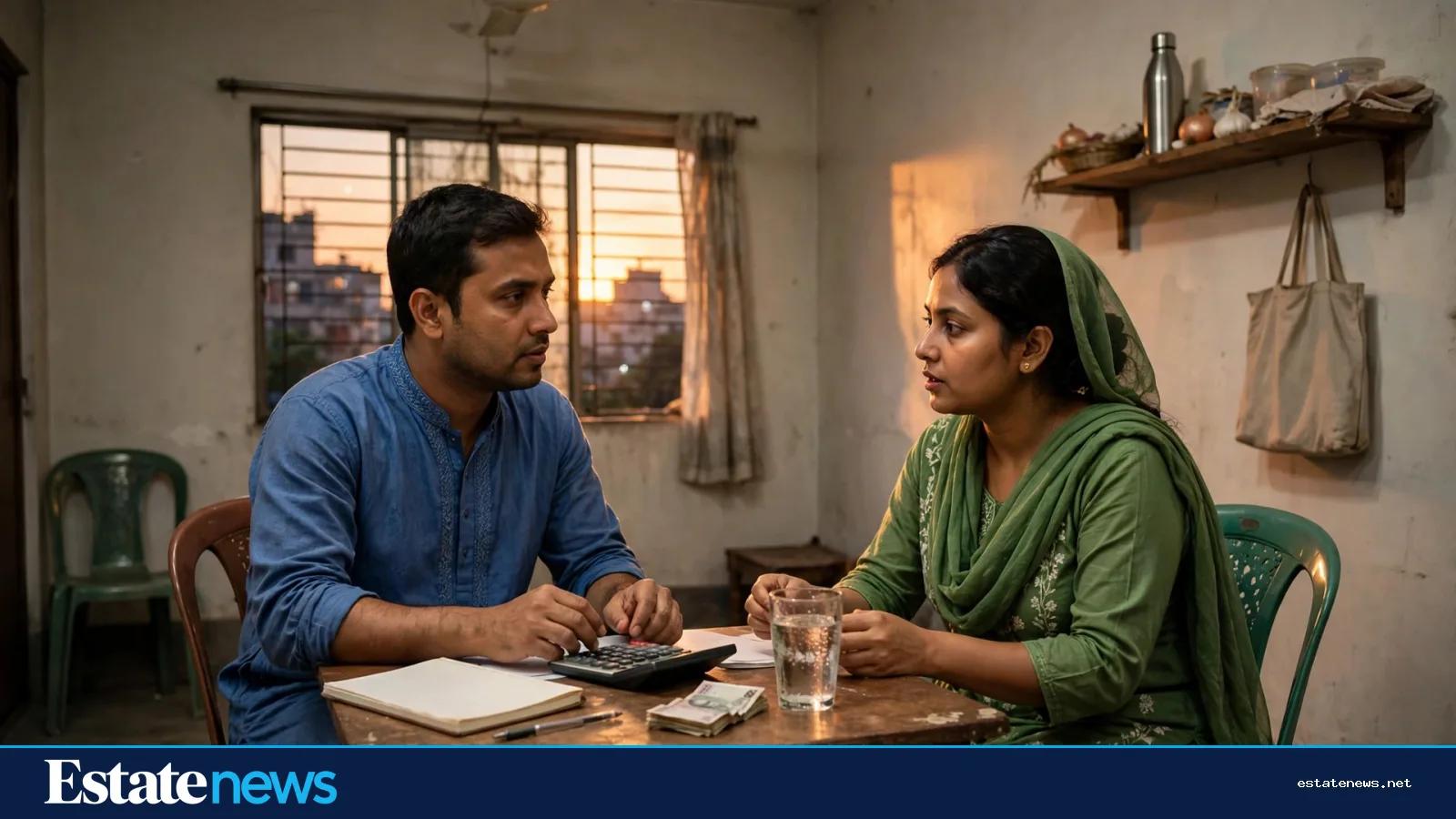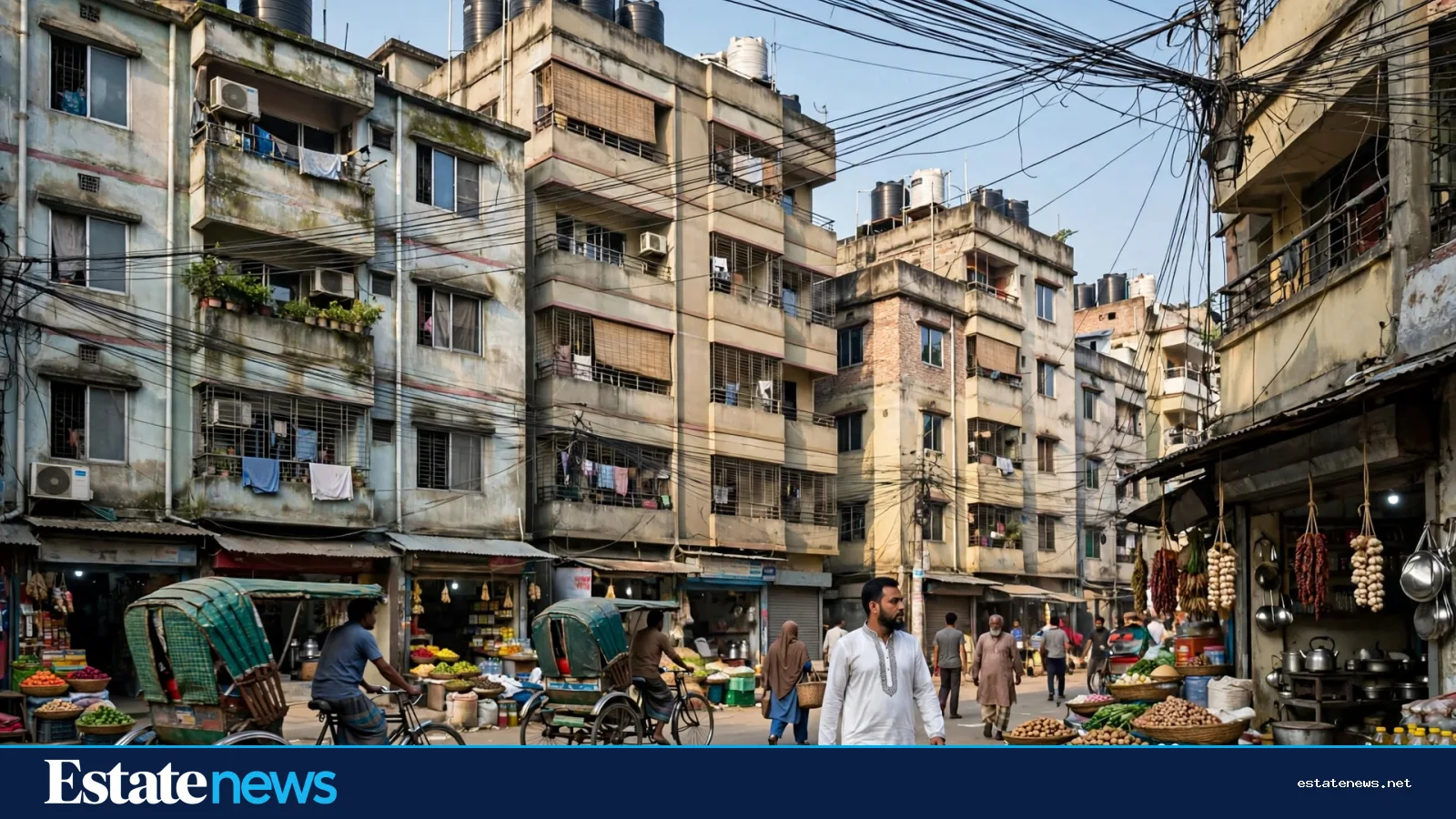
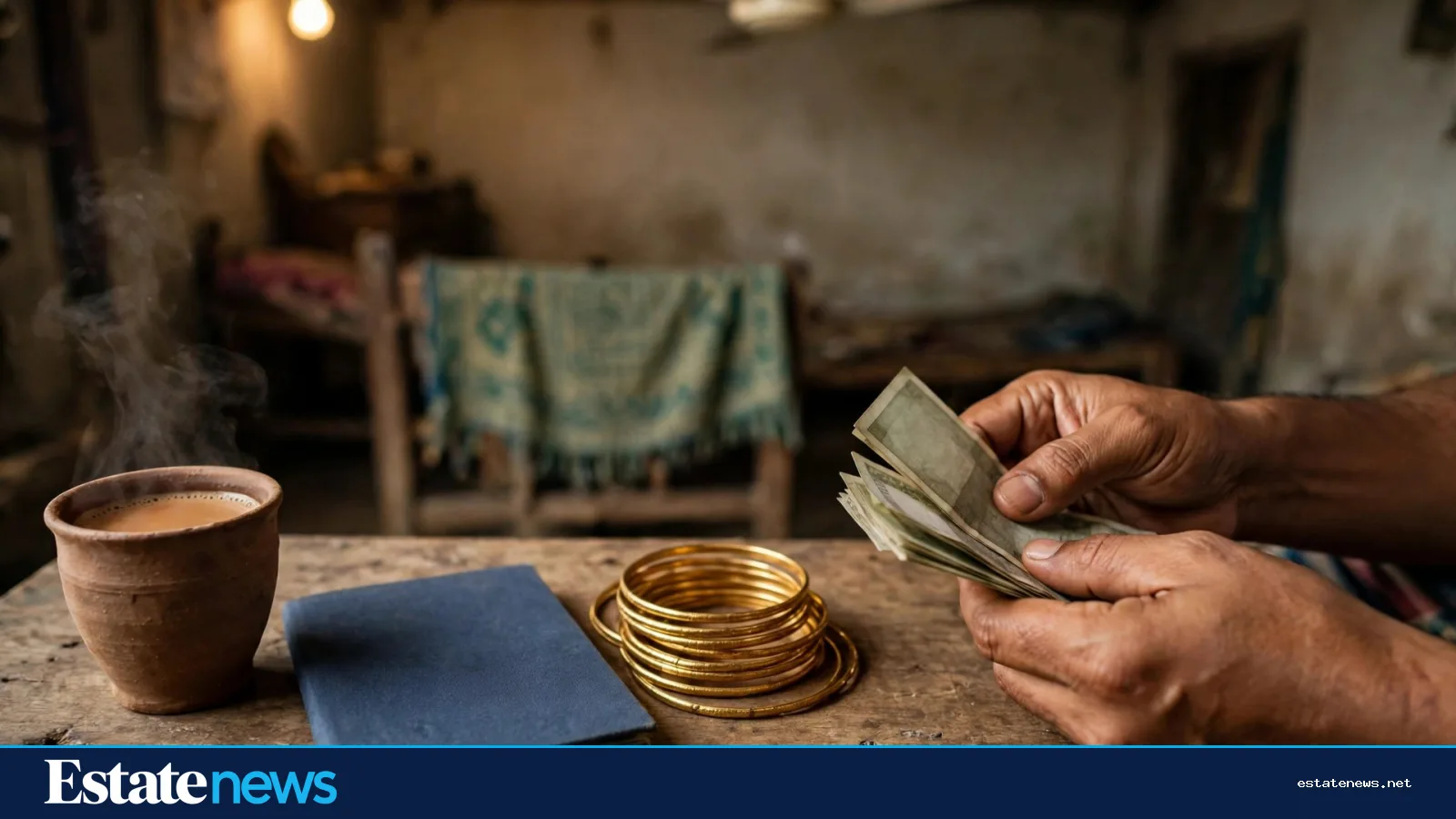
Put Tk 1 lakh on a table in Dhaka and ask three neighbours what to do with it. One will say gold. One will say a bank deposit. One will say start saving for a flat. All three are describing the same city, and all three are partly right. The honest answer depends on the job the money has to do.
Gold is the easiest of the three to buy. The Bangladesh Jewellers Association set 22-carat gold at Tk 221,966 per bhori on 12 November, after cutting the price by Tk 2,216 that morning. It was the third cut in six days, taking Tk 7,698 off the bhori in that stretch from Tk 229,664 on 5 November. At the current rate, Tk 1 lakh buys about 0.45 bhori of 22-carat gold. It fits in a drawer, it sells in a day at any jeweller's shop, and every family in the country knows its price. The catch is written in the same numbers. Gold moves. It rose to Tk 229,664 in early November and fell back within a week. A saver who buys at the top waits for the price to come back. Making charges sit on top of the listed rate, so jewellery costs more than the per-bhori figure suggests.
The deposit: quiet, and smaller than it looks
A bank deposit does the opposite job. It does not jump around. The money sits in an account, earns interest, and comes back on the date agreed. Bangladesh Bank cut its policy rate to 9.5 percent in August 2026, and home-loan rates run roughly 9 to 13 percent, which tells a saver where bank rates sit in general. Deposit rates sit below lending rates, and after tax and inflation the real gain on a deposit is modest. That is the trade. A deposit will not make a saver rich, and it will not fall by Tk 2,216 in a morning either.
For a family building a flat fund, the deposit has one clear use: it is the parking place. Money meant for a down payment in two or three years should not be riding the gold price up and down. It should be somewhere it can be counted on.
The flat: the lakh is the start, not the price


A flat is a different order of money. The asking median for Bashundhara Residential Area stands at Tk 12,005 per square foot, from a sample of 16 current listings, so Tk 1 lakh buys about eight square feet there. Nobody buys eight square feet. A flat is bought with a loan, and the loan needs equity. Banks lend up to 70 percent of a flat's price, which leaves the buyer to find the other 30 percent. On a Tk 70 lakh flat, that is Tk 21 lakh. On a Tk 1 crore flat, it is Tk 30 lakh. A single lakh is the first step toward that figure, not the figure itself.
That is why remittance matters to this comparison. Bangladesh Bank data shows $12.34 billion came in between 1 July and 7 November this financial year, and much of it goes toward land and flats. A family abroad sends money month after month, and the flat fund grows in a deposit account, not in a gold box.
So where does the lakh go?
It depends on the horizon. Money needed within a year belongs in a deposit, where it stays whole. Money set aside for a daughter's wedding in five years can sit partly in gold, because the family understands gold and can wait out a fall. Money meant for a flat belongs in a savings plan with a date on it: so much a month, toward a named deposit figure, with the loan arithmetic done in advance.
None of the three choices is wrong on its own. The mistake is confusing them: treating gold as a savings account, treating a deposit as an investment, or treating a lakh as a flat. A saver who names the job first, and then picks the place, usually ends up with the money where it needs to be.
This article is for information only. It is not financial advice, and readers should check current rates with their own bank or jeweller before deciding.