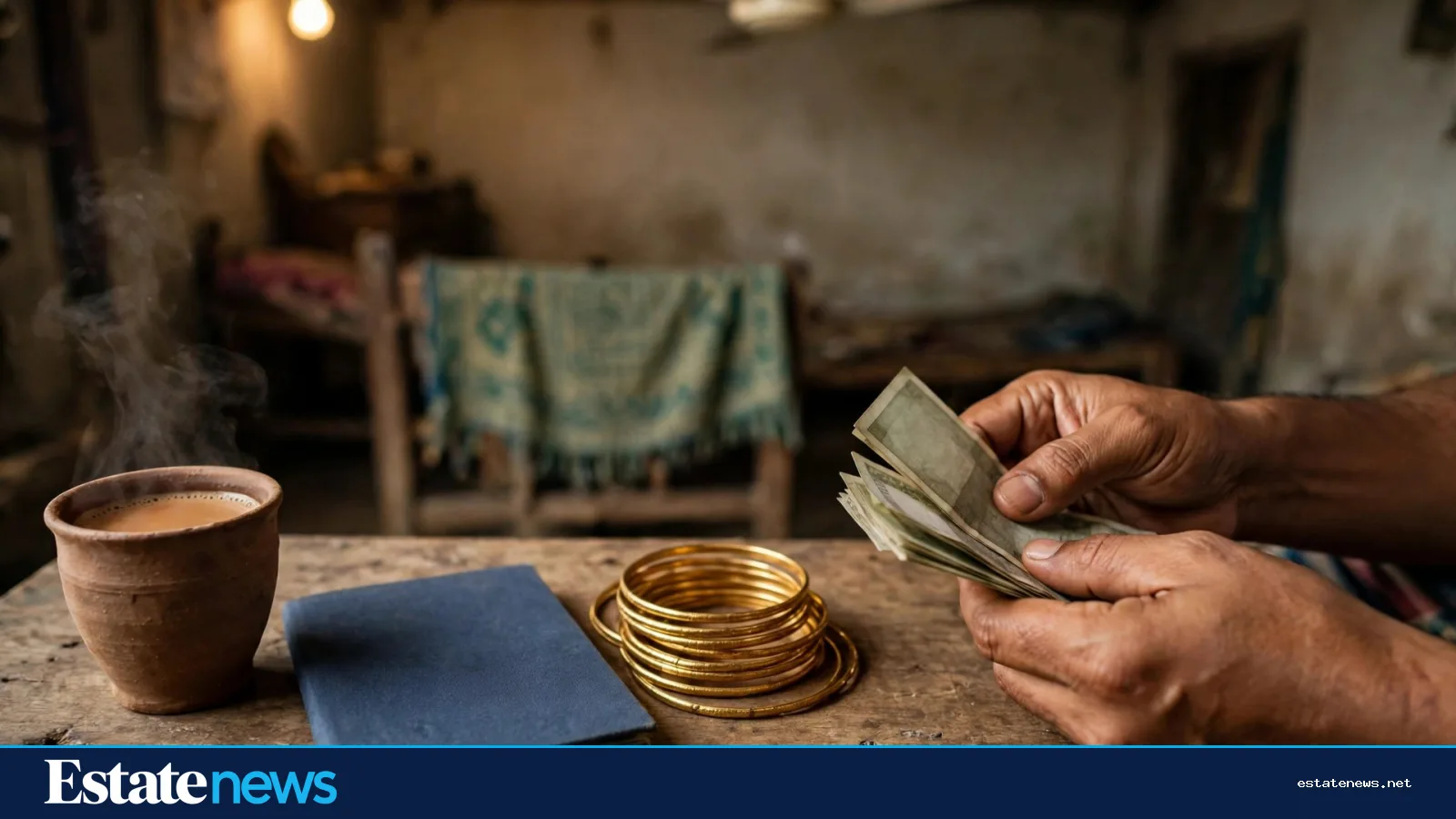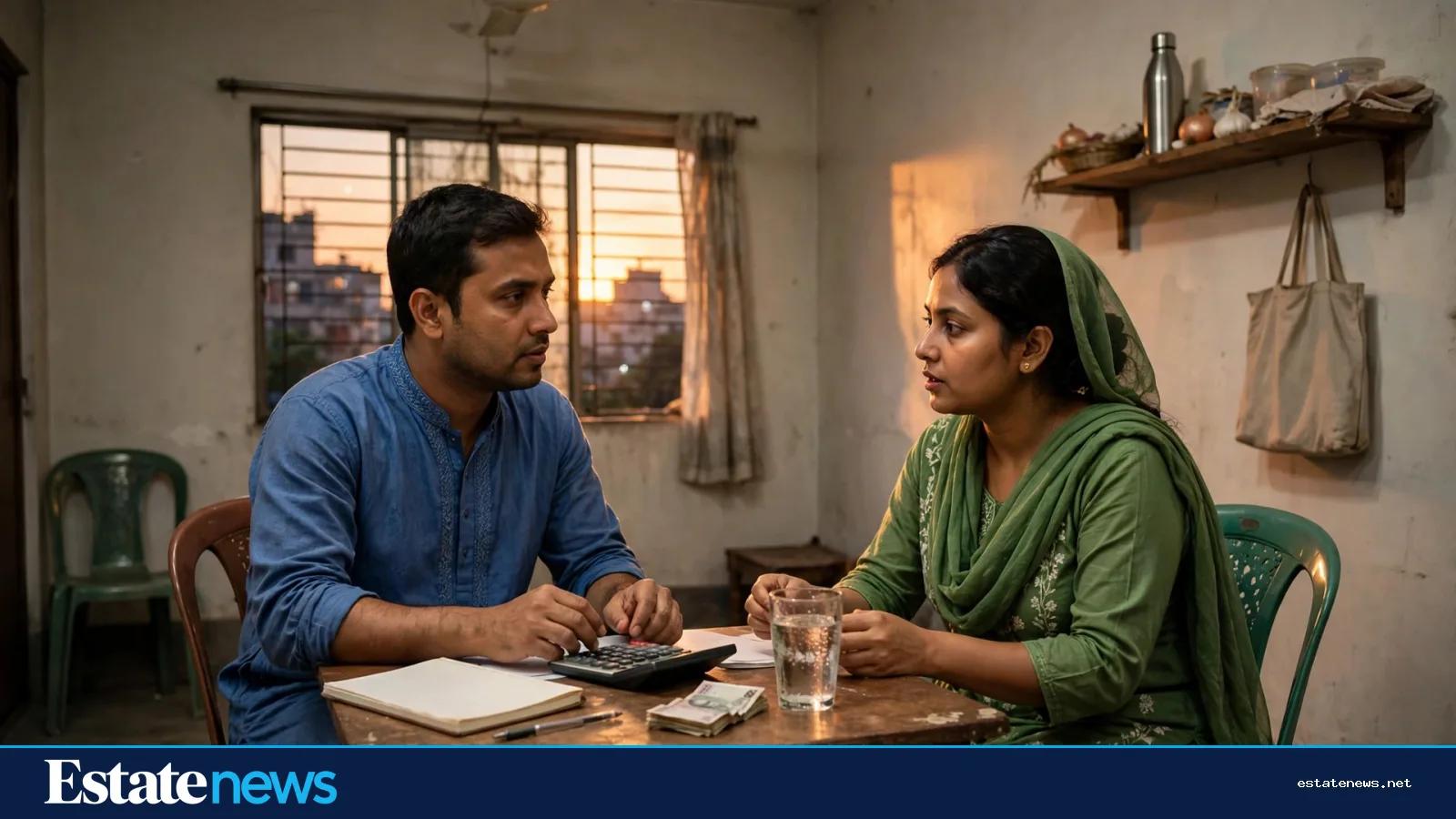
The dollar now costs Tk 124.75. That is the weighted average interbank rate, up from Tk 124.65, and Tk 1.47 higher than the Tk 123.28 it stood at a month earlier. It is a small move on a chart. Inside a family flat budget, it is not small at all, because the dollar touches almost everything a home costs: the steel and cement that go into the building, the fittings that come from abroad, and the remittance money that pays for much of it.
Bangladesh Bank sold 205 million dollars on 12 November at Tk 124.74, according to Asia Daily. Three bankers put the figure at 201 million dollars. Remittance houses had paid above Tk 125.30 in the morning. After the auction, purchases came in at Tk 124.90 to Tk 124.95, about Tk 0.35 to Tk 0.42 cheaper per dollar. The central bank also told banks not to resell auction dollars in the interbank market, a step aimed at keeping the sale from feeding straight back into trading.
Where the dollar meets the building

A flat is built from imported things. Steel rod, cement, lifts, tiles, sanitary fittings and finishing materials all carry an import cost, and a weaker taka pushes those costs up. Rod now trades at about Tk 93,500 a tonne, the midpoint of a published range of Tk 92,500 to Tk 94,500, and a bag of cement costs about Tk 560, the midpoint of a Dhaka retail range of Tk 540 to Tk 580. Those are today's prices. A dollar that keeps climbing puts pressure on the next round of prices, and developers pass that pressure on in the only place they can: the asking price of the next launch.
The central bank has been active in the market. It sold 100 million dollars on 4 November as well, and on 5 November it paid 1.64 billion dollars to the Asian Clearing Union. Gross foreign exchange reserves stood at 34.99 billion dollars, with the BPM6 measure at 30.12 billion dollars on 10 November. After the 205 million dollar sale on 12 November, reserves stood at 29.82 billion dollars, according to central bank spokesperson Arief Hossain Khan. These are large numbers, and they move by hundreds of millions at a time. A family watching them is really watching one thing: whether the taka holds its ground.
The other side of the rate


For families with someone working abroad, a higher dollar rate is not only bad news. Remittance inflows reached 1,409 million dollars in the first ten days of November, up 27.1 percent on 1,109 million dollars in the same period last year, according to Bangladesh Bank data. The 10th of November alone brought in 126 million dollars. Money sent home in that window converted into more taka than it would have a month earlier. At Tk 124.75, a thousand dollars becomes Tk 124,750. At the rate of a month ago, Tk 123.28, the same thousand dollars would have been Tk 123,280. The difference is Tk 1,470 on every thousand dollars, and for a family saving towards a down payment, that difference is real money.
That is the split at the heart of the flat budget. The same rate that makes building materials dearer also makes remittance income fatter. A family that earns in taka and buys a flat feels the first side. A family that receives money from abroad feels both at once, and which side wins depends on how much of the budget comes from remittance and how much of the flat's cost is still to be paid.
What to do with the number
Home loans carry rates of roughly 9 to 13 percent from banks, so borrowing is already dear. A family that borrows to buy should do the sums in taka, not in dollars, and should ask the bank for the full monthly figure, including every charge, before signing anything. This article is general information, not financial advice, and no loan decision should rest on a single exchange rate reading.
Three practical checks help. First, if a developer quotes a price and a payment schedule, ask whether the price is fixed or whether later instalments can move. Second, if the family receives remittance, compare what the money buys this month against last month, and keep the comparison in taka. Third, watch the next central bank sales. The 205 million dollars sold on 12 November and the 100 million on 4 November show the bank is willing to step in, and each step-in steadies the rate for a while.
The dollar at Tk 124.75 is not a crisis. It is a price, and prices move. But for a family counting towards a flat, it is worth knowing exactly where that price sits, because it sits inside the steel, the cement, the loan and the remittance slip all at once. A budget that ignores it will be wrong in four places instead of one.