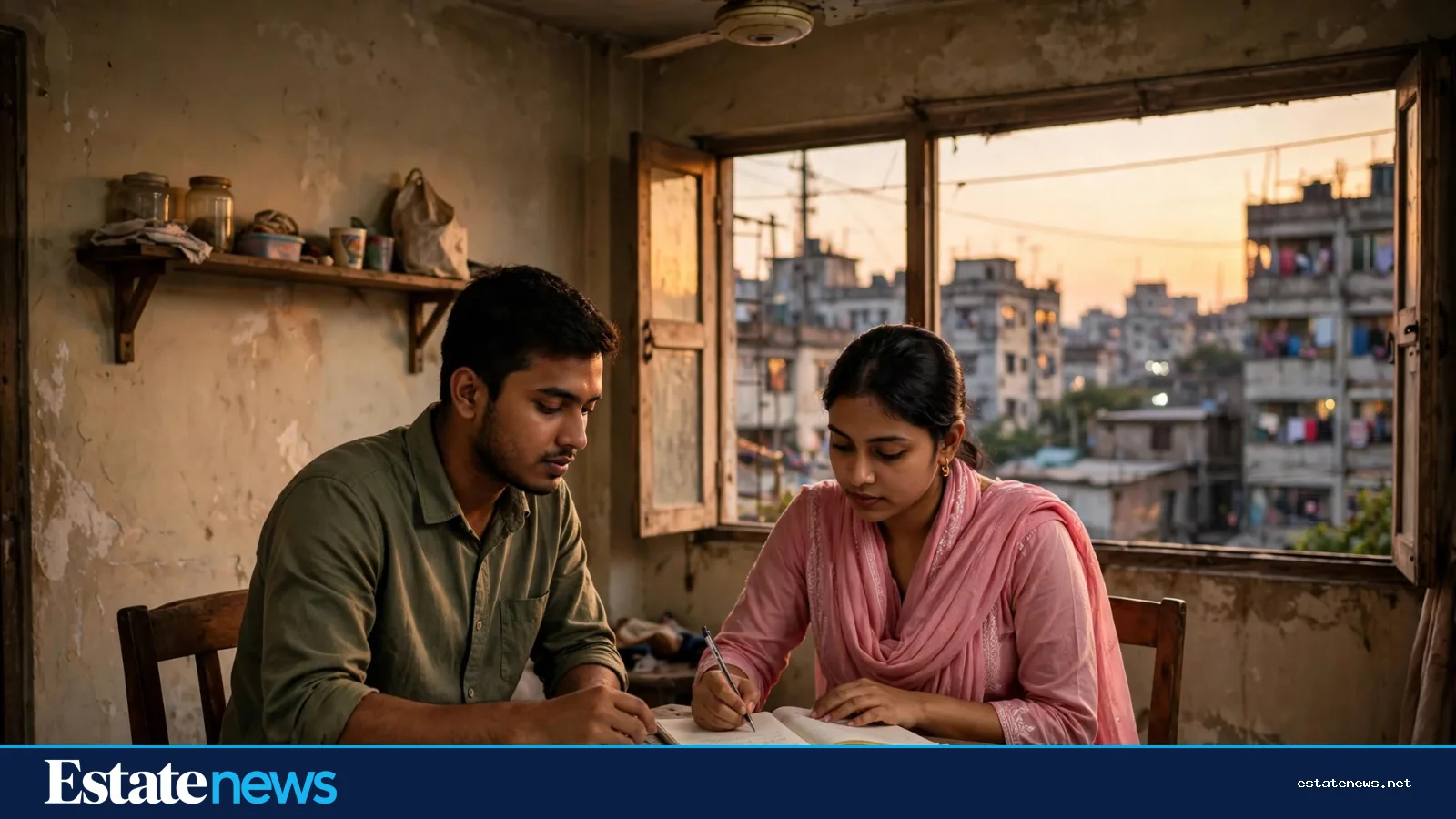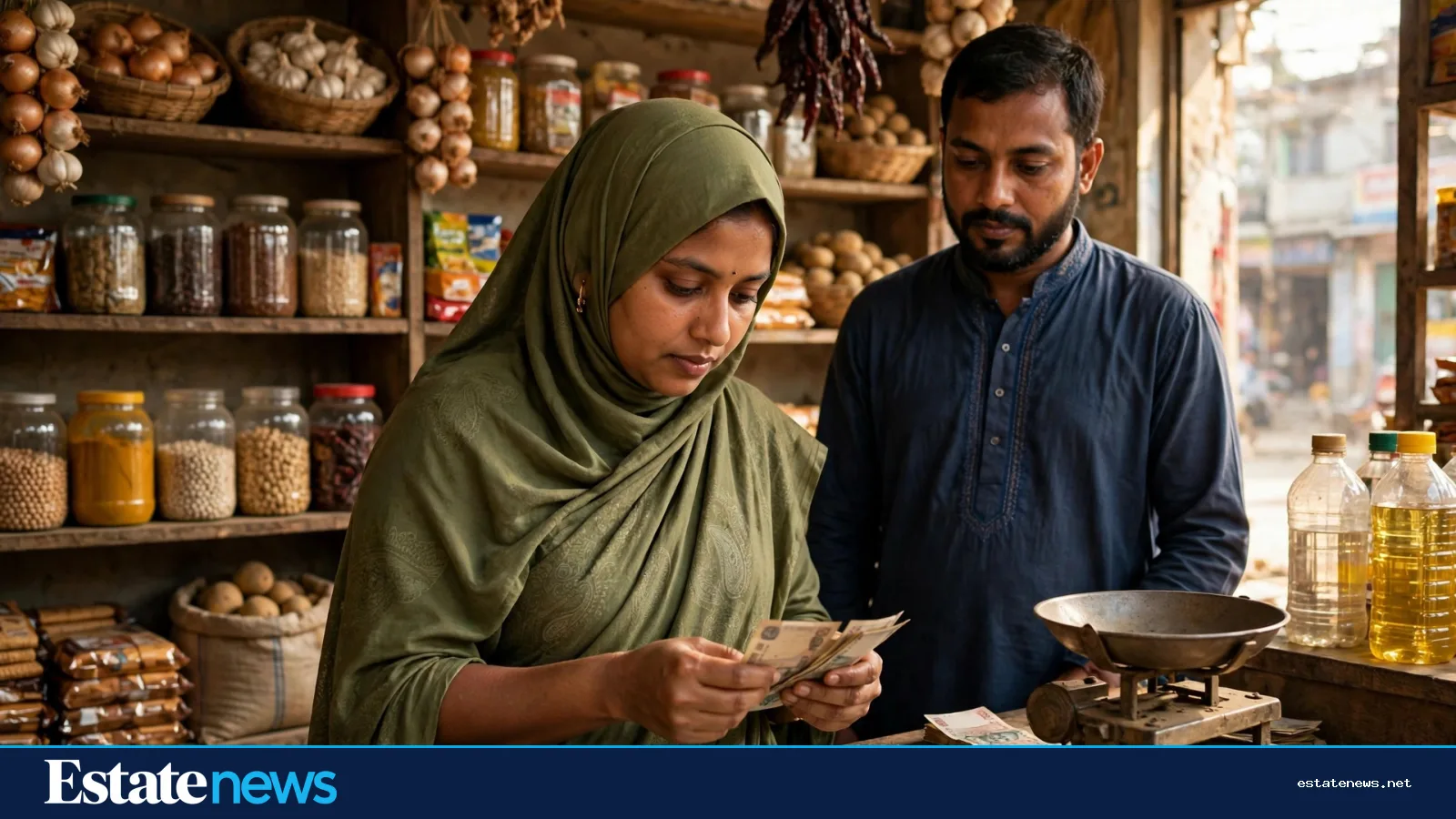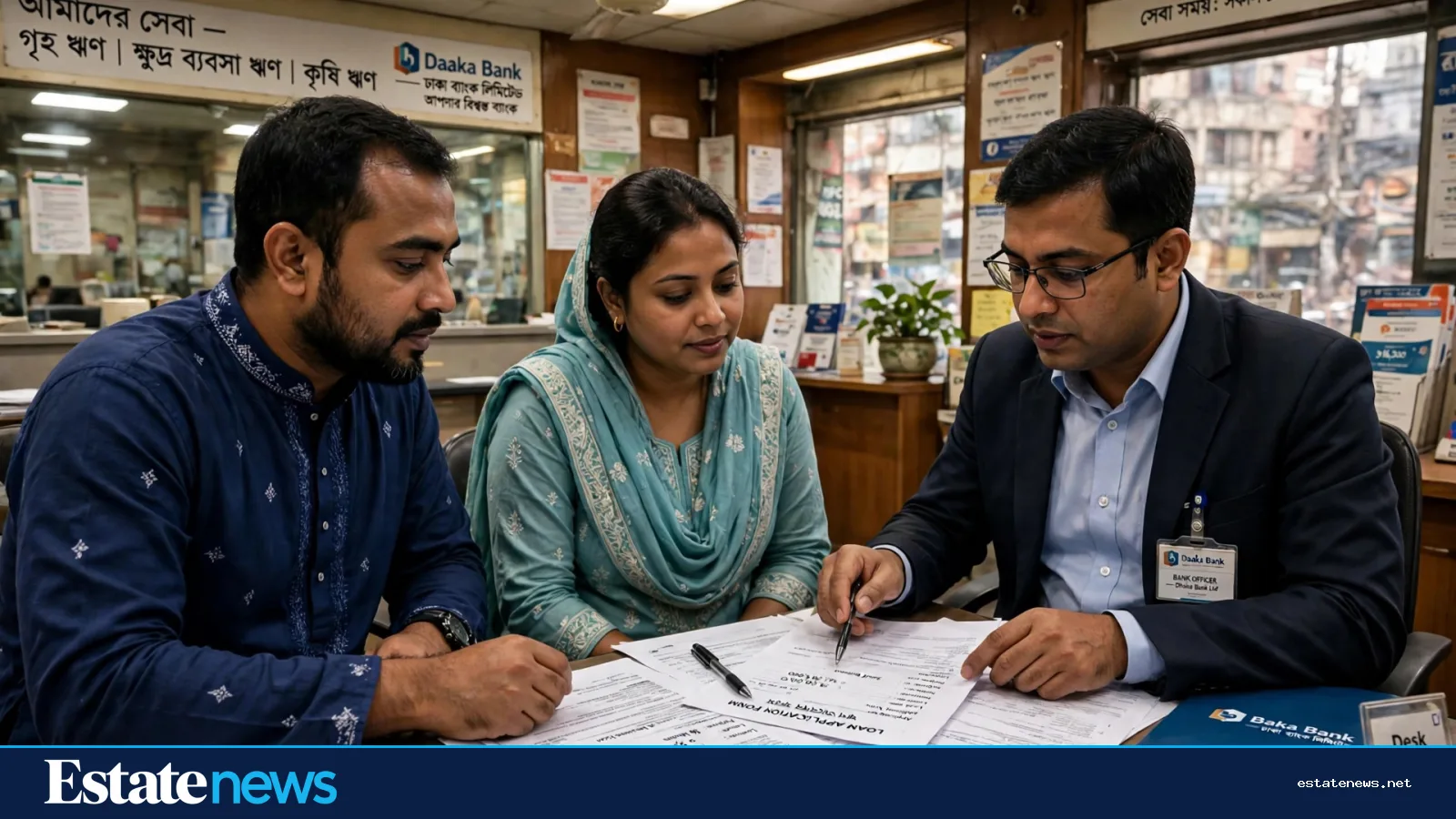

Nobody walks into a bank and walks out with a home loan the same day. The meeting is short, the paperwork is long, and the decision comes later, after someone the buyer never meets has read the file. That is how lending works, and it is worth knowing what sits inside the file before you apply.
A home loan in Bangladesh is a large commitment on both sides. The bank lends for twenty years or more, and the flat stands as security. So the bank asks five questions, in different forms, and each one has to come back with a satisfactory answer. A weak answer on one can be balanced by strength on another, but a bad answer on any of them can end the application.
The background matters. Bangladesh Bank's policy rate stands at 9.5 percent, cut from 10 percent in August 2026, and bank home-loan rates run roughly 9 to 13 percent. REHAB president Ali Afzal told the Abashan Mela audience that home loans in Bangladesh carry 14 to 15 percent, against about 4 percent in richer countries. The gap is real, and it is why the monthly instalment, the EMI, sits at the centre of every conversation a buyer has with a bank.

The income test
Income comes first, and it is the simplest question: can this household pay every month, for years, without breaking? The bank looks at salary slips, bank statements and, for business owners, tax returns and business accounts. It wants to see income that arrives regularly, not income that arrives once and never again.
What counts is the surplus after living costs. A salary that looks large on paper shrinks fast once rent, school fees, transport and food are counted. Banks work this out in their own way, and each bank sets its own limits, but the logic is the same everywhere: the instalment must leave room for life to happen, including the bad months.
The down payment
Next comes how much of the flat the buyer is paying for themselves. Bangladesh Bank's 70:30 debt-equity rule sets the shape of it: the bank lends up to 70 percent of the price, and the buyer brings the remaining 30 percent as their own money. On a flat that costs Tk 1 crore, that means Tk 30 lakh from the buyer before the bank's money starts.
The bank will ask where that money came from. Savings built over years are the easiest answer. A gift from family needs a letter saying so. A loan from somewhere else, taken to fund the down payment, is the worst answer, because it means the buyer starts the home loan already in debt.
This is also where the single-borrower ceiling comes in. Under a Bangladesh Bank circular from January 2026, a bank may lend up to Tk 4 crore to one borrower for housing where the bank's classified housing-loan ratio is 5 percent or below. The ceiling falls to Tk 3 crore or Tk 2 crore at higher classified ratios. Most buyers never reach the ceiling, but it sets the outer edge of what the system allows.
The credit record
Then the bank looks at the buyer's history with borrowed money. The bank pulls the credit report and reads it like a biography: every loan, every card, every missed payment, and whether old loans were closed cleanly.


A missed instalment two years ago will not always end an application, but a pattern of late payments will. A loan still running elsewhere counts against the buyer, because its instalment eats into the same monthly surplus.
The fix is slow: pay on time, keep card use modest, and close loans that are no longer needed before applying. A credit record is built over years, so the time to start is well before the flat is chosen.
The flat's own papers
The flat itself is checked too, and that has nothing to do with the buyer. The bank checks the flat: the deed chain, the mutation, the building approval and the developer's standing. A bank will not lend against a flat whose papers do not hold together, however strong the buyer's income is.
For a new flat from a developer, the bank wants the approved plan, the deed of the land, and the developer's track record. For a resale flat, the chain of ownership matters more: each sale documented, each mutation recorded, and no gap where ownership becomes unclear. A flat with a disputed title is not security for a loan.
This is also the check that surprises buyers most. They choose the flat, fall in love with the light and the layout, and then learn the bank will not touch it. Better to ask the bank early, before the booking money is paid, than to learn the answer after.
The job behind the income
Last comes stability. A bank lends for decades, so it asks how likely the income is to still be there in five years. A permanent job with a known employer is the easiest case. A new job, a probation period, or a business less than a few years old needs more explaining.
Self-employed buyers face the hardest version of this check, since their income moves up and down. Tax returns become the proof that matters.
None of this means a bank wants to refuse. A bank earns from lending, and a good home loan is good business for both sides. What the bank wants is a file it can defend: income that covers the instalment, savings that show discipline, a clean record, a flat with clear papers, and a job that will still be there next year. A buyer who walks in with those five answers ready will find the conversation short and the wait shorter.
This article is general information, not financial advice. Loan terms, rates and ceilings vary by bank and change over time, so check the current terms with the bank itself before deciding.