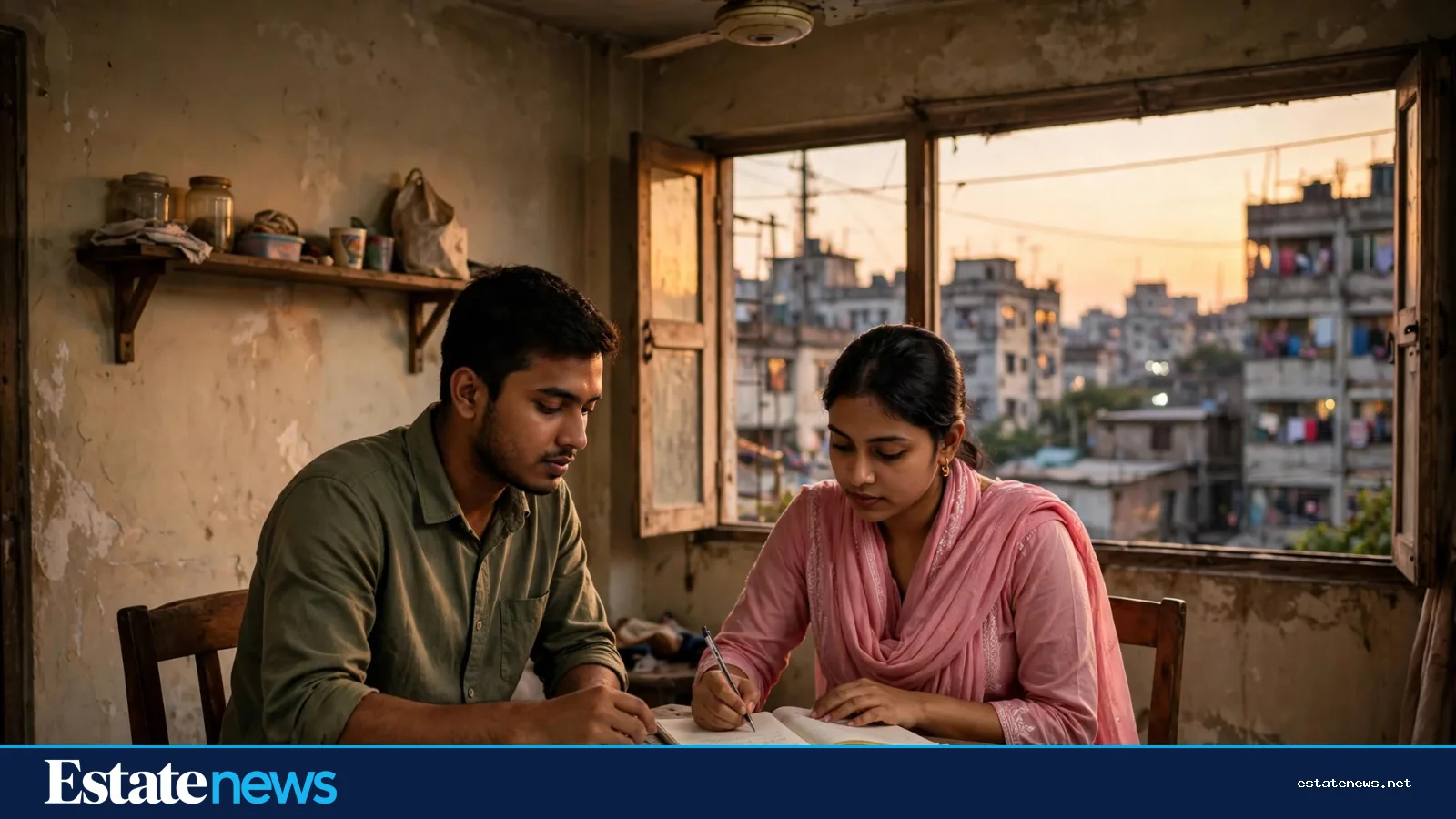
Start with the flat. Under Bangladesh Bank's 70:30 debt-equity rule, a bank lends at most 70 percent of a property's value, and the buyer puts in the other 30 percent from savings. A Tk 70 lakh loan therefore sits on a flat worth about Tk 1 crore, with Tk 30 lakh of the buyer's own money going in first. That is the first test, before any salary question is asked. The deposit has to exist.
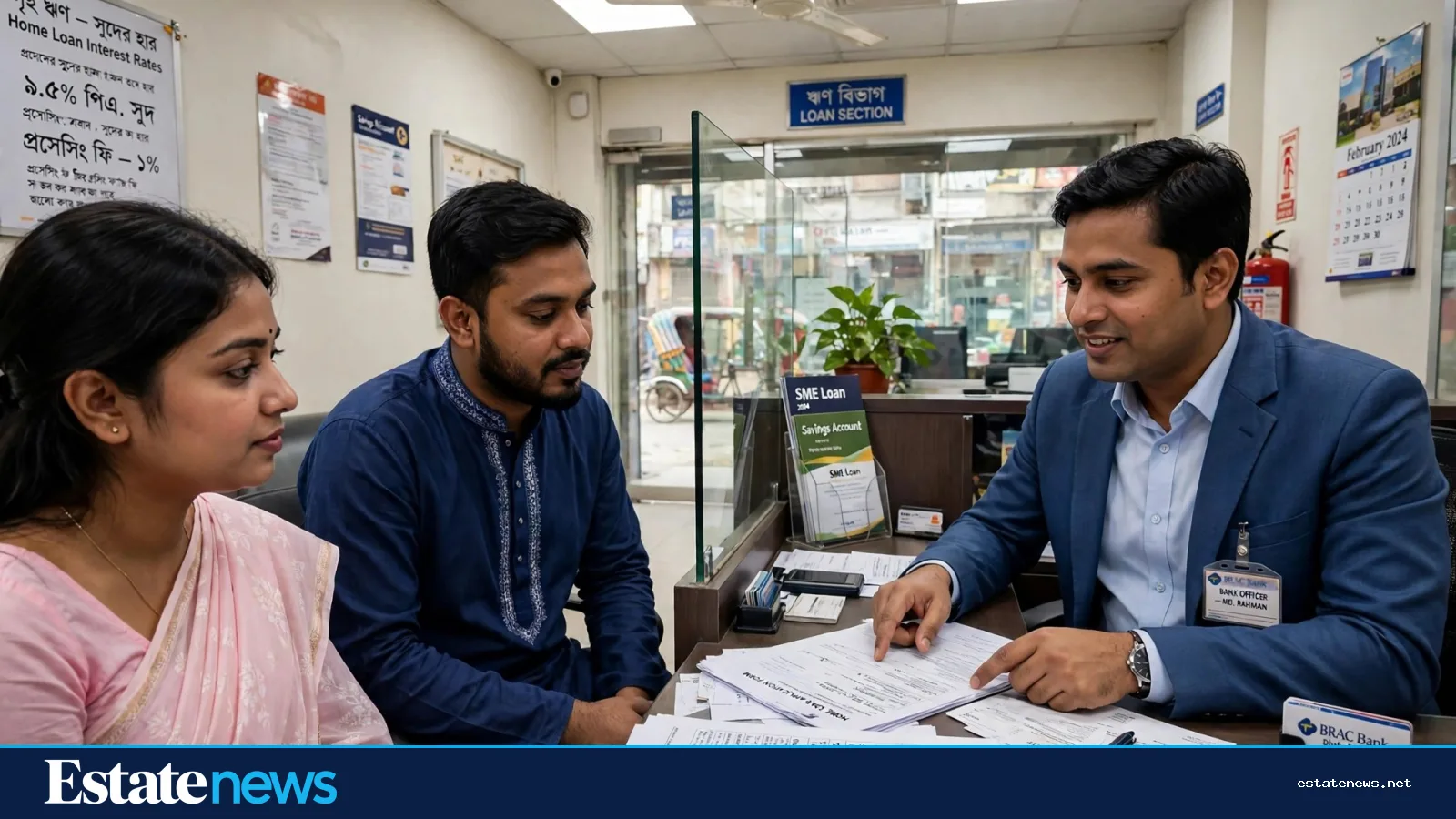
Then comes the instalment. Home-loan rates from banks now run roughly 9 to 13 percent a year, and Bangladesh Bank's policy rate stands at 9.5 percent after a cut in August 2026 from 10 percent. Take the middle of the range, 10 percent, and a twenty-year tenure. The monthly rate is 10 percent divided by 12, or 0.833 percent a month. Over 240 monthly instalments, a Tk 70 lakh loan at that rate gives an equated monthly instalment of about Tk 67,550.
The arithmetic behind that number is worth seeing once, because it explains why the instalment barely moves. Over twenty years the borrower pays about Tk 1.62 crore in total, of which roughly Tk 92 lakh is interest and Tk 70 lakh is the principal itself. More than half of everything paid goes to interest. Stretch the same loan to twenty-five years and the instalment falls to about Tk 63,610 a month, but the total paid rises to about Tk 1.91 crore, with interest of roughly Tk 1.21 crore. A shorter tenure costs more each month and less in total. A longer one does the opposite.
The rate changes everything
The rate matters as much as the tenure. At 9 percent over twenty years, the instalment on Tk 70 lakh is about Tk 62,980 a month. At 12 percent, it is about Tk 77,080. That is a gap of more than Tk 14,000 a month for the same loan, the same flat and the same borrower. It is why the first question a buyer should ask a bank is not the loan amount but the rate, and whether it is fixed or floating.


Now the salary. Banks test whether the instalment fits the borrower's income, and a common sense check is to keep the instalment to about 40 percent of take-home pay, leaving the rest for food, school fees, transport and savings. On that test, a Tk 67,550 instalment needs a monthly household income of about Tk 1.69 lakh. A couple earning together can count their combined income, which is how many Dhaka families actually qualify. A single earner on Tk 1 lakh a month would be stretching: the instalment alone would take more than two-thirds of the pay.
There are other ceilings to know. A single borrower can take up to Tk 4 crore in housing loans where the bank's classified housing-loan ratio is 5 percent or below, under a Bangladesh Bank circular from January 2026, with lower ceilings where that ratio is higher. That ceiling rarely binds a first-time buyer. What binds is the monthly cash flow, and the costs around the loan: registration, stamp duty, the lawyer's fee and the service charge that begins the month the family moves in.
Registration alone is a sum worth planning for. On a Tk 1 crore flat in a city corporation area, the stamp duty at 1.5 percent, the registration fee at 1 percent and the local government tax at 2 percent come to about Tk 4.5 lakh, before the lawyer's fee and other charges. Add that to the Tk 30 lakh deposit, and the cash a buyer needs before the keys change hands is closer to Tk 35 lakh than Tk 30 lakh. Many buyers learn this late. The ones who plan for it do not have to borrow for it.
A Tk 70 lakh loan is not a rich person's product and it is not a poor person's trap. It is a twenty-year commitment that asks for a deposit of Tk 30 lakh, an income near Tk 1.7 lakh a month for comfort, and a clear-eyed look at the rate. A buyer who runs these numbers before visiting a developer's office walks in with the one thing that matters most: a figure the household can actually live with.
This article is general information only, not financial advice. Rates, terms and eligibility differ by bank, and a borrower should confirm the current offer in writing before deciding.