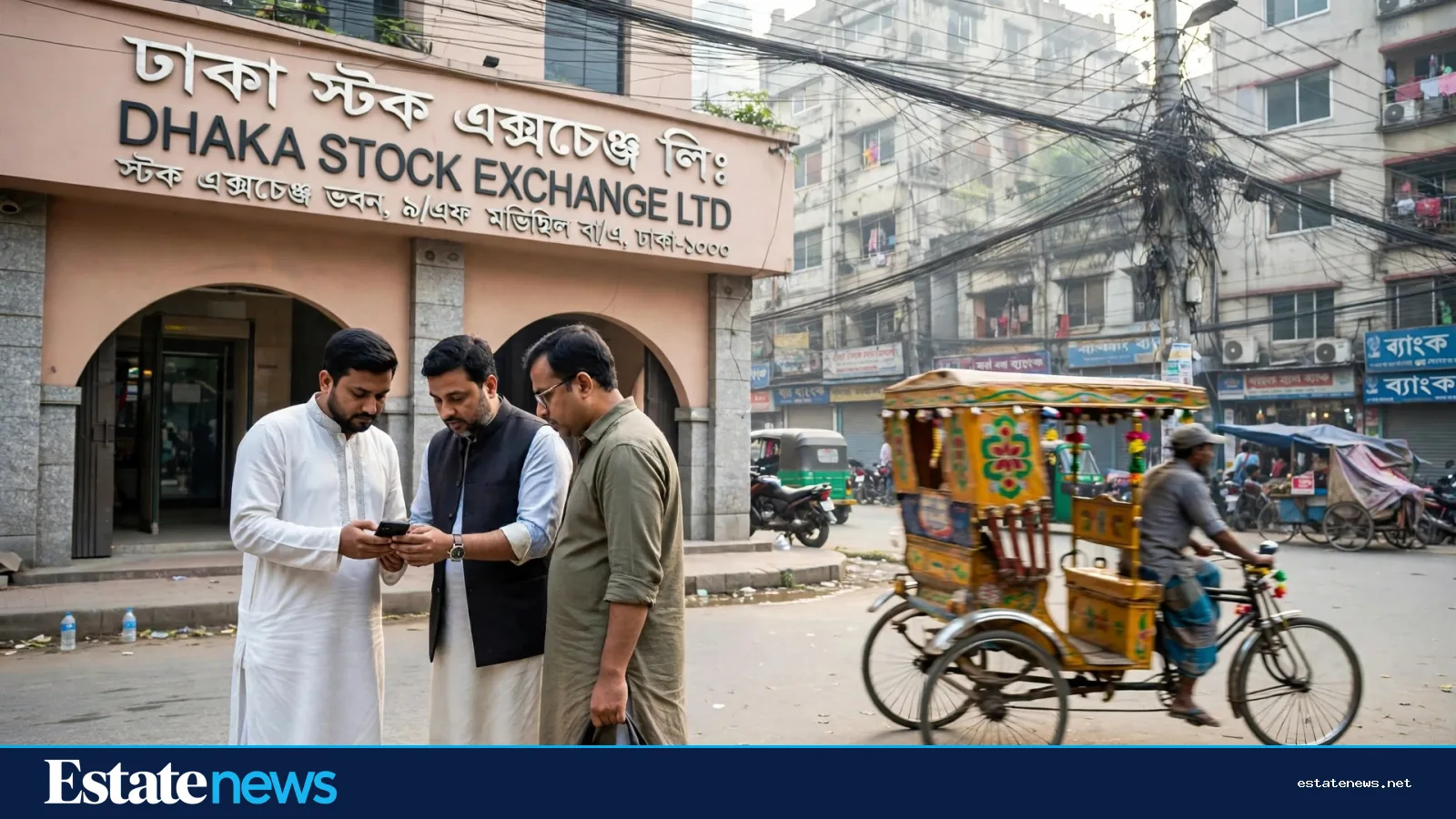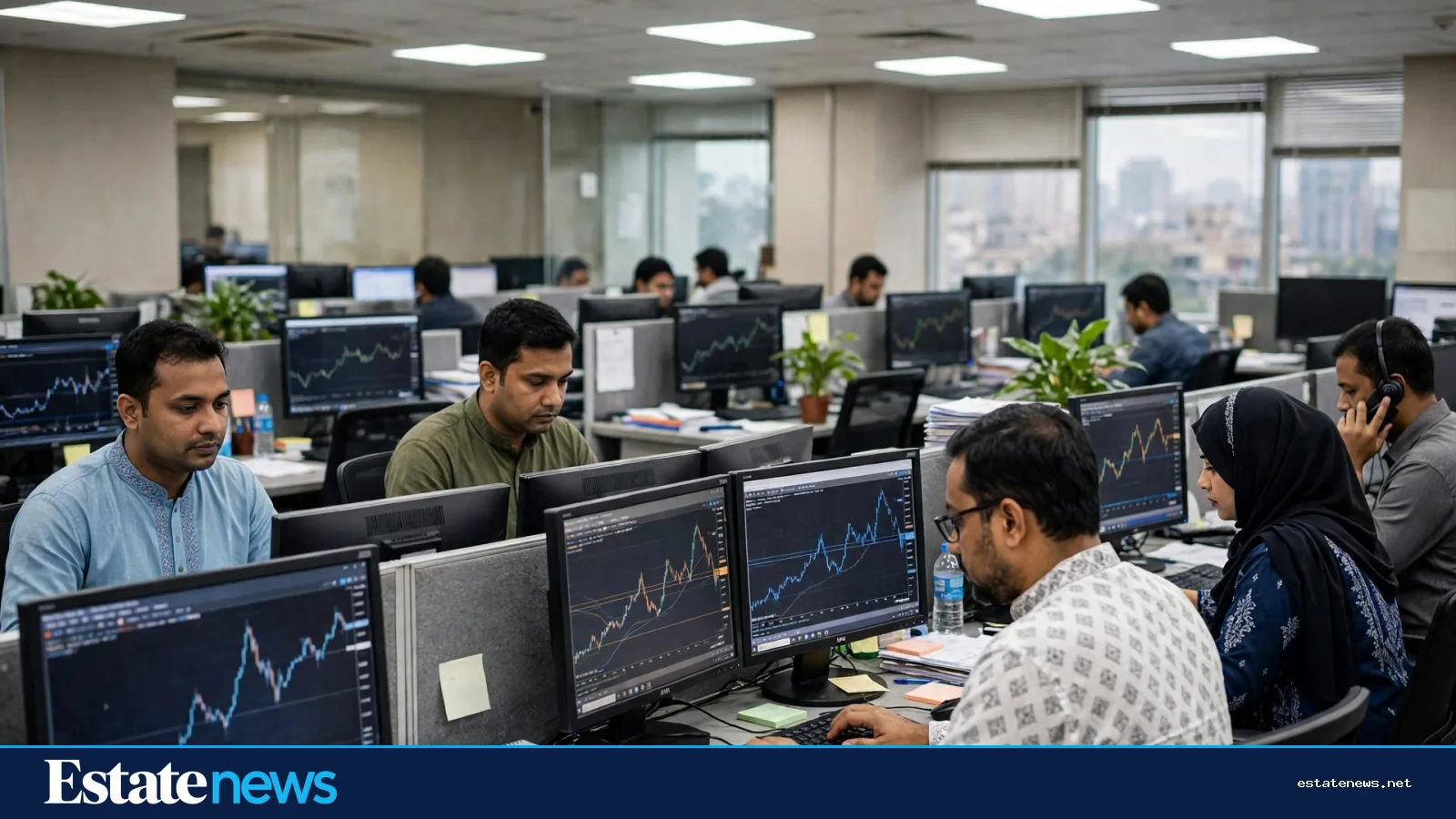
The Dhaka Stock Exchange ended Thursday almost exactly where it started. After two straight days of gains, the market took a breath. The DSEX slipped 0.15 points to 5,444.9, from 5,445.06 the day before. Turnover fell 7.7 per cent to Tk 699.01 crore, from Tk 757.66 crore. Foreign investors were net sellers of Tk 4.89 crore. In all, 381 issues were traded.
The flat close reads as a pause rather than a turn. On Wednesday, the index had gained 8.32 points to 5,445.06, its second straight rise, with turnover at Tk 757.7 crore, the highest in seven weeks. Thursday gave some of that energy back, but none of the ground. The index held above 5,440, and the turnover, though lower, stayed well above the levels of late October.
What the week behind it says

The wider picture is better than a single flat day suggests. Average daily turnover rose 17.05 per cent last week to Tk 526.79 crore, from Tk 450.08 crore the week before, with total turnover of Tk 2,633.97 crore over five sessions. Two policy decisions sat behind that lift: the reopening of 617 suspended beneficiary owner accounts, and the extension of the deadline for banks to use special investment funds to 31 December 2027.
The Dhaka Stock Exchange's managing director, Nuzhat Anwar, said expectations around the reopening of the accounts contributed to the positive sentiment, while noting the exchange had not yet received a detailed official letter. The Dhaka Brokers Association president, Saiful Islam, said the two decisions generated fresh optimism. The market's job now is to show whether that optimism can survive a flat day without fading.
Remittance crosses $12 billion
The bigger number of the day came from Bangladesh Bank. Remittance reached $12.34 billion between 1 July and 7 November this fiscal year, up 13.6 per cent on $10.87 billion in the same stretch a year earlier. The first seven days of November brought $879 million. October alone brought $2.87 billion, up 12.1 per cent on the year, after $2.77 billion in September, $2.97 billion in August and $2.86 billion in July. The previous fiscal year set a record of $35.59 billion, up 17.34 per cent.


The money matters to the property market more than to any other part of the economy. A large share of remittance goes into land and homes, and the families receiving it are the buyers developers watch most closely. The $12 billion mark, reached in just over four months, keeps that pipeline full.
Reserves stood at $29.98 billion under the IMF's BPM6 method and $34.85 billion gross, after a $1.64 billion Asian Clearing Union payment on 5 November. September imports cost $7.53 billion, equal to about four months of cover. The reserve position is steady rather than comfortable, and the import bill is the number to watch next.
The trade backdrop
Exports give the market its other anchor. Merchandise exports reached $17.04 billion in the first four months of the fiscal year, up about 6 per cent on $16.08 billion a year earlier, according to Bangladesh Bank figures released on 1 November. October alone brought $3.99 billion, up 4.39 per cent. Garments accounted for $13.75 billion of the total, up 5.82 per cent, with knitwear at $7.73 billion and woven at $6.02 billion.
The United States took $3.35 billion, up 11.51 per cent, with October sales of $756.64 million. The trade picture has cleared a little in Bangladesh's favour: under the new US Section 301 regime in force since 24 July, Bangladesh sits in the lower 10 per cent tier, a 2.5 percentage point edge over China, Vietnam and Thailand at 12.5 per cent. The duty-free tariff-rate quotas for textiles and US cotton, open only to Bangladesh, Cambodia, Indonesia and Malaysia, are not yet operational, and the garment industry is still pressing Washington for exemption from the additional 10 per cent tariff. The BGMEA president, Mahmud Hasan Khan, has called the position relatively favourable. The BKMEA vice-president, Md Fazlee Shamim Ehsan, has cautioned that raw-material import costs are up 15 to 20 per cent and wages up 9 per cent, so the margin behind the export growth is thin.
For households watching the market with a flat in mind, the day's message is plain. The bourse paused, it did not fall. The money from abroad keeps coming, and it keeps coming in record amounts. The export engine that pays for so much of Dhaka's housing demand is still running. A flat market day inside that picture is not a warning. It is a market catching its breath.