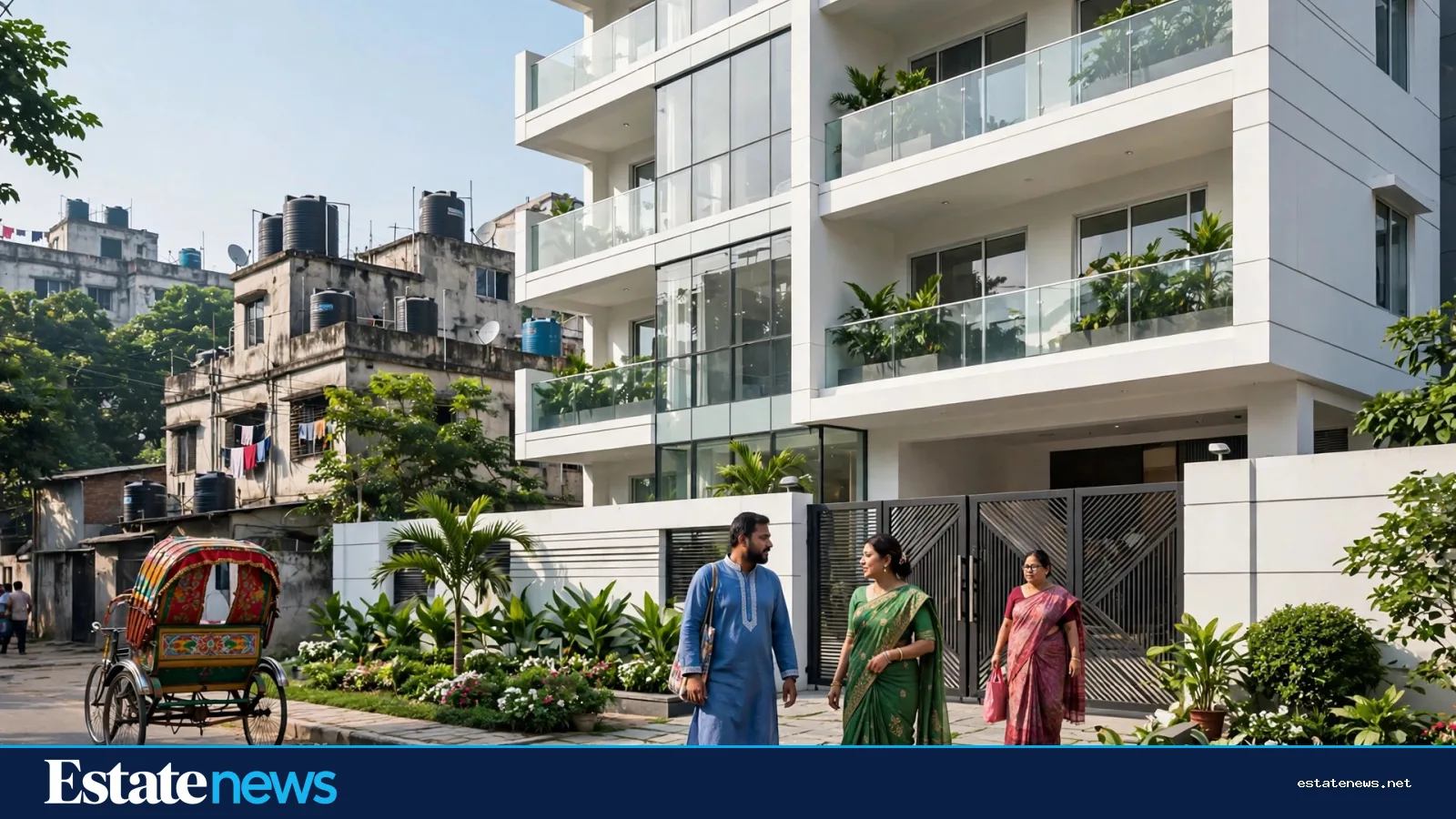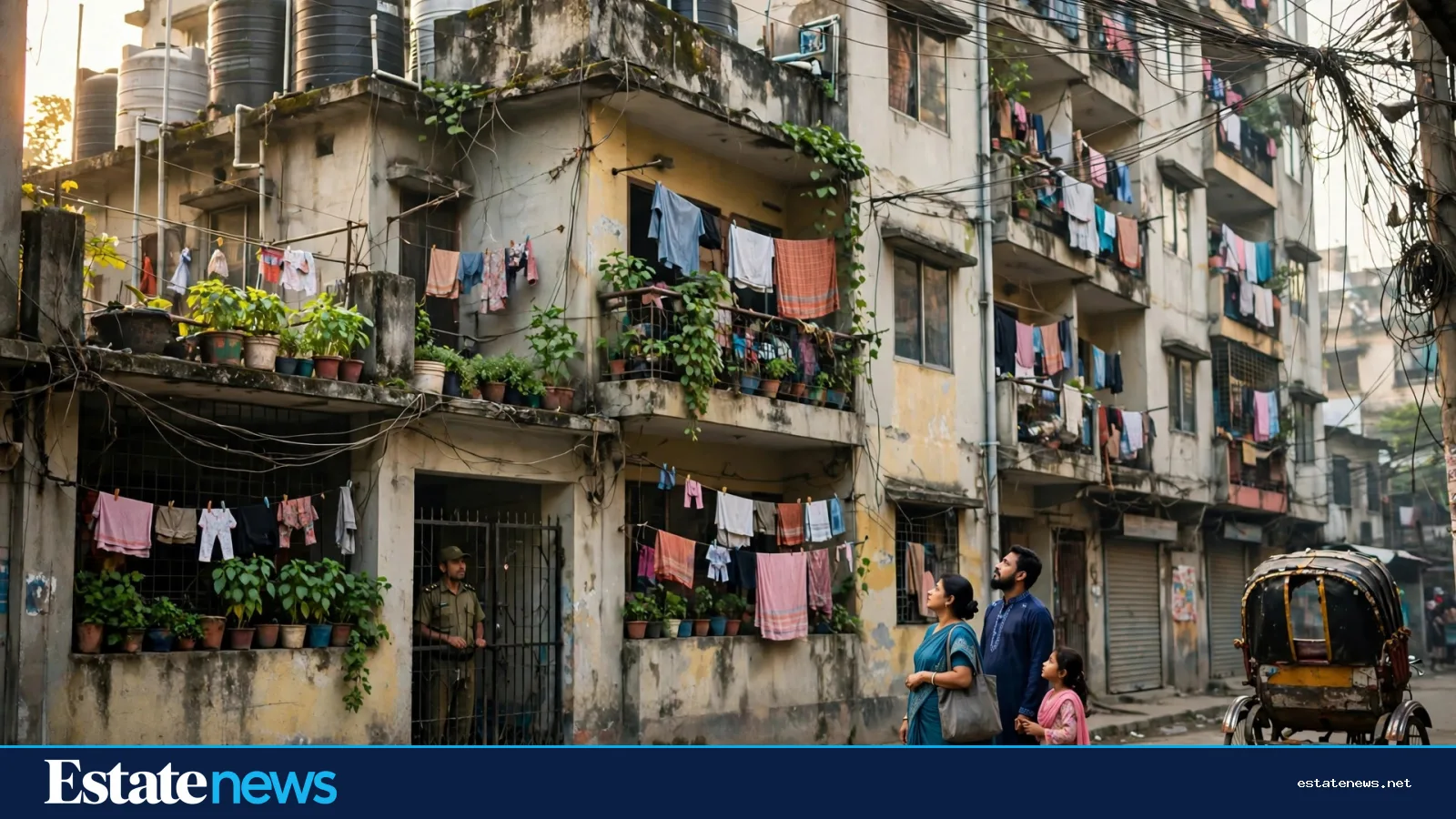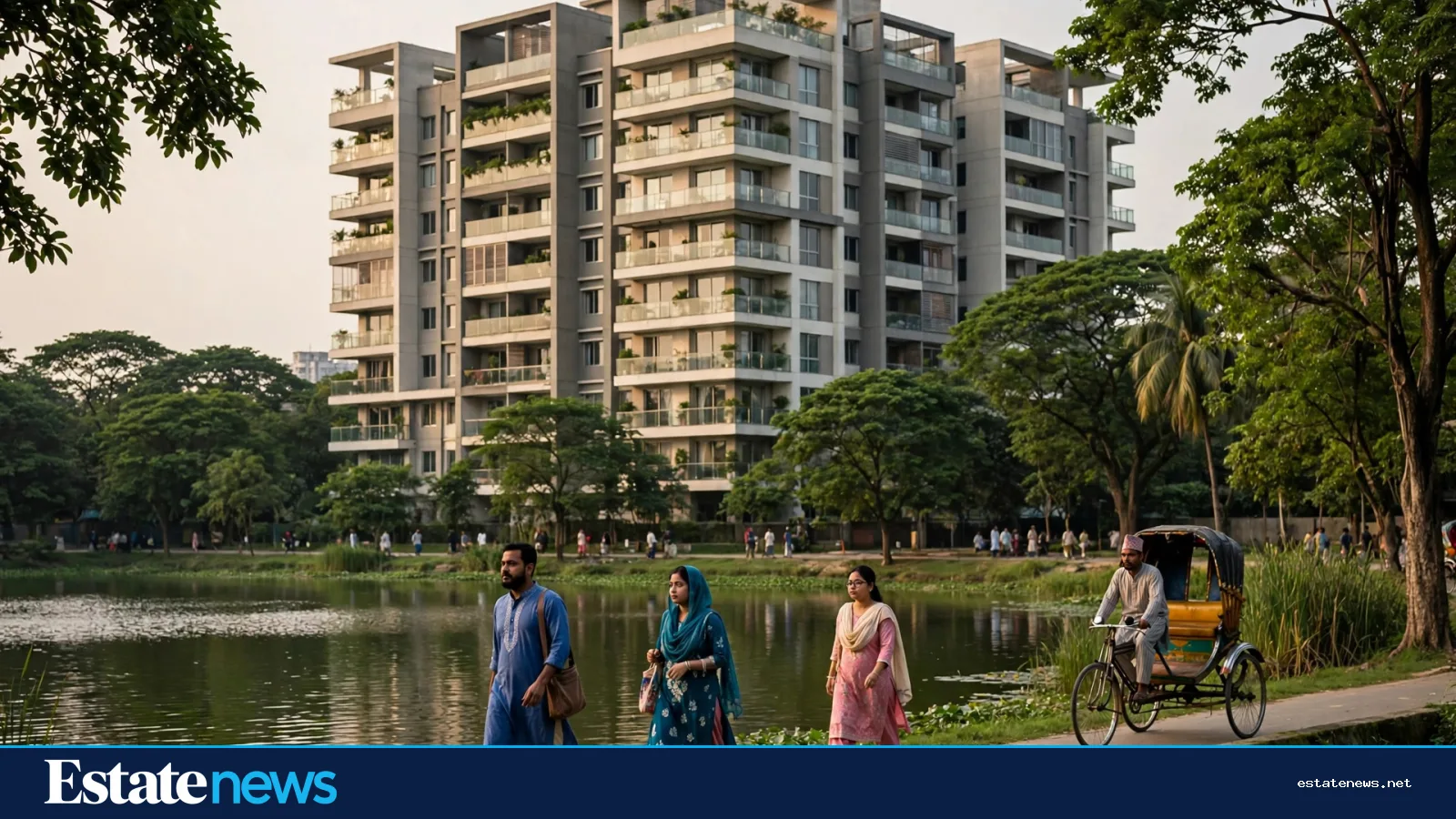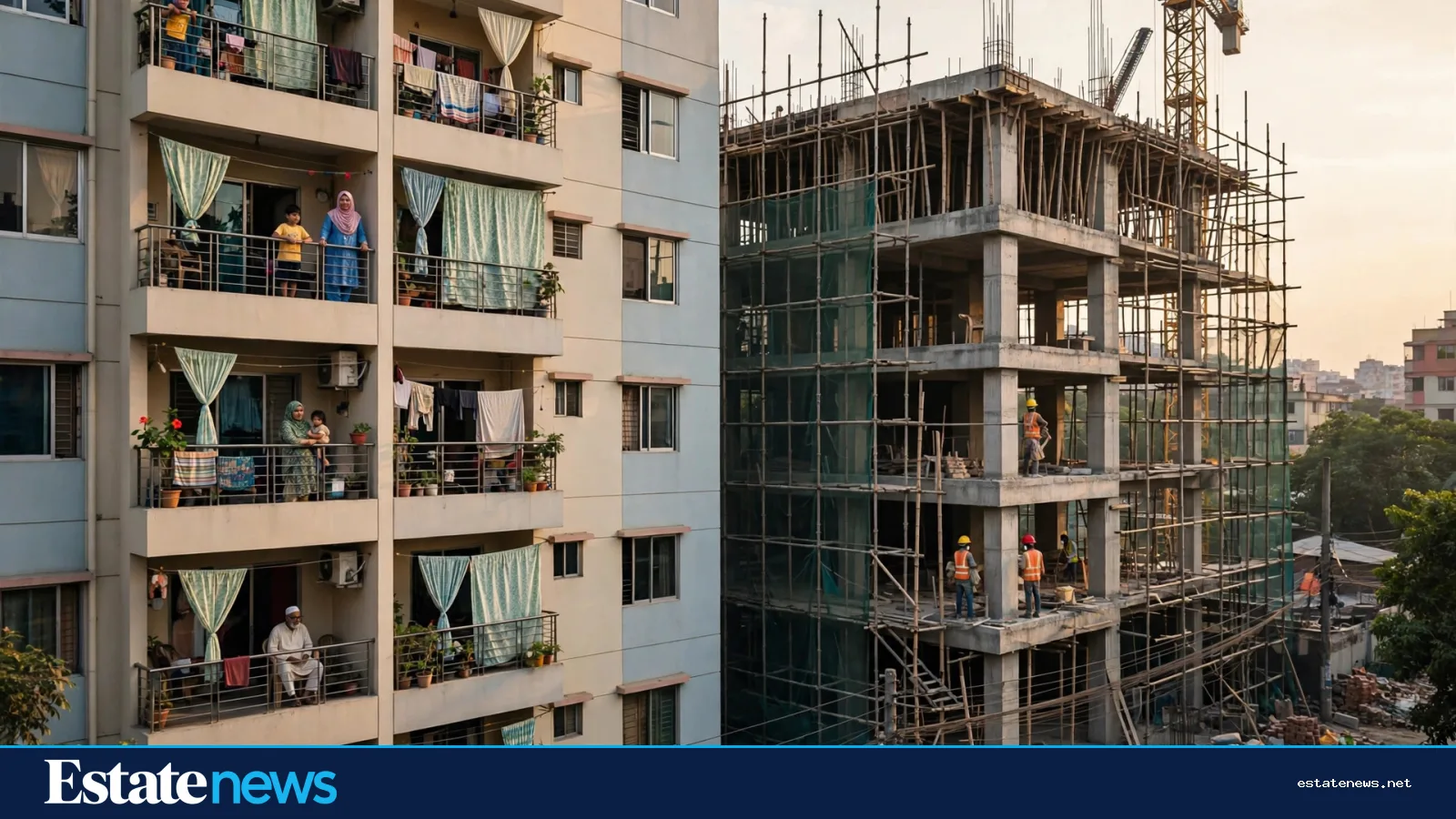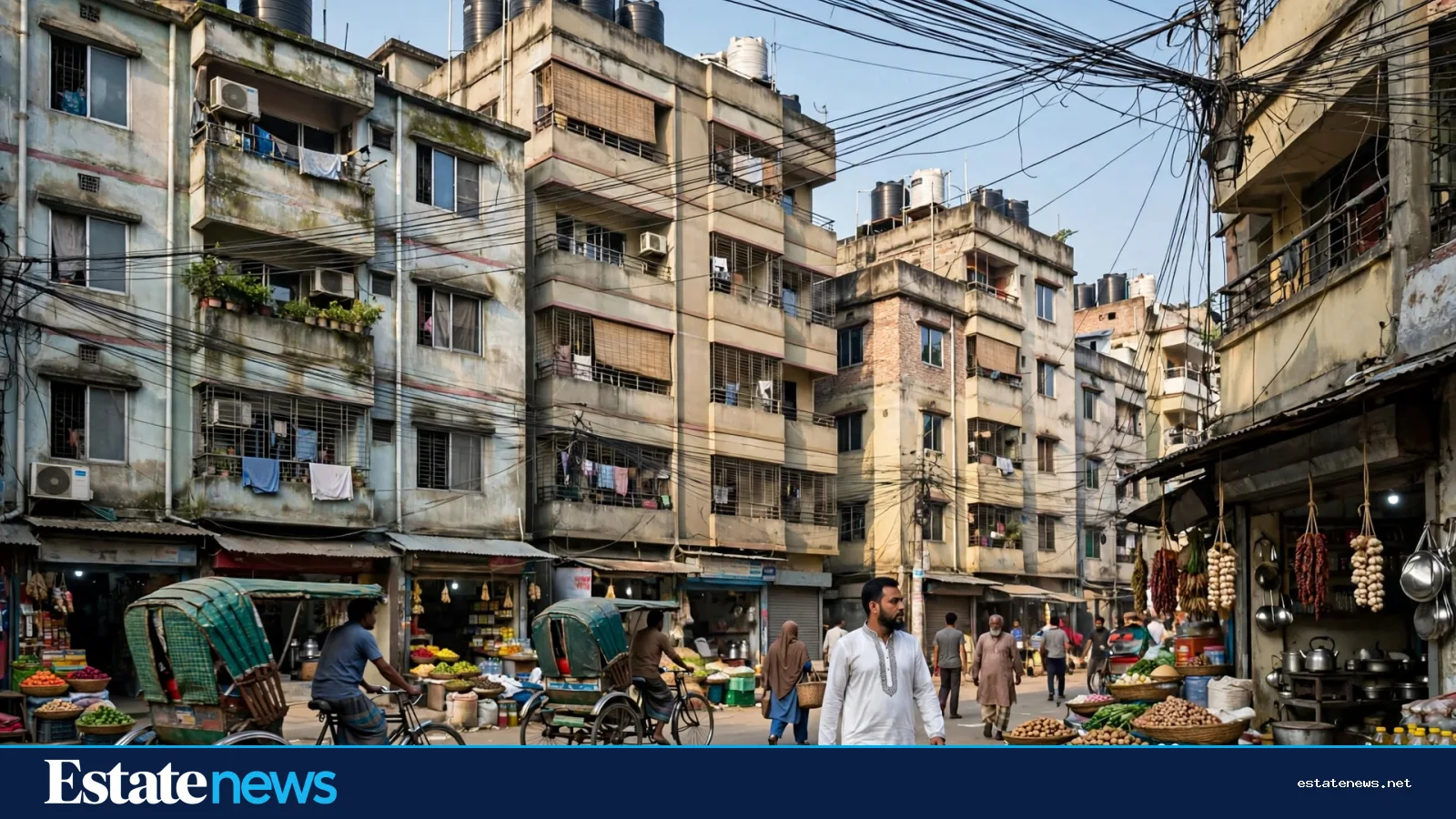
Tk 1 crore is the number most Dhaka flat buyers carry in their heads. It is a round figure, a savings target, and often the top of a family budget. But it buys a very different home depending on which part of the city you stand in. In Gulshan it buys a small flat. In Uttara it buys a family-sized one. The gap between the two is the story of Dhaka's housing market in a single number.
The figures below are asking-price medians from current public sale listings, collected on 12 November. Gulshan's median sits at Tk 22,184 a square foot, drawn from 11 listings. Banani follows at Tk 15,000, from seven listings. Dhanmondi stands at Tk 10,901, from eight. Bashundhara Residential Area records Tk 12,005, from 16 listings, the largest sample of the six. Mirpur comes in at Tk 9,268, from eight listings, and Uttara at Tk 7,833, from nine. These are asking prices, not transaction prices. A flat can sell above or below its asking price, and small samples can move quickly. Read them as a guide to what sellers are asking this week, not as a record of what changed hands.
Gulshan: about 451 sq ft

Divide Tk 10,000,000 by Tk 22,184 and the answer is about 451 square feet. That is a compact one-bedroom flat, or a small two-bedroom if the layout is tight. Gulshan has always been Dhaka's most expensive residential address, and the gap to the rest of the city is wide. Buyers here pay for the address, the security, the embassies and the schools, and for the fact that very little new land ever comes up in the area. A family with Tk 1 crore in Gulshan is buying location first and space second.
Banani: about 667 sq ft
In Banani, Tk 10,000,000 divided by Tk 15,000 gives about 667 square feet. That is a modest two-bedroom flat, enough for a small family that wants to stay close to Gulshan without paying Gulshan prices. Banani's streets carry much of the same corporate and diplomatic life, and its older buildings sit beside new towers. The area suits buyers who already work nearby and want the commute to disappear.
Bashundhara: about 833 sq ft
Bashundhara Residential Area asks a median of Tk 12,005 a square foot. Tk 10,000,000 divided by that figure gives about 833 square feet. A flat of that size holds two bedrooms comfortably, with a living room that can take a dining table. Bashundhara draws buyers who want planned roads, newer buildings and water views in parts of the area, and who accept a longer trip into central Dhaka in return. With 16 listings behind the median, it is also the most measured of the six areas this week.
Dhanmondi: about 917 sq ft


Dhanmondi's median of Tk 10,901 a square foot turns Tk 1 crore into about 917 square feet. Divide 10,000,000 by 10,901 and the answer is 917.4. Dhanmondi is the old middle-class heart of the city, with its lake, its schools and its lanes full of long-settled families. A flat near 900 square feet here fits a family of four, and the area's pull has held for decades. Buyers who grew up in Dhanmondi often refuse to consider anywhere else, and the asking prices show it.
Mirpur: about 1,079 sq ft
Mirpur asks Tk 9,268 a square foot. Tk 10,000,000 divided by 9,268 gives about 1,079 square feet, a three-bedroom flat in most layouts. Mirpur is the city's great middle-market area, dense, busy and full of families who bought when prices were lower. Newer blocks and the metro have changed how the area feels, and buyers who want the most space for Tk 1 crore without leaving the city proper often start their search here.
Uttara: about 1,277 sq ft
Uttara gives the most room for the money. At Tk 7,833 a square foot, Tk 10,000,000 divided by 7,833 comes to about 1,277 square feet. That is a large three-bedroom flat, or a three-bedroom with a servant's room and a proper dining space. Uttara's wide roads and sector layout have always suited families who want space, and the area keeps drawing buyers from older parts of the city. The trade is distance: the trip to Motijheel or Gulshan is long, and buyers weigh that against the extra rooms every single day.
The spread from 451 to 1,277 square feet is nearly threefold. Same budget, same city, three times the space. That spread is the choice Dhaka buyers actually make, and it is rarely only about money. A family with school-age children counts the school run. A couple with elderly parents counts the lift, the ground floor and the clinic nearby. A buyer who works in Banani counts the hours a Uttara commute would take.
Two warnings belong with the numbers. The first is that asking prices are a starting point. Registration, legal checks and furnishing sit on top of the flat's price, and a buyer who spends the whole crore on the flat itself will find the rest of the bill hard to pay. The second is that a median hides the range. In every one of these six areas, some flats ask far more than the median and some far less, because age, floor, facing and condition move the price as much as the neighbourhood does. A ground-floor flat on a busy lane and a top-floor flat with a lake view are not the same product, even at the same address.
Used the right way, the crore test is a fast filter. It tells a buyer where their budget buys a home they can live in, and where it buys a compromise they will regret. Gulshan at 451 square feet suits a buyer who needs the address more than the rooms. Uttara at 1,277 suits a family that needs the rooms and can live with the distance. The rest of Dhaka sits between those two poles, and most buyers, after doing this sum, find their answer somewhere in the middle.