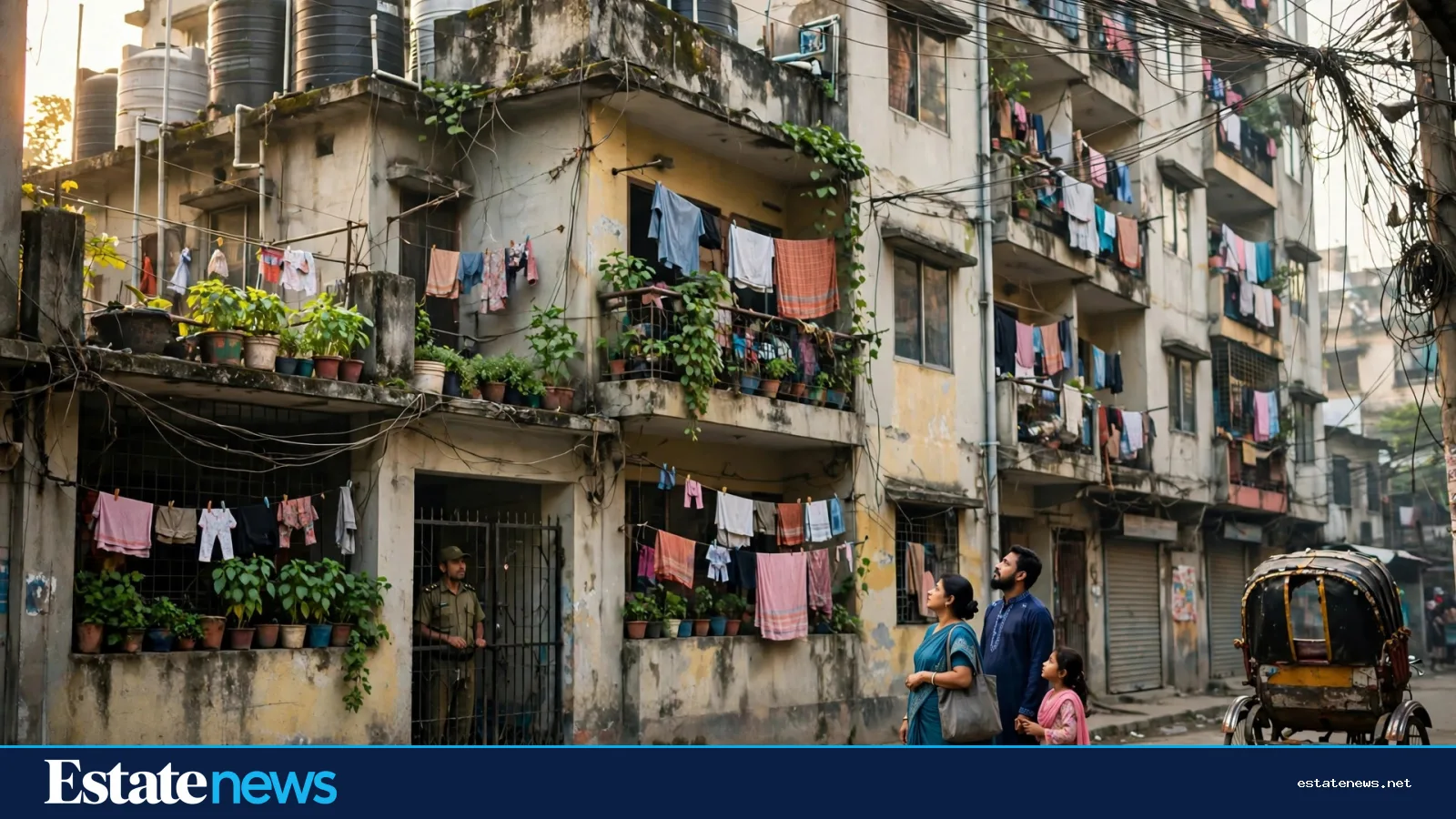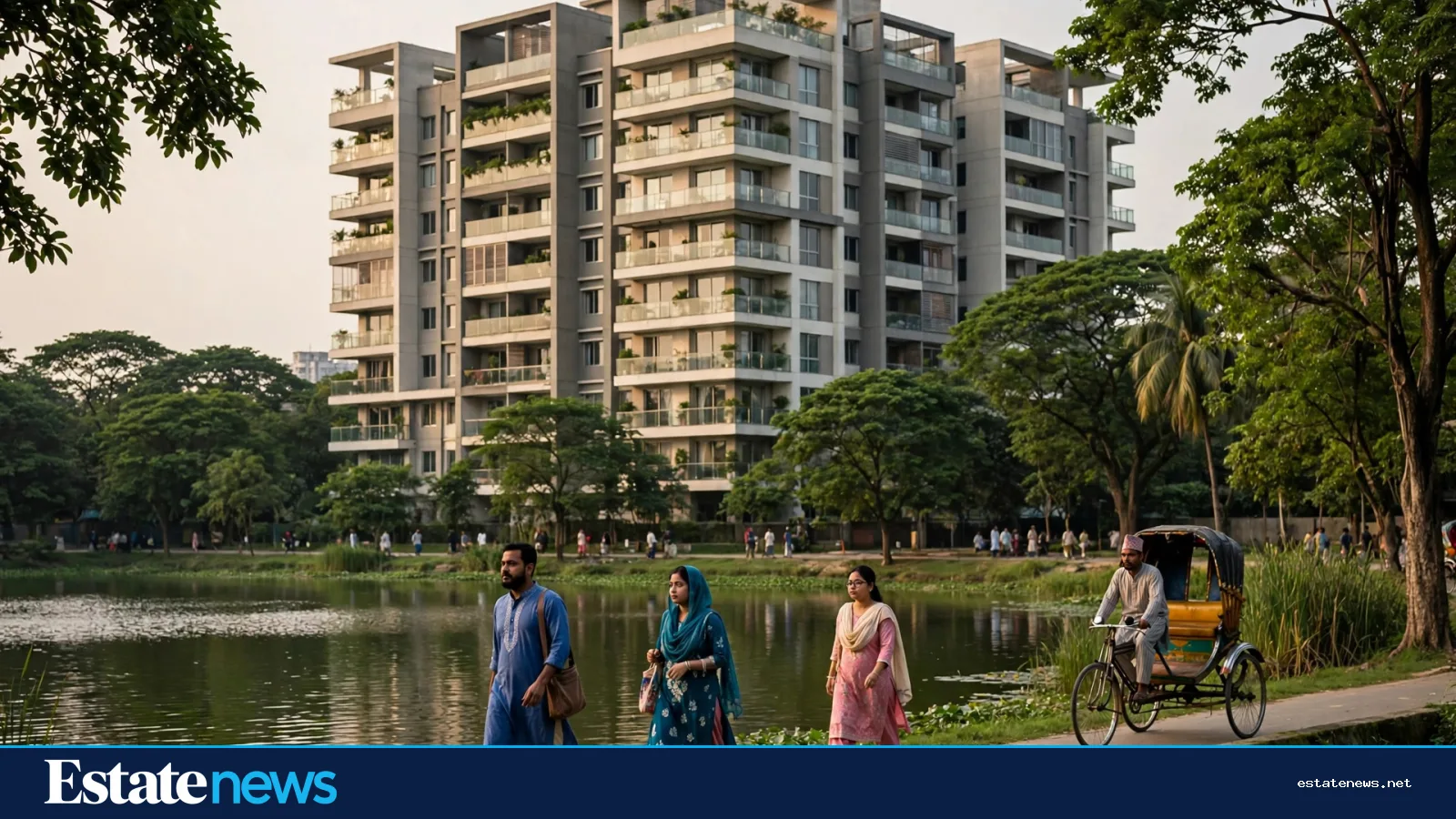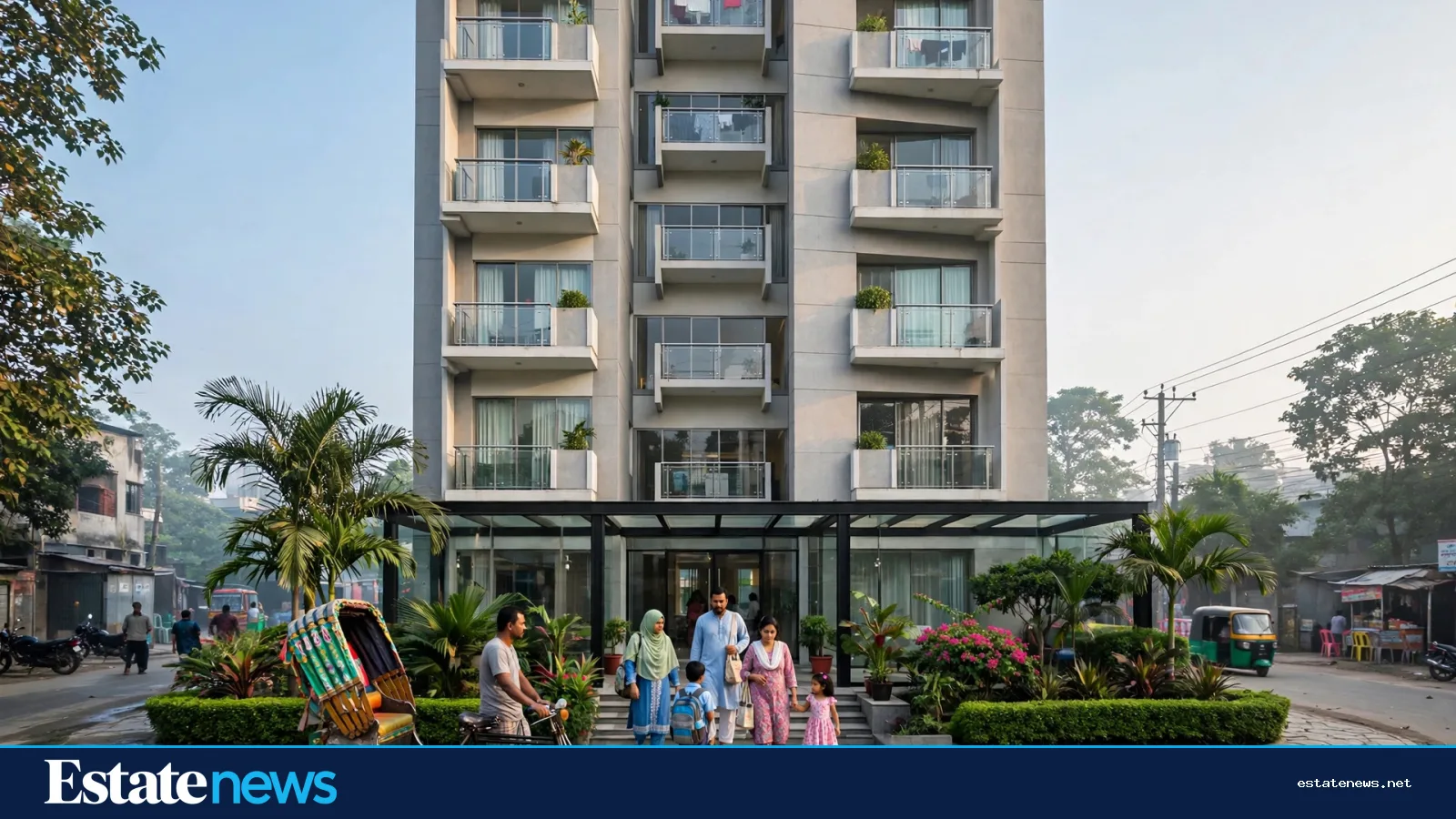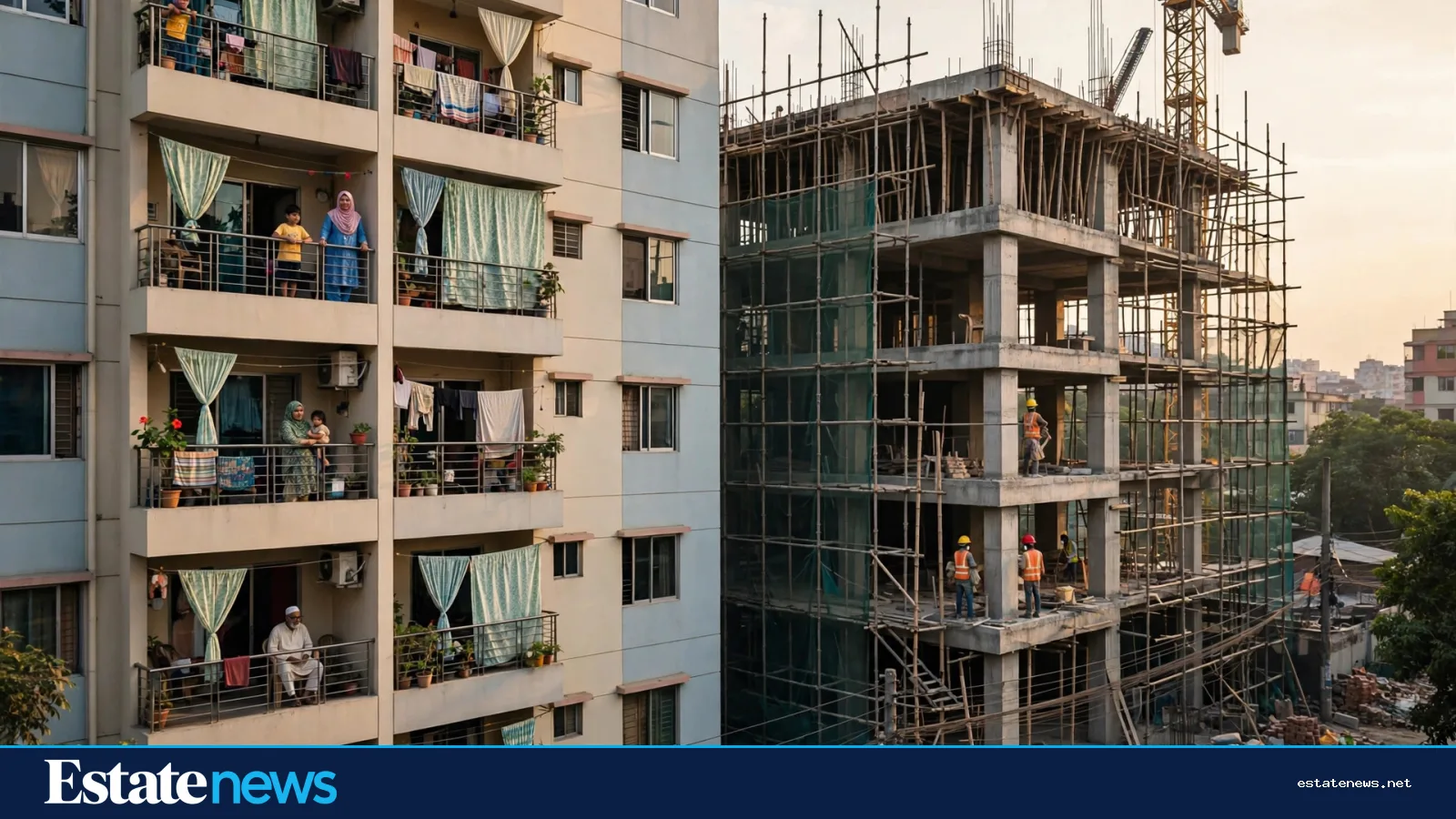
Walk through any Dhaka neighbourhood and the choice stands on both sides of the same road. On the left, a finished building with curtains in the windows and a guard at the gate. On the right, a concrete frame with bamboo scaffolding and a signboard. One is a home. The other is a promise.
Buyers treat the two as if they were the same product at different prices. They are not. A ready flat and a flat under construction are different purchases, with different risks, different costs and different kinds of certainty. The price gap between them is the market's way of charging for that difference.
What the ready flat gives you

A ready flat can be seen, touched and measured. The buyer walks the rooms, opens the taps, checks the lift, listens for the generator and looks out of the window at what the view actually is. There is no brochure between the buyer and the building.
That certainty extends to the paperwork. The deed, the mutation record, the RAJUK approval and the gas and utility connections either exist or they do not, and the buyer can check each one before paying. A bank values a ready flat on its own survey, and the valuation is grounded in a building that already stands.
The cost of all this is money and choice. Ready flats in a given area usually ask more than flats under construction in the same area, because the developer has already carried the construction cost and the waiting. The buyer also takes what exists: the floor, the facing, the layout. There is no changing the kitchen wall.
There is also the question of age. A ready flat that has sat unsold for three years may have a tired lift, stained walls and a service charge that has already started climbing. Ready does not mean new, and a buyer should ask how long the flat has been finished and why it is still empty.
What the under-construction flat asks of you
A flat under construction is bought in instalments, and that is its main attraction. The buyer pays a booking amount, then pays as the building rises: foundation, frame, brickwork, finishing. For a family saving month by month, that schedule fits how money actually arrives.


The trade is time and trust. The buyer is paying for a building that does not yet exist, on the strength of a developer's record and a piece of paper. If the developer is slow, the buyer waits. If the developer's finances falter, the buyer waits longer, or worse. Handover delays are the most common complaint in Dhaka's flat market, and they fall entirely on buyers of under-construction flats.
The price is lower on paper, but the full cost is harder to see. Instalments stretch over years, and during those years the buyer is often paying rent somewhere else. A two-year delay means two more years of rent, which can quietly erase the discount the buyer thought they were getting. Interest on any loan taken for instalments adds to the same bill.
How to weigh the two
Start with the buyer's own clock. A family that must move within six months has no real choice: only a ready flat works. A family with a rented home they are happy in, and two or three years to wait, can afford the instalment route, provided the developer's handover record is clean.
Then check the numbers against the area. November's asking data puts Gulshan at a median of Tk 22,184 a square foot, Banani at Tk 15,000, Bashundhara at Tk 12,005, Dhanmondi at Tk 10,901, Mirpur at Tk 9,268 and Uttara at Tk 7,833, all asking prices from current listings. A ready flat listed far above its area median should be able to explain itself: a better floor, a better facing, a recent renovation. An under-construction flat priced far below its area median should raise the opposite question: what is being left out, and who pays for it later.
Then check the developer the same way for both. Visit a completed project. Ask residents about water, gas, lift maintenance and service charges. Ask when the developer's last three projects actually handed over, against the dates in their booking agreements. A developer that delivers close to schedule is worth a premium on an under-construction flat, because the discount only holds if the handover does.
A practical rule
Buy the ready flat when certainty matters most: a move with a deadline, a loan that depends on a bank valuation, a family that cannot carry rent and instalments together. Buy under construction when the buyer's budget needs the instalment schedule, the developer's record is solid, and the family can absorb a delay without pain.
Either way, the same checks apply. Read the deed and the approval. Confirm the mutation position. Ask the bank what it will lend against this specific flat, not against flats in general. And remember that the cheapest flat in an area is rarely the best value, while the most expensive one is rarely the best home. The right purchase is the one whose risks the buyer has actually priced, and can live with.