Dubai's property market has split in two. Offices are booming. Homes are cooling. The latest numbers, from CBRE's UAE Real Estate Market Review for the third quarter of 2026, reported by Arabian Business on 3 November, draw the divide in sharp lines. Average office rents rose 12 per cent year on year, with occupancy at about 95 per cent. Retail rents rose 5 per cent, with occupancy at 97 per cent. Industrial rents rose 12 per cent. Residential rents, meanwhile, fell 7 per cent over the same twelve months. Apartments fell 7 per cent. Villas fell just under 6 per cent.
Home prices tell a similar story, more gently. Average home prices fell 1 per cent year on year. Apartments fell 2 per cent. Villas rose 1 per cent. The supply side explains much of it. Some 38,000 homes were delivered between January and September, up 41 per cent on the same period last year, and another 24,000 were due before the year ended. When that many homes arrive at once, rents feel it first.
The renewal numbers show tenants pushing back

The detail that best captures the mood is in renewals. More than 21 per cent of residential renewals in the third quarter took a rent cut, and about 39 per cent renewed at the same rent. Tenants, in other words, are negotiating, and in a fifth of cases they are winning a lower rent. A year ago the balance of power sat with landlords. It has moved.
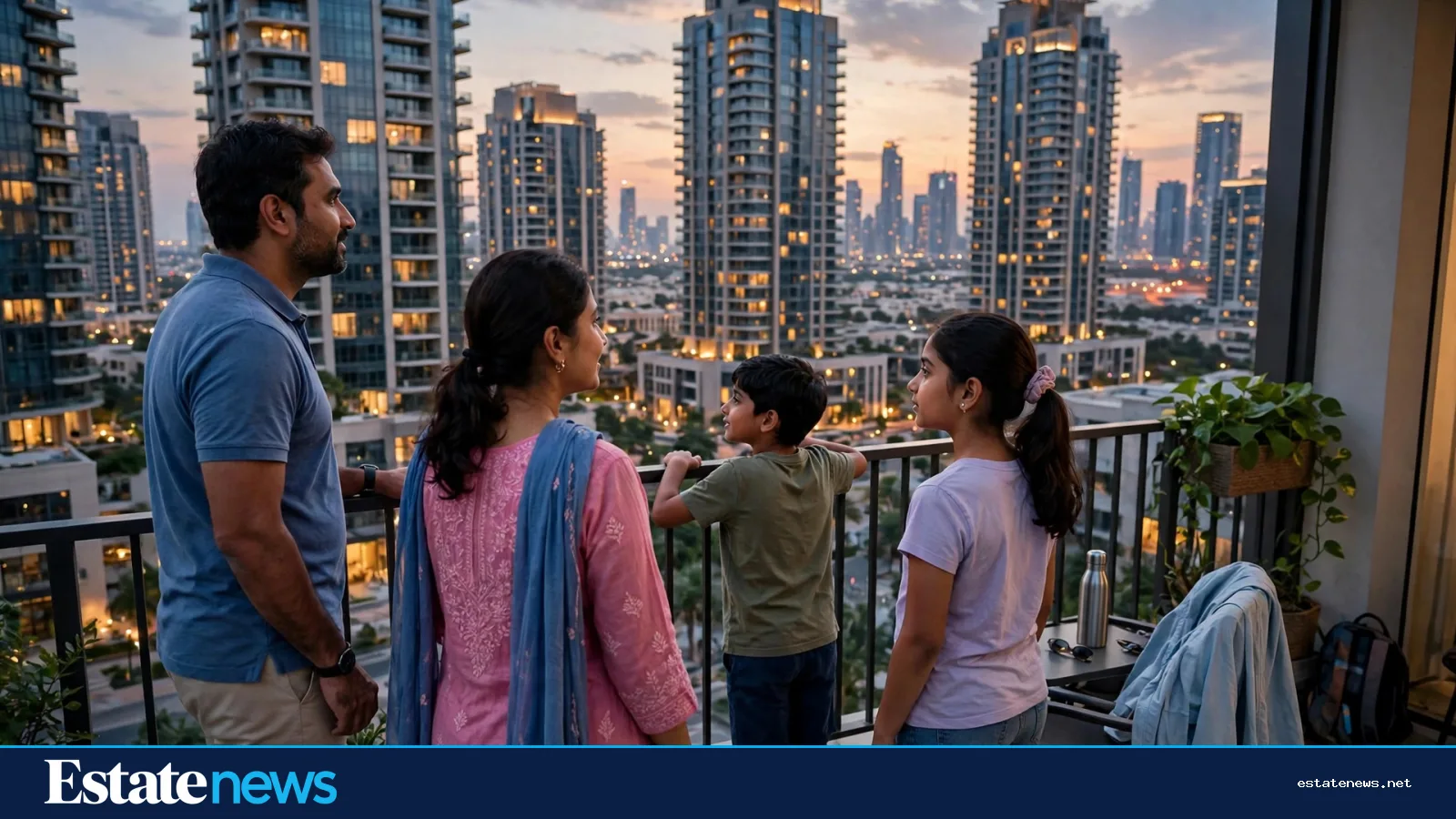
For a Bangladeshi investor, that shift changes the arithmetic in two directions at once. A lower rent means a cheaper entry point for someone buying to live in Dubai, or for someone renting while deciding whether to buy. It also means a lower income for someone buying to let. The same fall that helps the tenant hurts the landlord's yield, and the investor has to decide which side of that line they are on.
Two firms, two different rent numbers
Here the story gets awkward. Cavendish Maxwell, another firm tracking the same market, puts the average Dubai rent at AED 77.3 per square foot, up 5.5 per cent year on year, with gross yields of 6.6 per cent for apartments and 4.9 per cent for villas. That is a rent rise where CBRE reports a rent fall. The two firms measure differently. They use different samples, different definitions of average rent, and different ways of weighting new leases against renewals. Their numbers do not reconcile, and neither firm claims the other is wrong.
A reader should take the honest lesson from that. Dubai rent figures depend on who is counting and how. A single percentage, quoted without its source, is not a fact about the market. It is a fact about one firm's measure of the market. Anyone buying on the strength of a yield figure should ask which measure produced it, and whether the same measure applied to the specific building and area they are considering.


The sales data adds a third angle. Figures from the Dubai Land Department, reported through Cevitas, put the median one-bedroom apartment at AED 1,250,000 over the twelve months to 4 November 2026. And 74 per cent of residential sales in that period were off-plan, homes bought before they were built. Off-plan buying dominates because developers offer payment plans and new launches, and because buyers are betting on the finished home being worth more than the price agreed today. That bet is exactly what a cooling market tests.
What it means for a Bangladeshi buyer
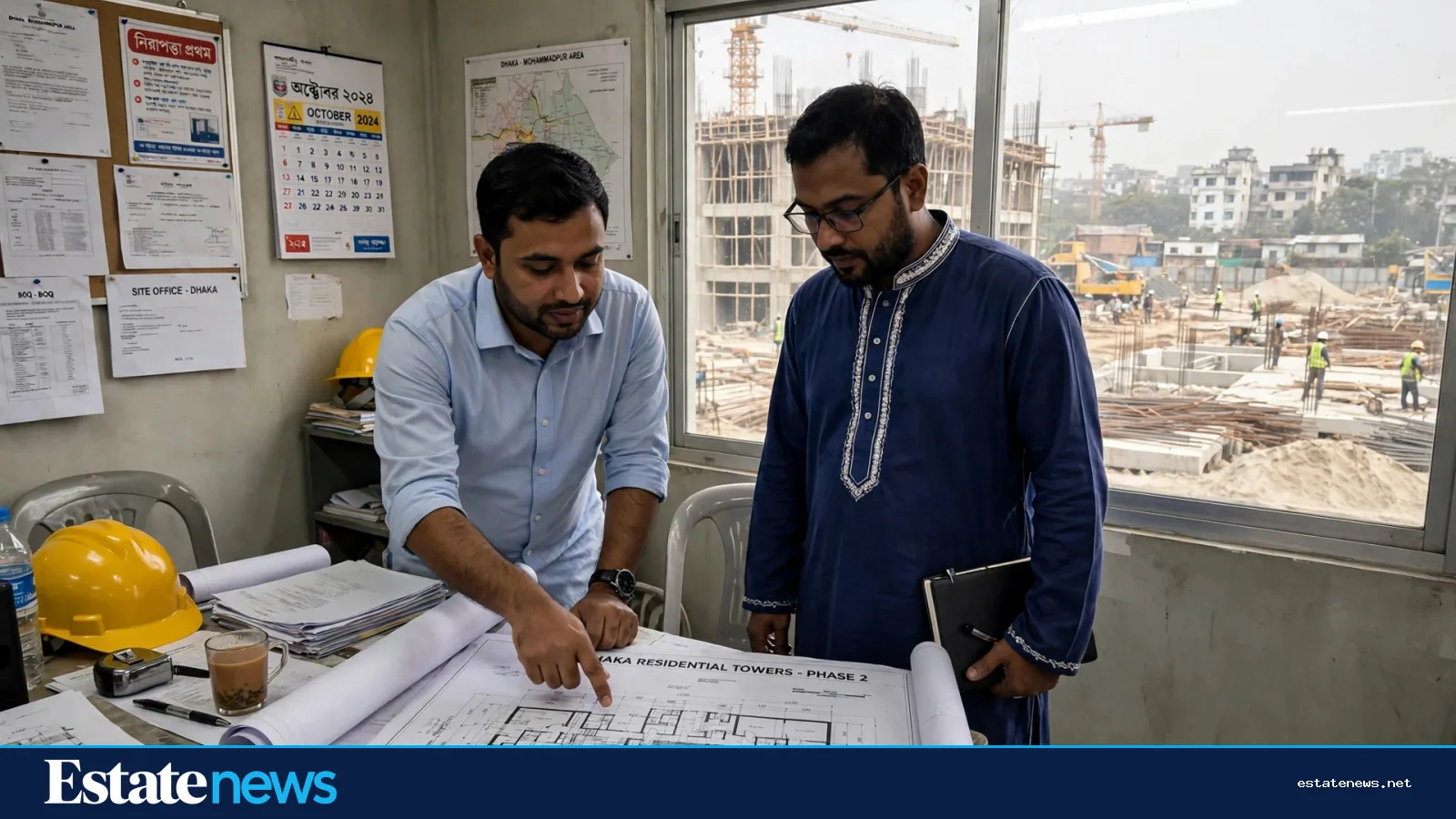
Start with the offices. The office boom is real and it is about demand, not speculation. Companies are leasing space, occupancy is near full, and rents are rising because there is not enough good office space to go around. A Bangladeshi investor looking at Dubai commercial property is looking at a different market from the one a flat buyer faces. The two should not be confused.
For homes, the picture is mixed in a useful way. Prices have barely moved, down 1 per cent, while rents have fallen 7 per cent. That combination means the yield on a new purchase has fallen, since the price is roughly the same and the rent is lower. It also means a buyer who plans to live in the flat, or to hold it for years, faces a softer entry than a year ago. Neither reading is a promise. A market that delivered 38,000 homes in nine months can deliver more.
The practical checks are the same as for any overseas purchase, and they matter more when the numbers disagree. Visit the building or send someone trusted. Check the service charges, which in Dubai can be a large share of the annual cost and which a headline yield often ignores. Check whether a quoted rent is a new-lease rent or a renewal rent, and check the developer's delivery record before buying off-plan, since three quarters of the market is off-plan.
Dubai will stay the benchmark overseas market for Bangladeshi investors. It is close, it is familiar, and its rules are written down. The third quarter has made it a more interesting market, not a simpler one. Offices boom, homes cool, and the firms counting the rents disagree.
This article is informational only and is not financial advice. Overseas property carries currency, legal and market risks that need professional advice before any purchase.
Read more: What Dhaka can learn from Dubai's property playbook — https://estatenews.net/investment/what-dhaka-can-learn-from-dubais-property-playbook-and-where-the-comparison-breaks-down | দুবাইয়ে ফ্ল্যাট কেনার আগে বাংলাদেশি ক্রেতার যে হিসাবগুলো মিলিয়ে নেওয়া জরুরি — https://estatenews.net/investment/dubaize-flzat-kenar-age-bangladesi-kretar-ze-hisabgulo-milize-neooza-jruri | Property returns vs bank deposits — https://estatenews.net/investment/property-returns-vs-bank-deposits-what-the-comparison-misses-about-risk-liquidity-and-time