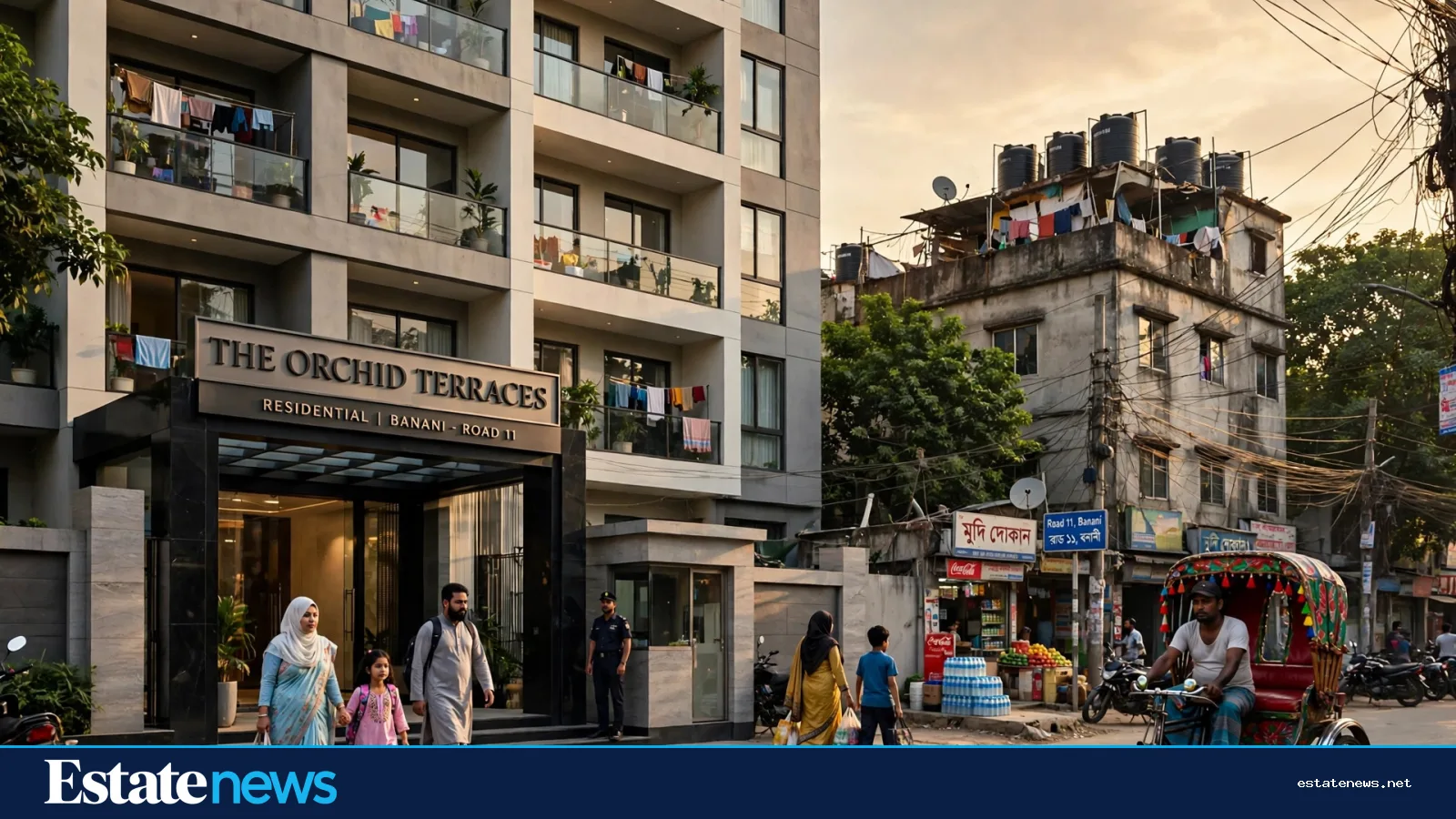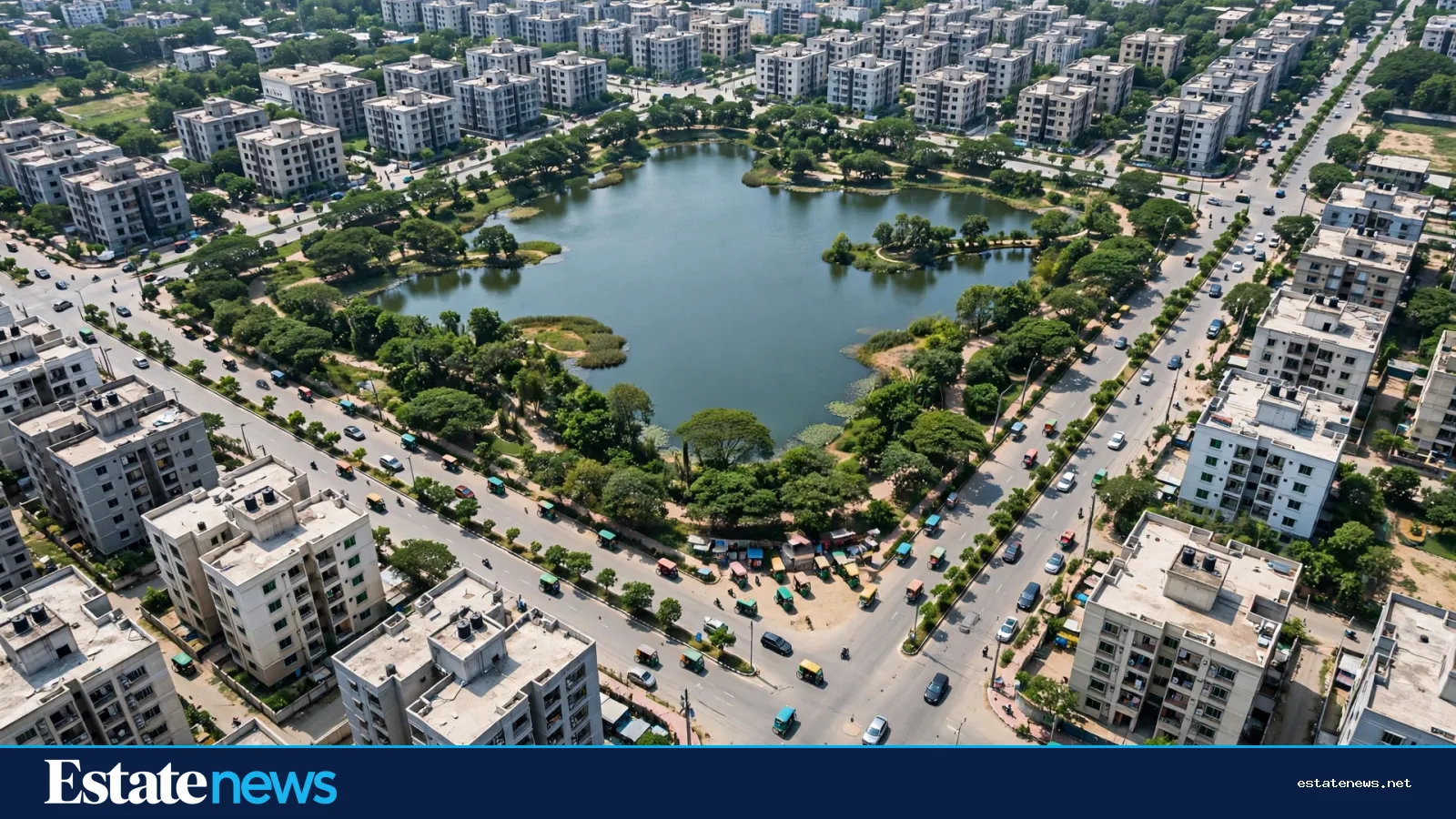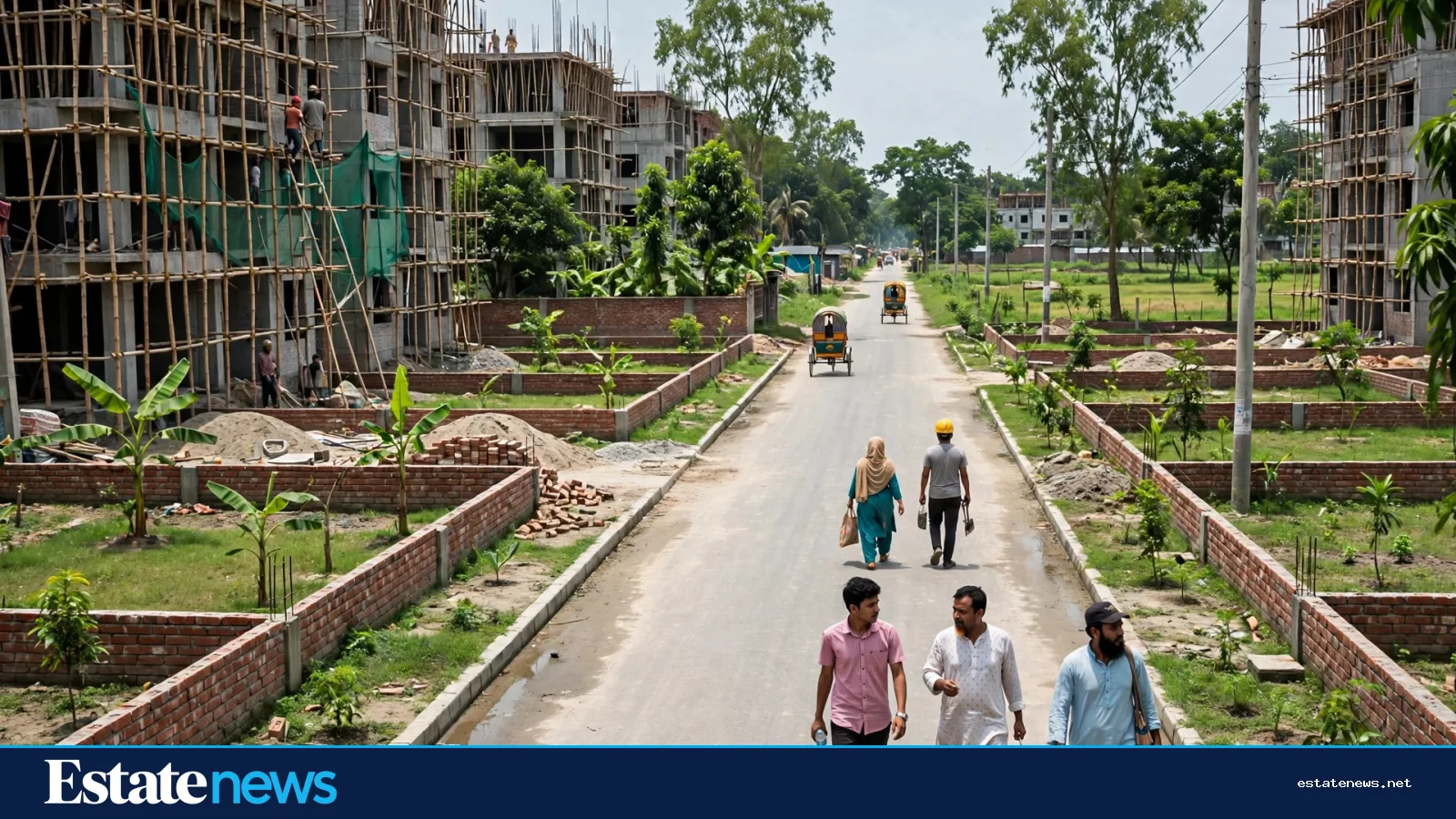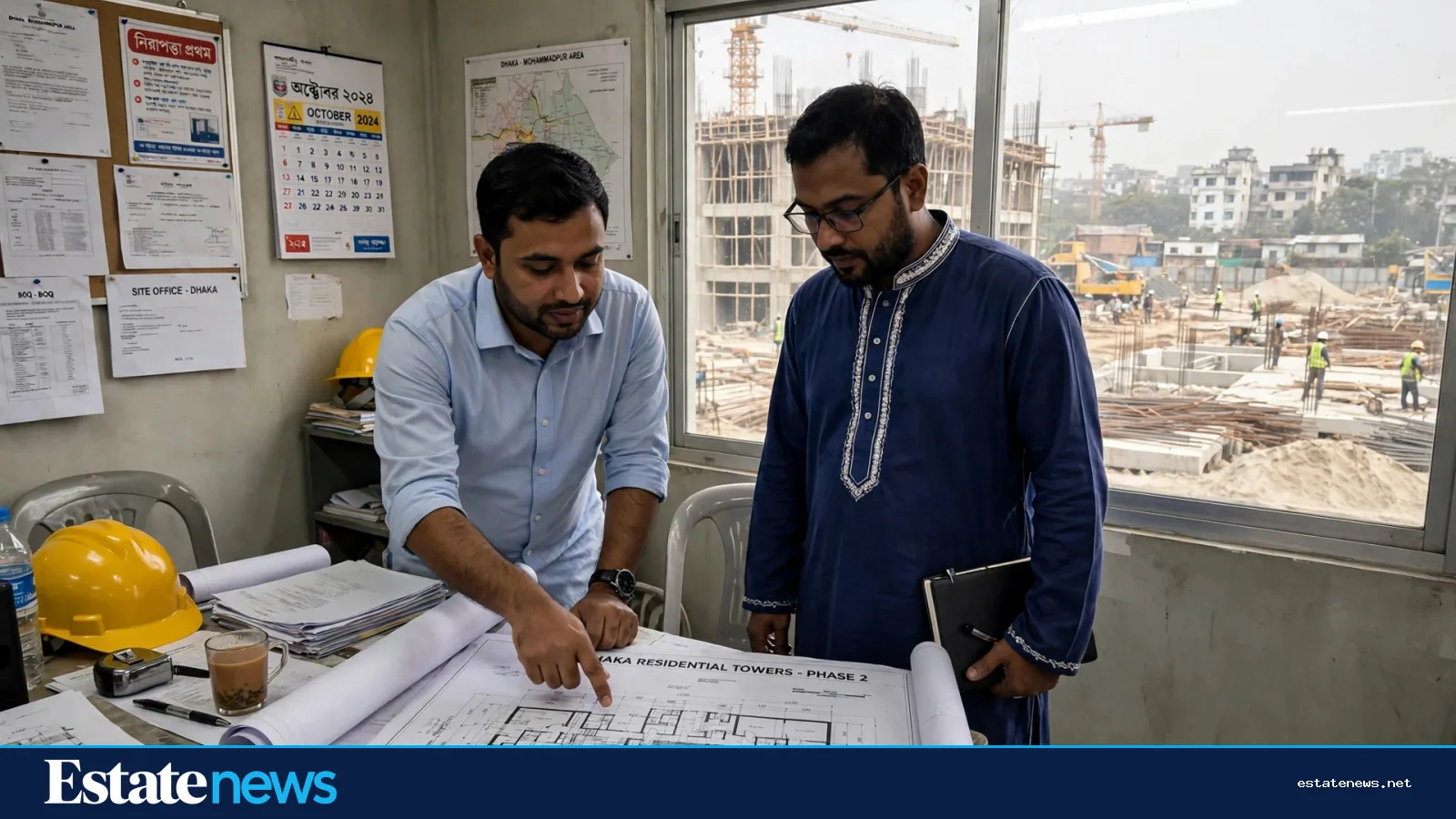
In a site office in Mohammadpur, a project manager leans over a rolled-out floor plan while the building outside is still bamboo scaffolding and bare columns. The tea on the desk has gone cold. The plan on the table is not only a drawing. It is a budget, a loan file and a sales promise, all in one, and the money behind it was arranged long before the first truck of cement arrived.
That is the part of a housing project buyers rarely see. A flat is sold as a finished home, but it is paid for in stages, from several pockets at once, and the order in which that money arrives decides whether the building rises on schedule or stalls halfway. Land comes first, then approvals, then marketing, and only then the heavy construction. Each stage has its own source of funds.
Bank loans, and what they cost now

Bank finance is the first source most people think of, and it is the one most sensitive to the cost of money. Bangladesh Bank's policy rate stands at 9.50 percent, where it has been since 2 August 2026, according to the quarterly monetary policy statement of 30 September 2026. Home loan rates quoted by banks this November run from 9.72 percent to 15 percent, as our piece "Home Loan Rates in Bangladesh: The Same Loan Costs Very Different Amounts" sets out today, and a developer borrowing to build faces rates at the upper end of that range or above it.
Credit is also tight. Private-sector credit growth was 4.75 percent in August, below 5 percent for six months running, against Bangladesh Bank's December target of 6.80 percent, according to a Financial Express editorial in October 2026. When banks lend slowly, a developer cannot count on fresh borrowing to cover a cost overrun. Projects that were planned on cheap credit have to be re-planned, and some simply wait.
Booking money: the buyer's share
The second source is the buyer's own money, paid as booking money and then in instalments as construction moves ahead. For a developer, this is the cheapest money available, because it carries no interest. For a buyer, it is the riskiest, because it is paid before the flat exists.
That is why the agreement matters more than the brochure. Booking money is governed by the terms of the agreement itself, and what happens to it if a buyer pulls out, or if a project is delayed, depends on the clauses the buyer signed. Our Bangla guide "বুকিং মানি ফেরত পাবেন তো? চুক্তিতে যা লেখা থাকে" runs through the clauses worth reading before any money changes hands. A buyer who pays in stages tied to visible construction progress keeps more control than one who pays a large sum up front on a promise.


Joint ventures and the landowner's stake
The third source is the land itself, through a joint venture. In Dhaka's most common arrangement, a landowner hands over a plot and the developer builds on it, and the finished flats are split between them under an agreement. No cash changes hands for the land at the start. The landowner's share is the land, and the developer's share is the construction, the approvals and the sales.
Our Bangla guide to joint-venture agreements between landowners and developers explains what to look for in that split, and the same logic applies to the money. A joint venture spreads the cost, but it also spreads the risk. If the two sides fall out, or if the agreement is vague about who pays for what, the building can stop while the argument is settled. Buyers who ask how a project is structured, and not only what the flat costs, usually get a clearer picture of whether it will finish on time.
The developer's own money
The last source is the developer's own capital: retained earnings from earlier projects, and money put in by the owners. This is the money that covers the gap when a bank loan is late or a sales target is missed. It is also the money that absorbs the first shock when building costs move.
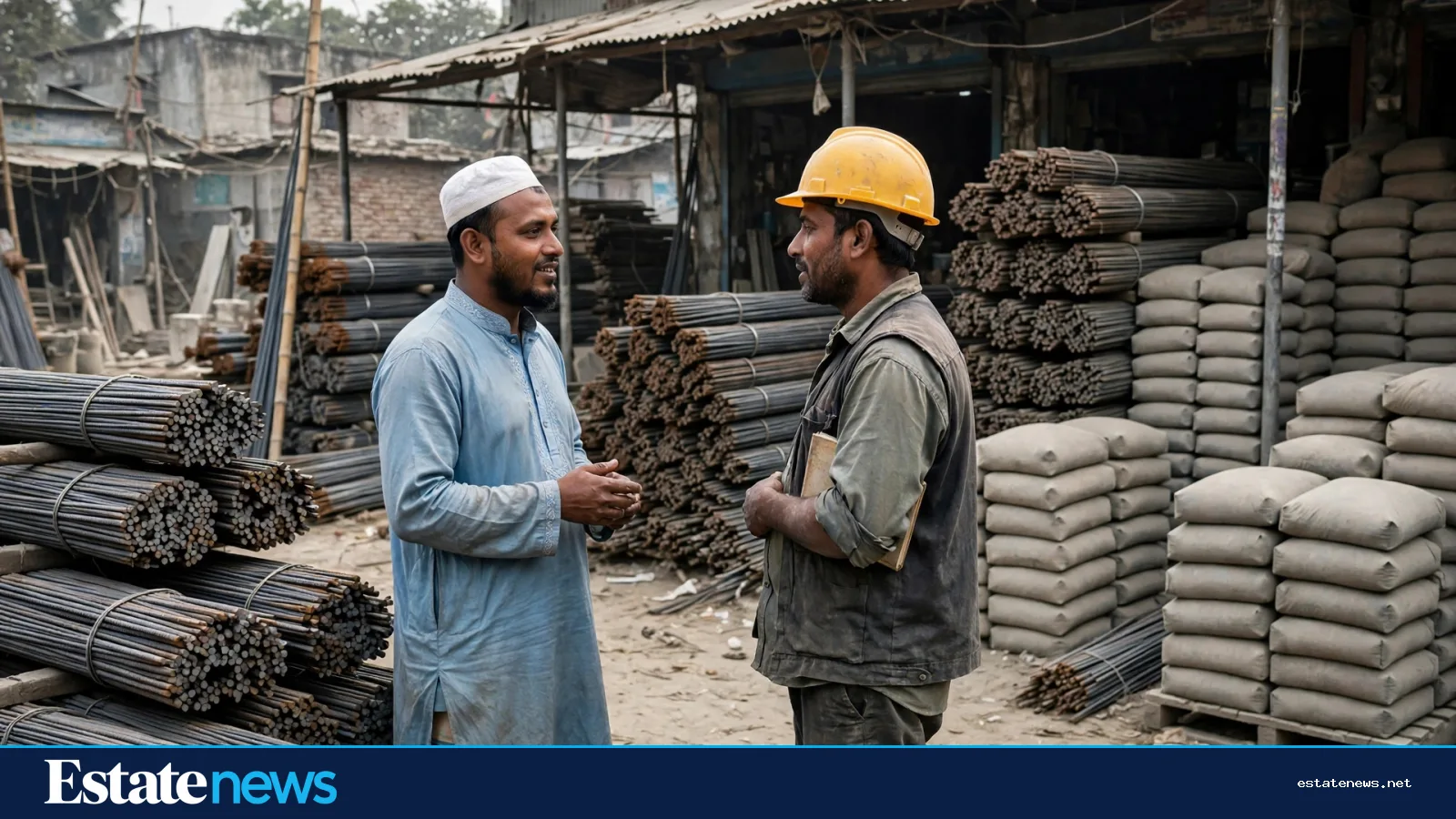
Those costs have not stood still. Steel rod was Tk 92,500 to Tk 94,500 a tonne in early September 2026, and cement Tk 490 to Tk 550 a bag in May 2026, according to the dated figures in our piece "Steel, Cement and the Cost of Building: What November's Prices Mean for Developers". A developer that started a project on one set of prices and builds on another has to find the difference somewhere, and the sources above are where it looks first.
For a buyer, the lesson is practical rather than financial. A project funded from several sources is normal in Dhaka, and no single source tells the whole story. Ask where the money comes from, check that the approvals are in place, and read the agreement before the booking money is paid. The building outside the site-office window will tell you how the work is going. The funding behind it tells you whether it will keep going.