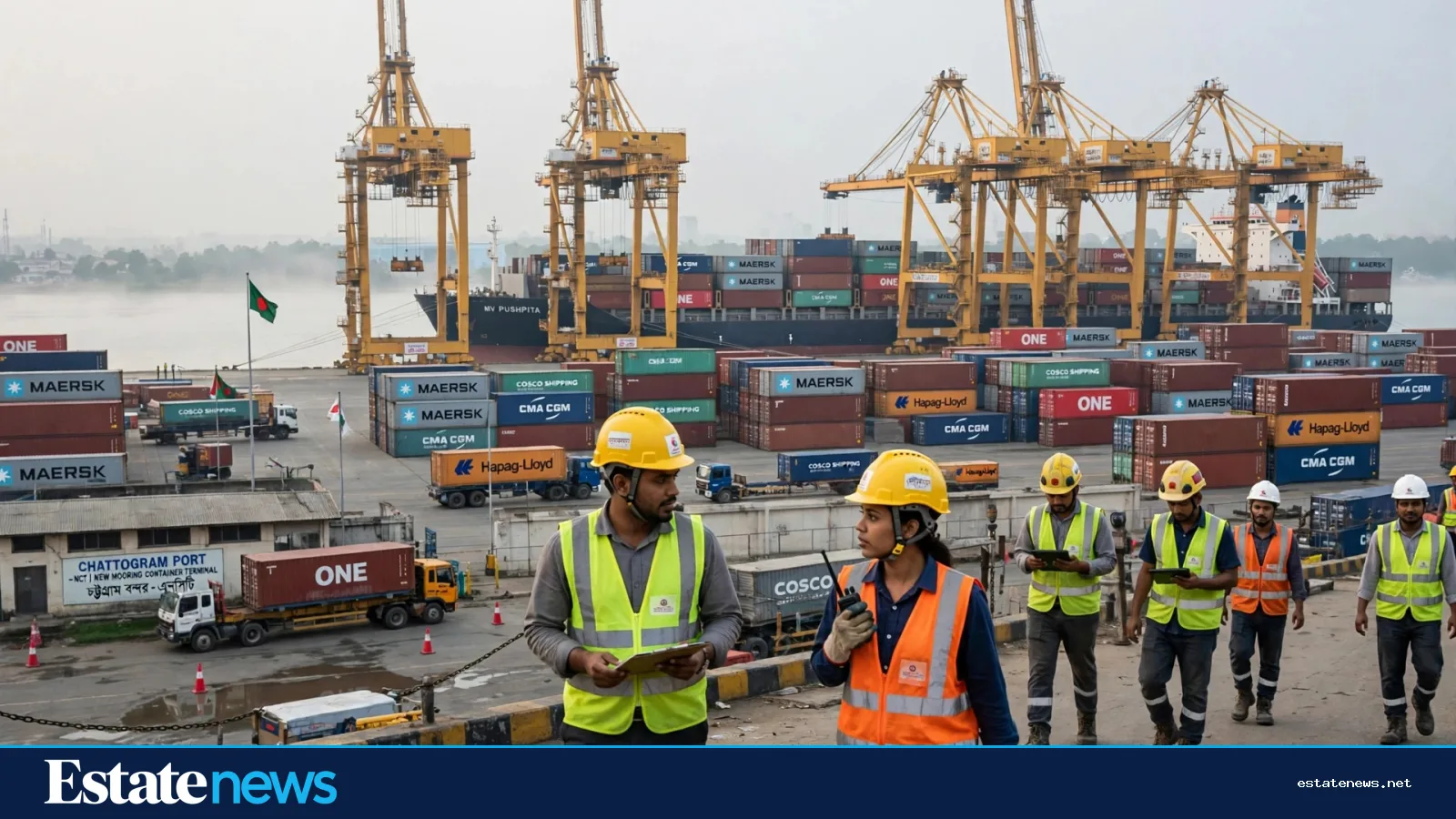
The port that moves almost everything Bangladesh buys and sells is changing the way it does business. Chattogram Port Authority has gazetted new rules that make competitive tendering mandatory for berth, terminal and ship-handling operators, and the port is moving towards a landlord model in which it owns the land and the quays while private operators run the terminals. The change, set out in the Chattogram Port Authority (Appointment of Berth, Terminal and Ship Handling Operators) Rules, 2026, gazetted on 5 November, is the biggest shift in how the country's main gateway has been run in years.
The timing is no accident. The New Mooring Container Terminal, which handles about 44 percent of the port's container traffic, is due to pass to DP World under a 15-year concession signed on 8 October, with handover targeted for March 2027. Estate News reported the deal in "Chattogram Port: DP World to Take Over New Mooring Terminal in March 2027". The terminal handled about 1.3 million TEUs in 2025, and the port as a whole handled about 2.14 million TEUs between January and July 2026.
What DP World is paying, and what it must deliver

The money side of the deal is plain, and the figures come from the port authority via BSS. DP World is paying about Tk 600 crore upfront, a quarter of it on signing and the rest before operations begin, and plans to invest more than Tk 1,000 crore in the terminal over ten years. On top of that, the port authority takes a royalty of 40 to 67 percent per TEU, plus a fixed payment of about Tk 10 crore a year. There is a minimum volume guarantee of 1.23 million TEUs, and penalties if crane productivity or truck turnaround times miss their marks for three months in a row. The New Mooring terminal has been run by Chattogram Dry Dock Ltd, a Bangladesh Navy-owned company, since 2024, and it keeps running it until the handover.
The rules matter because they set the pattern for the other terminals. Three terminals now involve foreign operators. Patenga went to RSGTI of Saudi Arabia on a 22-year deal signed in December 2023. Laldia is next in line, and the new rules say foreign operators can take part, subject to government approval. The Daily Observer reported on 14 November that the port authority is moving the whole port to a landlord model. Under that model, the authority keeps the infrastructure and the regulatory role, and the operators bring the cranes, the systems and the money.
The Bay Terminal, and why it costs Tk 13,525 crore


While the terminals change hands, the port is also growing. The Bay Terminal, approved by ECNEC at Tk 13,525 crore with work running through June 2031, is the largest expansion the port has attempted. BSS reported the approval on 5 November. The terminal is meant to take the pressure off the existing jetties, where ships queue and containers pile up in the busy season, and to give the port room for the larger vessels that now call on the Bay of Bengal.
The stakes are easy to see. Chattogram handles about 92 percent of Bangladesh's seaborne foreign trade, according to India Sea Trade News on 14 November. When the port slows down, garment shipments miss their dates, factories wait for raw materials, and importers pay more for every container. When it speeds up, the whole export economy breathes easier. That is why the landlord model is being watched far beyond the port gates, in Dhaka boardrooms and in the factory towns of Gazipur and Narayanganj, where export orders depend on a berth being free on the right day.
Estate News has also looked at the energy side of the port city's growth in "The Third LNG Terminal at Maheshkhali: Energy for Chattogram's Next Chapter", and at the housing that follows the port's money in "Khulshi Hills: The Port City's Premium Pocket, Flat by Flat". The port, the power and the housing move together in Chattogram, and the landlord model touches all three.
There are questions the port authority will have to answer as the tenders go out. How the royalty bands are set for each terminal, how the minimum volume guarantees are enforced, and what happens when an operator misses its targets will decide whether the model works in practice. The DP World deal gives the first answers. The terminal's handover in March will be the first test of the new rules, and the port city will be watching the cranes.
For Chattogram itself, the change is about more than containers. A port that runs on open tenders and private operators is a different kind of landlord, one that has to keep its tenants honest and its gates moving. The city has waited a long time for the Bay Terminal and for terminals run the way the world's big ports run them. The rules are now written. The next two years will show whether they hold.