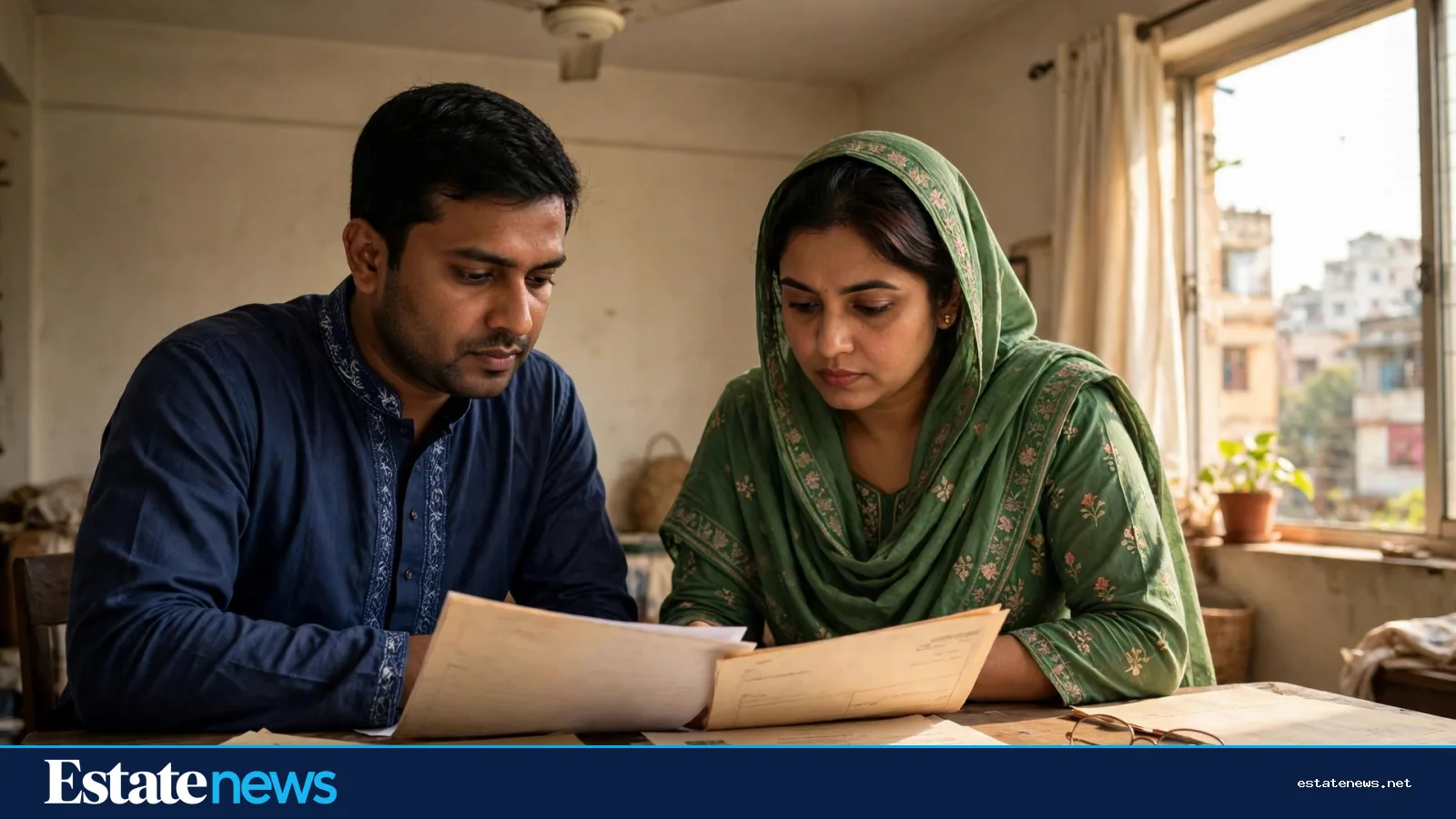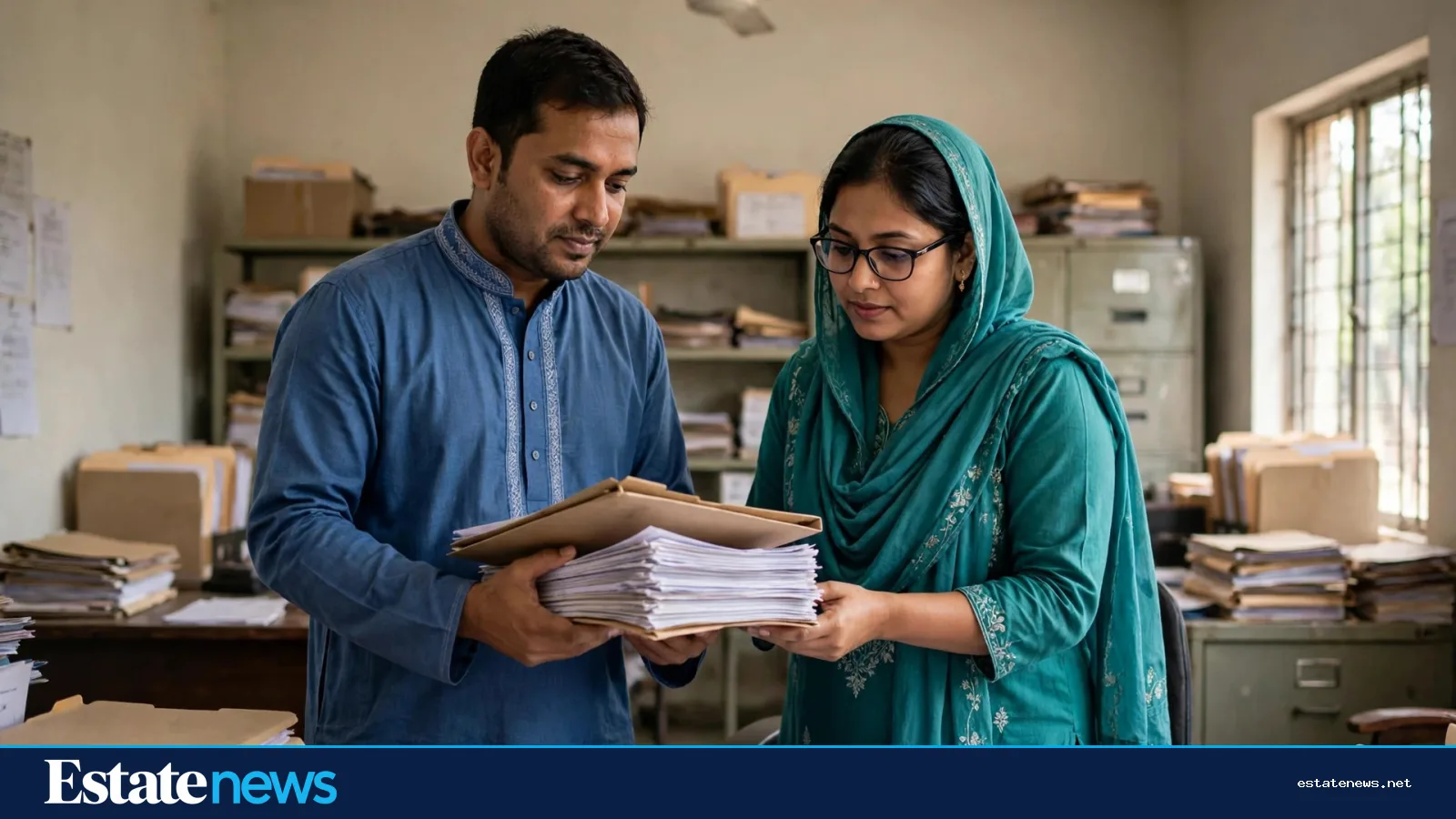
The seller has the deed in his hand, the price sounds fair, and the plot looks right. This is the moment when most land deals go wrong, not because the buyer is careless, but because the buyer checks one document and stops there. A clean land title in Bangladesh is never one paper. It is a chain, and every link has to hold.
Five documents decide whether that chain is sound. They are the same five our Bangla guide "জমির দলিল যাচাই: কেনার আগে যে পাঁচটি কাগজ দেখবেন" lists for buyers, and they are worth going through slowly, in English, because a mistake here costs more than any other mistake in property.
The deed, and the chain behind it

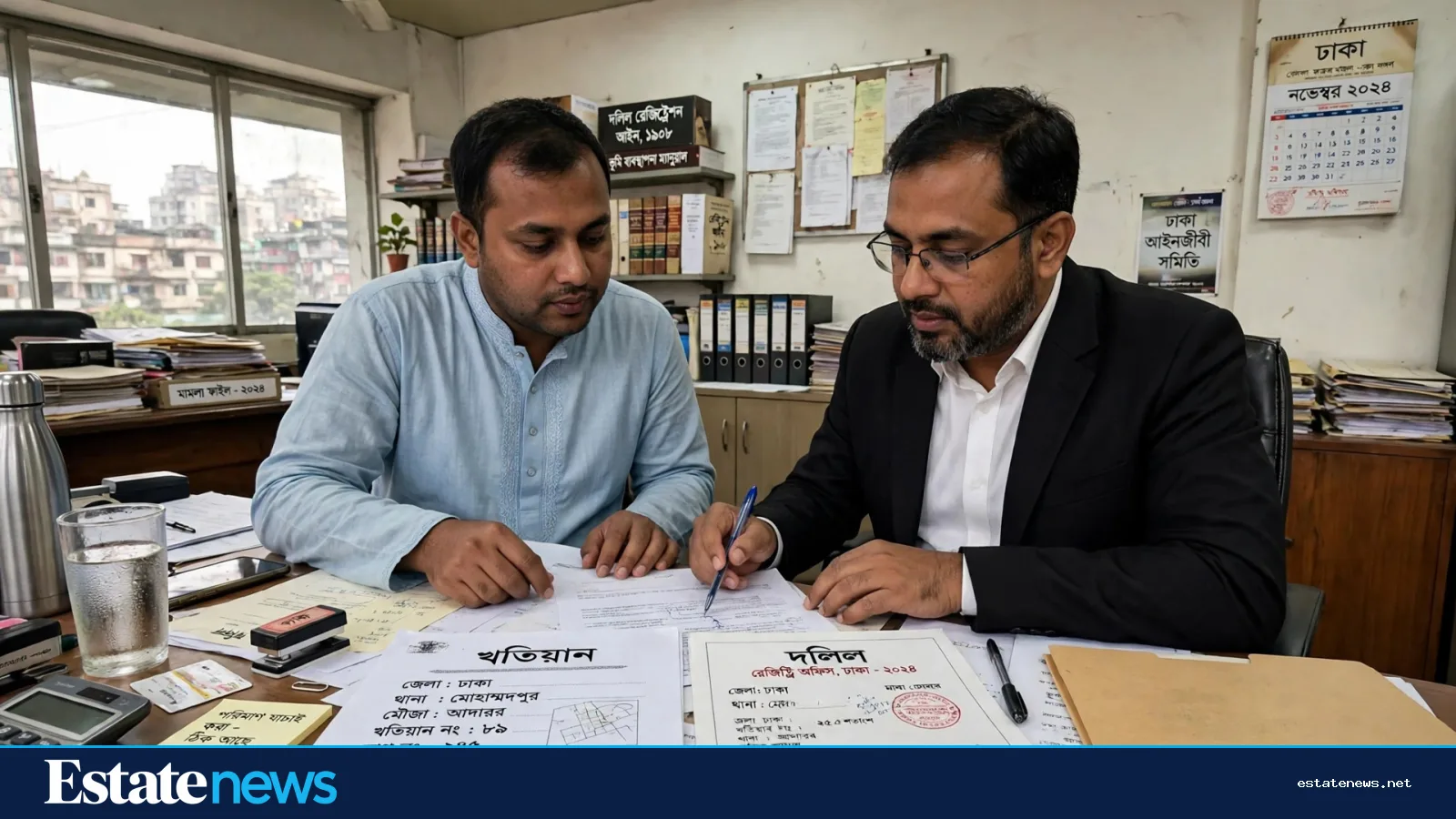
The deed, the dolil, is the record of the transfer itself. It says who sold the land, who bought it, when, and for how much. But a deed on its own proves little. What matters is the chain of deeds behind it: each transfer from one owner to the next, back far enough that the story holds together. A gap in that chain is a warning, not a detail. Ask the seller for the earlier deeds, and if one is missing, ask why before you pay anything.
The khatian, the record of rights
The khatian is the government's record of rights. It shows the recorded owner, the mouza, the dag number and the area, and it is the document the land office works from. Check that the name on the khatian matches the seller, and that the dag number matches the plot you walked on. A khatian is not a deed of title on its own, and it carries only a presumption of ownership, but a mismatch between the khatian and the seller's story is a reason to stop and ask questions.
If the khatian itself has an error, a wrong name or a wrong area, it can be corrected, but correction takes its own process. Our Bangla piece "খতিয়ানে ভুল হলে কী করবেন: সংশোধনের আবেদন থেকে আদালত" walks through that route, from an application to the land office to the courts where needed. Do not accept a promise that the error will be fixed after the sale. Fix it first, or price the risk honestly.
Mutation, and the tax receipts
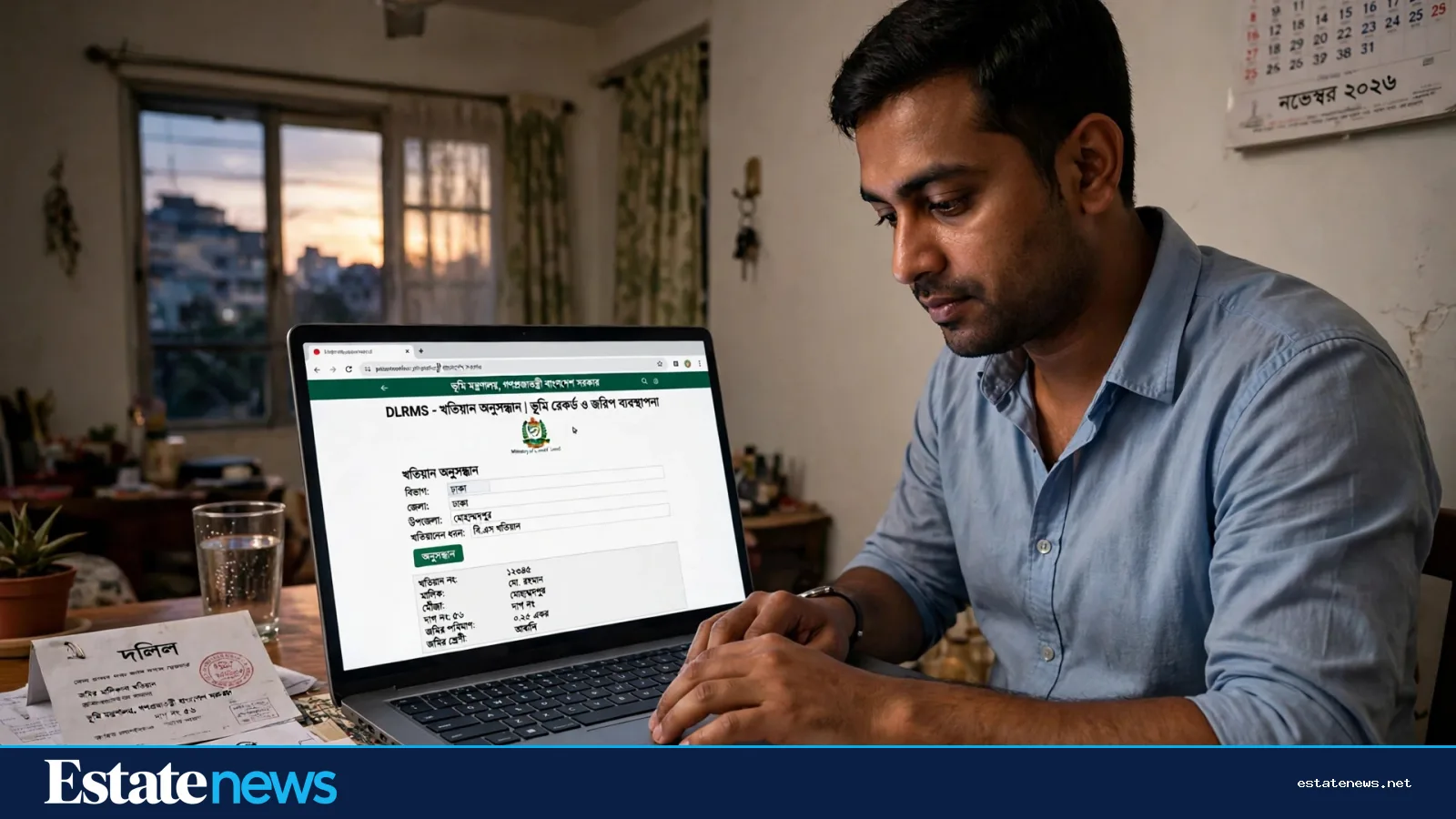
Mutation, the namjari, is the step that puts the new owner's name into the record after a purchase. Until it is done, the government's record still shows the previous owner. Our mutation guide explains the paper trail from deed to holding number, and the online route is now the normal one: the e-mutation portal, an application to the Assistant Commissioner (Land), and a new khatian in the buyer's name.


The tax receipts matter too. Ask for the land development tax receipts and the DCR, the duplicate carbon receipt, for the mutation fee. A seller who has paid the tax and kept the receipts is a seller whose paperwork is in order. A seller who cannot show them is a seller whose file you will have to untangle later, at your own expense.
The survey chain, and the ground itself
Land in Bangladesh has been surveyed more than once, and the old survey records, CS, RS and BS, do not always agree with each other. The dag number on one survey may sit differently on another. A careful buyer checks the plot against the current survey and the mouza map, and walks the ground with the papers in hand. A boundary that looks clear on paper and unclear on the ground is a dispute waiting to happen.
Purbachal deserves a special note here. Land bought in Purbachal carries its own conditions: the bayna, the agreement to sell, must be registered within 60 days from 1 January 2026, and a 3 percent transfer fee has applied since November 2025, according to a current 2026 guide cross-checked against the published rules rather than RAJUK's own site. Readers should confirm the current position with RAJUK or a lawyer before relying on it, because these conditions have changed before and may change again.
The checks that cost little and save a lot
Two more checks cost almost nothing. Take the deed number to the sub-registry office and confirm the deed is recorded there, and that no mortgage or lien sits on the land. Then ask the neighbours. They know who farmed the plot, who disputed it, and whether anyone else claims a share. A family dispute over inherited land is the most common surprise in Bangladeshi land deals, and it rarely appears in any document.
Registration costs are part of the same calculation. Our Bangla guide "ফ্ল্যাটের রেজিস্ট্রেশন খরচ ২০২৬: হিসাবটা যেভাবে করবেন" works through the stamp duty, registration fee and taxes for a flat purchase, and the same habit applies to land: work out the full cost, including registration, before you agree a price, not after.
None of this is legal advice, and none of it replaces a lawyer. A property lawyer in Dhaka will run these checks in a day or two, and the fee is small beside the price of a plot. What this guide does is simpler: it tells you which papers to ask for, and what a wrong answer looks like. A seller with clean papers will show them gladly. A seller who will not show them has already told you everything you need to know.