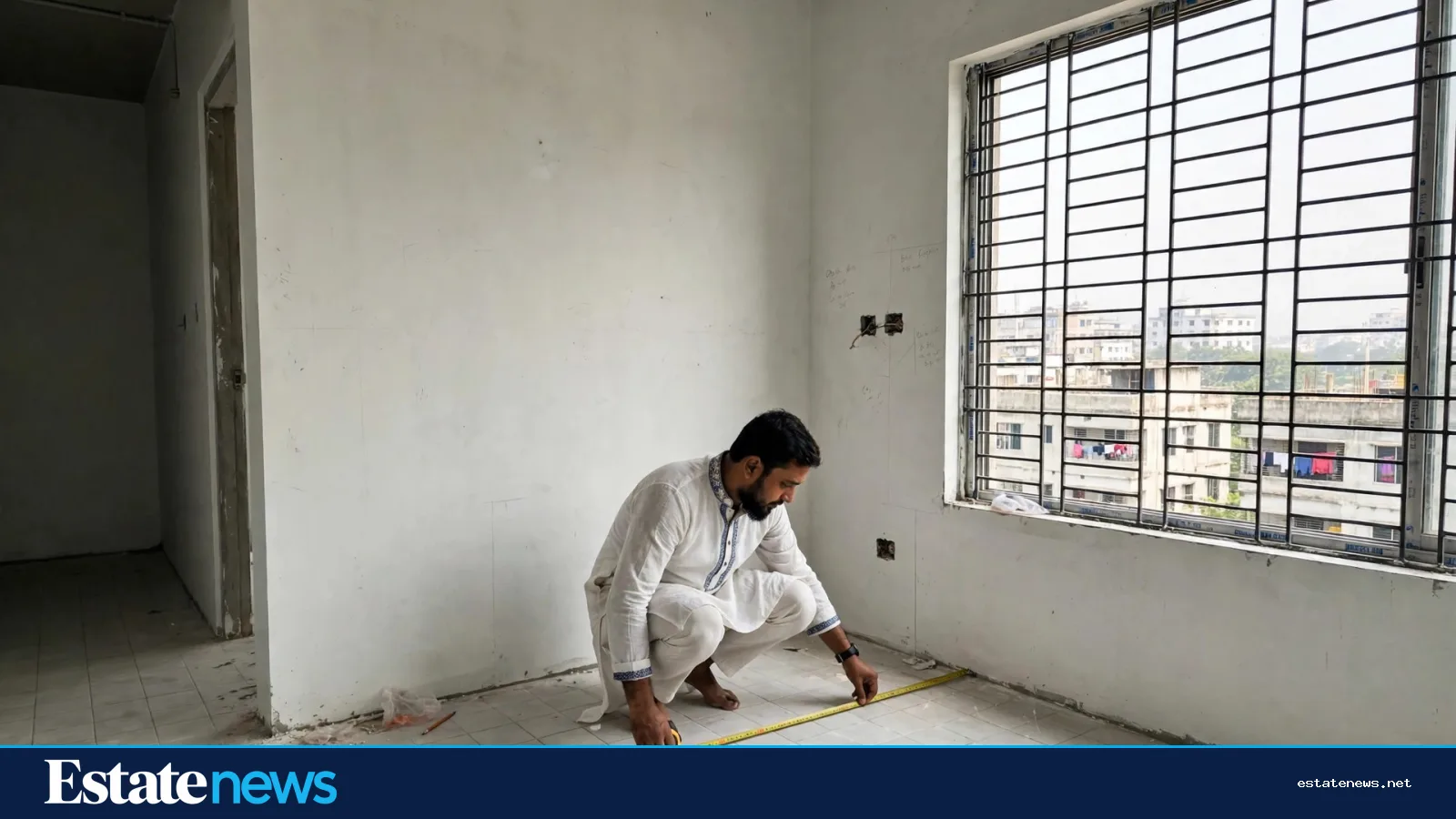
The brochure says 1,200 square feet. The flat, when you walk into it, feels smaller. The bedrooms are snug, the living room holds a sofa and not much else, and you start to wonder where the missing space went. It did not go anywhere. It was never yours to live in. It was counted in a different way.
Three terms describe a flat's size in Dhaka, and they are not the same thing. Super built-up area, built-up area and carpet area sound like small variations on one number. In practice, the gap between them is the difference between the flat you paid for and the flat you live in.
Carpet area: the space you actually use

Carpet area is the simplest of the three. It is the floor area inside the flat that you can actually walk on and put furniture in: the rooms, the kitchen, the bathrooms, the space inside the walls. If you could roll out a carpet over every usable inch, that is the carpet area. It is the number that matters most to daily life, because it is the space your bed, your table and your family actually occupy.
Built-up area: the walls join in
Built-up area adds the walls to the carpet area. The thickness of the outer walls and the inner walls counts, along with the balcony in most listings. The flat has not grown. The measurement has simply widened to include the structure that holds the flat up. A flat with thick walls and a large balcony will show a bigger built-up area than a flat with the same carpet area and thinner walls.
Super built-up area: the building's share
Super built-up area goes further still. It takes the built-up area and adds a share of the building's common spaces: the lift, the staircase, the lobby, the corridor, sometimes the car park. The share is divided among the flats in the building. Your flat has not changed size at all. You are now counting a slice of the hallway outside your door as part of your home.
This is where the confusion lives. A 1,200 square foot flat measured as super built-up area may give you far less usable room than a 1,200 square foot flat measured as carpet area. The brochure number is the same. The home is not.


What to ask the developer to show in writing
There is no single percentage split that applies to every building, and no rule a buyer can quote to settle the question. The split depends on the building, the design and the developer's own method, so the right move is to ask for the numbers in writing before you sign anything.
Ask for the carpet area, the built-up area and the super built-up area as three separate figures, and ask which of them the price is based on. Ask for the floor plan with the dimensions of each room marked on it, and ask what is included in the common area share. Then measure the flat yourself at handover, with a tape, room by room, and compare it with the plan. A difference of a few square feet is normal. A large one is a conversation, and the agreement is where that conversation should have happened.
The agreement and the deed are the documents that carry the area, so read them the way our Bangla guide to deed verification, "জমির দলিল যাচাই: কেনার আগে যে পাঁচটি কাগজ দেখবেন", advises for land: check that the figures in the papers match the figures you were told, and that the same measurement is used in every document. If the brochure says one number and the agreement says another, the agreement is the one that counts.
Why the same number buys different flats
The same headline size can buy a very different home depending on the building. A flat in a building with wide corridors, a large lobby and a lift for every few flats carries a bigger common-area share than a flat in a simple building with a single staircase. A flat with a large balcony counts more built-up area than one with a small balcony, even if the rooms are the same size.
That is why comparing two flats by their headline size alone is a poor way to choose. Our piece "Ready Flats vs Flats Under Construction: What Buyers Pay for Certainty" makes a related point about what a buyer is really paying for, and our piece "The Resale Market: Why Some Dhaka Flats Sell in Weeks and Others Sit" shows how buyers judge a flat once they are inside it. In both cases, the usable space is what the next buyer looks at, not the number on the brochure.
None of this is legal advice, and the definitions here are the industry's working terms, not a legal standard. A lawyer can confirm how the area is stated in your agreement and what it means for the price. But the habit is simple, and it costs nothing: ask for all three numbers, measure the rooms, and buy the flat you can walk through, not the number on the page.