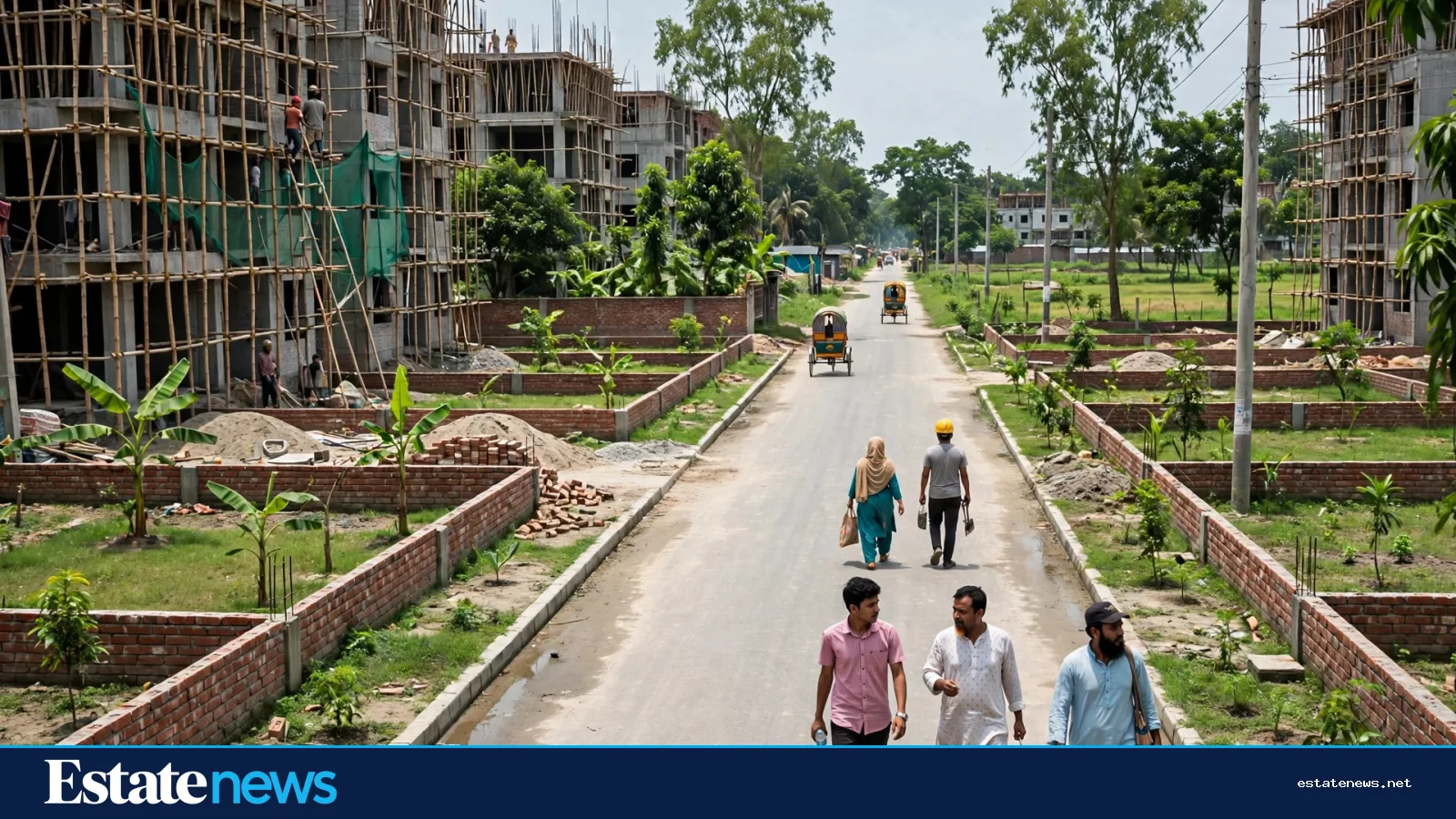
Dhaka grows in two ways. Inside the old city, developers stack flats on small plots. Outside it, other companies draw whole townships on open land, lay the roads, and sell plots where families will one day build. Amin Mohammad Group, known as AMG, belongs firmly to the second way. For more than thirty years it has been in the business of making land ready for homes, and its name is attached to some of the largest planned settlements on the edge of the capital.
The group began in 1993, when M. M. Enamul Haque founded Amin Mohammad Foundation Limited in Dhaka. In 2000 he formed Amin Mohammad Lands Development Limited, the group's land-development arm, which the company describes as one of the best known land developers in the country. Today the group runs its business through three flagship companies: Amin Mohammad Foundation Limited, Amin Mohammad Lands Development Limited, and Amin Mohammad Engineering and Construction Limited. The head office sits on Satmasjid Road in Dhanmondi, in the middle of the city its projects now ring.
The townships that carry the name

The projects read like a map of Dhaka's outward growth. Green Model Town, on the eastern side of the city, is one of the group's earliest and best known settlements. Green Bonosree grew beside it. Amin Mohammad City and Ashulia Model Town took the model further out, to the city's northwestern edge. Company profiles put the plots handed over at more than 5,000, and list Alokito Bangladesh and Amin Mohammad Town among the later projects.
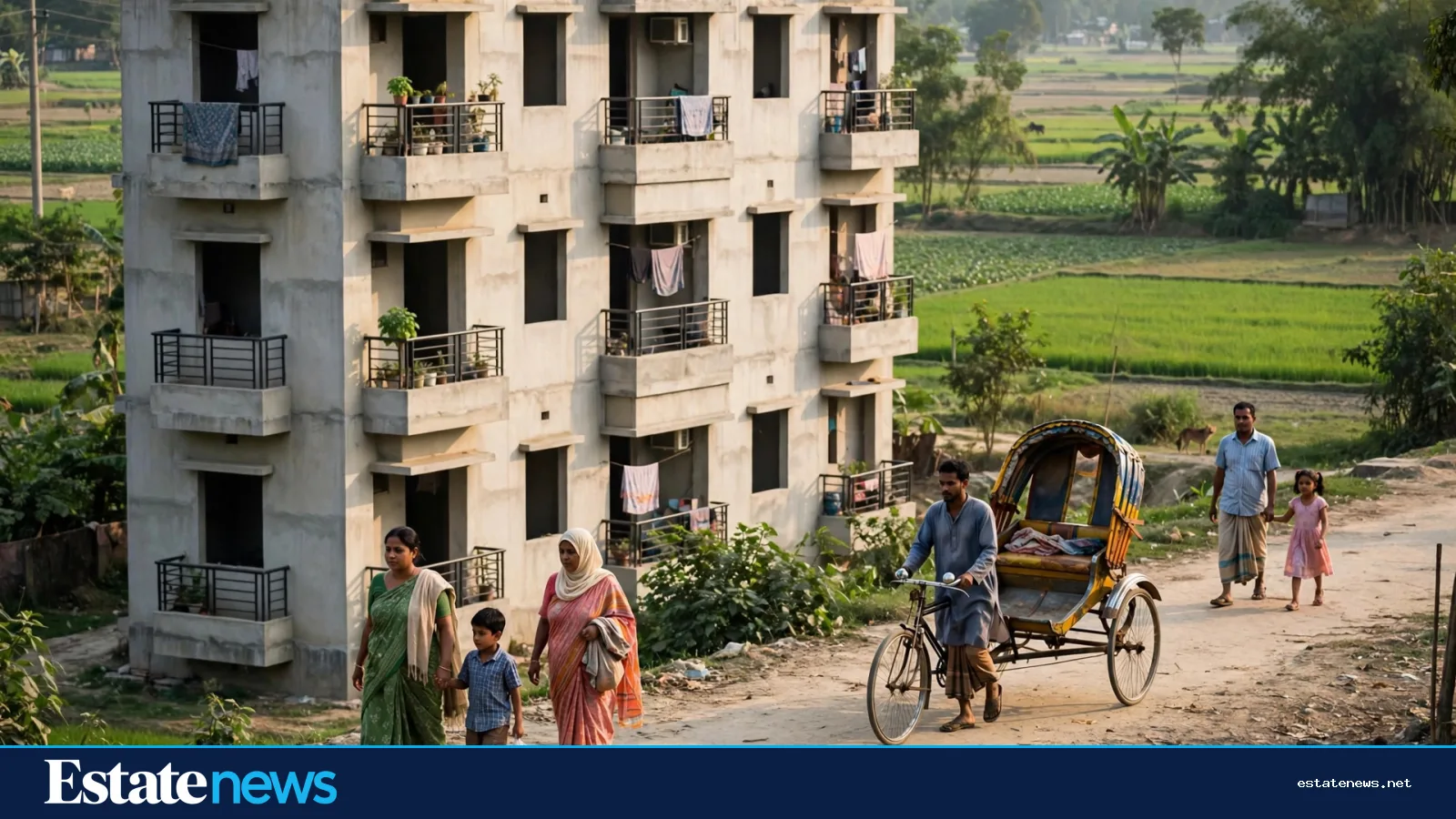
The newest large project is Amin City Purbachal, the group's township in the Purbachal corridor, where the capital's planned expansion is taking shape. Purbachal is where Dhaka's next generation of neighbourhoods is being drawn, and a land developer's work there is different from building a single tower in Dhanmondi. It means acquiring large tracts, cutting roads, marking plots, and waiting for a whole community to arrive. The group's more recent work, including The Valley, a gated community project run by Amin Mohammad Holdings Limited, follows the same idea: sell a plot, or a home, inside a place that is planned as a whole rather than built one building at a time.
That land-first model sets AMG apart from the flat builders that dominate Dhaka's market. A flat buyer checks a building. A plot buyer checks a township: the road, the drainage, the water and power lines, the distance to the nearest bazaar and school, and whether neighbours are already building. The group's business is to answer those questions with ground that is ready.
A family business, and a new generation
The group was built by one man, and it is now run by the next generation. M. M. Enamul Haque, the founder and chairman, died at his Gulshan home on 1 April 2023, according to Bangladesh Pratidin. His elder son, Md. Ramzanul Haque Nihad, had already taken charge of the group's daily running: he became Deputy Managing Director in 2015 and Managing Director in July 2020. In November 2025, The Prestige Magazine featured Nihad and his leadership of the group, describing a focus on trust, clear communication and real-time project tracking from land acquisition to handover.


The same feature, carried on the group's own website, describes a shift in what the group builds now: middle-segment lifestyle communities with shared services such as gyms, healthcare and community spaces. It is a sign of how the land business has changed. A township is no longer just plots and roads. Buyers ask about the life that will happen on the plot, and developers answer with the services around it.
What a plot buyer should check
A township's promise is only as good as its papers. Any buyer considering a plot in one of these projects should check the same things they would check anywhere in Dhaka: the approved layout, the deed chain, the mutation record, and whether the plot is free of dispute. The group's projects are large, and large projects carry their own questions: which phase a plot belongs to, what services are already in place, and what is still to come. These checks apply to township plots just as they apply to a single flat.
No price is published here, because the group does not publish plot rates. Rates move with plot position and the stage of works, and buyers are given them in writing on enquiry, so every figure should be in writing before paying.
Why the land model matters to Dhaka
Dhaka's housing shortage will not be solved inside the old city alone. The capital's families need new neighbourhoods, and new neighbourhoods need someone to buy the land, lay the roads and wait. That is slow, patient work, and it is the work AMG has done since 1993. Green Model Town is now a lived-in place, with homes, shops and schools, and the newer townships are following the same path from field to neighbourhood.
The test of a land developer is not a launch ceremony. It is what the place looks like ten years later: whether the roads held up, whether the neighbours came, whether the plots became homes. The group's oldest townships have an answer already. The newer ones, in Purbachal and beyond, are still being written. For a buyer, the question stays the same: check the papers, walk the ground, and buy the place, not the promise.
Read more: Eastern Housing, the Pallabi pioneer (https://estatenews.net/development/eastern-housing-the-pallabi-pioneer-that-became-dhakas-only-listed-developer) | Purbachal plots or Dhaka flats, land versus apartment (https://estatenews.net/markets/purbachal-plots-or-dhaka-flats-land-versus-apartment-and-the-choice-behind-it) | Bashundhara Residential Area, a planned neighbourhood (https://estatenews.net/markets/bashundhara-residential-area-a-planned-neighbourhood-learns-to-live-like-a-small-city)