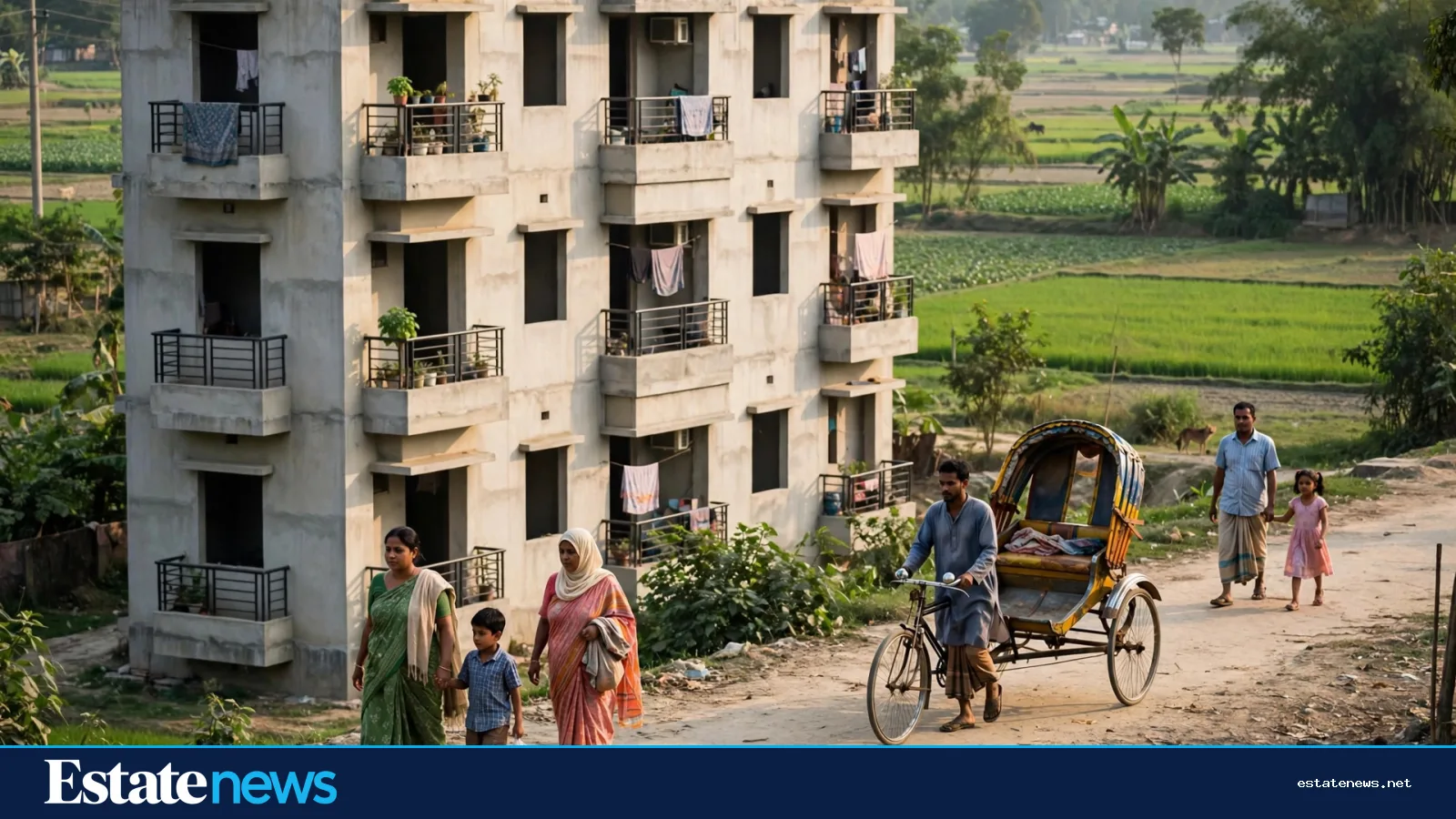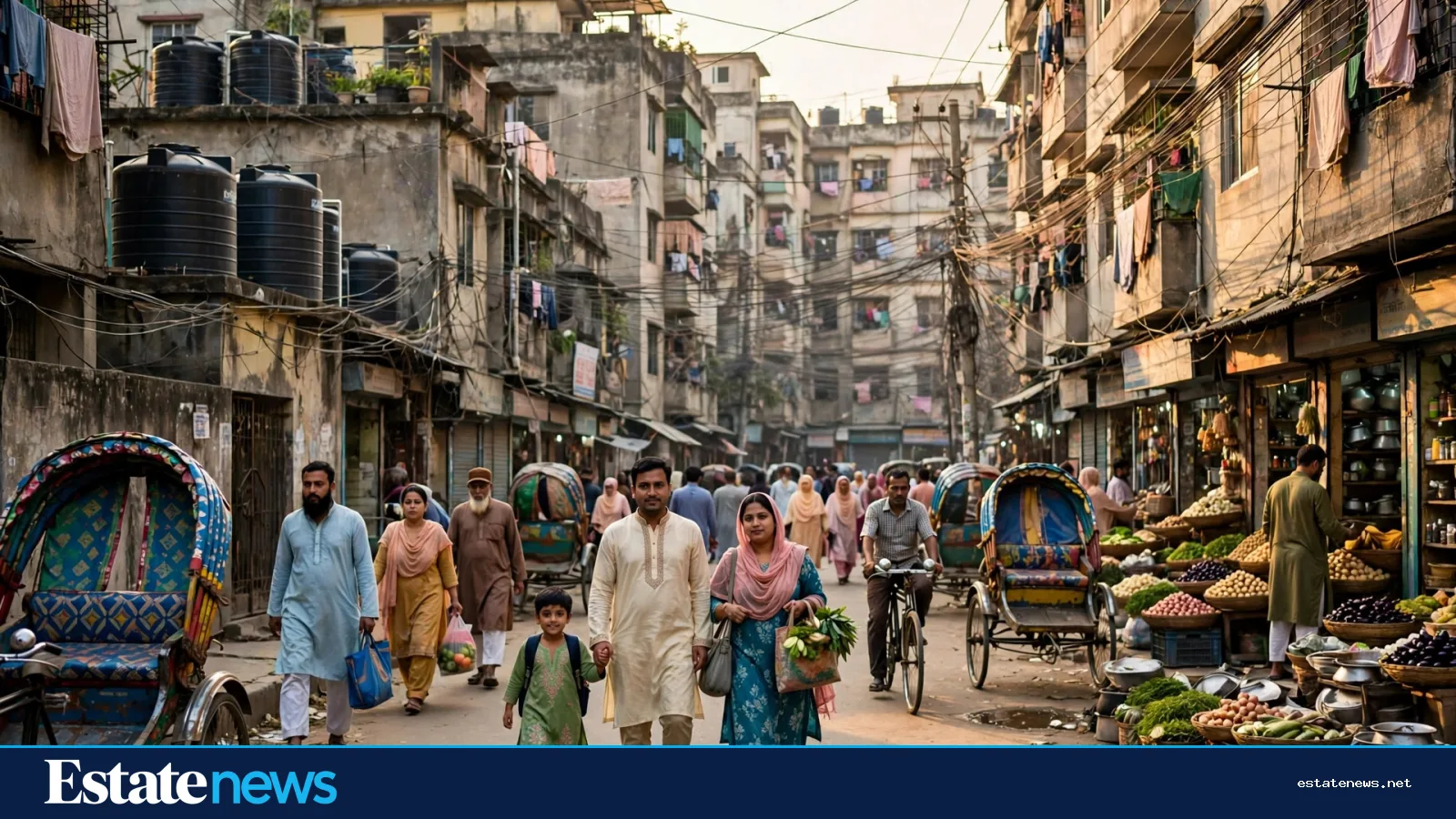
The rickshaw bell rings twice on the lane off Mirpur 10, and a boy in a green panjabi runs ahead of his parents with his school bag bouncing. Above him, washing hangs from a balcony rail. Below the balcony, a shopkeeper stacks brinjals in baskets. A metro train passes overhead, quick and quiet, and nobody on the street looks up. In Mirpur, the train has already become part of the furniture.
That is the first thing to understand about this part of Dhaka. Mirpur does not announce itself. It works. For more than half a century it has been the place where the city's teachers, bank officers, small traders and government staff found a way to own a roof, and it still does that job today.
A planned beginning on open land

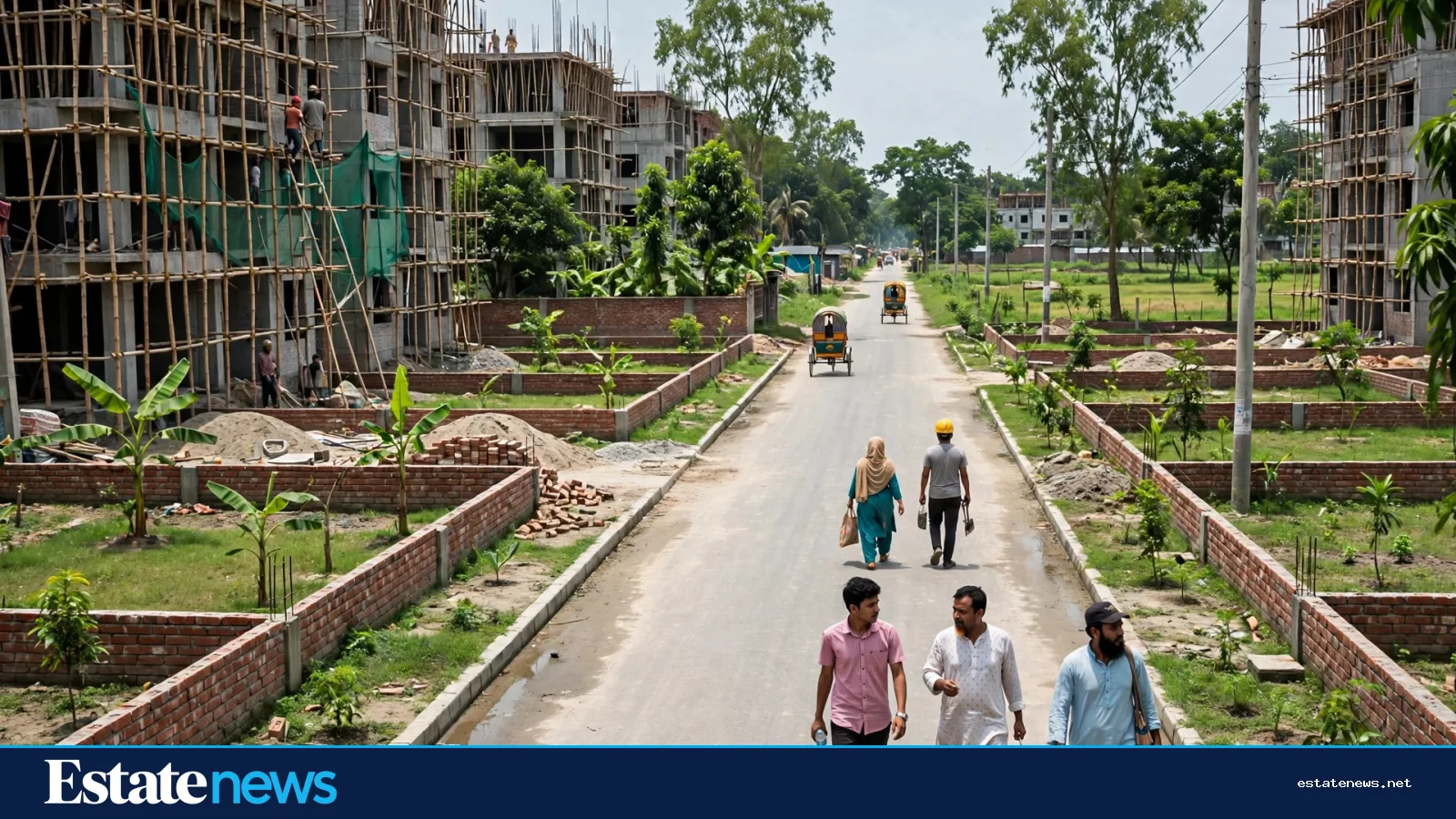
Mirpur's housing story starts in Pallabi, and it starts with a company. Eastern Housing Limited, formed under the leadership of Jahurul Islam, began work in 1964 with a project of 700 houses in Pallabi and 910 acres of land, according to the company's own history. It was the country's first private-sector real estate project, and it set the pattern for everything that followed: plots laid out in blocks, streets wide enough for a rickshaw to turn, and homes aimed at people with a salary rather than a fortune.
The company is still the only publicly listed real estate firm in Bangladesh, listed on the Dhaka Stock Exchange in 1994. Its Pallabi start matters because it gave Mirpur something few Dhaka neighbourhoods have: a grid. The blocks of Pallabi, the numbered sections of Mirpur 1, 2, 10, 11, 12 and 14, the long sweep of Mirpur Road, all grew from that early habit of planning on open land. Walk the inner lanes today and the plan still shows through the clutter of later building.
Who lives here, and why they stay
Ask a Mirpur family why they stay and the answer comes in practical pieces. The schools are close. The bazaars are close. The mosque is two lanes away. A father who works in Motijheel can catch the metro at Kazipara or Shewrapara or Mirpur 10 and be at his desk without the bus. A mother who runs a shop in Mirpur 1 can walk to work. Grandparents live in the flat upstairs, or in the house two lanes over, and the children grow up with cousins on the same street.
That closeness is the neighbourhood's real currency. Mirpur's flats are not the city's largest, and its buildings are not its newest. What they offer instead is a complete daily life inside a short walk, and for a middle-class household that counts for more than marble in the lobby. Our earlier comparison of Uttara and Mirpur found the same trade-off from the other side: Uttara has the wider roads and the newer blocks, Mirpur has the denser, cheaper, more settled everyday life.
Old houses beside new flats
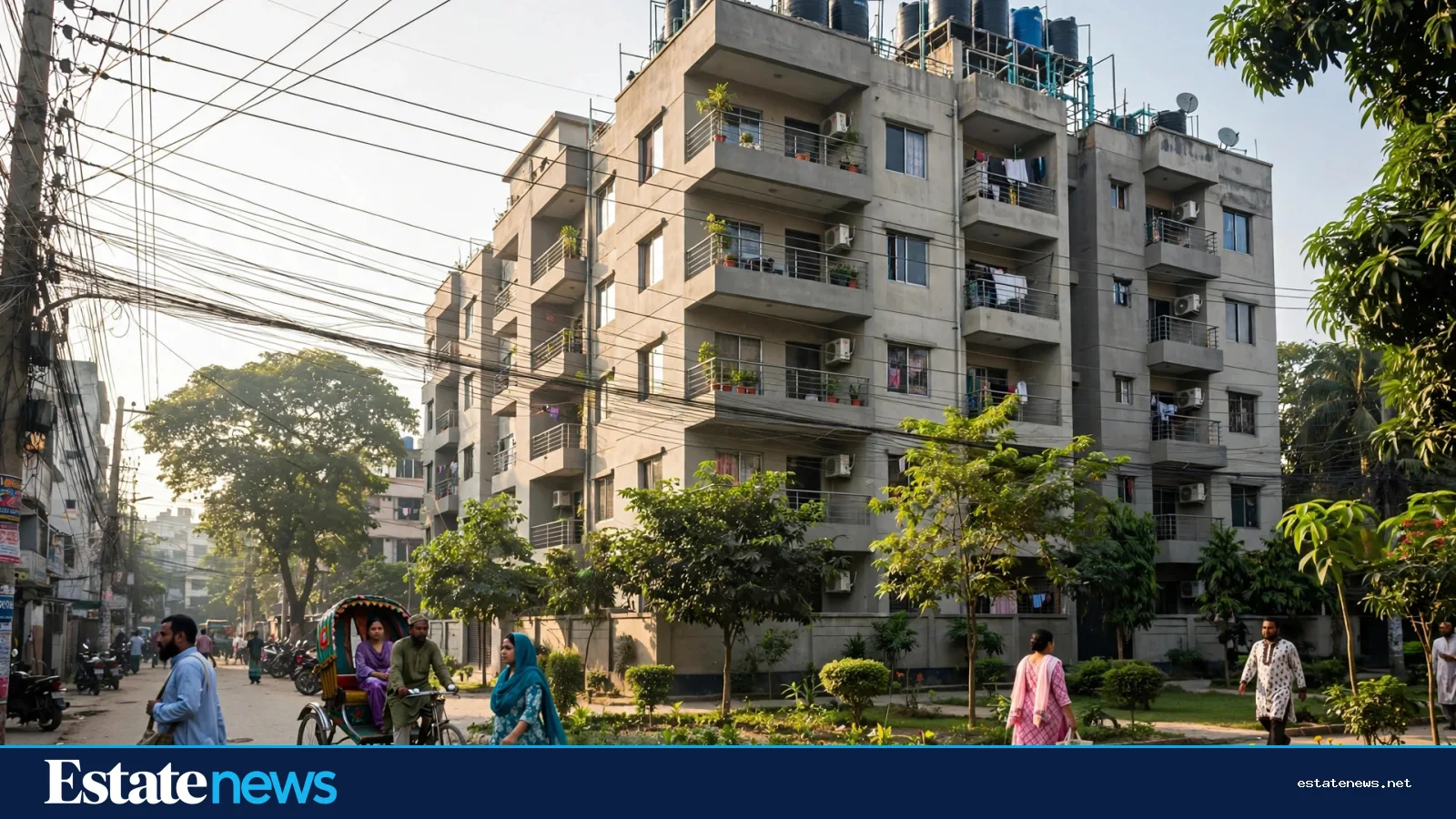
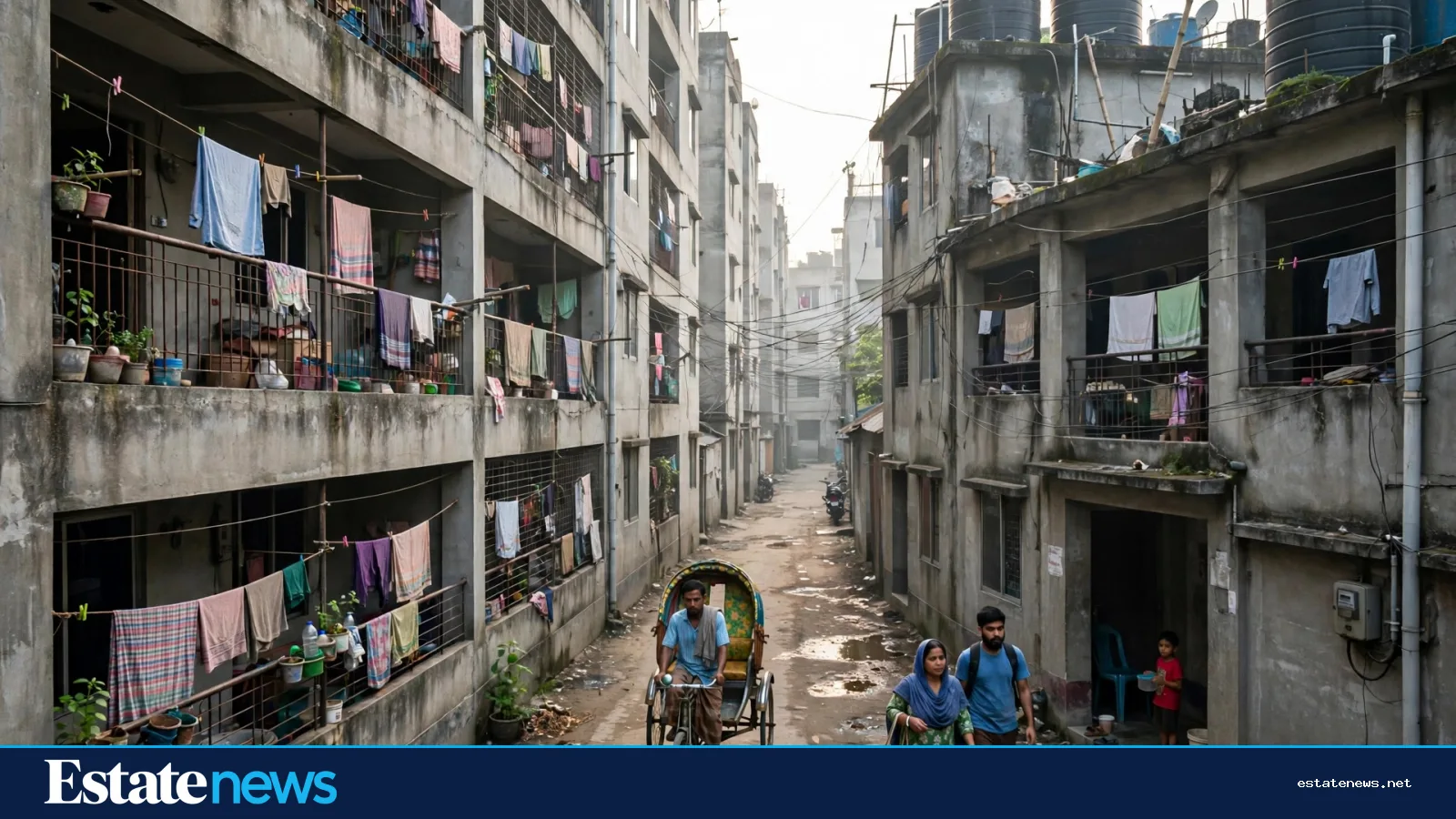
Stand at a Mirpur junction and the housing history stacks up in front of you. A two-storey house from the 1980s, its gate painted green, sits beside a ten-storey apartment block with a lift and a caretaker's desk. A tin-roofed extension leans against a new boundary wall. A plot that held one family now holds twelve flats, and the families inside them share a water pump, a gas line argument and a building committee that meets after Maghrib.
This mix is not a flaw. It is how a middle-class neighbourhood absorbs change without pricing everyone out at once. The old house gives the street its memory. The new flat gives a young couple their first address. Between them, the lanes fill with tailors, pharmacies, coaching centres and tea stalls, the small businesses that make a residential area feel inhabited rather than merely occupied.


The metro changed the map, not the character
The metro line that runs through Mirpur, with stations at Kazipara, Shewrapara, Mirpur 10, Mirpur 11 and Pallabi, has done something simple and large: it has shortened the distance between this neighbourhood and the rest of the city. A commute that once meant an hour in a bus now takes minutes on the train, and that has made Mirpur's flats easier to sell and easier to rent.
What the metro has not done is change what Mirpur is. The stations did not bring luxury towers or shopping malls in their wake. They brought more foot traffic to the same bazaars, more students to the same coaching centres, more tenants to the same mid-priced flats. The neighbourhood absorbed the train the way it has absorbed every earlier change: by folding it into the daily routine.
What buyers check before they sign
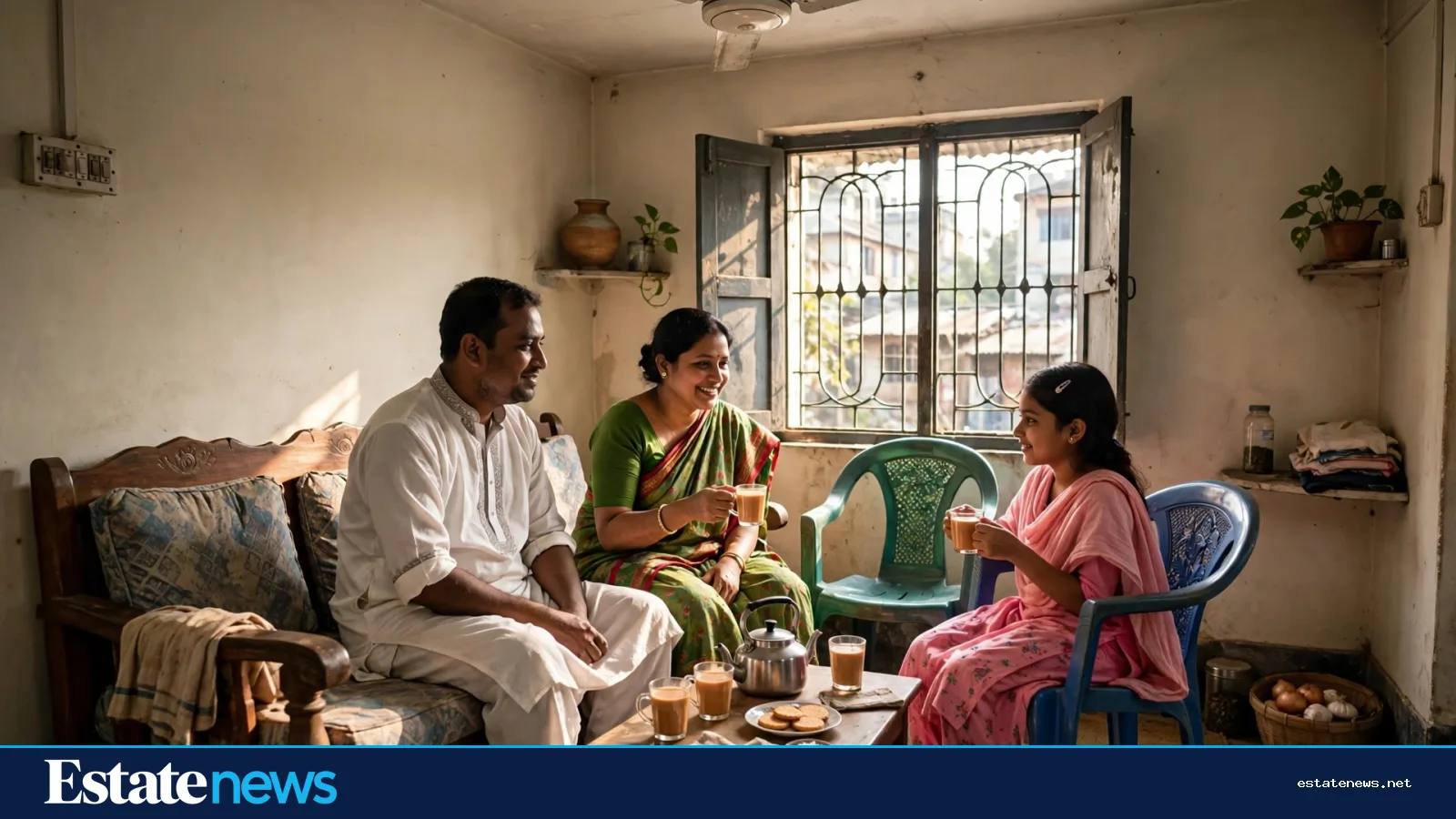
A buyer looking at a Mirpur flat today works through the same checks as anywhere in Dhaka, but the local details matter. Water supply in the building, and whether the pump runs on a schedule. The lift, and who pays when it breaks. The gas line, and whether it is a legal connection. The building's age, and whether the structure has been maintained or merely painted. The papers: deed chain, mutation, and the approvals behind the building.
Asking prices across Dhaka vary widely by area, and Mirpur sits in the middle of that spread, below the premium addresses and above the far outskirts. Our November asking-price round-up shows how wide the gap between areas has become, and Mirpur's place in it is the point: it is the area where a salaried family can still do the sums and find them workable, provided the flat is the right size and the building is sound. No single figure describes the whole neighbourhood, and any buyer who is quoted one should ask which block, which floor and which building it refers to.
The evening test
Every neighbourhood in Dhaka has an evening test, and Mirpur passes it in its own way. At dusk the lanes fill with children coming home from coaching, vendors calling out the last of the vegetables, and families walking to the park or the mosque. The lights come on in the flats one by one. The sound is not traffic. It is a neighbourhood settling in for the night.
That is what Mirpur sells, in the end. Not a view, not a brand, not a promise of a price rise. A place where a middle-class family can live a whole life: school in the morning, work in the day, bazaar in the evening, family at night. Dhaka keeps growing outward, and new areas keep promising more. Mirpur keeps doing the quieter thing it has done since Pallabi's first 700 houses: giving ordinary families a street they can call their own.
Read more: Uttara vs Mirpur comparison (https://estatenews.net/markets/uttra-na-mirpur-pribarer-jnz-kon-elaka-besi-baszogz) | Dhaka's November asking prices (https://estatenews.net/markets/dhakas-november-asking-prices-six-areas-one-wide-gap-and-what-it-means-for-buyers) | Eastern Housing, the Pallabi pioneer (https://estatenews.net/development/eastern-housing-the-pallabi-pioneer-that-became-dhakas-only-listed-developer)