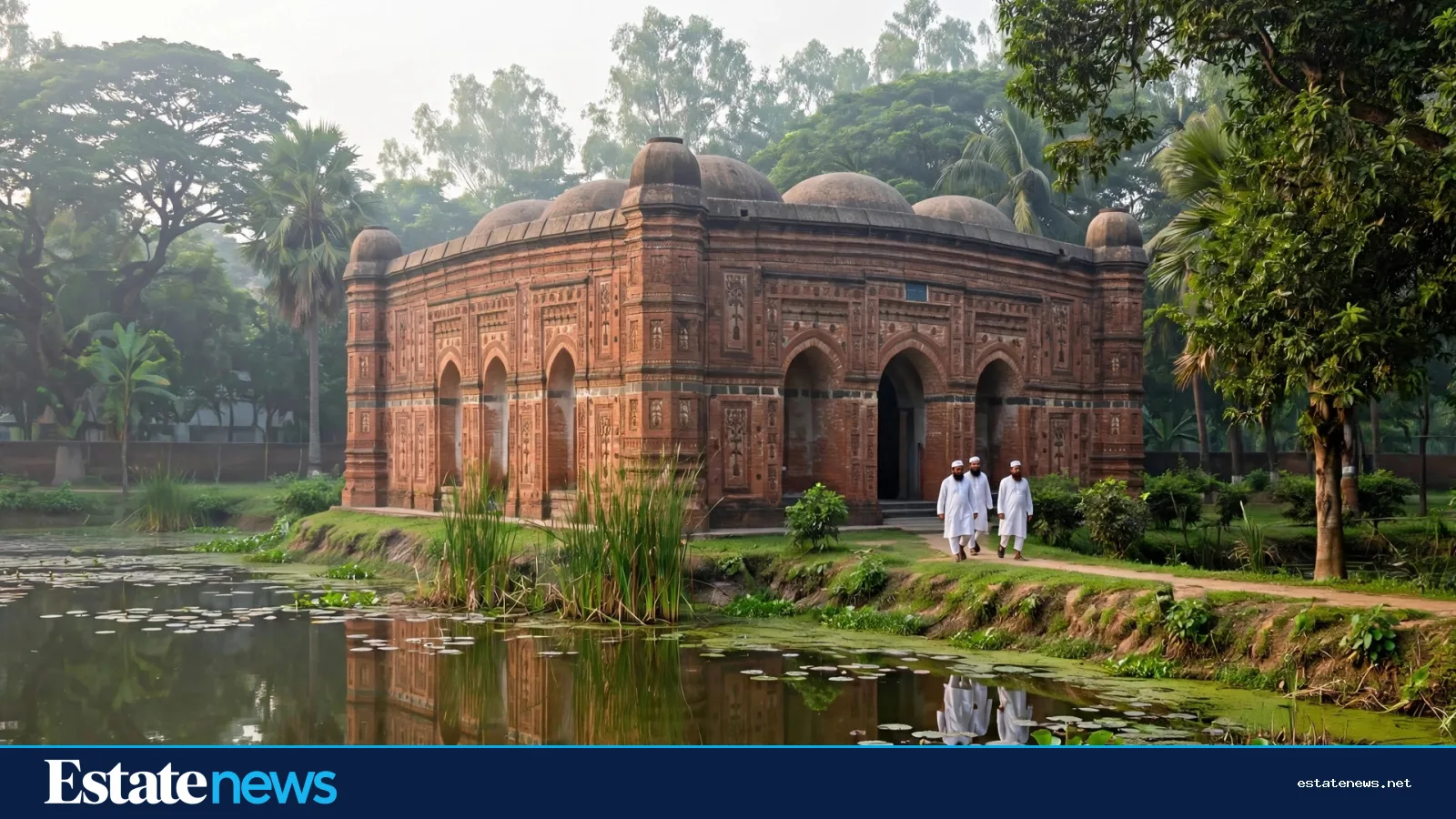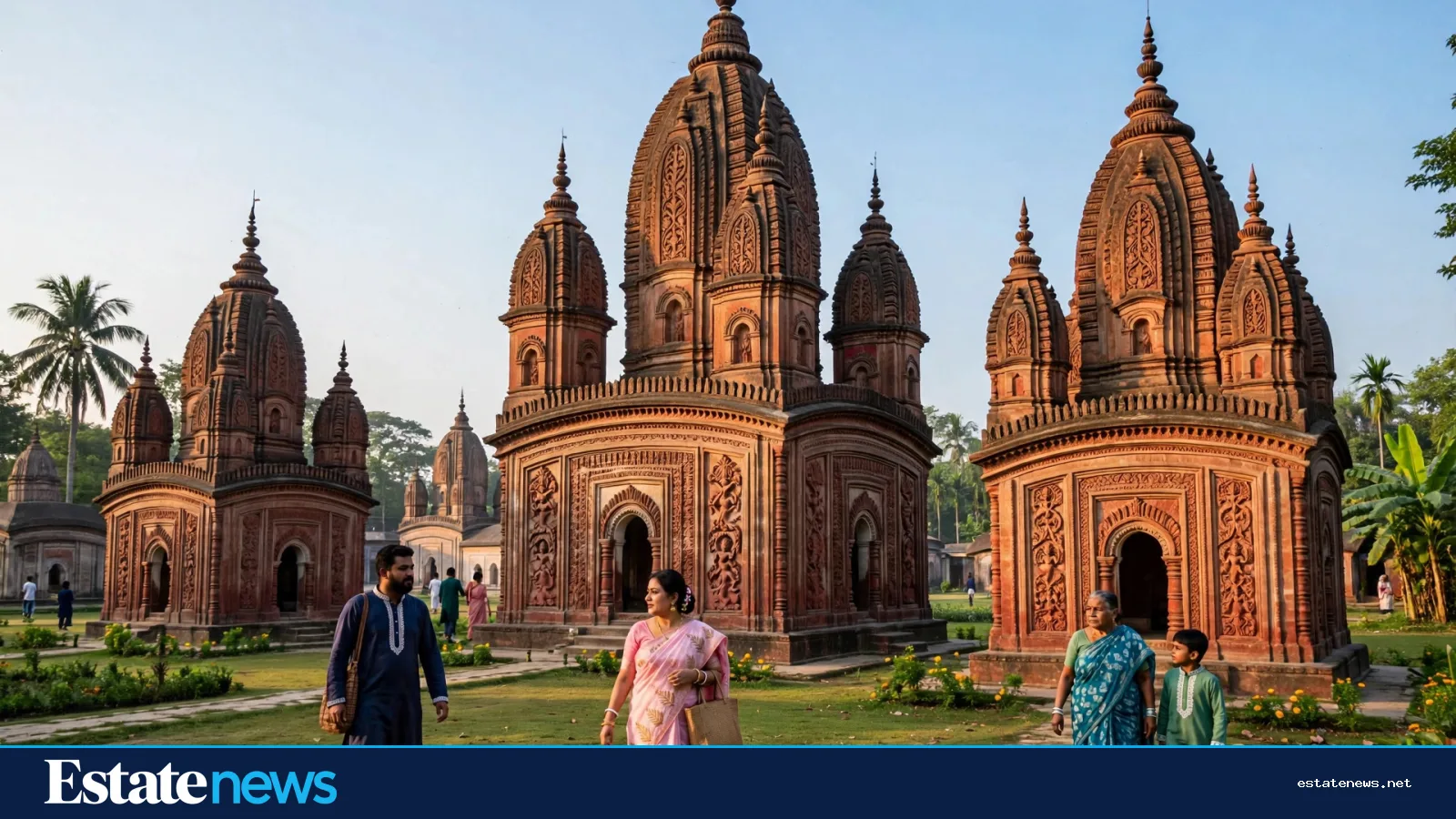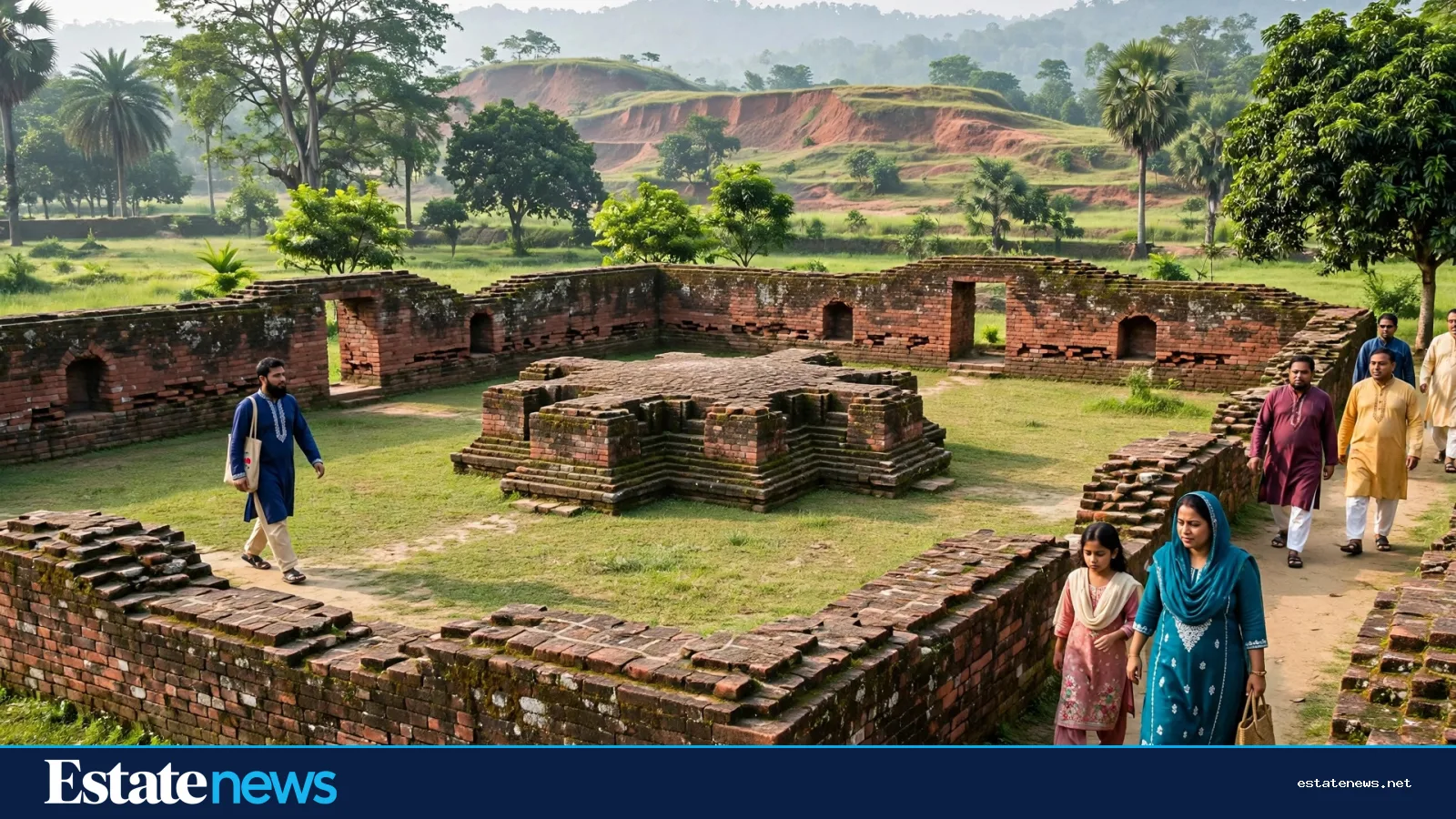
The road from Cumilla town climbs a little, and the flat delta gives way to something unexpected: low hills of red soil, covered in green. This is the Mainamati-Lalmai ridge, and under its grass lie the remains of a Buddhist city. Walk up to Shalban Vihara on a winter morning and the first thing you notice is the quiet. Brick walls, worn low by thirteen centuries, run in a great square. In the middle rises the mound of a shrine. Monks lived here, studied here and prayed here, long before Cumilla had a railway station or a highway.
The ridge holds more than one site. Banglapedia and the Department of Archaeology record more than fifty ancient Buddhist settlements scattered along the Mainamati-Lalmai range, dating from the 8th to the 12th centuries. Shalban Vihara is the best known of them, and the one that tells the story most clearly. It sits near Kotbari, about eight kilometres west of Cumilla town, close to the Bangladesh Academy for Rural Development. For a long time local people called the place Shalban Rajar Bari, the king's house in the sal forest. Digging showed it was something else entirely: a monastery, and a large one.
A monastery built like a small town

Shalban Vihara is laid out as a square, 167.6 metres on each side, with four wings of cells arranged around a central shrine. Banglapedia records 155 cells in total. Each cell was a monk's room. Put together, the plan reads like a small town with one purpose: a community of monks living, studying and praying within walls of their own.
The shrine at the centre is not one building but six, built one after another on the same spot in different periods and on different plans. Deep digging has shown four phases of repair and rebuilding, the earliest belonging to the central shrine's third period, in the 7th to 8th century. No monastery remains have been found from the first two periods. The shrine as it survives is cruciform in plan, and Banglapedia notes its close resemblance to the great temple at Paharpur, calling it a fully developed example of 7th to 8th century Buddhist temple architecture in Bengal.
The monastery had a name of its own. Terracotta seals and copper plates found in the digging show it was called Bhava Deva Mahavihara. Banglapedia records that it was built by Shri Bhavadeva, the fourth ruler of the Early Deva dynasty of Devaparvata, some time at the end of the 7th or the beginning of the 8th century. Devaparvata was the capital of the old kingdom of Samatata, and the monastery stood on its edge, beside the Lalmai forest. For nearly five hundred years, monks kept coming here. The finds run from the 7th century to the 12th.
What the digging found
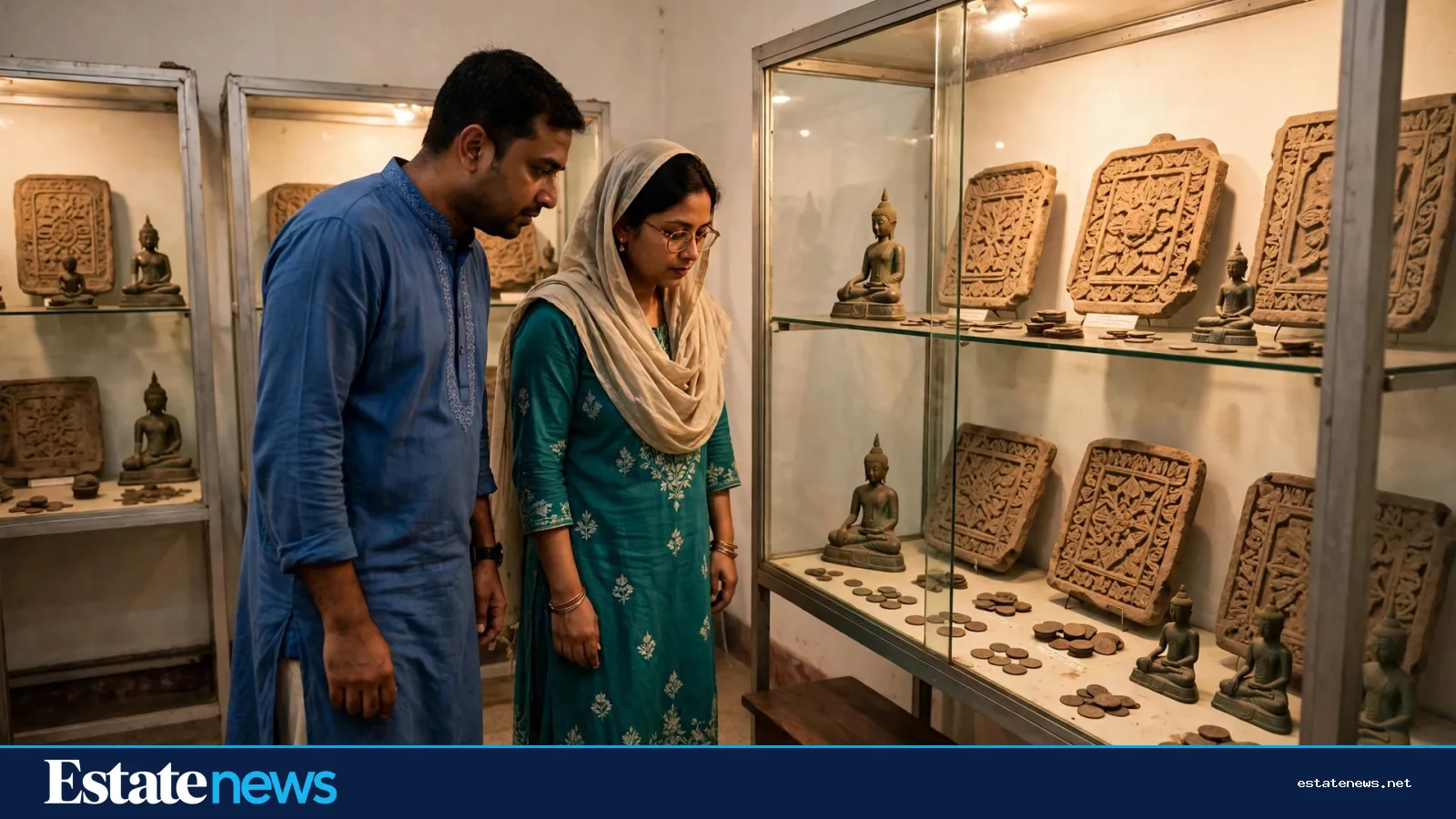
The excavation finds were rich. Banglapedia lists seven copper-plate inscriptions, about 350 gold objects, and a large number of sculptures in stone, bronze and terracotta, along with terracotta plaques found both in place and scattered around the site. The plaques carry figures, animals and patterns pressed into baked clay, and the copper plates record grants and names that let historians put dates to walls.
Much of this is now kept a short walk away, in the Mainamati Museum. The museum was established in 1965, just south of the monastery site, and it holds statues, terracotta plaques, coins and other objects recovered from sites across the Lalmai-Mainamati belt. A visitor can walk from the brick cells of the vihara to the glass cases of the museum, and see in one morning what the diggers took decades to uncover. According to a report in The Daily Ittefaq, the site and museum drew enough visitors in the 2024-25 fiscal year to bring in Tk 1.24 crore in revenue, a sign that the old monastery has become a working part of Cumilla's present.


How the place is cared for now
Shalban Vihara has been a protected site for eighty years. It was declared a protected archaeological site on 7 July 1945, under the Ancient Monuments Preservation Act of 1904, when it was still listed under its old local name. Today the Department of Archaeology looks after the monastery and the museum. The grounds have been laid out with flower gardens, the security has been strengthened, and the site is kept clean for visitors, according to the same Ittefaq report. School groups come from Cumilla and Dhaka, and on winter weekends families spread out on the grass between the mounds.
The recognition goes beyond Bangladesh. On 17 February 1999, Shalban Vihara was placed on UNESCO's Tentative List as part of the Lalmai-Mainamati Group of Monuments, the first step on the road to World Heritage consideration. The listing covers the whole ridge, not one monastery alone: more than fifty settlements, a capital city, monasteries, stupas and shrines, spread across nearly twenty kilometres of low hills.
Why it still matters to Cumilla
Cumilla is a highway city now, the stop between Dhaka and Chattogram, and its growth is measured in flats and markets. Mainamati gives the district a different kind of asset. It is a place where a family can spend a morning and come away knowing that their district was once home to a university of monks, a capital of kings and a craft of terracotta that still turns up in the soil. Its walls are low and its shrine is a mound. The story is in the plan: a square of small rooms around a shared centre, built to last.
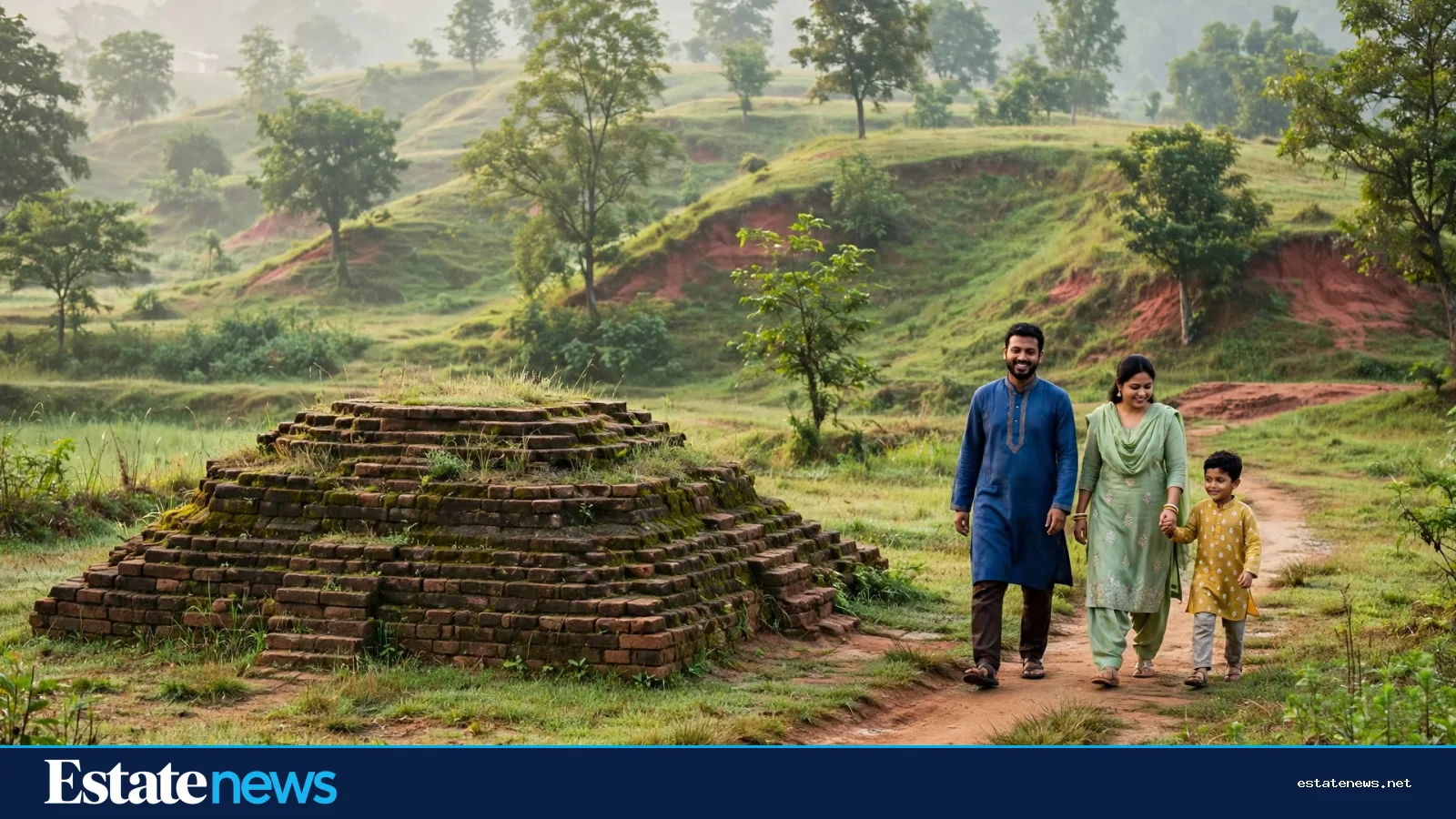
Go in the morning, when the light is soft on the red brick and the ridge is still cool. Walk the square slowly, cell by cell, then step into the museum to see what the monks left behind. Thirteen centuries after Shri Bhavadeva's builders laid the first bricks, the city under the hill is still teaching, and it only asks that we keep looking after what is found.
Read more: Sixty Dome Mosque, Bagerhat's forest of pillars (https://estatenews.net/markets/sixty-dome-mosque-bagerhats-forest-of-pillars-still-standing-after-six-centuries) | Panam City, Sonargaon's merchant street (https://estatenews.net/markets/panam-siti-sonargannzer-bnikplli-zekhane-ekti-rastai-ble-dez-banijzer-itihas) | Kantajew Temple, Dinajpur's terracotta walls (https://estatenews.net/markets/kantjiu-mndir-dinajpurer-terakotar-dezale-banglar-jeebn)