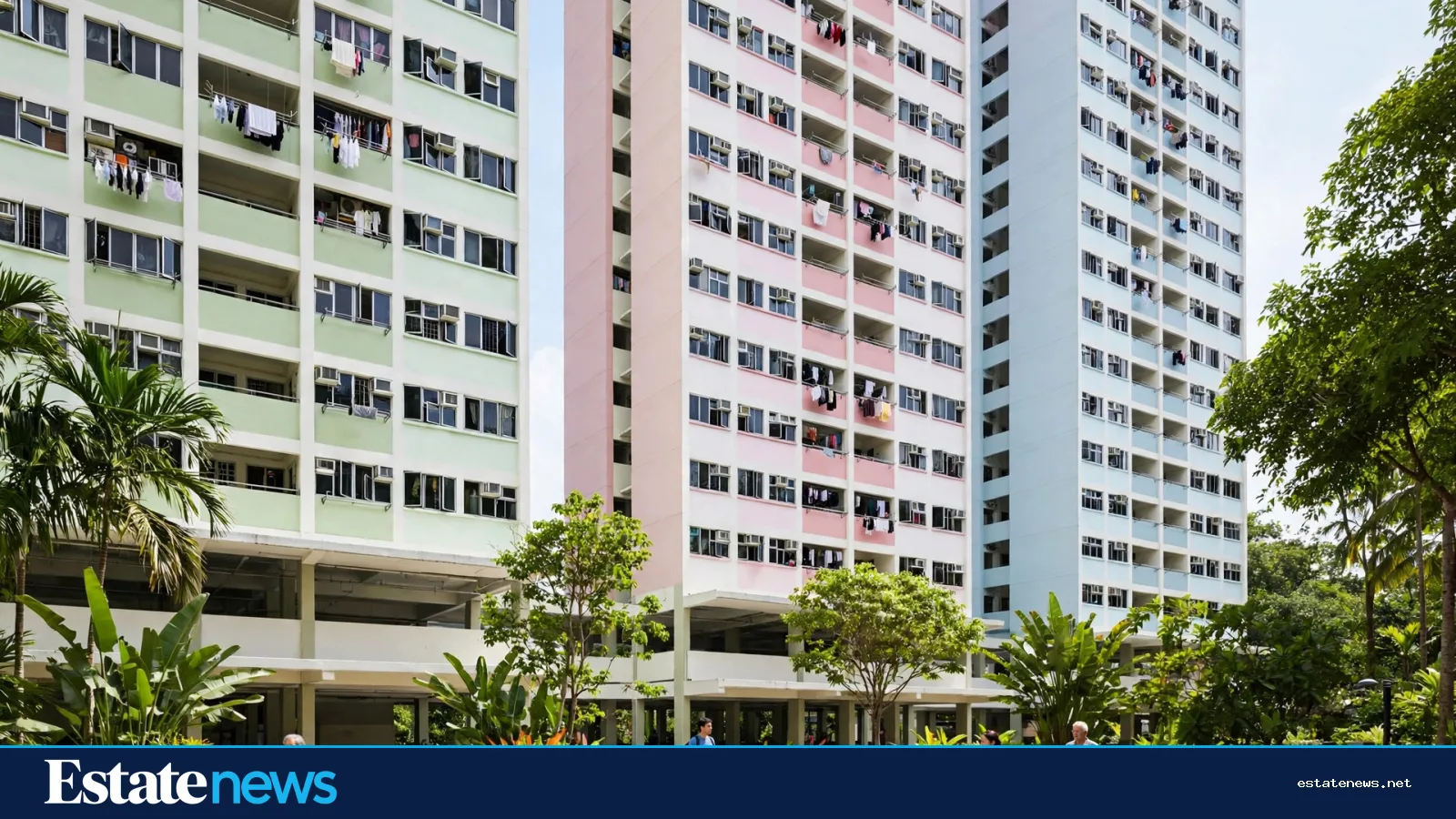
Stand in a Singapore housing estate at dusk and the scene looks ordinary: tower blocks in pastel paint, laundry on the balconies, children cycling around a playground, old men playing chess at a void-deck table. The ordinary part is the point. About 75.7 per cent of Singapore's resident population lives in flats built by the Housing and Development Board, the HDB, according to the board's own key statistics for the 2025-26 financial year. About 72.7 per cent live in an HDB flat they own. Singapore's overall home ownership rate, 91.2 per cent in 2025, is among the highest in the world.
The numbers are the result of a system built over 65 years, not a single policy. The HDB was set up in February 1960, when only about 9 per cent of the population lived in public housing. Its job was simple to state and enormous to do: build enough homes, cheaply enough, for a whole city. It did it by controlling the three things that decide housing everywhere: land, money and time.
Land first, and the part Dhaka cannot copy

Singapore's advantage starts with land. Almost all land in the city-state is public. The government acquires it, plans it and leases it to the HDB, which builds whole towns, Tampines, Jurong West, Woodlands, each with schools, markets, clinics and transport planned in from the start. The HDB manages more than 1.15 million homes.
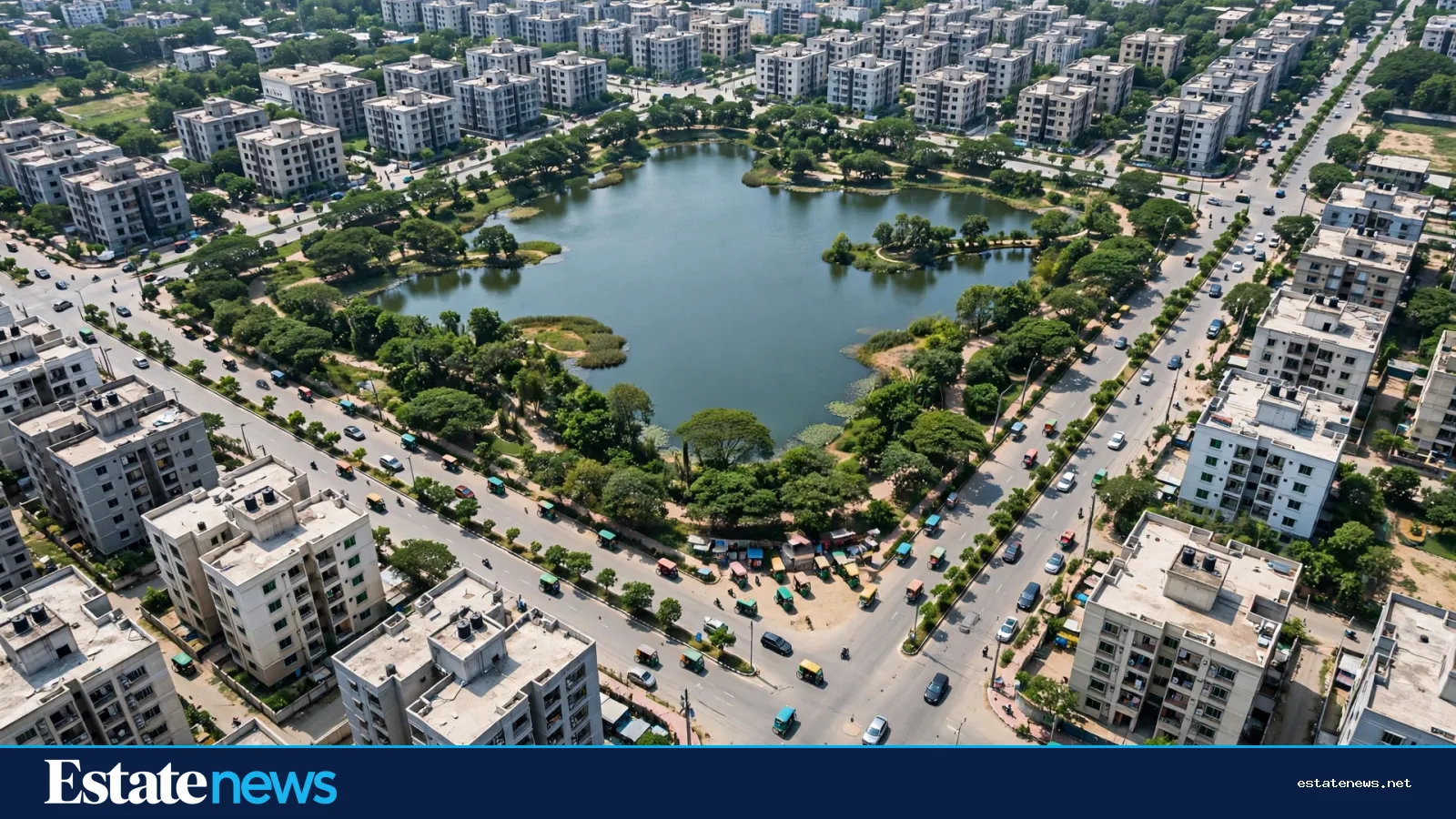
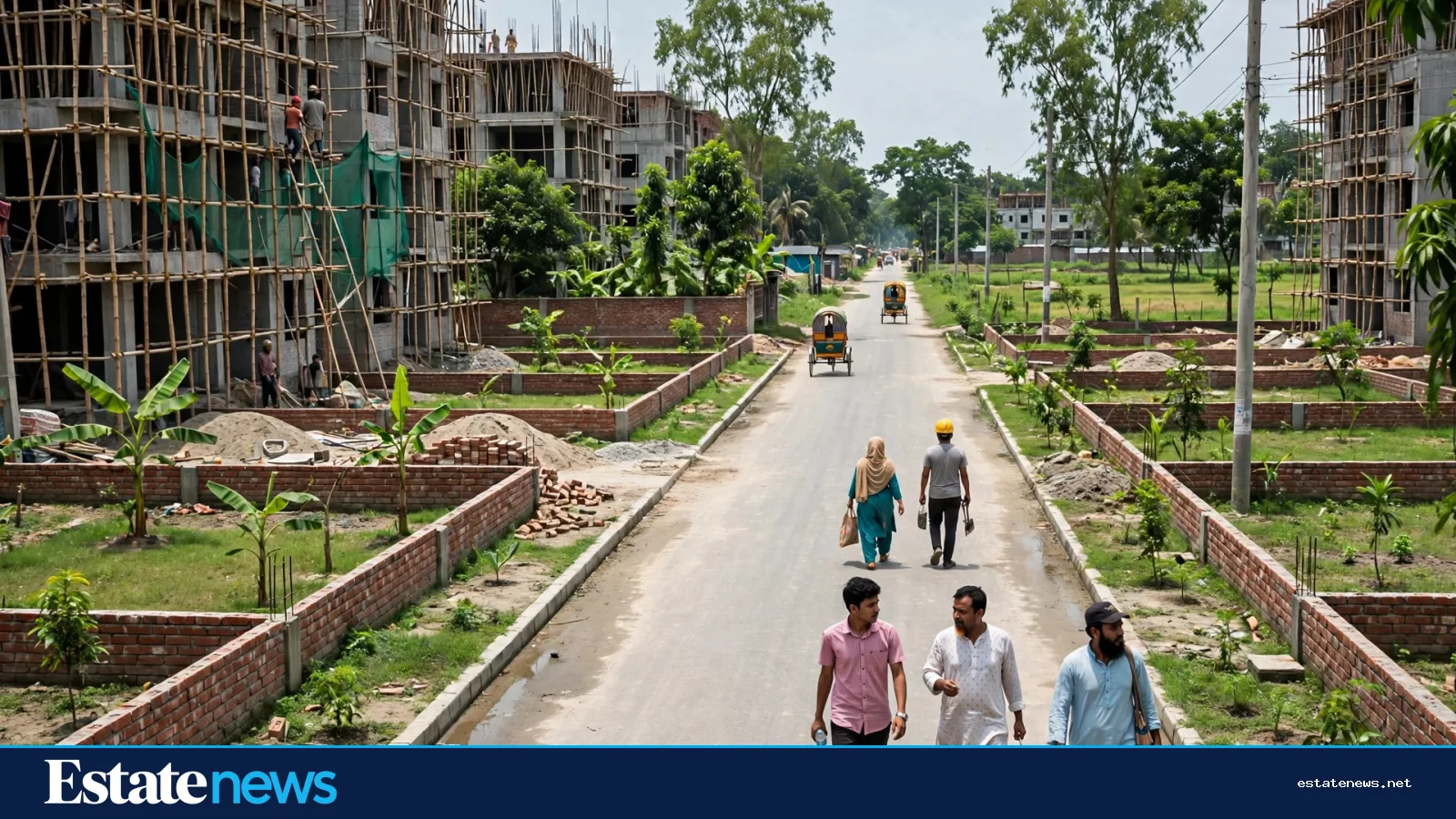
Dhaka has no equivalent starting point. Land in the capital is privately owned, fragmented into thousands of small plots, and traded at prices that reflect scarcity. The government cannot assemble a 2,000-acre township the way Singapore did, because the land is already owned, built on and fought over. Purbachal, RAJUK's planned new town, is the closest Dhaka has come, and even there, three decades after the project began, only a few hundred houses stand on 26,213 plots. Our earlier comparison of the two cities' housing (https://estatenews.net/investment/what-dhaka-can-and-cannot-learn-from-singapores-housing-miracle) made the same point from a different angle. The land lesson is not that Dhaka should seize land. It is that without a pipeline of planned, serviced land, affordable housing stays a slogan.
Money second, and the part Dhaka can copy
The second pillar is finance, and here the borrowing is easier. Singapore's Central Provident Fund, the CPF, takes a share of every worker's pay and lets them use it to buy an HDB flat. The state sells new flats below market price, through the Build-To-Order system, and gives first-time buyers grants. The flat is sold on a 99-year lease, not freehold, which keeps the price down and the stock in circulation.
Bangladesh has no CPF, but it has the pieces. The universal pension scheme, the DPS habit, the provident funds of large employers: all of them are pools of long-term household savings that currently flow into bank deposits. A housing finance system that let workers use those savings for a first home, with a transparent subsidy for the lowest incomes, would be a Bangladeshi version of the same idea. The numbers would be smaller and the institutions weaker, but the logic is identical: housing is affordable when the finance is long, cheap and tied to a real home.


Planning third, and the part Dhaka needs most
The third pillar is the one Dhaka needs most urgently: planning whole neighbourhoods instead of single buildings. An HDB town is not a set of towers. It is a town. The school is there before the families arrive. The market, the clinic, the bus stop and the park are part of the plan, not afterthoughts. That is why the estates feel like places rather than projects.
Dhaka builds the opposite way. A developer buys a plot, builds a tower, and the neighbourhood grows around it by accident. The roads, the drains, the schools and the water supply arrive years later, if at all. Jolshiri Abashon, the planned township on Dhaka's edge, is the one large attempt to do it Singapore's way, with sectors, lakes and a road network drawn before the buildings. Our look at Jolshiri's growth block by block (https://estatenews.net/markets/jolshiri-abashon-dhakas-new-township-block-by-block) tracks that experiment. Whether it works will tell Dhaka more about its own future than any number of study tours to Singapore.
The resale market, and the warning inside it
Singapore's model is not without strain. Resale prices of HDB flats have risen for years, and the government has repeatedly tightened rules to cool the market, including the Prime Location Public Housing model, which imposes longer occupation periods and resale conditions on flats in the most desirable locations. The lesson for Dhaka is that even a successful system needs constant adjustment. A housing policy is not a monument. It is a machine that needs servicing.
There is a second warning. Singapore's model works because the state is the developer, the planner and the financier at once. Dhaka's developers are private, its planners are under-resourced, and its finance is expensive. Copying the HDB's form without its foundations would produce the worst of both: state control without state capacity.
What Dhaka can borrow is the discipline: planned land, long finance, whole neighbourhoods, and a willingness to keep adjusting. What it cannot borrow is the history. Singapore built its system when land was cheap, the state was strong and the city was small. Dhaka must build its own, on expensive land, with private builders, for 20 million people. That is a harder job. It is also the only one on offer.
Read more: Dubai's property playbook (https://estatenews.net/investment/what-dhaka-can-learn-from-dubais-property-playbook-and-where-the-comparison-breaks-down)