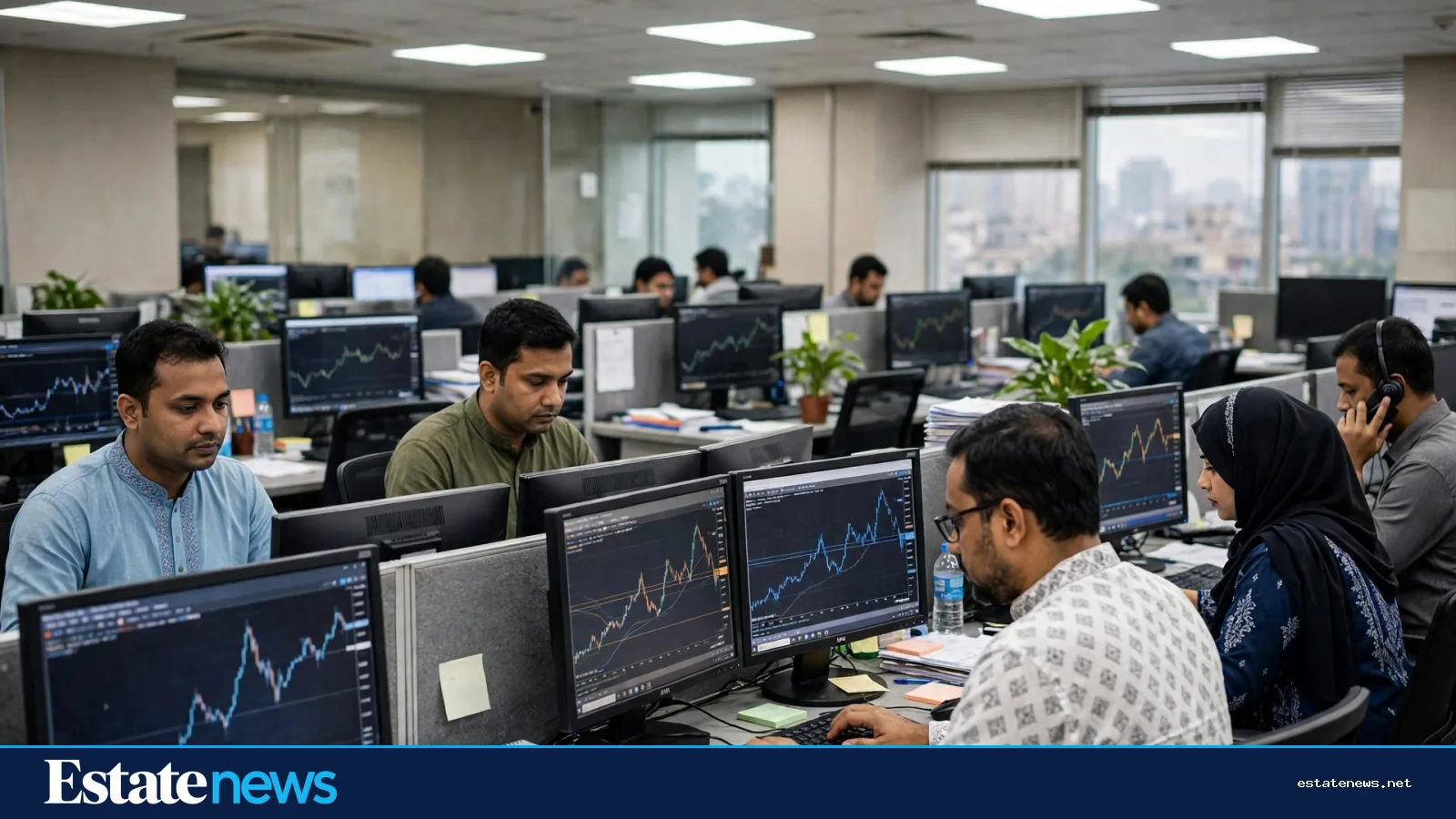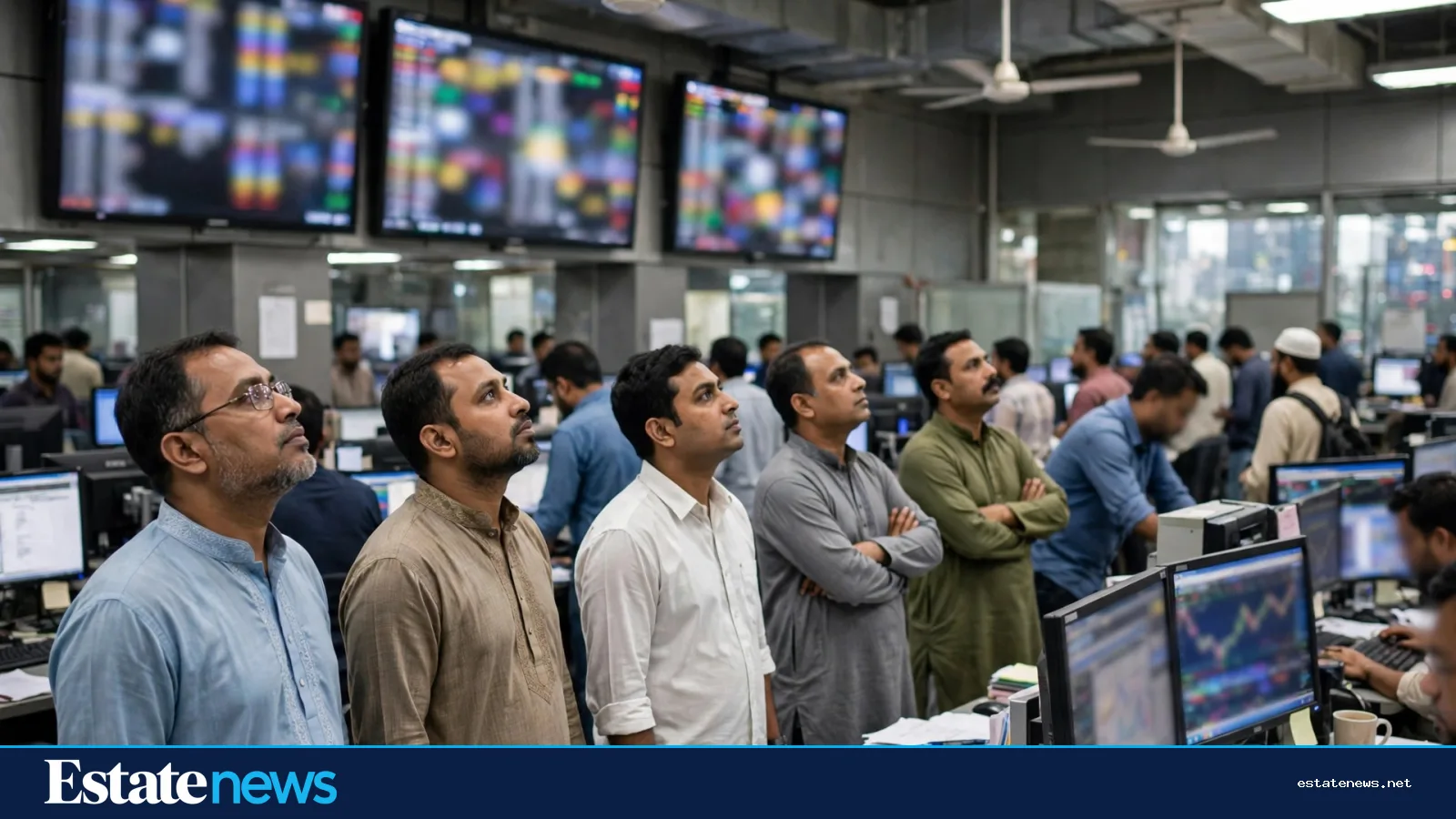
The Dhaka Stock Exchange opened the week on the front foot. On Sunday, the DSEX rose 15.65 points, or 0.29 percent, to close at 5,460.56, up from 5,444.91. The DS30 climbed 18.71 points to 2,078.11, and the DSES added 7.56 points to 1,064.86. Turnover reached Tk 739 crore, up 5.8 percent from about Tk 699 crore. It was the second green week in a row after the six-week losing streak broke last week, and the lift came with a reason: the securities regulator has eased restrictions on frozen BO accounts, conditionally lifting the freeze on 93 BO accounts of seven individuals.
For property investors, a steady stock market matters because it is the other place household money goes. A flat and a share portfolio compete for the same savings. When the market rises two weeks running, the money that might have sat in a bank deposit starts looking for a home, and some of it finds its way into property.
The wage board meets today

The day's most watched meeting is not at the stock exchange. The Minimum Wage Board holds its third meeting at 11am today at the Department of Labour in Shrom Bhaban, Bijoynagar, chaired by Syed Azad Subhani. Factory owners are to submit their written proposal today, with press reports putting it around Tk 14,000 to 15,000 a month. Workers are demanding Tk 32,000 for Grade 4, with Tk 38,000, Tk 43,000 and Tk 48,000 for Grades 3, 2 and 1. The current floor is Tk 12,500, set in December 2023.
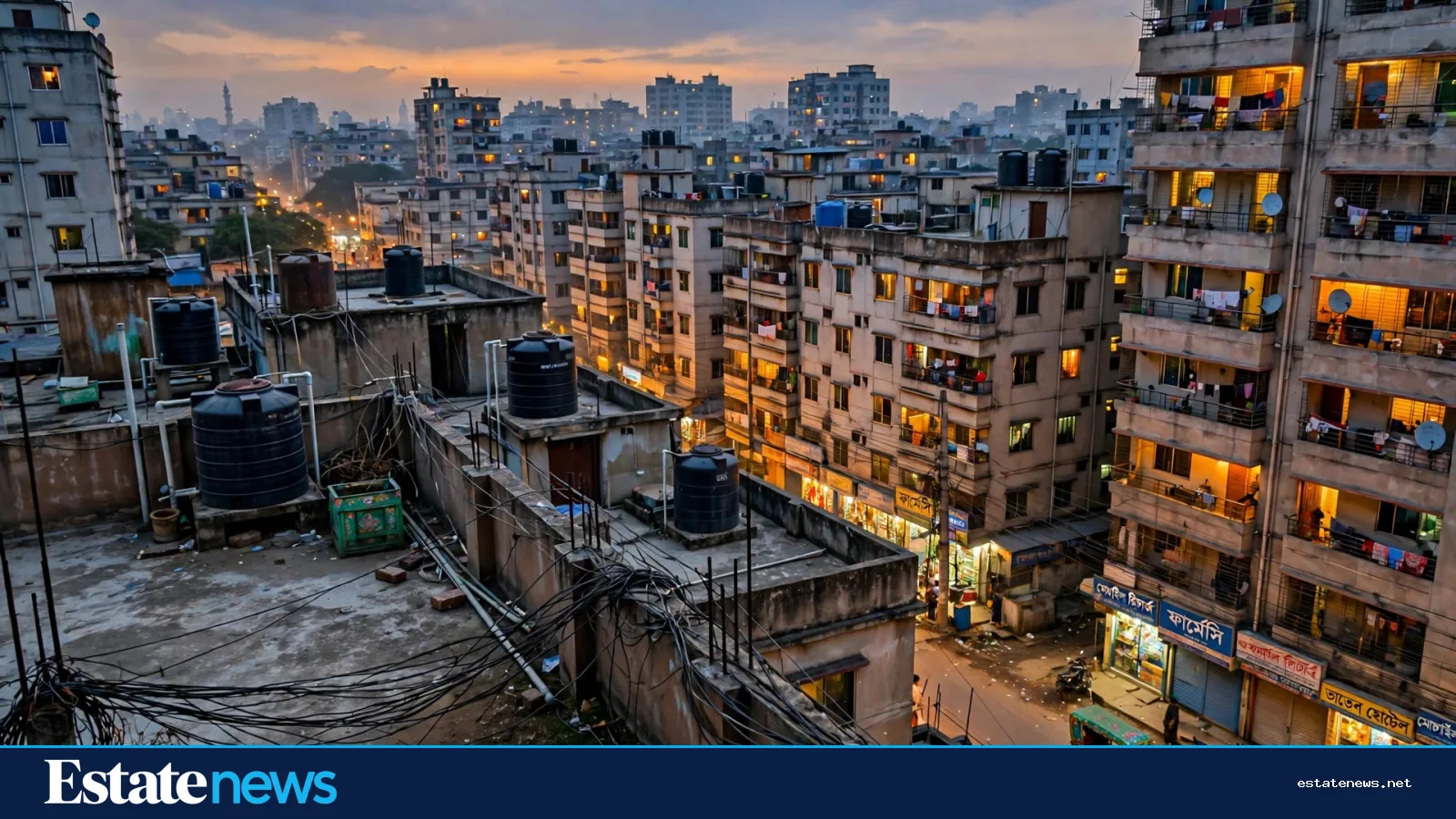
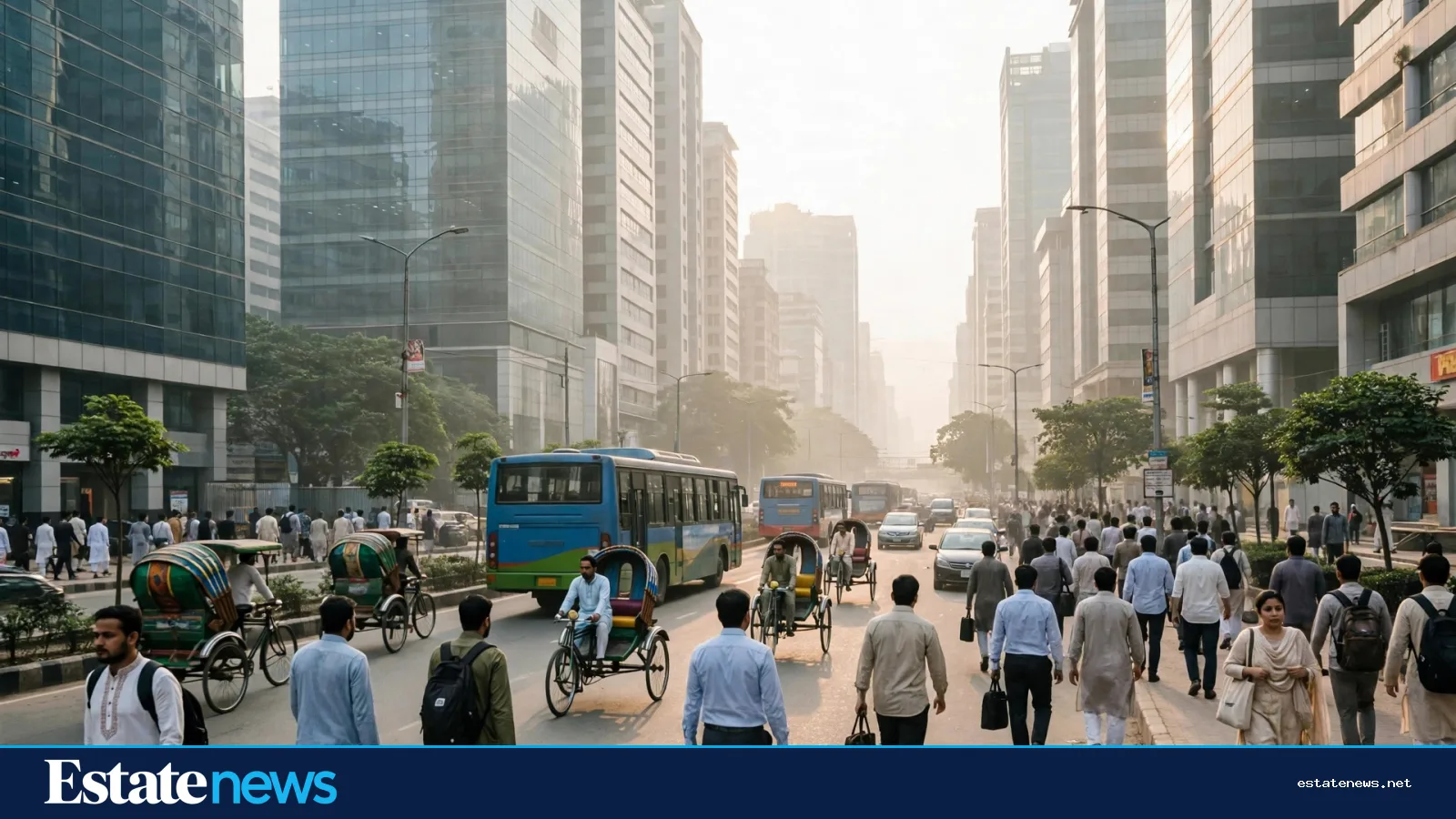
The stakes reach beyond the factory gate. More than four million garment workers live in and around Dhaka's factory towns, and their pay decides what those towns' housing markets do. Production halted at 148 factories in Savar, Ashulia and Gazipur on Sunday, and 65 factories closed indefinitely. The board aims to have a new wage structure effective from December, with the first new salaries paid in January. Whatever figure it settles on, the housing demand in Gazipur, Savar and Narayanganj will move with it.
The debt conference closes in Cox's Bazar
Day two of the International Debt Conference Bangladesh 2026 runs today at the Ocean Paradise Hotel in Cox's Bazar. Around 100 delegates from 30 countries are attending the two-day gathering, organised by the Finance Division with the Asian Development Bank. Today's sessions cover sukuk and Islamic finance, the IMF and World Bank debt sustainability framework, a debt management office and alternative financing.


The conference opened with the Finance Minister, Amir Khosru Mahmud Chowdhury, setting out the direction: Bangladesh aims to be a trillion-dollar economy by 2034. Public debt stood under 39 percent of GDP at the end of the last financial year, and the total public debt figure given to parliament in July was Tk 22,06,462 crore, including Tk 9,59,311 crore in foreign debt. The sovereign bond plan, approval in principle for borrowing of up to about $1 billion, with market entry planned within two to three months, is the conference's most concrete outcome for borrowers to watch.
Exports and remittance keep the frame steady
Trade gave the wrap its strongest number. Merchandise exports reached $17.04 billion in July to October of the current financial year, up 6 percent from $16.08 billion a year earlier. Knitwear earned $7.71 billion, up 7 percent, and woven garments $6 billion, up 4.8 percent. Jute rose 23.8 percent to $383 million, leather 12.7 percent to $464 million, and chemicals 27.3 percent to $157 million. Exports to non-traditional markets grew 9.3 percent to $2.37 billion, with Turkey up 107 percent to $206.5 million.
Remittance added to the same picture. In the first ten days of November, expatriates sent home $1.409 billion, up 27.1 percent from $1.109 billion a year earlier, the fastest pace of the financial year so far. The cumulative figure for 1 July to 10 November stands at $12.874 billion, up 14.4 percent from $11.258 billion. Gross reserves were $34.85 billion, with BPM6 reserves at $29.98 billion after the 5 November ACU settlement of $1.64 billion.
Monday's wrap is a picture of a market economy with several things moving at once: a stock market finding its feet, a wage decision that will shape factory-town housing, a debt strategy being set out in Cox's Bazar, and export and remittance earnings holding up. None of it decides a flat purchase on its own. Together, it is the weather a buyer is walking into.
[Read more: Bangladesh Market Wrap, 15 November: DSE Rebound, Reserves Above $30 Billion and the Debt Conference](https://estatenews.net/markets/bangladesh-market-wrap-15-november-dse-rebound-reserves-above-30-billion-and-the-debt-conference) | [DSEX Breaks Its Six-Week Losing Streak: What the Rebound Means for Property Investors](https://estatenews.net/markets/dsex-breaks-its-six-week-losing-streak-what-the-rebound-means-for-property-investors) | [Gazipur: The Factory Belt Turning Into a Housing Market](https://estatenews.net/development/gazipur-the-factory-belt-turning-into-a-housing-market)