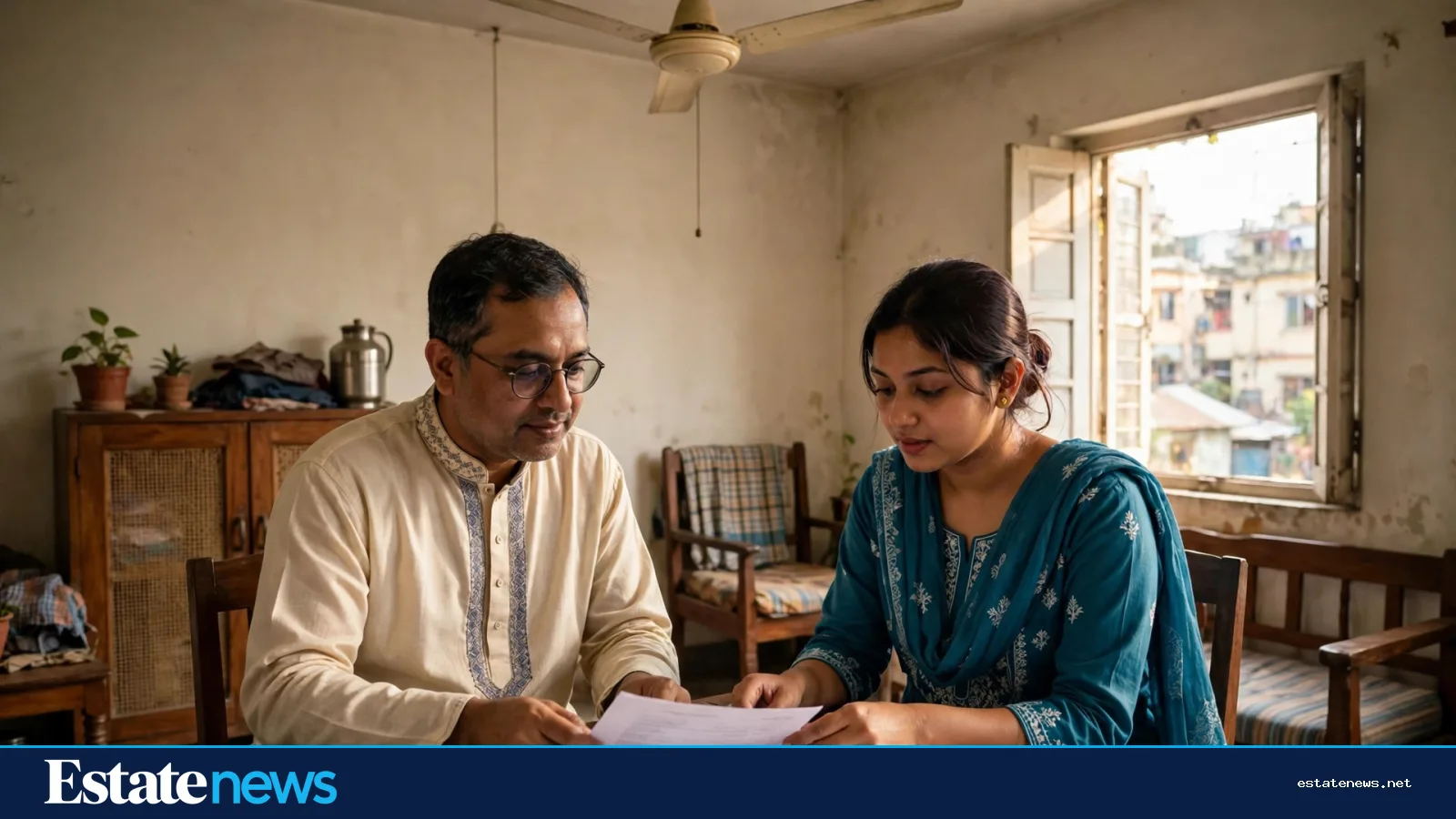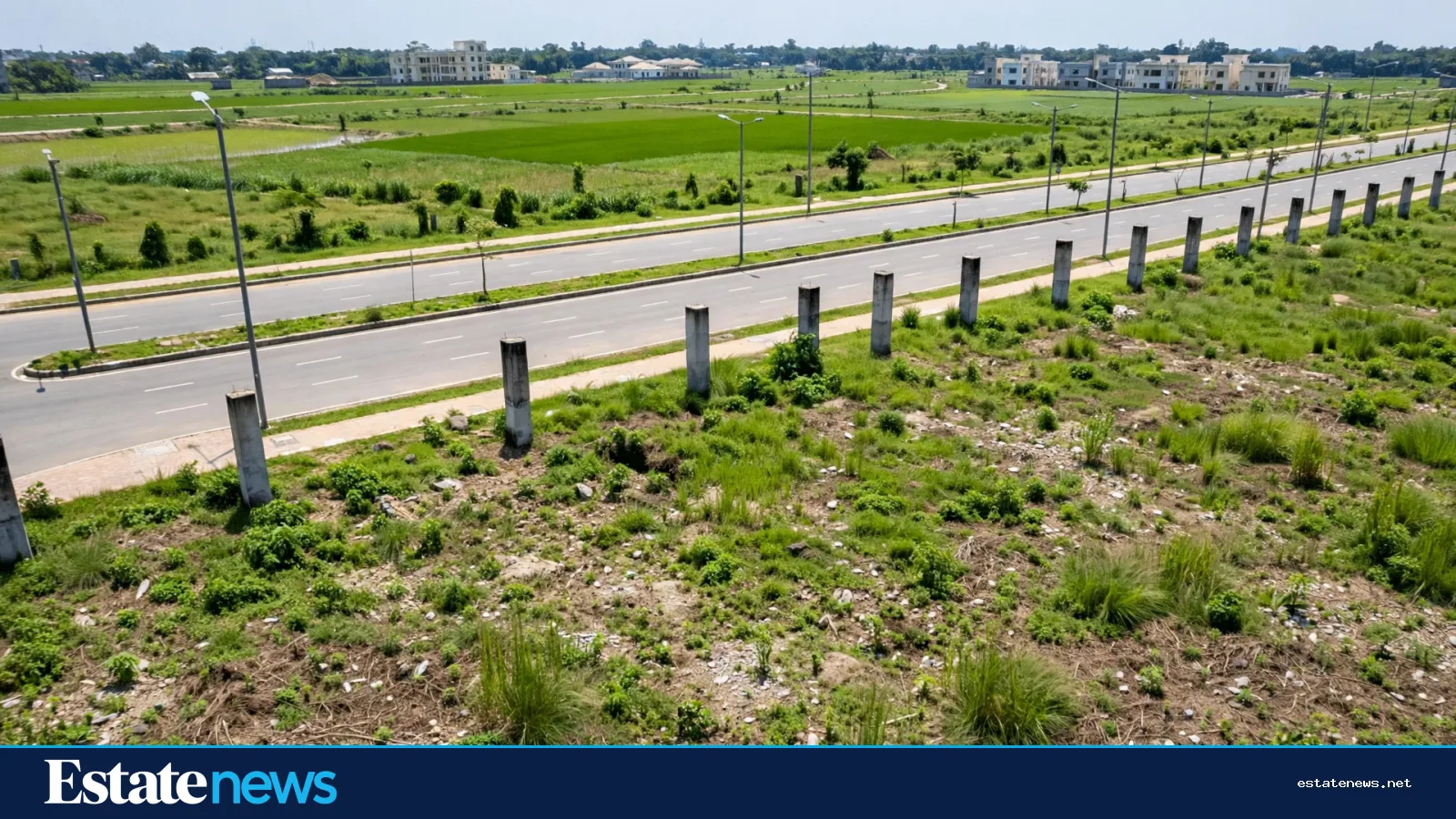
A buyer in Dhaka usually checks the price first, the location second, and the paperwork last. The Detailed Area Plan, or DAP, punishes that order. It decides what can be built on a plot, how tall the building can rise, and how much of the land must stay open. A plot bought without checking the DAP can turn out to be land where the flat the buyer was promised cannot legally be built.
The current plan, DAP 2022-2035, was gazetted on 24 August 2022 and covers about 1,528 square kilometres under RAJUK's jurisdiction. It has been amended more than once since then. The revised DAP and the Dhaka Metropolitan Building Construction Rules 2025 were gazetted in December 2025, and a further amendment followed on 14 October 2026. A buyer who relies on what a broker said two years ago is relying on an old plan. Here are the five checks that matter now.
Check one: the land-use category

The DAP marks every area for a purpose: residential, commercial, industrial, mixed use, open space or water flow. The first question is the simplest. Is this plot marked residential? A flat built on land marked for another use is a problem that no amount of finishing can fix.
Land-use categories do change, and the changes are gazetted. The October 2026 amendment reclassified three plots in Ailbahar mouza, under Shyampur and Kadamtali, from open space to heavy industrial use. Ask for the plot's land-use classification in writing, and check it against the gazetted DAP map. RAJUK publishes its laws, rules and notices on its own site, and a land-use clearance from RAJUK settles the question.
Check two: the density block and the FAR
Every plot sits in one of the DAP's population density blocks, and each block carries its own maximum floor area ratio, or FAR. The FAR is the ratio of a building's total floor area to the size of the plot it stands on. A plot of 1,000 square feet with a FAR of 1.5 allows 1,500 square feet of construction in total, as The Business Standard explained. The December 2025 revision merged the earlier 275 density blocks into 68, and raised FAR across most of the RAJUK area. The Business Standard reported examples such as Mirpur rising from 2.8 to 3.4, Mohammadpur from 2.7 to 3.4, Old Dhaka from 2.6 to 3.3, Khilgaon from 2 to 3.4 and Savar from 2 to 3.4. Treat these as reported figures, not as your plot's final value. Your block's FAR is a ceiling, and the only figure that counts is the one for your plot's block. Ask for it in writing, and check it against the gazetted plan.
Check three: the road in front
The DAP sets two FAR caps, and the lower one decides. One comes from the density block. The other comes from the width of the road the plot faces, because wider roads can carry more traffic, services and fire engines. Prothom Alo reported that the December 2025 revision raised the FAR for a plot on a 6-metre road, about 20 feet, from 2.75 to 3.25, and on a 9-metre road, about 30 feet, from 3.25 to 3.5.
This is the check that catches the most buyers. A developer may quote the density-block FAR for a plot on a narrow lane, where the road-width FAR is lower. Measure the road, or ask for its recorded width. A 6-metre road and a 9-metre road give different buildings, and the difference is decided by a tape measure, not by a brochure.


Check four: the open ground and the setback
A building cannot cover its whole plot. The setback rule, the open ground left around a building, runs at 25 to 40 percent of the plot under the current rules, according to The Business Standard. Walk the plot and look at what is actually open. Then ask for the approved plan and check the setback lines against the ground. A plan that shows a garden on paper and a wall on the ground is a warning, and it is one a buyer can spot before paying a booking amount.
Check five: the latest amendment
The October 2026 amendment shows why the DAP is a living document rather than a fixed map. It raised FAR by up to 0.5 for residential plots of five katha or more in the Purbachal and Jhilmil housing projects, provided the owner applies for building plan approval within six months from 15 October 2026, according to The Financial Express and The Daily Star. The same gazette revised the rules for water flow overlay zones, the areas marked for drainage and water movement, where building is restricted.
A buyer in Purbachal or Jhilmil should ask directly whether the project benefits from that extra FAR, and whether the application was filed inside the six-month window. A buyer anywhere else should ask whether anything in the DAP has changed for this plot since the plan was approved. The answer should be a document, not a reassurance.
The hour that saves the purchase
Five checks, and none of them needs a lawyer. The land-use category, the density block FAR, the road width, the setback, and the latest amendment. Each one has a written answer, and each one is available before a booking amount is paid. A developer who answers all five plainly is a developer worth dealing with.
The DAP is not a mystery. It is a public plan, gazetted and published, and it exists precisely so that a buyer can check what a plot can hold before paying for it. The buyers who run into trouble in Dhaka are rarely the ones who could not read the plan. They are the ones who never looked.
Read more: RAJUK Approval, Step by Step: How a Building Plan Gets Its Stamp — https://estatenews.net/policy/rajuk-approval-step-by-step-how-a-building-plan-gets-its-stamp | Buying Land in Purbachal: The Checks Before You Pay — https://estatenews.net/policy/buying-land-in-purbachal-the-checks-before-you-pay | The DAP, Explained: What Dhaka's Detailed Area Plan Controls and Why Builders Want It Changed — https://estatenews.net/policy/the-dap-explained-what-dhakas-detailed-area-plan-controls-and-why-builders-want-it-changed