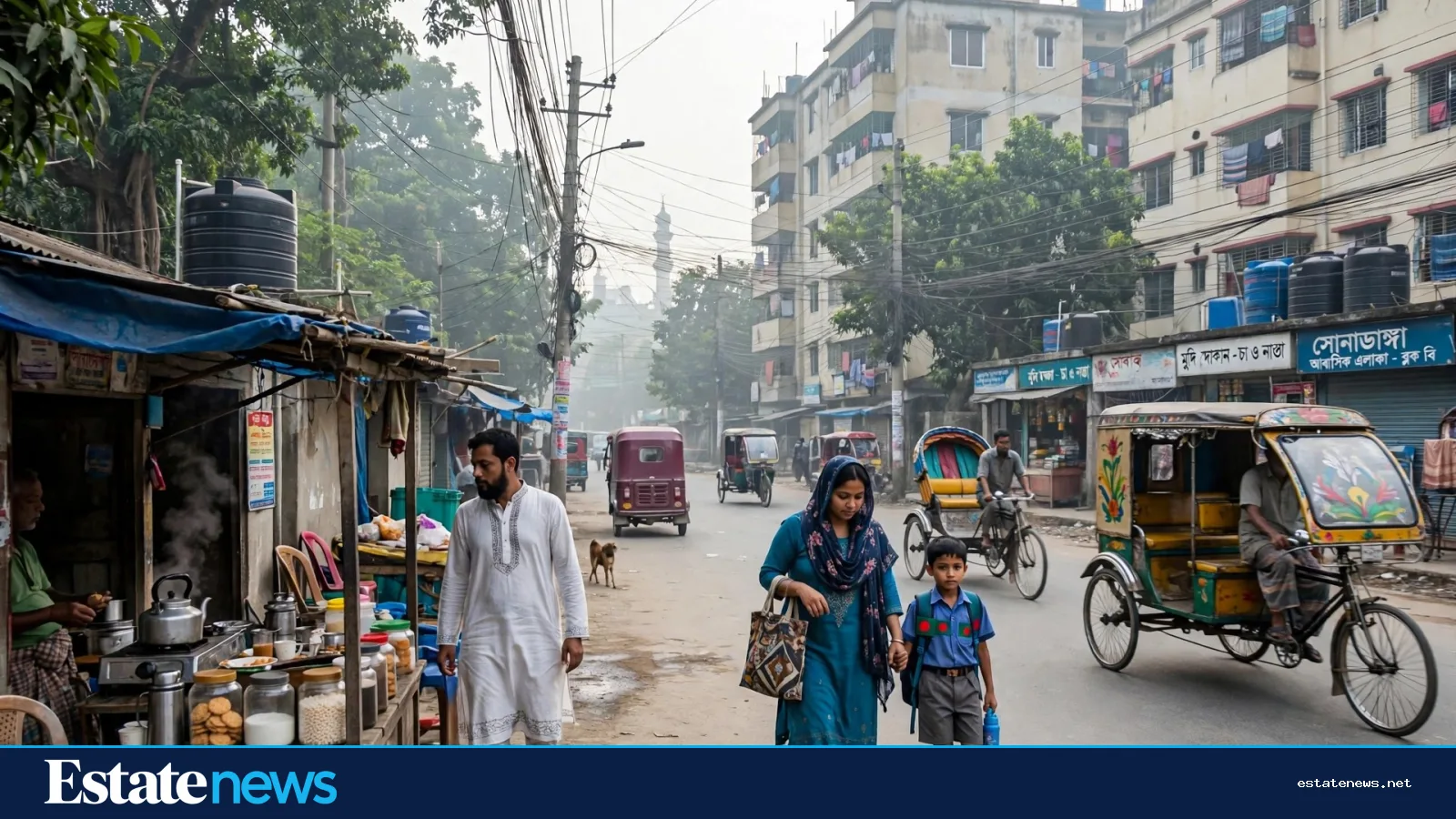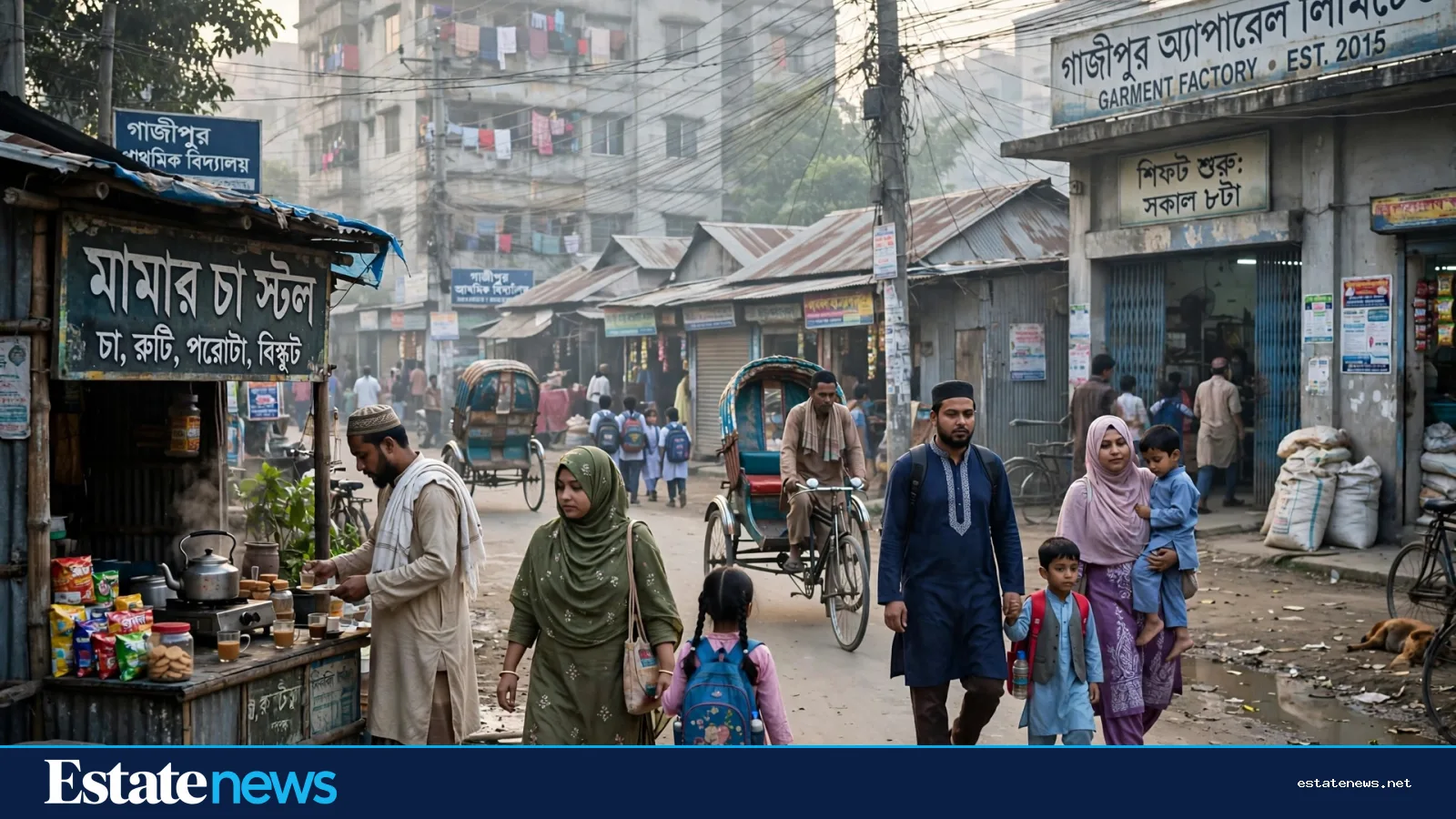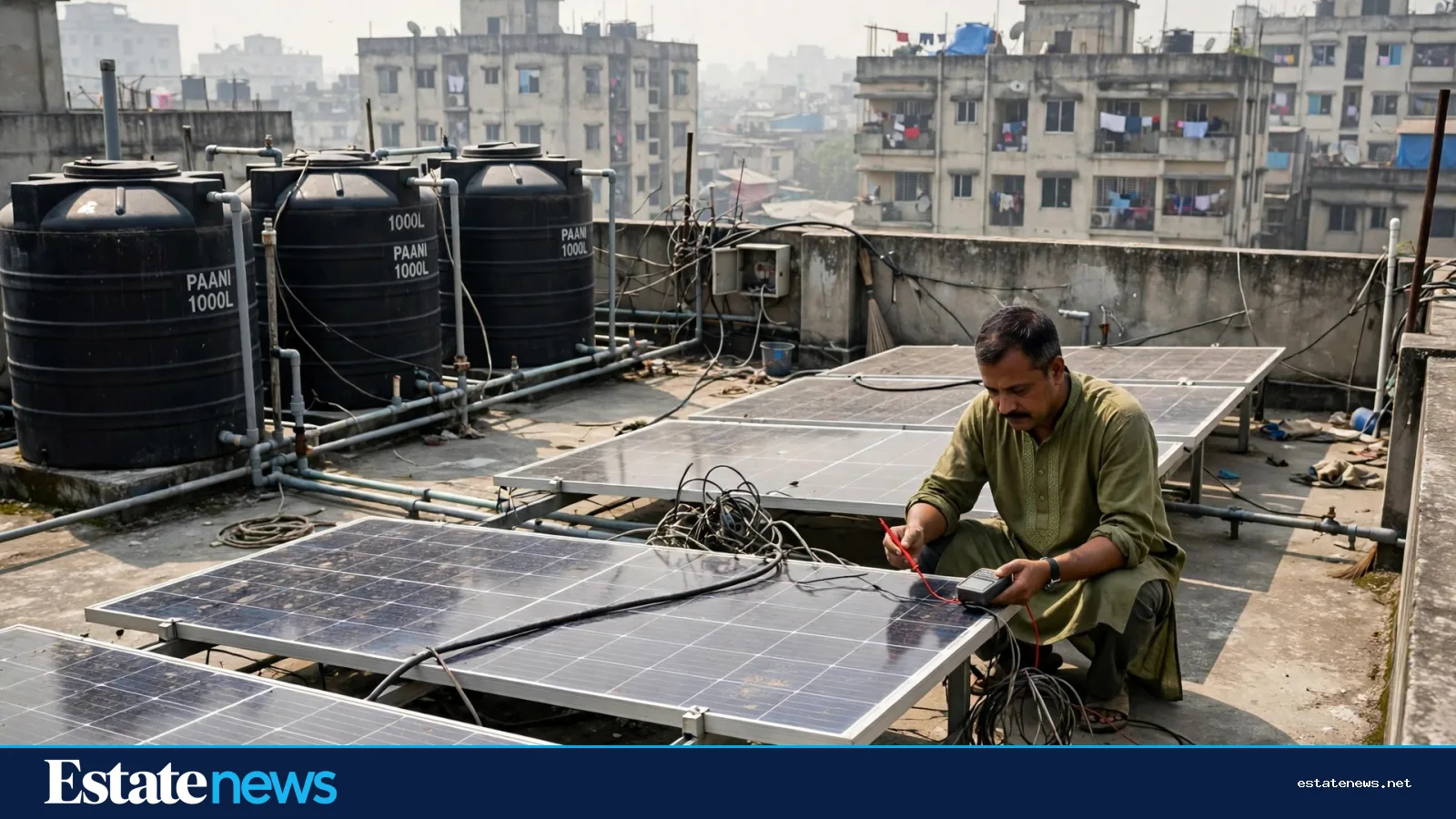
Walk across a Dhaka rooftop at noon and the case for solar is obvious. The sun is strong, the roof is empty, and below it a building full of flats is running lifts, water pumps and corridor lights on grid power. The question is not whether the sun is there. It is whether a housing society can agree on how to use it, and who pays for what.
The rules have moved in solar's favour this autumn. The government issued the Special Solar Power Installation Ordinance, 2026, published in the gazette on 19 October after cabinet approval the day before. It opens rooftops, courtyards, unused land, water bodies and tea gardens to solar projects of up to 5 megawatts, and it covers government, semi-government, autonomous and local government institutions, state-owned companies, private buildings and residential properties. A building owner has two routes: pay for a system and own it, or let a company finance and operate it in return for payments for the electricity it produces.
For households, there is also a specific incentive. Under the Net Metering Guidelines 2025, a household that installs a rooftop system with batteries by 28 February 2027 and supplies surplus electricity to the grid receives Tk 10.50 for every unit of surplus power, guaranteed until February 2030. The Power Division has put the maximum generation cost for eligible systems at Tk 8 per unit. Its calculator gives an example: a rooftop system on a residential building with a roof area of 2,000 square feet could generate an average of 1,833 units of electricity a month. That is the Power Division's example, for a building of that size, not a promise for every roof.

Net metering, in plain terms
Net metering is the mechanism that makes rooftop solar work for a building rather than only for a single flat. Solar power generated on the roof is used first to meet the building's own demand. Surplus power goes to the national grid through a bi-directional meter, and the exported power is credited against electricity bills under the applicable rules. The Sustainable and Renewable Energy Development Authority, SREDA, records installed systems and checks that they are operating. Equipment must meet the technical standards set by the Bangladesh Standards and Testing Institution and SREDA.
For a housing society, the natural loads are the shared ones: lifts, water pumps and common lighting. Those run through the day, when the sun is up, which is when solar generates. A society does not need to rewire every flat to start. It can begin with the common load, where the benefit is shared and the billing is already collective.
The ordinance also requires a tripartite agreement among the consumer, the service provider and the appropriate authority for systems installed under it. The standard government contract must address access to the roof, equipment quality, electricity prices, net metering and equipment disposal. That last point matters. Panels last for years, but they do not last forever, and a society should know who removes them and who pays for it before the first panel goes up.
The questions to settle before the panels go up


The first question is the roof itself. In a Dhaka apartment building, the roof is common property, but it is also where residents dry clothes, keep water tanks and, in many buildings, hold gatherings. A solar installation takes space, and it takes it for years. The society's management committee should record, in writing, which part of the roof is given over, for how long, and what happens to the residents' existing uses. A verbal understanding will not survive the first disagreement.
The second question is money. A society should get more than one quotation, compare them on the same basis, and ask what is included: panels, inverter, batteries if any, the bi-directional meter, installation, and maintenance for the first years. It should ask who cleans the panels, how often, and what happens when an inverter fails in the monsoon. Maintenance is the part most often left out of the sales talk, and it is the part that decides whether a system keeps working in its third year.
The third question is the building's own rules. Some buildings already have a rule that new grid connections need a solar system. The Power Division has made rooftop solar under net metering mandatory for buildings with at least 1,000 square feet of usable roof space for a minimum of 20 years when applying for a new electricity connection, under a revised circular reported in December 2025. A society planning a new connection, or an increase in its load, should check what applies to its own case with the distribution company and SREDA before it signs anything.
Start with the common load
Cover the lifts, the pumps and the common lights first, measure what the system actually generates over a few months, and then decide whether to go further. The Solar Bangladesh expo, opening tomorrow at the International Convention City Bashundhara alongside the Build Bangladesh and Real Estate expos, is a good place to ask these questions in person and compare offers side by side.
Rooftop solar will not solve a building's electricity bill on its own. It can cut the shared load, it can earn a credit for surplus power, and it can give a society a measure of control over a cost that only rises. The buildings that gain most will be the ones that settle the roof, the money and the maintenance before the panels arrive, not after.
Read more: "how Dhaka's builders track a project from a phone" and "Jhilmil, RAJUK's township south of Dhaka".