Bangladesh paid far more for fuel in the first three months of the financial year, and the trade gap widened with it. The deficit reached $7.48 billion in July to September, the first quarter of FY27, up 31 percent from a year earlier, according to Bangladesh Bank data reported by The Daily Star and IANS on 8 November. Imports rose 15 percent to $19.33 billion. Exports grew too, by 7 percent to $11.86 billion, but the import bill grew faster, and fuel led the way.
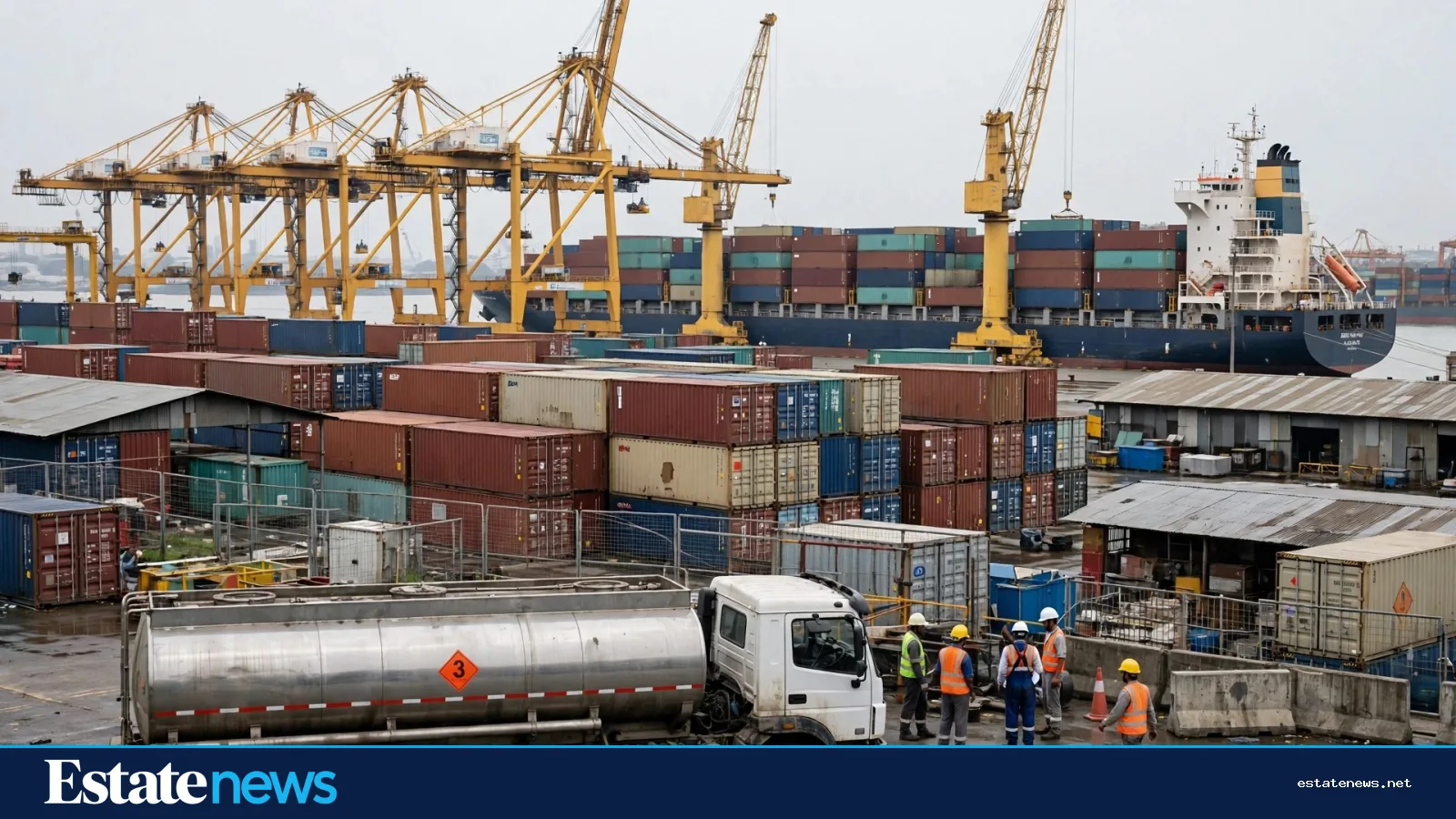
Petroleum imports more than doubled, rising 105 percent to $4.2 billion. That single line explains much of the quarter. Fuel is not a cost that sits in one corner of the economy. It moves through everything a building needs: the trucks that carry cement and steel, the generators that keep a site running, the energy that fires a kiln or runs a factory. When the fuel bill doubles, the cost of putting up a building moves with it, even if no single material price makes the news on its own.
A wider gap, and what held it back

The current account deficit, the broadest measure of the external balance, widened to $1.33 billion in the quarter, from $821 million a year earlier. The overall external deficit stood at $1.16 billion, against a surplus of $853 million in the same quarter last year. Those are sharp turns, and they show how quickly a fuel shock can change the country's external position.
What held the gap back was money sent home by Bangladeshis working abroad. Remittance reached $8.59 billion in the quarter, up 13 percent from a year earlier, and that inflow limited the damage. Exports also held firm, with the 7 percent rise to $11.86 billion showing that the country's factories kept selling abroad while the import bill climbed. The picture is not one of collapse. It is one of pressure: a strong export and remittance base carrying a much heavier fuel cost than a year ago.
For the construction sector, the pressure arrives through several doors at once. Transport costs rise first, because diesel moves every load of bricks, sand, cement and rod. Energy costs follow, because factories that make cement, steel and ceramics run on fuel and power. Imported inputs cost more when the taka is under strain from a wider external deficit. None of these costs appears as a single headline, but together they push up the price of a finished flat.
What it means for a buyer


A homebuyer does not pay the trade deficit. A homebuyer pays the price of a flat, and the interest on the loan that buys it. Both are touched by the external balance. When the deficit widens, the central bank faces harder choices on interest rates, and home-loan rates follow the direction of those choices. A buyer who locks in a loan while rates are steady pays less over twenty years than a buyer who borrows after rates have moved up.
The practical point for a buyer in the coming months is to watch two numbers. The first is the price of building materials, which will show the fuel shock first. The second is the home-loan rate on offer from banks, which will show how the external balance is feeding through to borrowing costs. A buyer who has already agreed a price with a developer should read the agreement for any clause that lets the price move with material costs, and should ask, in writing, how such a clause works.
Developers face the same arithmetic from the other side. A project priced when fuel was cheaper may cost more to finish than planned, and a developer who absorbs that cost protects the buyer but squeezes the project's margin. A developer who passes it on protects the margin but tests the buyer's patience. The honest answer for both sides is to price the risk in advance, rather than discover it halfway through construction.
The steadier side of the ledger
There is a steadier side to the quarter's figures, and it matters. Remittance at $8.59 billion, up 13 percent, is not a one-off. It is the flow that has carried Bangladesh's external accounts through harder times than this, and it gives the country room to manage a fuel shock without a crisis. Exports at $11.86 billion, up 7 percent, show that the garment and manufacturing base is still selling, and that the earning side of the ledger is working.
The trade gap widened because Bangladesh bought far more fuel, not because it stopped earning. That distinction shapes what comes next. If fuel prices ease, the deficit narrows quickly. If they stay high, the pressure on building costs and on borrowing costs stays with it. Either way, the quarter's figures are a reminder that a flat in Dhaka is priced by forces far beyond Dhaka: by the oil market, by the remittance flow, and by the balance between what the country earns and what it buys.