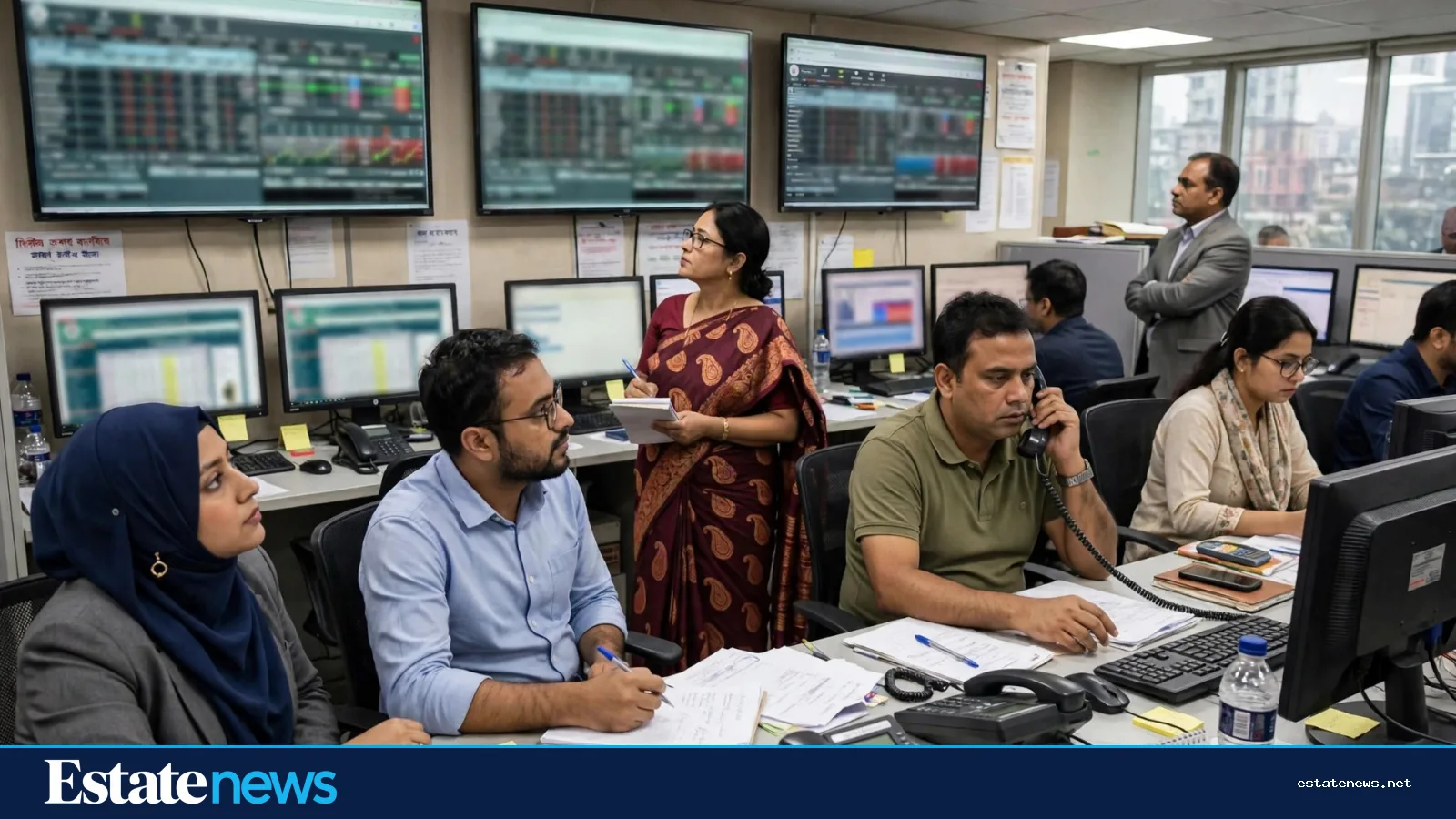
The Dhaka Stock Exchange turned on 4 November, according to DSE data. The DSEX rose 57.32 points, or 1.08 percent, to close at 5,341.63. The DS30 gained 16 points to 2,037.62, and the DSES added 7 points to 1,036.88. Breadth was wide: of 383 issues traded, 282 advanced, 51 declined and 50 stayed unchanged. The rebound ended a four-session losing streak, and it came alongside a move by the Bangladesh Securities and Exchange Commission to ease restrictions on frozen BO accounts, a step market watchers read as an attempt to bring sidelined investors back into trading.
A one-day rise does not erase a weak run, and this wrap does not pretend otherwise. What the session did show was buying across a broad front rather than a narrow rally in a handful of stocks. That breadth matters for household confidence, because a market that rises on many counters feels different to savers than one carried by a few names.
Exports and remittances: the slower, steadier story

Trade figures for October, from Export Promotion Bureau data reported through Bangladesh Bank, put exports at $3.99 billion, up 4.39 percent year on year. Ready-made garments accounted for $3.17 billion of that total, up 4.9 percent. For July to October, exports reached $17.04 billion, up 6 percent on the same period last year. These are solid rather than spectacular numbers, and that is their point. Export earnings have held up without a single month doing all the work.
Remittance told a similar story. Bangladesh Bank data put October remittance at $2.87 billion, up 12.18 percent year on year. July to October remittance reached $11.465 billion, up 13 percent. For families planning around money sent home from abroad, a run of months like this changes the planning horizon. A single strong month can be spent. A run of steady months can be saved against, borrowed against carefully, or set aside for a flat deposit.


What this means for property and household finance
Property decisions rarely turn on one stock market session. They turn on whether a family believes its income will still be there in a year, whether a bank will lend at a rate it can carry, and whether a developer will finish what it started. On those questions, this week's figures cut both ways, and honestly so.
Steady remittance supports demand for family flats, especially in Dhaka and Chattogram, where expatriate families often buy for parents, for a future return, or for children studying in the city. Steady exports support jobs in garments and linked industries, which in turn support rents in factory-adjacent areas and in the towns that feed those factories. Construction costs, though, do not fall just because exports rise, and a family that stretches for a flat on the back of one good remittance month takes a risk that a steadier plan would avoid.
The sensible reading is modest. Keep a deposit separate from monthly spending. Check loan terms against a bad month, not only a good one. Verify land and project papers before paying, whatever the market mood. A rebounding index and firm remittance make that planning easier. They do not remove the need for it. This article is informational only and is not financial advice.