In a two-bedroom flat in Mirpur, Uttara or Banasree, the hallway is often the most wasted space in the house. Shoes pile by the door. School bags slide off a chair. A winter quilt lives on top of a wardrobe for eight months, because no one made a place for it. The floor shrinks, room by room, until the flat feels smaller than its deed says it is.
A storage wall answers that problem by using the wall, not the floor. Done well, it runs from one end of a hallway or bedroom wall to the other, and from floor to ceiling, with doors that close flat. The room keeps its walking space. What changes is the wall itself: it stops being blank plaster and starts working.
The first decision is not about wood or colour. It is about sorting. Open every cupboard in the flat for an afternoon and make three honest piles in your head: things used every day, things used every season, and things kept for a reason that no longer exists. Daily things need low, easy shelves. Seasonal things, quilts, suitcases and festival clothes, belong high up, where a step stool is acceptable. The third pile should leave the house. No storage wall can fix a flat that keeps everything.

Hallway walls first
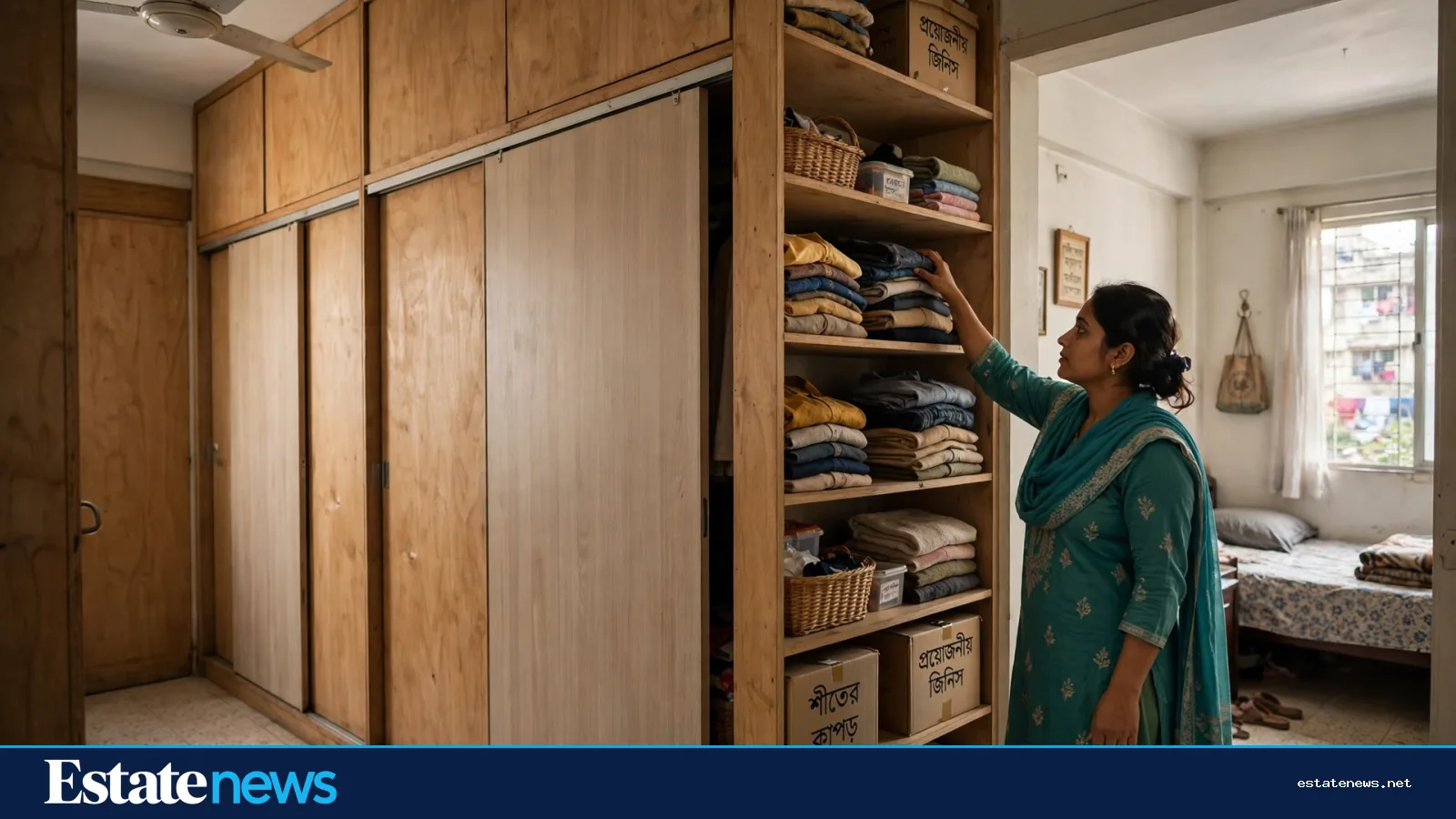
Start with the hallway, because it is where clutter lands. A shallow wall, about a foot deep, is enough for shoes, umbrellas, school bags and cleaning supplies. Sliding doors work better than hinged doors here, since a hinged door needs swing space the hallway does not have. Inside, keep the bottom row open or low for shoes, so no one has to bend into a dark corner every morning.
A small bench section helps more than it sounds. A place to sit while putting on shoes, with a shoe rack below and hooks above, turns the doorway from a dumping ground into a proper entry. In rented flats, the same idea can be built without drilling: a tall freestanding shelf unit, fixed to the wall with removable straps, gives most of the benefit and leaves with the tenant.
Bedroom walls without the bulk


Bedroom storage walls fail when they are built as one giant wardrobe. Clothes, bedding, documents and chargers all end up in the same deep box, and the box ends up half-empty at the back. Break the wall into zones instead. Hanging space for panjabis, shirts and saris on one side. Shelves for folded clothes in the middle. A narrow, lockable section for documents, jewellery and passports. A top row, full height, for suitcases and winter quilts.
Light matters inside a deep wardrobe. A simple strip light, or even a small rechargeable light, stops the back of the shelf from becoming a lost zone. Labels on boxes, written in Bangla or English, whichever the family reads faster, save more time than any fancy fitting.
What it costs, in plain terms
Costs vary widely, and any article that quotes one figure for every flat would mislead. A carpenter-built wall in board and laminate, measured to the room, usually costs far less than a branded modular system, but it needs a good carpenter and clear drawings. Modular systems cost more and arrive faster, with a cleaner finish, yet they rarely fit an uneven Dhaka wall perfectly. Renters should think twice before paying for a fixed wall in a flat they may leave in two years: freestanding units, stackable boxes and over-door racks give a large share of the result at a fraction of the commitment.
Ask the carpenter three questions before work starts: how deep is each section, how will the wall cope with damp in the rainy season, and what happens if a door hinge breaks in a year. A wall that cannot be repaired locally is a wall that will stay broken. Leave a small gap behind the unit on an outside wall, so trapped moisture has somewhere to go, and check that wall for damp patches before the wood goes up.
The test of a storage wall is simple. After a month, is the floor clearer? Can every person in the flat find their own things without asking someone else? If the answer is yes, the wall has done its job, even if it looks plain. Storage is not decoration. It is the quiet work that lets a small flat feel like a home, not a warehouse.